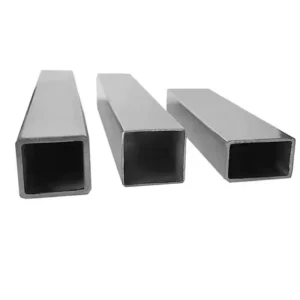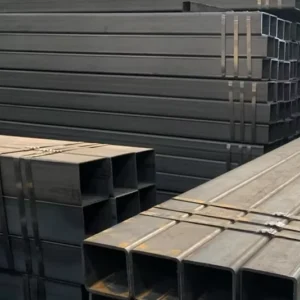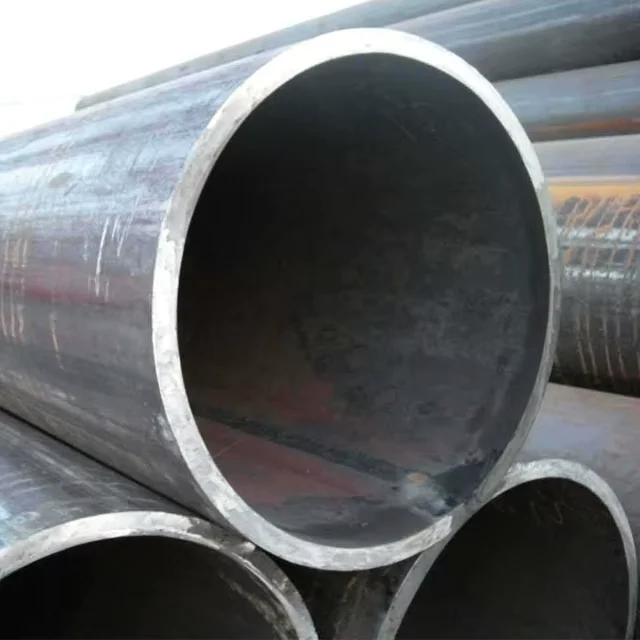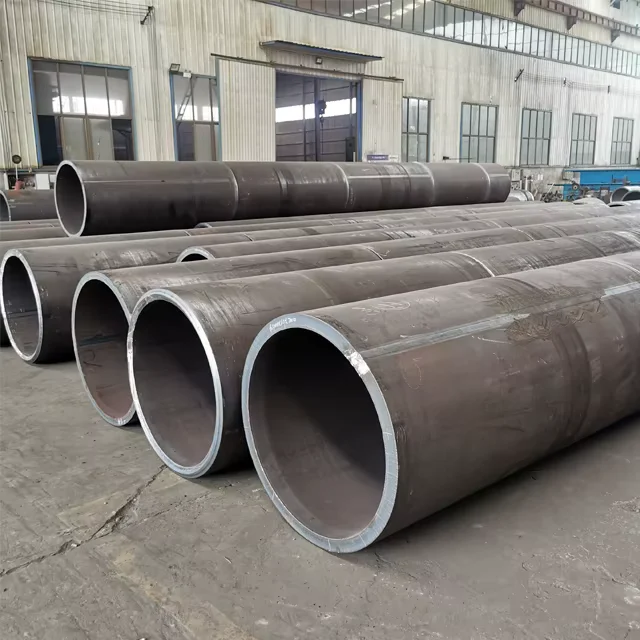


Description
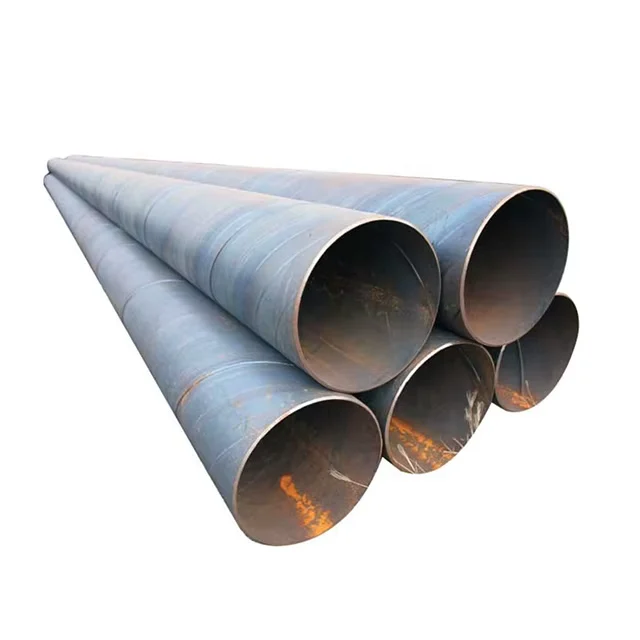
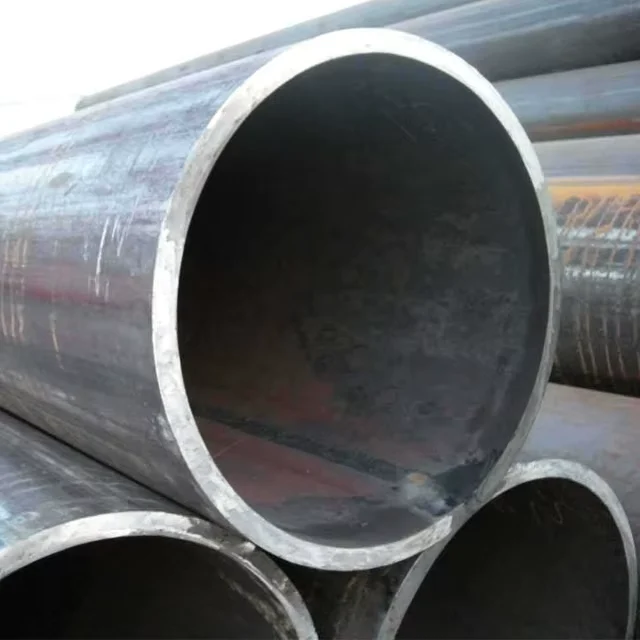
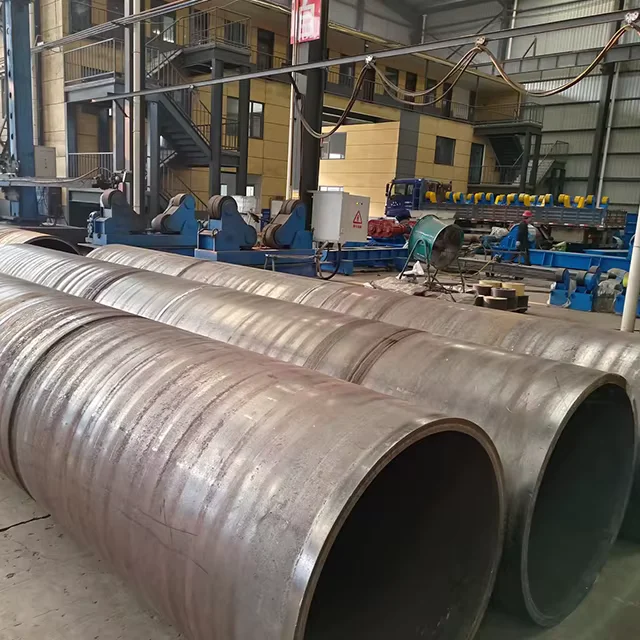
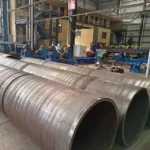
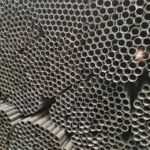
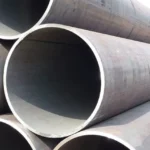
Mill-direct ERW pipe supply — ASTM A53 / A106 / API 5L grades rolled and welded in-house with full heat-number traceability from billet to finished pipe.
Technical Specifications
| Parameter | Value |
|---|---|
| Designation | ASTM A53 ERW Welded Steel Pipe |
| Product Type | ERW / Welded Steel Pipe |
| Steel Grade | A53, A106, Q195, Q235, Q355 |
| Standard | ASTM A53, ASTM A106, API 5L, GB/T 3091, GB/T 13793, GB/T 9711, BS 1387, BS EN 10219, BS EN 10296 |
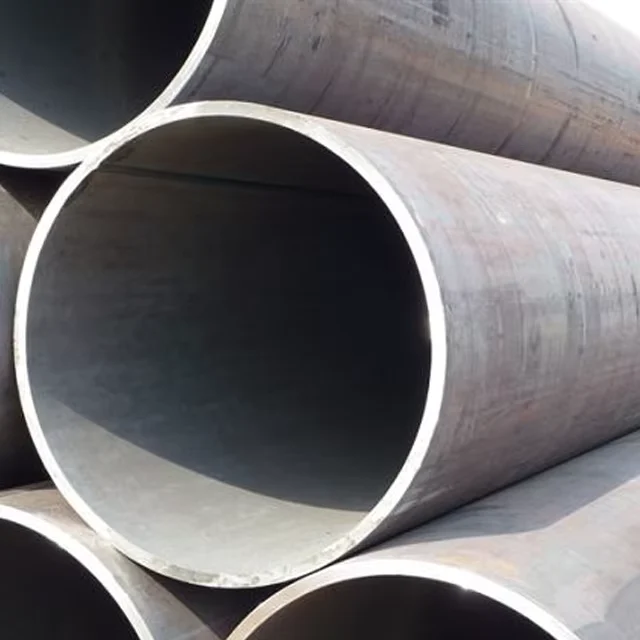
| Section Shape | Round |
| Outer Diameter | 10–2000 mm |
| Wall Thickness | 3.4–200 mm |
| Length | 6 m / 12 m (or customized) |
| Technique | ERW (Electric Resistance Welded) |
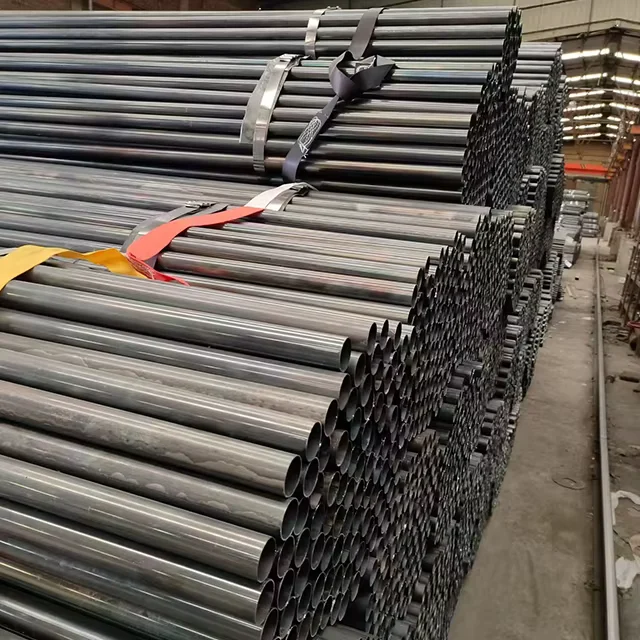
| Surface Treatment | Hot Rolled / Black (Non-oiled) |
| Tolerance | ±1% |
| Ends | Plain / Beveled (customizable) |
| Application | Fluid transport, gas pipeline, oil pipeline, structural support, construction, boiler, hydraulic system, scaffolding |
| MOQ | 1 Ton |
| Origin | Shandong, China |
Application Suitability
| Industry | Typical Applications |
|---|---|
| EPC Infrastructure | Gas and oil transmission pipelines, water distribution mains, piling casings for bridge foundations |
| Industrial Construction | Structural support columns, conveyor frames, equipment skids, scaffolding uprights |
| Energy & Chemical | Boiler feed lines, hydraulic piping circuits, chemical fertilizer plant process lines |
| Commercial Building | Fire protection standpipes, HVAC ducting supports, mezzanine frame bracing |
What Negative Tolerance Really Costs on an ASTM A53 Pipe Order
A pipe that passes visual inspection can still fail caliper measurement — and the rejection bill lands on the buyer.
When overseas buyers source ASTM A53 ERW welded steel pipe from China, the most common failure point is not the steel grade itself but the wall thickness tolerance. Mills running deep into negative tolerance produce pipes that look correct on the outside but measure dangerously thin under caliper. Third-party inspectors catch it at the destination port, and the entire lot gets rejected. The buyer then faces air-freight replacement costs, project schedule delays, and a broken chain of material traceability that makes re-ordering equally risky. [NEED_CITE: ASTM A53 dimensional tolerance requirements for ERW pipe]
Matching ERW Pipe Dimensions to Pipeline and Structural Loads
The OD range of 10–2000 mm and wall thickness from 3.4–200 mm covers everything from small-bore instrument lines to large-diameter process headers. For EPC pipeline projects, the ±1% tolerance on ASTM A53 ERW welded steel pipe keeps hydraulic calculation assumptions valid across the full order. Structural applications like scaffold uprights and column casings benefit from the consistent weld seam produced by the ERW process, where the flash is trimmed flush and the joint area matches the parent metal in load-bearing capacity. Our own mill produces the raw coil and plate, so ever*ysis — no third-party material gaps.
Engineering Compliance Across ASTM, API, and EN Standards
Projects specifying ASTM A53 or A106 for North American markets need pipes that meet both chemical composition and tensile requirements under those standards, with documentation that customs and project engineers can verify without additional testing. [NEED_CITE: ASTM A53 vs A106 material requirements comparison] API 5L grades cover higher-pressure oil and gas transmission where the weld seam quality must pass NDT. For European-specification projects running parallel to the same supply chain, BS EN 10219 compliance is available on the same ERW production line. The beveled or plain end options allow direct welding on-site without secondary machining, reducing field fabrication time.
Understanding the Steel Grades Inside This ERW Range
ASTM A53 covers two types — Type F (furnace butt-welded) and Type E (electric resistance welded) — with Grade A and Grade B offering different minimum yield levels for pressure and mechanical applications. ASTM A106 is the high-temperature counterpart, specified for boiler and superheater service where creep resistance matters. The Q-series grades (Q195, Q235, Q355) follow the Chinese GB system, where the number indicates minimum yield strength in MPa; Q355 roughly corresponds to S355 in the EN system and is widely used in structural frames across Southeast Asian and African infrastructure projects. The ERW process itself forms the weld seam by passing current through the butted edges of the formed strip, creating a forge-welded joint without filler metal — this makes the weld zone narrow and the dimensional consistency tighter than SSAW for smaller diameters. [NEED_CITE: ERW vs seamless vs SSAW pipe manufacturing process comparison]
The Hidden Price of Unverified Pipe Procurement
Pipes sourced through trading companies without mill-level quality control often arrive with mismatched heat numbers, missing MTCs, or wall thickness that drifts beyond the ±1% tolerance band. The consequences are not abstract: engineering inspectors reject the lot, customs holds the shipment pending material verification, and the project absorbs rework costs for cut-and-weld sequences already completed on suspect material. [NEED_CITE: material traceability requirements in structural steel procurement] An ASTM A53 ERW welded steel pipe order with full documentation from a vertically integrated mill eliminates every one of these failure points.
Why Buyers Source ASTM A53 ERW Welded Steel Pipe From Us
We operate our own steel production facility with three rolling lines and maintain over 2,800 specifications in stock — meaning the ASTM A53 ERW welded steel pipe you order is rolled, welded, inspected, and dispatched from a single site. Every heat number is cross-checked against actual caliper readings before the pipe leaves the yard; this is not a policy written after a problem, it is how we have operated since an early order taught us what negative tolerance costs in air-freight replacements. Our engineering team reviews shop drawings and confirms material optimization before production begins, and our quality documentation package includes WPS, PQR, dimensional inspection reports, and coating certificates. We accept SGS, BV, and TÜV third-party inspections before shipment, and we handle professional loading for oversized and heavy pipe bundles — a logistics detail that matters when 12-meter lengths and 200 mm wall thicknesses meet a 40-foot container.
Documentation & Compliance
- Mill Test Certificate documenting ASTM A53 Grade B chemical composition (C, Mn, Si, P, S) and mechanical properties per heat number
- API 5L certification for line pipe grades with full PSL 1 or PSL 2 test reports
- CE marking and EN 10219 compliance documentation for European market shipments
- ISO 9001 quality management certificate covering the full ERW production and inspection process
- Material traceability sheet linking each pipe to its heat number, ladle analysis, and rolling date
- Complete export documentation set: packing list, bill of lading, certificate of origin, and commercial invoice
Packaging, Loading & Delivery
- Black non-oiled ASTM A53 ERW pipes bundled with steel strips and edge protectors to prevent surface damage during ocean transit
- Beveled-end pipes capped at both ends to protect the welding preparation geometry from moisture and impact
- 6 m and 12 m standard lengths loaded in dedicated container configurations to maximize payload for 200 mm wall thickness heavy-wall orders
- Heat number and steel grade stenciled on each pipe bundle for on-site identification and traceability verification
- FOB, CIF, and DDP shipping terms available with professional lashing plans for oversized diameter pipes above 500 mm OD
- Custom cut-to-length service available for non-standard project requirements with MOQ of 1 Ton
Start Your ASTM A53 ERW Pipe Inquiry
Send your project drawings, required steel grade, outer diameter, wall thickness, and destination port — we respond within 24 hours with a detailed quotation including material cost, fabrication, coating, packing, and shipping, along with a shop drawing timeline and production schedule.
Get Your ASTM A53 ERW Pipe Quote With Mill Test Certificate
Share your specifications and required standards to receive a full quotation with material traceability documentation.
Contact: Shandong Xin Jiyuan Special Steel Tube Co., Ltd
Tel: +86 531 8573 6315
Mobile/WhatsApp/WeChat: +86 188 5315 7756
Email: admin@xjystructure.com
Website: www.xjystructure.com
Frequently Asked Questions
Q: What is the difference between ASTM A53 and ASTM A106 for ERW pipe?
A: ASTM A53 covers both pressure and mechanical applications with Grade A and Grade B, while ASTM A106 is specifically designed for high-temperature service in boiler and superheater applications. Both are available in ERW format from our mill, with full chemical and mechanical test reports per heat number.
Q: Can you provide third-party inspection before shipment?
A: Yes, we accept SGS, BV, and TÜV third-party inspections at our facility before dispatch. The inspection covers dimensional verification, wall thickness caliper checks, visual weld seam examination, and documentation review against the Mill Test Certificate.
Q: What is the minimum order quantity for custom dimensions?
A: The MOQ is 1 Ton for standard ASTM A53 ERW welded steel pipe. Custom non-standard dimensions, lengths, or end preparations are available with the same MOQ, subject to production schedule confirmation.
Q: How do you ensure wall thickness tolerance stays within ±1%?
A: Every pipe is measured with calibrated calipers at multiple points along the length, and each heat number is cross-checked against actual readings — not just the mill roll settings. This process was implemented after an early export order revealed that visual appearance alone cannot confirm dimensional compliance.
Q: What surface treatment options are available beyond black non-oiled?
A: We offer hot rolled finish, galvanized coating, 3PE anti-corrosion coating, and custom painted finishes. The choice depends on the service environment — galvanized for atmospheric exposure, 3PE for buried pipeline applications, and black non-oiled for indoor structural or further coated applications.