Description
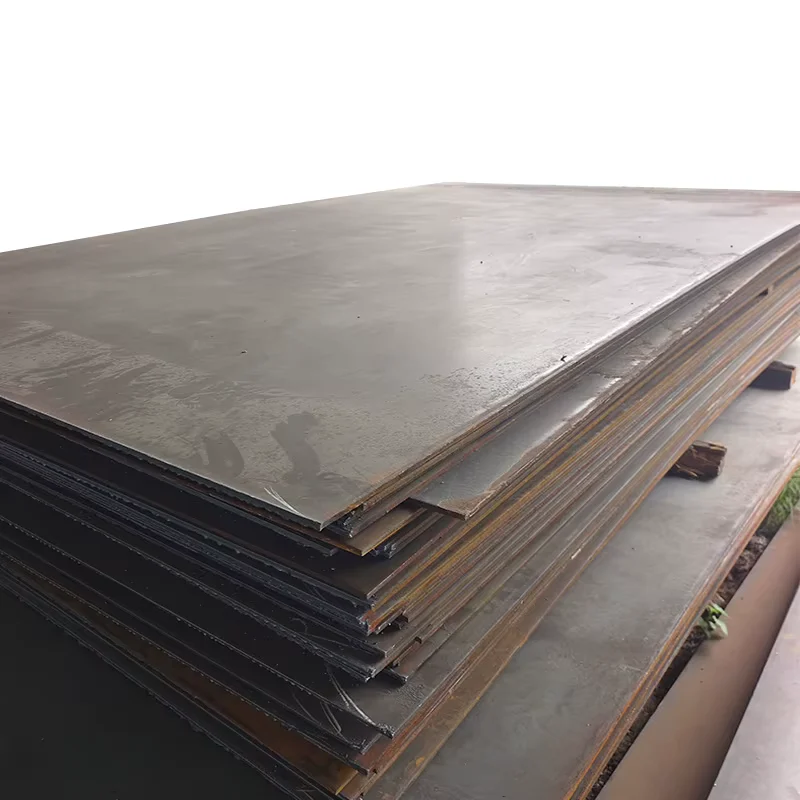
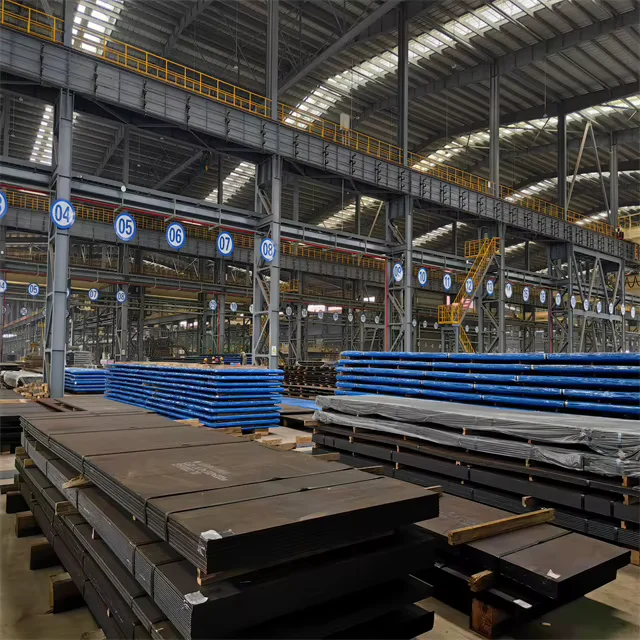
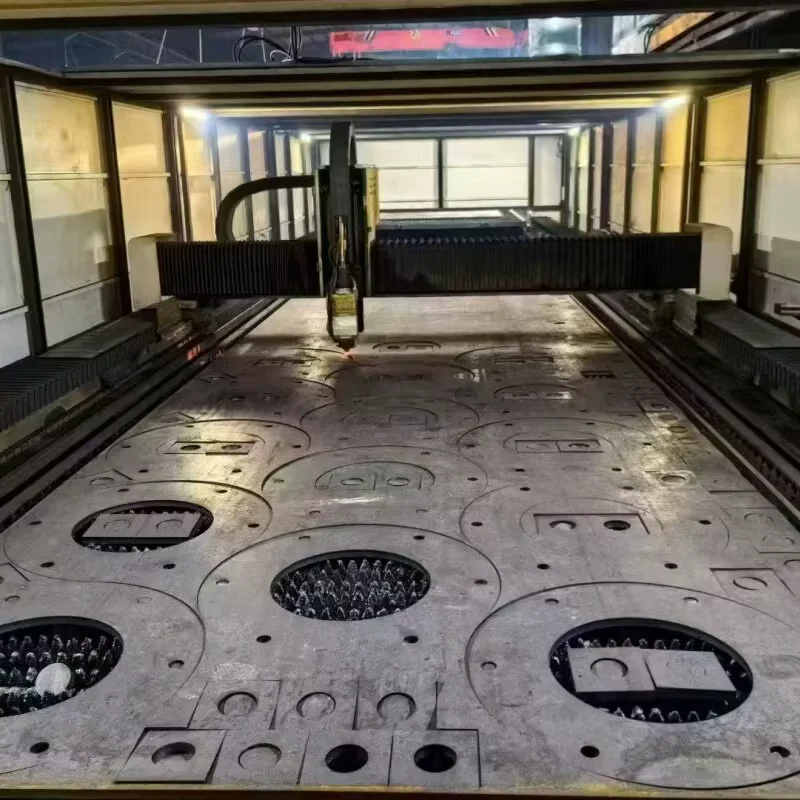
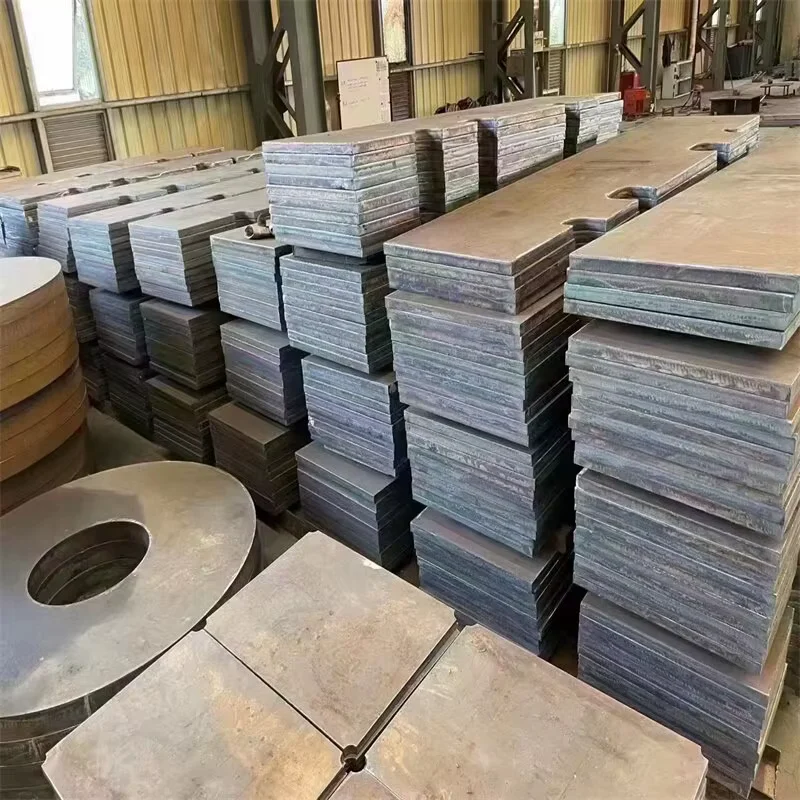
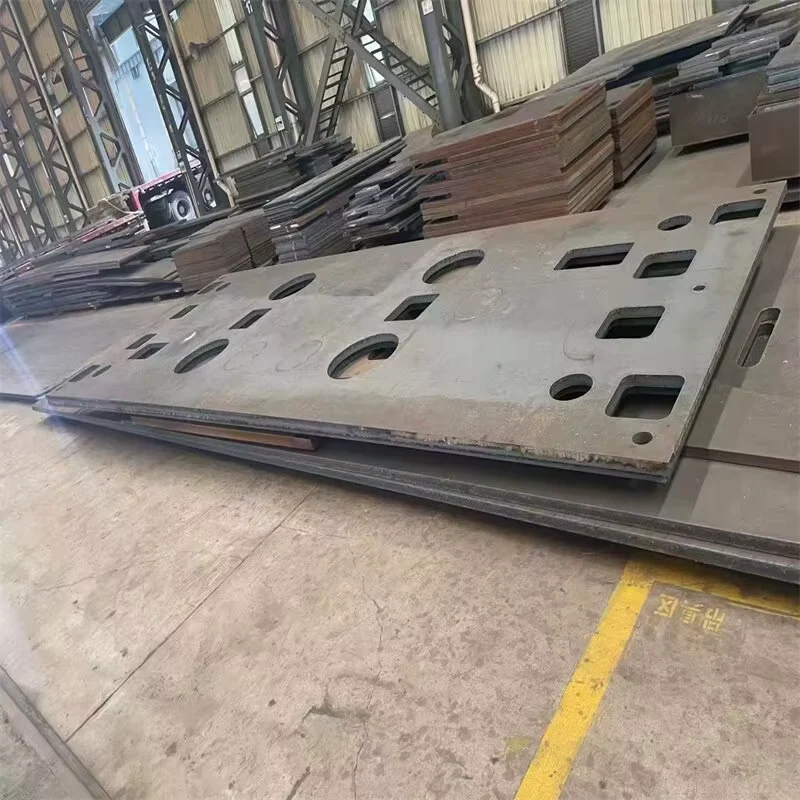
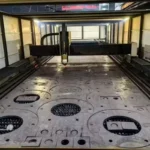
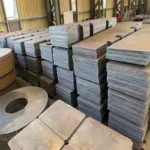
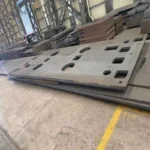
Factory-direct wear plate sourcing — Raw NM400/NM500 slabs rolled in our own mill and laser-cut in the same facility, so every heat number is traceable from casting to finished part.
Technical Specifications
| Parameter | Value |
|---|---|
| Designation | NM400/NM500 Wear-Resistant Steel Plate |
| Product Type | Steel Plate |
| Steel Grade | NM300, NM360, NM400, NM450, NM500, NM550, NM600, AR360, AR400, AR450, AR500, XAR400, XAR450, XAR500, XAR600, Dillidur400, Dillidur500, QUARD400, QUARD450, QUARD500, FORA400, FORA500, Creusabro4800, Creusabro8000, RAEX400, RAEX450, RAEX500 |
| Standard | GB/T 24186, AISI, JIS, ASTM, DIN, EN, GB |
| Thickness | 3.5–16 mm |
| Width | 0.6–3 m |
| Length | 1–12 m |
| Technique | Hot Rolled |
| Surface Treatment | AR / TMCP / Q+T delivery condition |
| Tolerance | ±1% |
| Processing Service | Laser Cutting, Plasma Cutting, Welding, Punching, Bending, Decoiling, Sandblasting, Painting |
| Surface Brinell Hardness (NM360) | 330–390 HBW |
| Surface Brinell Hardness (NM400) | 370–430 HBW |
| Surface Brinell Hardness (NM450) | 420–480 HBW |
| Surface Brinell Hardness (NM500) | ≥470 HBW |
| Tensile Strength (NM400) | ≥1200 MPa |
| Tensile Strength (NM450) | ≥1250 MPa |
| Application | Engineering machinery, handling machinery, construction machinery, metallurgical machinery, mining machinery, thermal power equipment, shot blasting machinery |
| MOQ | 1 Ton |
Application Suitability
| Industry | Typical Applications |
|---|---|
| Mining & Aggregate | Crusher liners, hopper liners, scraper machine liners, blade edges for high-abrasion environments |
| Construction & Concrete | Concrete mixer liners, dust collector liners, pump truck components |
| Thermal Power & Bulk Handling | Coal mill lining boards, coal conveying pipes, unloading equipment liners |
| Engineering Machinery | Loader buckets, bulldozer blades, excavator bucket teeth and side cutters |
| Handling Machinery | Grab edge plates, automatic tipper plates, chute liners |
When Hardness Mismatch Destroys a Whole Container of Wear Parts
Substituting a lower-grade plate during cutting is the single most expensive mistake in overseas wear-plate procurement.
I watched an entire container of laser-cut liner parts get scrapped on a Monterrey jobsite because the workshop swapped NM400 for Q345B — hardness was off by a factor of two, and the liners cracked during installation. Buyers outsourcing wear-resistant steel fabrication overseas face material traceability gaps, fragmented procurement between plate suppliers and cutting shops, and no single party accountable when chemistry does not match the order. A missing MTR or an unverified heat number means you cannot prove the plate meets GB/T 24186 when the inspector shows up. [NEED_CITE: material traceability requirements for wear-resistant steel in mining equipment]
Matching Hardness Grades to Abrasion Severity in the Field
Selecting the right NM400 NM450 NM500 wear resistant steel plate supplier starts with mapping Brinell hardness to the actual abrasion mechanism. Low-impact sliding abrasion in coal conveying pipes calls for NM360 (330–390 HBW) in AR condition, where weldability matters more than peak hardness. High-impact crushing in mining hopper liners demands NM500 (≥470 HBW) delivered in Q+T condition to balance surface hardness with core toughness. Our in-house 12,000W fiber laser cuts these grades with parameters matched to each hardness band — cutting speed, assist gas pressure, and focal point shift accordingly — so the heat-affected zone does not anneal the edge and drop hardness below spec.
Engineering Compliance and Delivery Condition Selection
Wear plate used in load-bearing structures must satisfy both hardness requirements and weldability constraints. EN 1090 and AWS D1.1 demand qualified welding procedures (WPS/PQR) before any fabrication on NM450 or NM500, because higher carbon equivalents require preheat and controlled interpass temperature. [NEED_CITE: welding guidelines for high-hardness wear-resistant steel per AWS D1.1] Delivery condition directly affects downstream processing: AR plates are cheaper but harder to cold-form; TMCP plates offer a middle ground; Q+T plates deliver the highest and most uniform hardness through the full thickness. For projects shipping to the EU, CE marking and EN-equivalent grade documentation decide whether the container clears customs or sits at the port.
Decoding the Grade Equivalence Maze Across Standards
The same performance level wears different names depending on which standard your engineer specified. NM400 (GB/T 24186) corresponds to AR400 (AISI), XAR400 (Dillidur/DIN), QUARD400 (NBN), FORA400 (NF), Creusabro4800 (NF), and RAEX400 (SFS) — all targeting the 370–430 HBW range. NM500 maps to AR500, XAR500, QUARD500, FORA500, Creusabro8000, and RAEX500 at ≥470 HBW. Tensile strength separates them further: NM400 carries ≥1200 MPa while NM450 reaches ≥1250 MPa. A single NM400 NM450 NM500 wear resistant steel plate supplier holding stock across all these designations eliminates the need to source from multiple mills when your project draws from mixed international specifications.
Hidden Costs of Buying Wear Plate Without Verified Chemistry
Ordering wear plate without mill test reports tied to heat numbers invites three failure modes: hardness below spec causing premature field wear, chemistry deviations causing weld cracks, and missing documentation blocking project handover. [NEED_CITE: consequences of unverified material certification in structural steel procurement] When a crusher liner fails at half the expected service life, the replacement cost dwarfs the original plate price — and tracing the failure back to an unverified heat number is impossible without full traceability from the rolling mill.
Why Buyers Consolidate Wear Plate and Fabrication at XJY Structure
Our own steel mill rolls NM300 through NM600 on dedicated production lines, so every plate carries a heat number traceable to the original slab chemistry. The fabrication workshop next door runs 12,000W and 6,000W fiber lasers, plasma machines, press brakes, and a dedicated sandblasting and painting line — cutting parameters are logged per heat number so hardness at the cut edge stays within spec. Certified welders (AWS/EN) execute all welded fabrication under approved WPS, and the QC team issues a complete documentation package before shipment: dimensional reports, NDT records, coating thickness measurements, and MTRs with full material traceability. One facility, one quality system, one point of accountability — no gap between the plate supplier and the cutting shop.
Documentation & Compliance
- Mill test certificate documenting NM400/NM500 chemical composition, Brinell hardness, and tensile strength per GB/T 24186, linked to heat number
- Third-party inspection report (SGS/BV) verifying hardness distribution and dimensional tolerance on laser-cut parts
- Welding procedure specification (WPS) and procedure qualification record (PQR) for any welded fabrication on NM450/NM500 plates
- Dimensional inspection report covering laser-cut tolerances, hole positions, and edge straightness per engineering drawing
- Coating thickness report for sandblasted and painted components, measured per ISO 19840
- Export documentation set: packing list, bill of lading, certificate of origin, and material traceability summary by heat number
Packaging, Loading & Delivery
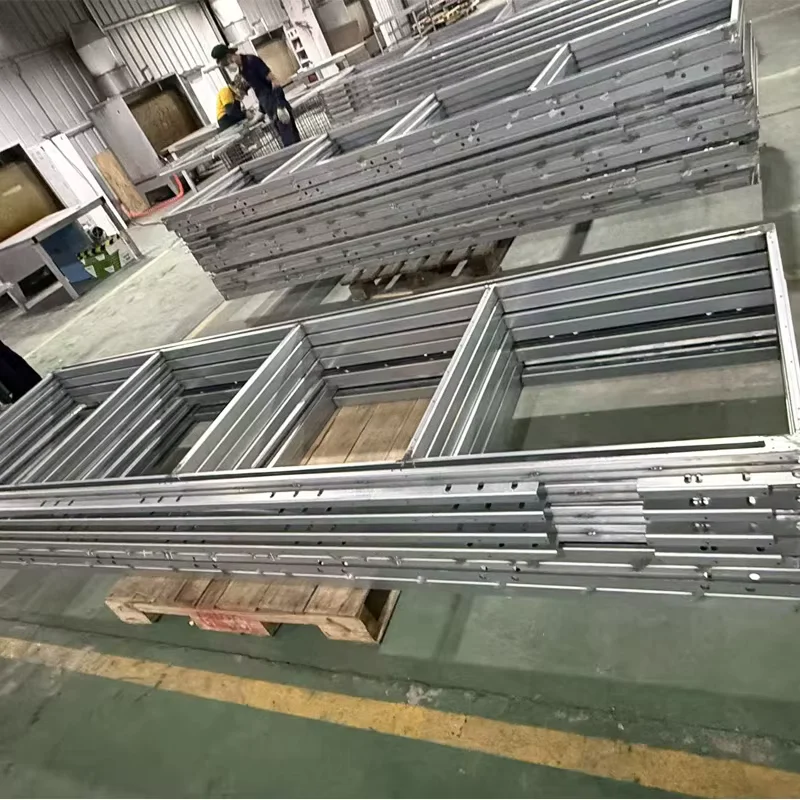
- Laser-cut NM400/NM500 parts stacked with interleaved separators and edge protectors to prevent surface scratching during ocean transit
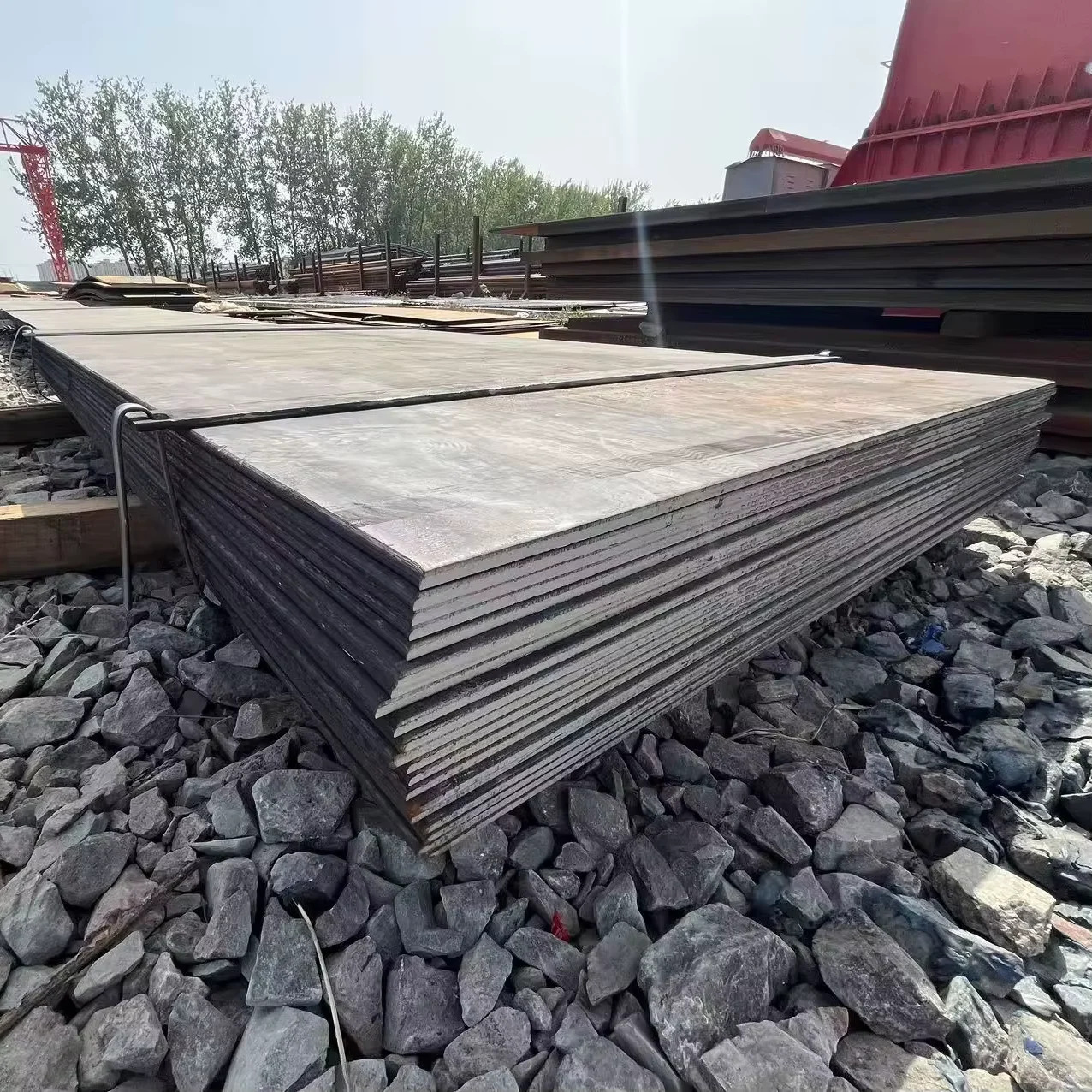
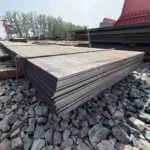
- Raw plates bundled with steel strips on seaworthy wooden sleepers, with heat number and grade stenciled on each bundle for site identification
- Oversized fabricated components (hopper liners, chute assemblies) crated with anti-rust coating and desiccant packs for tropical climate shipping
- Custom cutting to 1–12 m lengths consolidated into full container loads, with loading plans optimized for 20ft and 40ft open-top containers
- FOB/CIF/DDP terms available with door-to-door logistics coordination for project sites in the Middle East, Southeast Asia, and Africa
Start Your Wear Plate Procurement with Verified Hardness
Send your engineering drawings (PDF/DWG), specify steel grade (NM400, NM450, NM500, or equivalent), required delivery condition, and destination port — we respond within 24 hours with a detailed quote, shop drawing timeline, and sample MTR from a matching heat number.
Request a Quote with Mill Test Certificate
Submit your specifications and receive pricing, fabrication schedule, and material traceability documentation.
Email: admin@xjystructure.com | WhatsApp: +86 188 5315 7756 | Web: www.xjystructure.com
Frequently Asked Questions
Q: What is the difference between NM400, AR400, XAR400, and Hardox400?
A: All four target the 370–430 HBW Brinell hardness range. NM400 follows GB/T 24186, AR400 follows AISI, XAR400 follows DIN (Dillidur), and Hardox400 is SSAB’s proprietary grade. Chemical composition and mechanical properties are closely aligned, but exact carbon equivalent and impact toughness values vary by manufacturer. We supply NM, AR, XAR, Dillidur, QUARD, FORA, Creusabro, and RAEX equivalents from our own mill.
Q: Can you laser cut NM500 plate to my drawing and maintain edge hardness?
A: Yes. Our 12,000W fiber laser cuts NM500 (≥470 HBW) with parameters specifically calibrated for this hardness band — cutting speed, gas pressure, and focal position are adjusted so the heat-affected zone does not anneal the cut edge. Hardness at the edge remains within the NM500 specification after cutting.
Q: Do you provide mill test certificates and third-party inspection?
A: Every plate is supplied with an MTR documenting chemical composition, Brinell hardness, and tensile strength per GB/T 24186, traceable to the original heat number. Third-party inspection by SGS or BV can be arranged before shipment to verify hardness, dimensions, and surface quality.
Q: Which delivery condition should I choose for welding — AR, TMCP, or Q+T?
A: AR (as-rolled) plates are cost-effective but harder to cold-form and may require higher preheat for welding. TMCP plates offer improved weldability with moderate hardness. Q+T (quenched and tempered) plates deliver the highest and most uniform hardness through the full thickness and are preferred for NM450/NM500 when both wear resistance and weldability are critical. We recommend Q+T for most fabricated wear parts.
Q: What is the minimum order quantity for custom laser-cut wear plate parts?
A: The MOQ is 1 Ton. You can mix grades (NM360, NM400, NM450, NM500), thicknesses (3.5–16 mm), and part geometries within a single order, as long as the total weight meets the minimum.