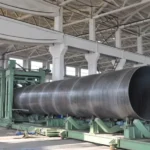
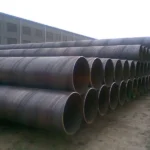
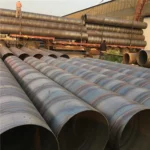
Description
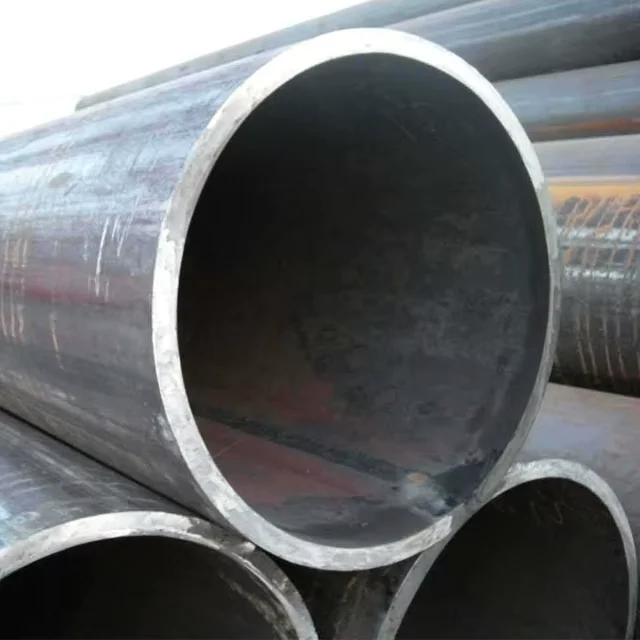
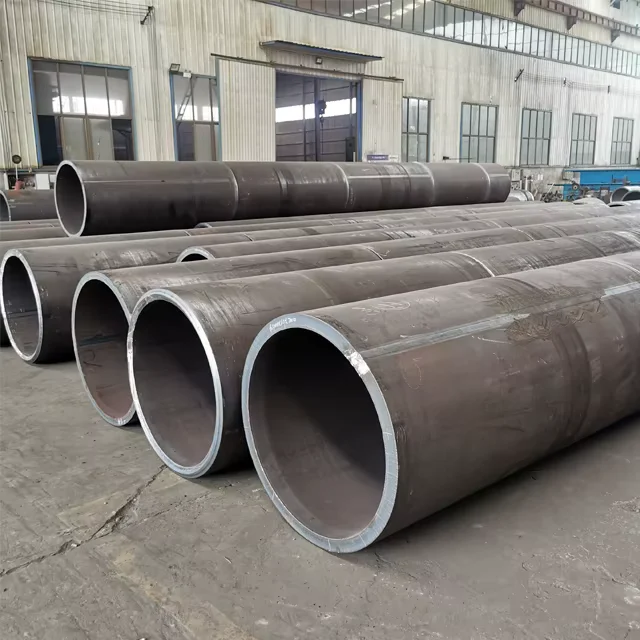
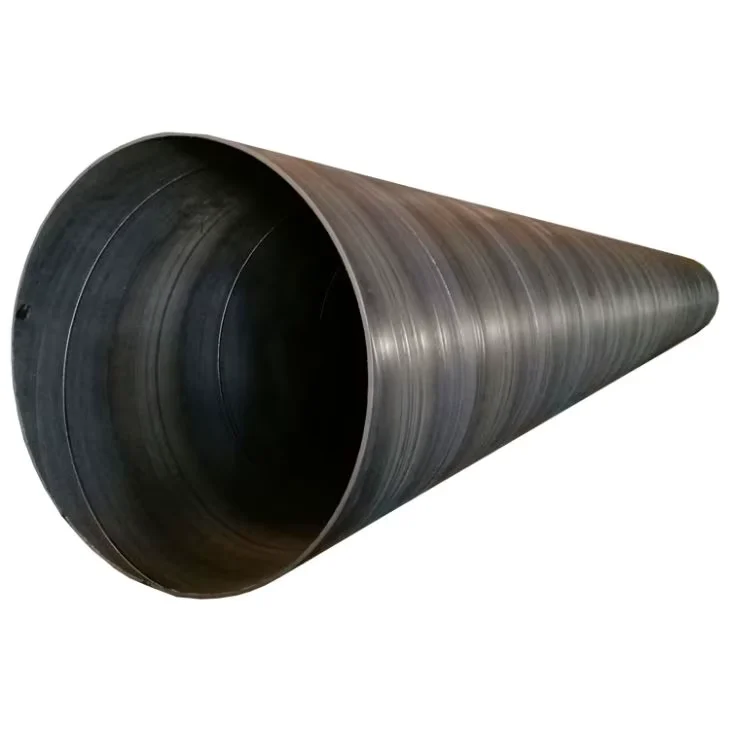
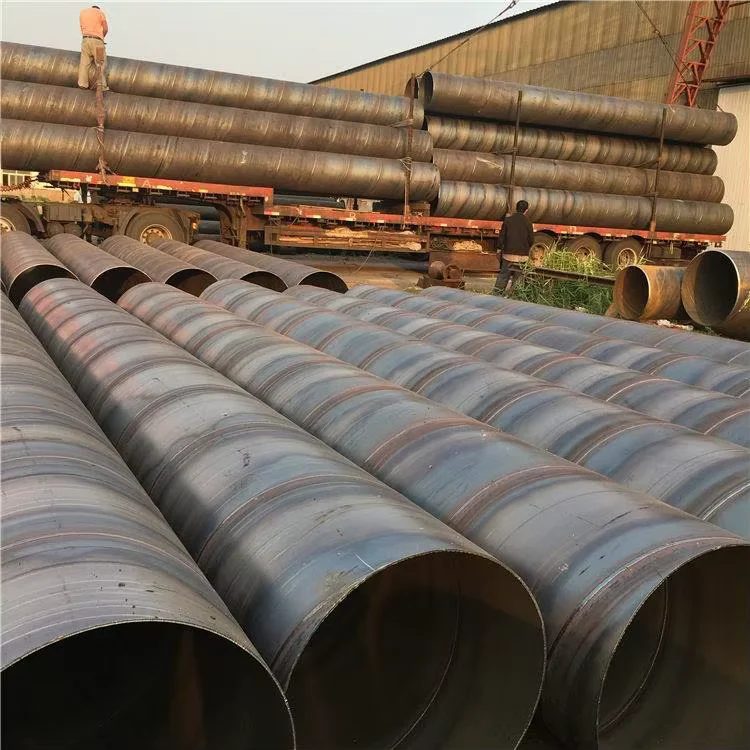
Direct Mill Supply for Large-Diameter Pipeline Projects — Q345B SSAW spiral welded steel pipe supplier controlling the full chain from raw steel coil to finished pipe, with OD up to 3000 mm and complete heat-number traceability.
Technical Specifications
| Parameter | Value |
|---|---|
| Designation | Q345B Spiral Welded Steel Pipe |
| Product Type | Spiral Welded Steel Pipe (SSAW) |
| Steel Grade | Q235, Q345, L175, L210, L245, L320 |
| Standard | GB/T 9711.1, GB/T 9711.2, SY/T 5037, SY/T 5040, API 5L, ISO 9001 |
| Section Shape | Round |
| Outer Diameter | 219–3000 mm |
| Wall Thickness | 6–24.5 mm |
| Length | 6 m / 6.4 m / 12 m (or customer’s request) |
| Technique | ERW / Spiral Welded |
| Surface Treatment | Hot Rolled |
| Tolerance | ±1% |
| Ends | Plain / Beveled (per standard) |
| Application | Fluid transportation, gas pipeline, oil pipeline, bridge construction, building construction, structure pipe, chemical fertilizer pipe, drill pipe |
| MOQ | 5 Tons |
| Origin | Shandong, China |
Application Suitability
| Industry | Typical Applications |
|---|---|
| Oil & Gas EPC | Long-distance transmission pipelines, gathering lines, and distribution networks using API 5L grade L245–L320 |
| Municipal Infrastructure | Raw water conveyance, sewage force mains, and stormwater outfalls per SY/T 5037 |
| Bridge & Civil Engineering | Structural pipe columns, pile sleeves, and foundation casings with Q345B grade |
| Industrial Plant Piping | Process fluid lines, cooling water circuits, and chemical fertilizer feed pipes |
| Building Construction | Column structures, truss members, and architectural exposed steel tubes |
Material Traceability Gaps That Trigger Customs Holds on Large-Diameter Pipe
When the mill test certificate cannot be traced back to a specific heat number, the entire shipment risks rejection at port.
Overseas buyers sourcing large-diameter spiral welded pipe from trading companies often discover that the material certification chain breaks somewhere between the steel mill and the fabrication shop. The pipe arrives, but the MTC references a heat number that does not match the stencil on the pipe surface. Customs officials in markets enforcing strict import documentation — particularly across the Middle East and EU — flag the discrepancy, and the cargo sits in the yard accumulating demurrage charges. As a Q345B SSAW spiral welded steel pipe supplier operating our own steel production facility, we eliminate this gap entirely: every pipe rolls from coil we produce, and the chemical composition and mechanical test results are recorded at the same site where the spiral welding occurs. [NEED_CITE: material traceability requirements under API 5L for line pipe]
Matching Pipe Grades to Pressure and Structural Demands
The Q345B SSAW spiral welded steel pipe range covers two distinct engineering families. Carbon structural grades Q235 and Q345 serve load-bearing applications — bridge columns, building frames, and platform supports — where yield strength and weldability matter more than internal pressure containment. API line pipe grades L175 through L320 target pressurized conveyance systems where the spiral weld seam must withstand sustained hoop stress. The 219–3000 mm diameter range means a single procurement source can supply both the structural casing and the process line for the same project site, reducing the coordination burden on EPC procurement teams.
Engineering Compliance Across International Standards
Large-diameter spiral welded pipe crossing borders must satisfy the standard framework of the destination market. GB/T 9711 and SY/T 5037 govern domestic Chinese pipeline specifications, while API 5L is the baseline for international oil and gas transmission. Projects in European markets increasingly require equivalence documentation mapping Chinese grades to EN 10219 or EN 10210 hollow section standards. Our engineering team prepares shop drawing reviews and grade equivalence tables before fabrication begins, ensuring the pipe specification matches the structural calculation assumptions. Dimensional tolerance of ±1% is verified through in-process NDT testing, and every weld seam follows an approved WPS with corresponding PQR records. [NEED_CITE: EN 10219 cold-formed hollow section dimensional tolerance requirements]
Understanding Spiral Welding工艺 and Grade Selection
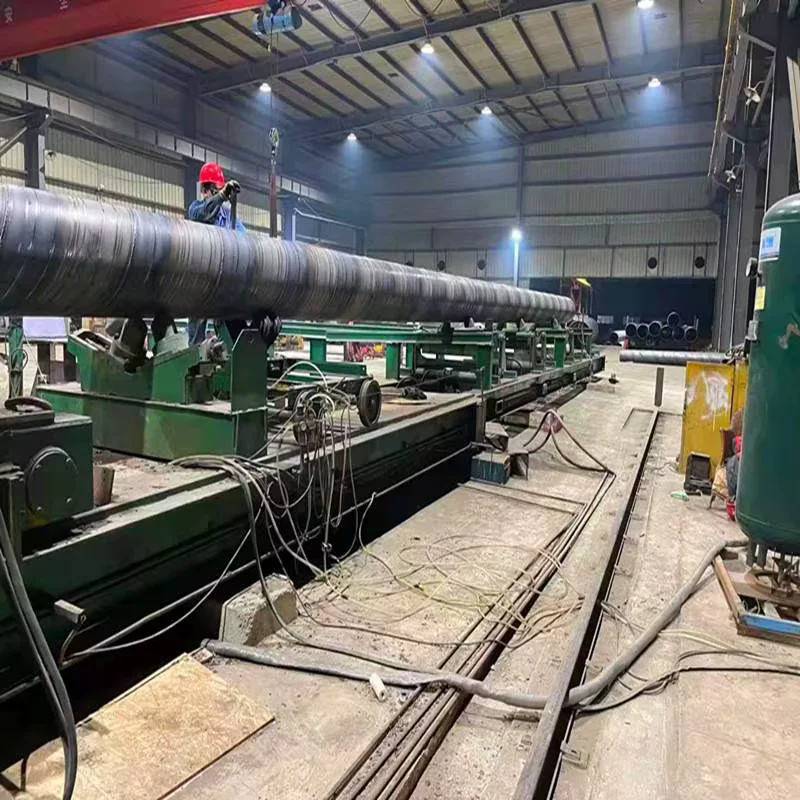
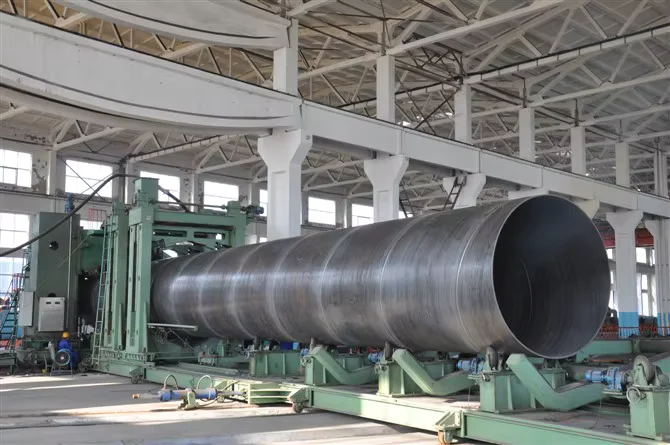
Spiral welded pipe forms from a steel coil that unwinds at an angle — the helix angle determines the seam orientation relative to the pipe axis. This manufacturing method allows a single coil width to produce a wide range of outer diameters, making it economically efficient for large-diameter pipe above 500 mm where seamless alternatives become prohibitively expensive. The Q345 grade offers higher yield strength than Q235, making it the default choice for structural columns carrying significant axial loads. API line pipe grades L245 through L320 follow a different designation logic tied to minimum yield strength in ksi, and selecting the correct grade requires matching the design pressure and corrosion allowance of the specific pipeline route. Hot rolled surface treatment provides a clean mill finish suitable for indoor or temporarily protected installations; projects requiring long-term corrosion resistance specify additional 3PE coating or epoxy painting applied after welding and inspection. Wall thickness from 6 mm to 24.5 mm covers everything from low-pressure water mains to heavy-wall structural piles, and the ±1% tolerance ensures that theoretical weight calculations remain reliable for shipping cost estimation.
Hidden Costs of Sourcing Without Verified Certification
Procuring large-diameter pipe from a supplier who cannot provide heat-number-linked mill test certificates creates risks that surface only after the pipe reaches the job site. Dimensional deviation beyond tolerance forces field cutting and re-beveling, adding labor costs and delaying the welding spread. Material that fails to meet the specified grade — whether through substitution or inadequate quality control — triggers structural review delays and may require third-party retesting at the buyer’s expense. In projects governed by API 5L or EN 10219, the absence of complete WPS and PQR documentation can halt inspection sign-off and prevent the pipeline from receiving its operating permit. [NEED_CITE: API 5L material certification and inspection requirements for line pipe]
Procurement Confidence Through Vertical Integration
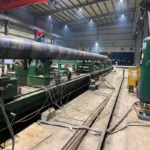
As a Q345B SSAW spiral welded steel pipe supplier operating our own steel mill with three production lines and over 2,800 raw material specifications, we control the entire supply chain from coil to finished pipe. This means the steel grade you specify is the steel grade that enters the forming station — no third-party coil substitution, no certification gaps. Our in-house quality laboratory generates mill test certificates with full chemical composition and mechanical properties for every heat number. Third-party inspection through SGS or BV is available before shipment for buyers who require independent verification. Professional loading plans account for the oversized diameter of large-bore pipe, with wooden wedges, steel strapping, and井字架 bracing at container doors to prevent oval deformation during ocean transit — a lesson learned from early export shipments where inadequate bracing caused pipe-end distortion that required field rework.
Documentation & Compliance
- Mill test certificate documenting Q345B chemical composition and mechanical properties per GB/T 9711, linked to individual heat number stenciled on each pipe
- API 5L compliance package for L245–L320 grades including PSL 1 or PSL 2 test reports as specified in the purchase order
- ISO 9001 quality management certificate covering the full spiral welded pipe production process from coil receiving to final inspection
- SGS or BV third-party inspection report available upon request, covering dimensional checks, weld seam NDT, and coating thickness verification
- Complete customs documentation set: commercial invoice, packing list, bill of lading, and certificate of origin for destination-country clearance
- Welding procedure specification (WPS) and procedure qualification record (PQR) for all spiral seam and repair welds
Packaging, Loading & Delivery
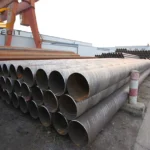
- Hot rolled Q345B pipe bundled with steel straps and separated by wooden cradles to prevent surface scratching during ocean transit
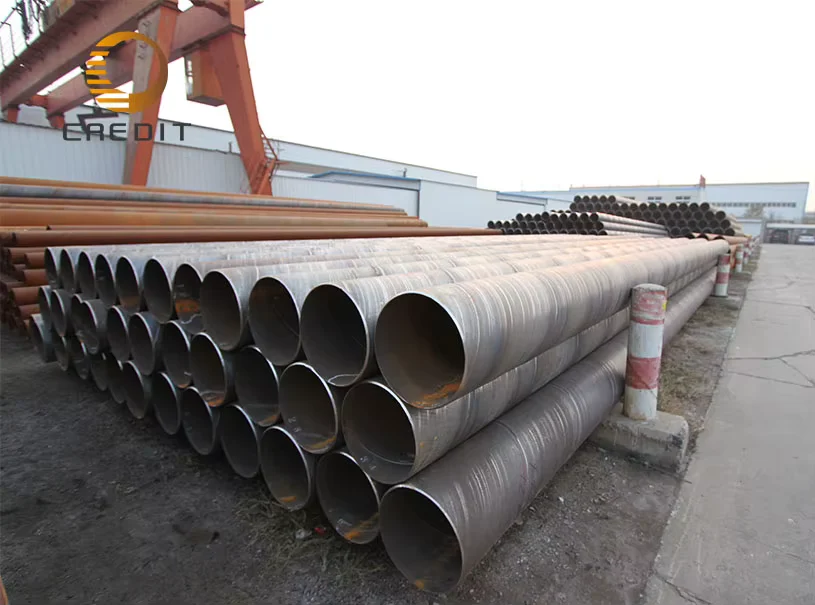
- Large-diameter pipe (above 1000 mm OD) loaded with internal cross-bracing and door-end井字架 to maintain roundness within tolerance through container shipping
- 12-meter定尺 pipe optimized for 40ft open-top or flat-rack container configuration; 6-meter lengths suited to standard 40ft GP for cost-efficient full-container loads
- Beveled-end pipe protected with plastic caps on both ends to prevent moisture ingress and edge damage during handling and transport
- Heat number, steel grade, and size markings stenciled on each pipe at 1-meter intervals for on-site identification and traceability verification
- FOB, CIF, and DDP shipping terms available with professional export packing and complete tracking until site delivery
Starting Your Procurement Process
Submit your project drawings, pipe specifications including OD, wall thickness, steel grade, and required standard, along with the total tonnage and destination port. We respond within 24 hours with a preliminary technical assessment and detailed quotation covering material, fabrication, coating, packing, and shipping costs.
Request Your Q345B SSAW Pipe Quotation
Send your specifications and project requirements to receive a detailed quotation with mill test certificate samples and loading plan.
Shandong Xin Jiyuan Special Steel Tube Co., Ltd
Website: www.xjystructure.com
Tel: +86 531 8573 6315
Mobile/WhatsApp/WeChat: +86 188 5315 7756
Email: admin@xjystructure.com
Address: No.11889, Jingshi West Road, Lulian Group, Jinan City, Shandong Province, China
Frequently Asked Questions
Q: How do Q235 and Q345 grades compare to ASTM A252 or A53 for structural pipe applications?
A: Q235 and Q345 are Chinese national standard grades under GB/T 700 and GB/T 1591 respectively. Q235 offers comparable yield strength to ASTM A252 Grade 2, while Q345 aligns closely with ASTM A572 Grade 50 in terms of minimum yield strength. For structural applications, the equivalence depends on the specific chemical composition and mechanical property requirements of the project specification. Our engineering team can provide a detailed grade comparison table for your review.
Q: How does material traceability work for each pipe in the shipment?
A: Every Q345B SSAW spiral welded steel pipe carries a unique heat number stencil on its surface. The corresponding mill test certificate documents the chemical composition and mechanical test results for that specific heat, including carbon, manganese, silicon, sulfur, phosphorus content, yield strength, tensile strength, and elongation. Third-party inspection agencies such as SGS or BV can verify the traceability chain before shipment.
Q: Can pipe ends be prepared to custom bevel angles for field welding?
A: Yes. We provide plain ends, beveled ends per standard welding preparation angles, or custom end preparation based on your project drawing specifications. Bevel angle, root face, and land dimensions are machined to match the welding procedure specification for your field welding spread.
Q: What surface treatment options are available beyond hot rolled finish?
A: Hot rolled black finish is the standard surface treatment for Q345B SSAW spiral welded steel pipe. For projects requiring corrosion protection, we offer 3PE anti-corrosion coating, epoxy painting, or other coating systems per project specification. The coating type and thickness are selected based on the service environment — buried, submerged, or atmospheric exposure.
Q: How do you ensure large-diameter pipe maintains roundness during container shipping?
A: For pipe above 1000 mm outer diameter, we prepare a detailed loading plan that includes internal cross-bracing, wooden wedge positioning between pipes, and steel strapping at regular intervals. Container door ends receive井字架 bracing to prevent forward movement and oval deformation. This loading methodology has been developed through extensive export experience to Middle East, Southeast Asian, and African ports.