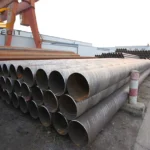
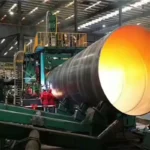
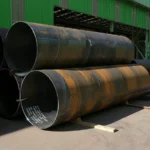
Description
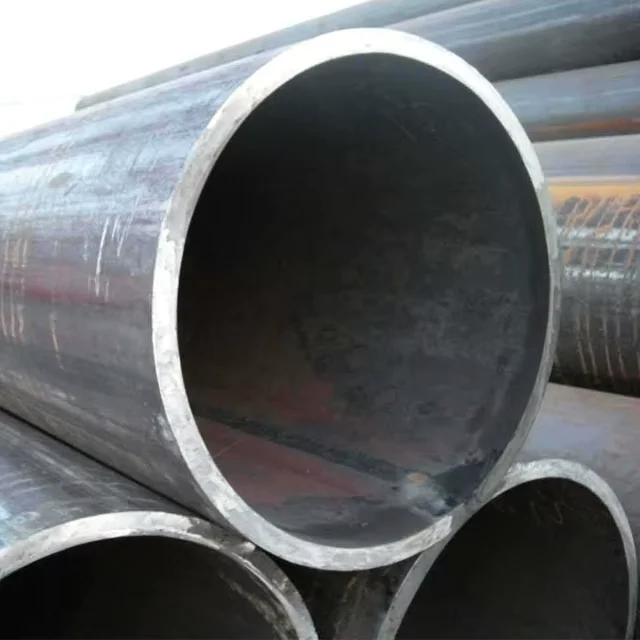
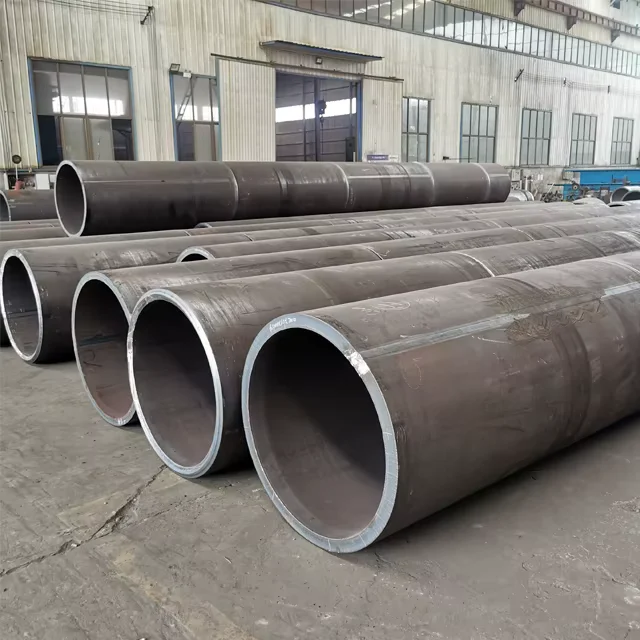
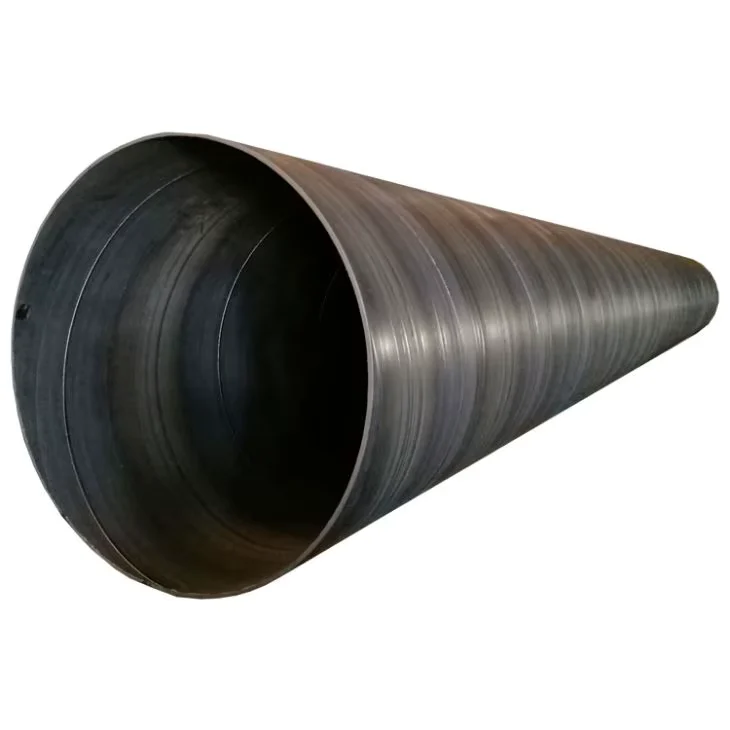
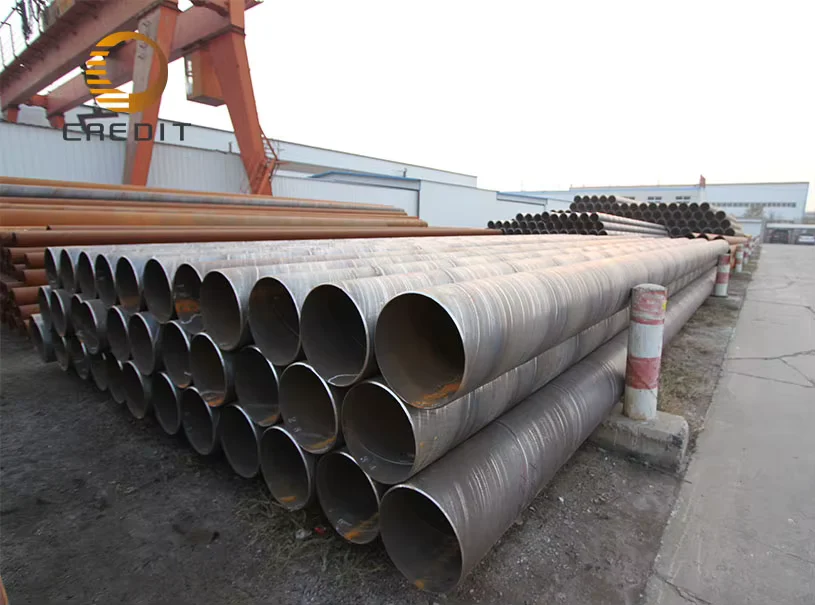
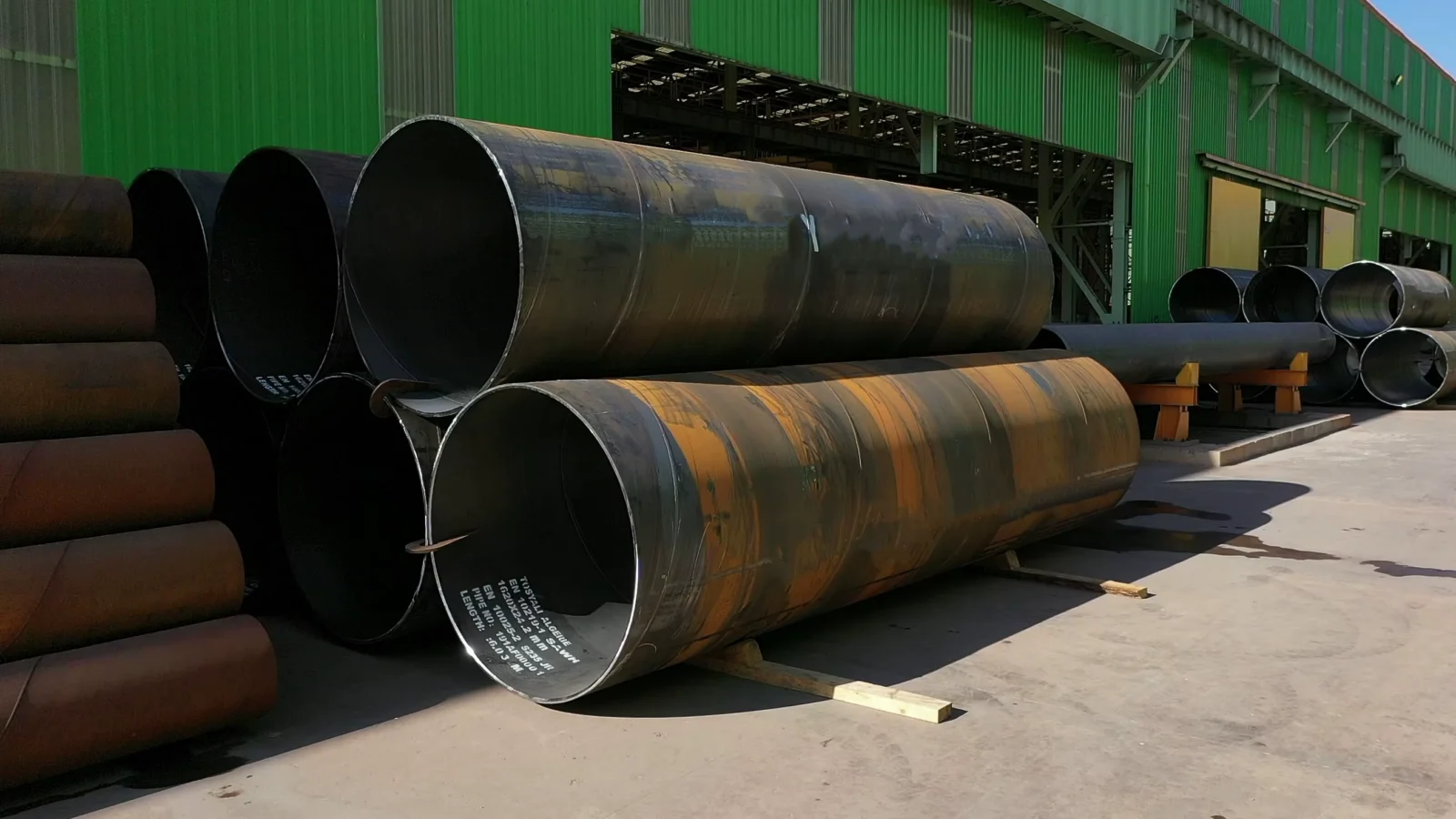
API 5L X42 SSAW Spiral Welded Steel Pipe — Mill-direct supply with full heat-number traceability from coil to finished pipe.
Technical Specifications
| Parameter | Value |
|---|---|
| Designation | API 5L GR.B X42 Spiral Welded Steel Pipe |
| Product Type | Spiral Welded Steel Pipe (SSAW) |
| Steel Grade | Q235, Q345, L175, L210, L245, L290, L320, L360, L390, L415, Grade B, X42, X52, X60, X70 |
| Standard | API 5L, GB/T 9711.1, GB/T 9711.2, SY/T 5037, SY/T 5040, ISO 9001 |
| Section Shape | Round |
| Size Range | OD 219–3000 mm |
| Wall Thickness | 6–24.5 mm |
| Length | 6 m / 6.4 m / 12 m |
| Technique | ERW / Spiral Welded |
| Surface Treatment | Hot Rolled / Oiled or Non-oiled |
| Tolerance | ±1% |
| Ends | Plain / Beveled (per standard) |
| Application | Oil and gas transmission, fluid transportation, bridge construction, building construction, structural piling |
| MOQ | 2 Tons |
| Origin | Shandong, China |
Application Suitability
| Industry | Typical Applications |
|---|---|
| Oil & Gas EPC | Onshore and offshore transmission pipelines, gathering lines, trunk lines for crude oil and natural gas |
| Water Infrastructure | Long-distance water conveyance mains, slurry transport pipelines, irrigation trunk lines |
| Civil Engineering | Structural piling for bridge foundations, port wharf bearing piles, retaining wall supports |
| Industrial Construction | Plant pipe racks, process piping supports, heavy structural columns in industrial facilities |
What Negative Wall Tolerance Costs on a Pipeline Order
Oversized negative tolerance on SSAW pipe walls triggers third-party inspection rejection at the discharge port — and the entire shipment gets stuck.
When procuring API 5L X42 SSAW spiral welded steel pipe for oil and gas transmission, buyers routinely face three compounding problems: material traceability gaps when the fabricator sources coils from unknown mills, inconsistent spiral seam welding quality that only shows up during hydrostatic testing, and fragmented procurement where pipe coating, end preparation, and documentation come from different vendors with no single accountability. On Middle East pipeline projects I have worked on, a batch of large-diameter SSAW pipe was held at Jebel Ali for eleven days because the wall thickness readings fell below the API 5L permissible negative tolerance on multiple joints — the mill certs looked correct on paper, but the actual rolling did not match. [NEED_CITE: API 5L dimensional tolerance requirements for spiral welded pipe]
How Large-Diameter SSAW Pipe Matches High-Pressure Transmission Requirements
The OD 219–3000 mm range with wall thickness up to 24.5 mm covers virtually all onshore transmission line specifications, from 8-inch gathering lines to 48-inch trunk pipelines. The spiral welding process produces a continuous helical seam that distributes stress more evenly along the pipe body compared to straight-seam alternatives, making API 5L X42 SSAW spiral welded steel pipe particularly suited for high-pressure gas transmission where cyclic loading is a concern. Our own steel mill produces the raw coil in-house, so every heat number on the finished pipe traces directly back to the ladle analysis — no third-party coil sourcing, no broken certification chains.
Engineering Compliance and Certification for Pipeline Projects
Pipeline projects governed by API 5L require documented compliance at every stage: approved welding procedure specifications (WPS), qualified procedure qualification records (PQR), and full non-destructive testing on both the spiral seam and the pipe body. For projects entering the European market, EN 10219 or equivalent CE marking may be required alongside API certification, and customs authorities increasingly request traceable documentation linking each pipe joint to its original heat number. [NEED_CITE: API 5L vs EN 10219 standard applicability for pipeline projects] End preparation — plain, beveled, or grooved — must match the field welding procedure specified by the EPC contractor, and our shop handles this to drawing before shipment.
Steel Grade Selection and Spiral Welding Process Explained
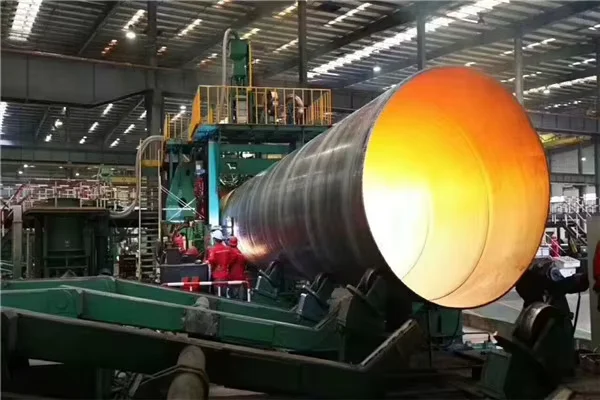
The API 5L grade system runs from Grade B through X70, with X42 sitting in the mid-range suitable for most onshore transmission applications. Higher grades like X60 and X70 are specified for offshore or high-pressure trunk lines where wall thickness reduction is needed to manage weight. The spiral welded (SSAW) process forms pipe from coiled steel plate using a continuous helical weld, which allows production of large diameters from relatively narrow coil widths — a cost advantage over plate-rolled LSAW for diameters above 500 mm. Surface treatment options include hot rolled finish, oiled for short-term corrosion protection during transit, or custom coating such as 3PE and FBE applied per project specification for long-term buried service. [NEED_CITE: SSAW vs LSAW manufacturing process comparison for pipeline applications]
Hidden Costs of Procuring SSAW Pipe Without Verified Traceability
Choosing a supplier who cannot provide heat-number-level mill test certificates means the buyer absorbs the risk of material rejection during third-party inspection — SGS, BV, or Lloyd’s surveyors routinely check wall thickness, chemical composition, and mechanical properties against API 5L requirements. Pipes with undocumented coil origin may pass visual inspection but fail during hydrostatic pressure testing at the project site, forcing joint replacement and schedule delays that cost far more than the initial price difference. Certification gaps also create customs clearance problems in markets with strict import documentation requirements, where missing or inconsistent test reports can hold an entire shipment at port. [NEED_CITE: third-party inspection rejection rates for imported steel pipe]
Why Pipeline Contractors Source SSAW Pipe From Our Mill
Our vertically integrated operation means the same facility that rolls the steel coil also fabricates the finished pipe — eliminating the traceability gap that occurs when a pipe maker buys coil from a third-party mill. Every API 5L X42 SSAW spiral welded steel pipe we produce carries a mill test certificate with full chemical composition and mechanical test results, and we welcome SGS, BV, or Lloyd’s inspection at any production stage. With over 2,800 raw material specifications in our inventory system and three dedicated production lines, we handle orders from 2-ton trial batches to full project quantities without subcontracting. Our welding procedures are certified per API standards, our welders hold current qualifications, and every shipment includes a complete documentation package — WPS, PQR, weld maps, dimensional inspection reports, and coating certificates where applicable.
Documentation & Compliance
- Mill Test Certificate per EN 10204 3.1 documenting API 5L Grade B and X42 chemical composition, tensile strength, and hydrostatic test results for each heat number
- API 5L certification with complete quality documentation package including WPS, PQR, and weld maps for spiral seam welding
- ISO 9001 quality management system certificate covering the full production chain from coil rolling to finished pipe
- Third-party inspection reports from SGS, BV, or Lloyd’s available at any stage — raw material, in-process welding, dimensional checks, and final inspection
- Material traceability linking every pipe joint to its original heat number and coil, with stamping on each pipe body
- Full export documentation package: commercial invoice, packing list, bill of lading, and certificate of origin
Packaging, Loading & Delivery
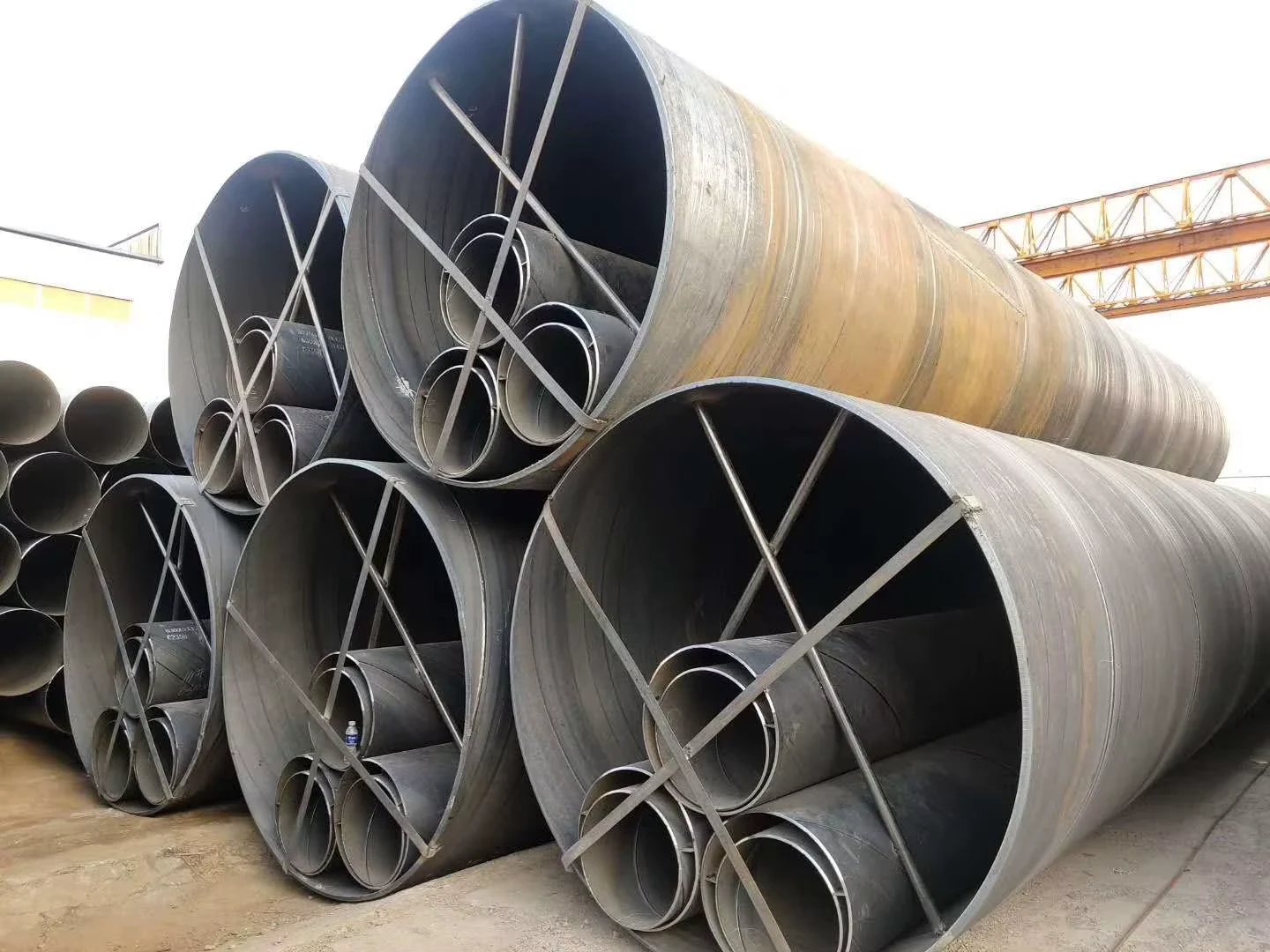
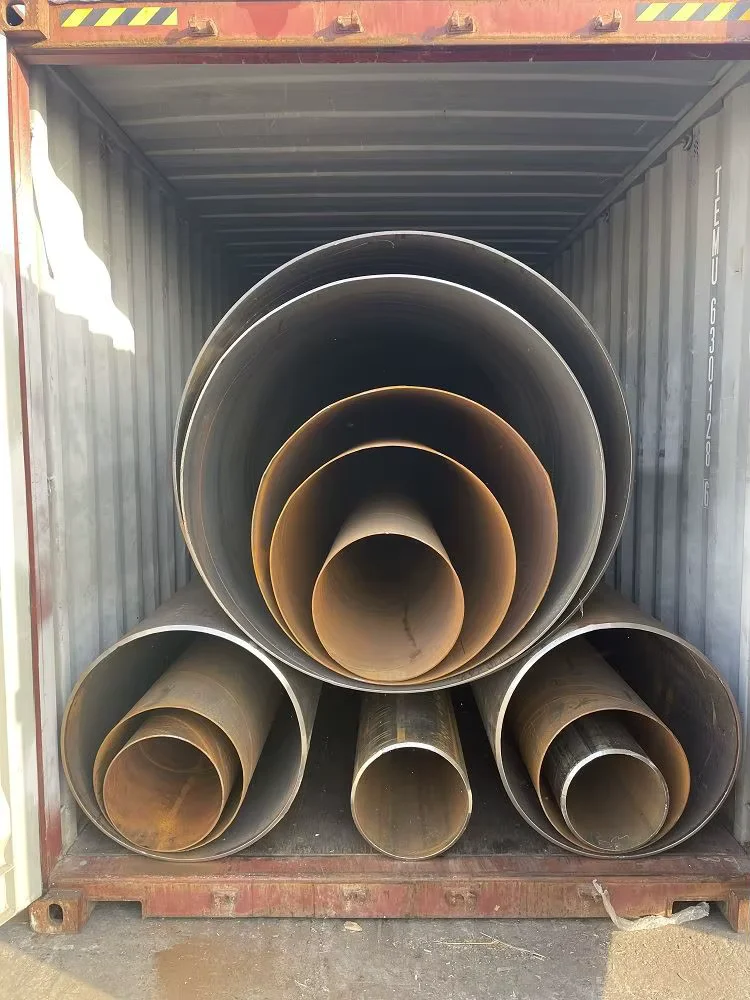
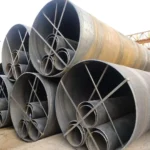
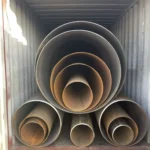
- API 5L Grade B and X42 SSAW pipes bundled with steel strip ties and edge protectors, sized to match the 6 m, 6.4 m, or 12 m standard lengths for secure ocean transit
- Oiled surface treatment applied before bundling to prevent corrosion during shipping; custom 3PE or FBE coated pipes wrapped with protective sleeves to preserve coating integrity
- Loading plans prepared in advance for large-diameter pipes (OD above 1000 mm) to optimize container and breakbulk cargo space, with anti-roll cradles and lashing details drawn before shipment
- Custom cut-to-length available per project specification, with beveled or plain ends prepared and protected with plastic caps before packing
- Heat number and steel grade stenciled on each pipe body for on-site identification and traceability verification during installation
- FOB, CIF, and DDP shipping terms available with professional oversized cargo handling and door-to-door logistics coordination
Start Your Pipeline Procurement With Verified Documentation
Submit your project drawings, required API 5L grade, OD and wall thickness specifications, quantity, and destination port — our engineering team responds within 24 hours with a detailed quotation including material, fabrication, coating, packing, and shipping costs, along with a shop drawing timeline and production schedule.
Request a Quotation with Mill Test Certificate
Send your specifications and standards to admin@xjystructure.com or contact us via WhatsApp at +86 188 5315 7756.
Frequently Asked Questions
Q: What is the difference between API 5L, GB/T 9711, and SY/T 5037 for SSAW pipe?
A: API 5L is the international standard for line pipe used in oil and gas transmission, covering grades from A to X80 with strict requirements on chemical composition, mechanical properties, and hydrostatic testing. GB/T 9711 is the Chinese national standard equivalent to API 5L for pipeline applications, while SY/T 5037 is a Chinese industry standard for spiral submerged arc welded pipe used in general fluid transportation with less stringent testing requirements. We produce to all three standards and can advise which applies based on your project specification.
Q: How do you ensure material traceability from coil to finished pipe?
A: Our own steel mill produces the raw coil in-house, so every heat number is recorded at the ladle stage and carried through rolling, pipe forming, welding, and final inspection. Each finished API 5L X42 SSAW spiral welded steel pipe is stamped with its heat number, and the mill test certificate links that number to the original chemical analysis and mechanical test results — no third-party coil sourcing, no gaps in the certification chain.
Q: Can you provide custom coating and end preparation per project specifications?
A: Yes. We offer 3PE and FBE external coating, internal lining, and custom end preparation including beveled, grooved, or plain ends per your engineering drawings. All coating and end preparation work is completed in our shop before shipment, with coating thickness reports and dimensional inspection records included in the documentation package.
Q: What is the minimum order quantity and typical production lead time?
A: The minimum order quantity is 2 tons. Production lead time depends on order size, grade, and coating requirements — we provide a detailed production schedule with every quotation, and our three production lines allow us to handle both small trial orders and large project quantities without subcontracting.
Q: How do you handle shipping for large-diameter and oversized pipe cargo?
A: For pipes with OD above 1000 mm or non-standard lengths, we prepare detailed loading plans with anti-roll cradles and lashing drawings before shipment. Our logistics team coordinates container, breakbulk, or bulk vessel loading depending on order volume, and provides complete export documentation and tracking until site delivery.