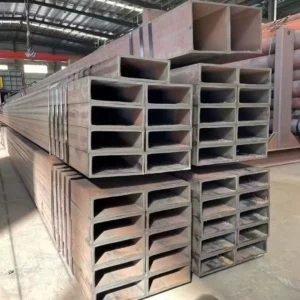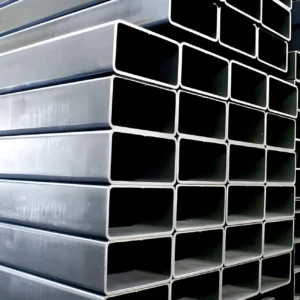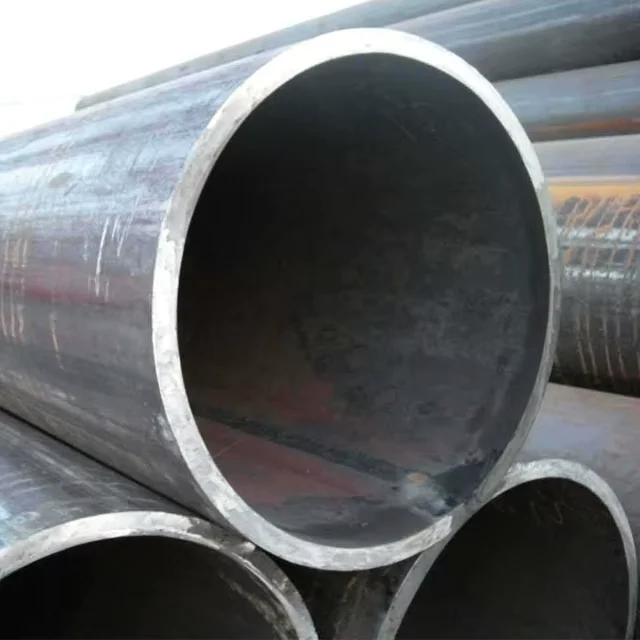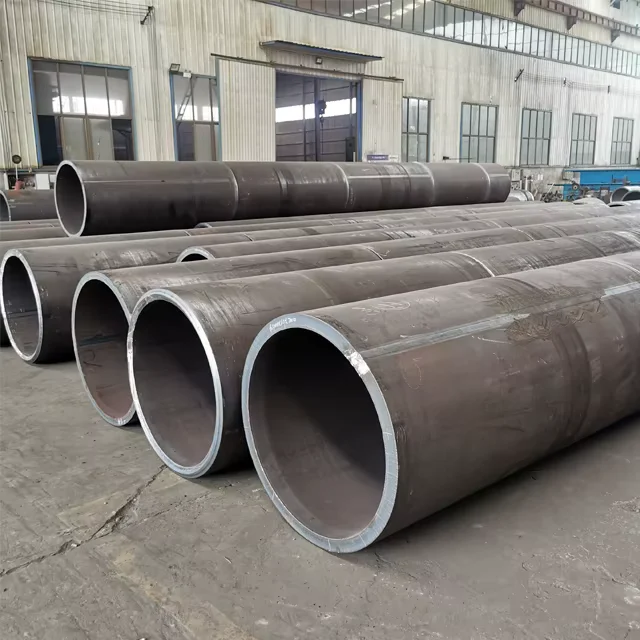
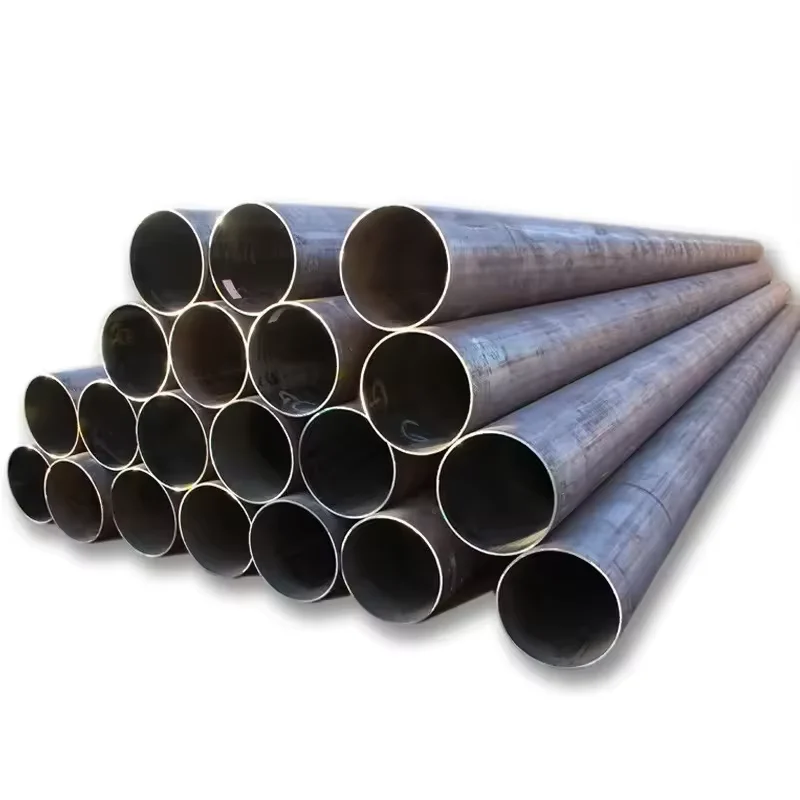
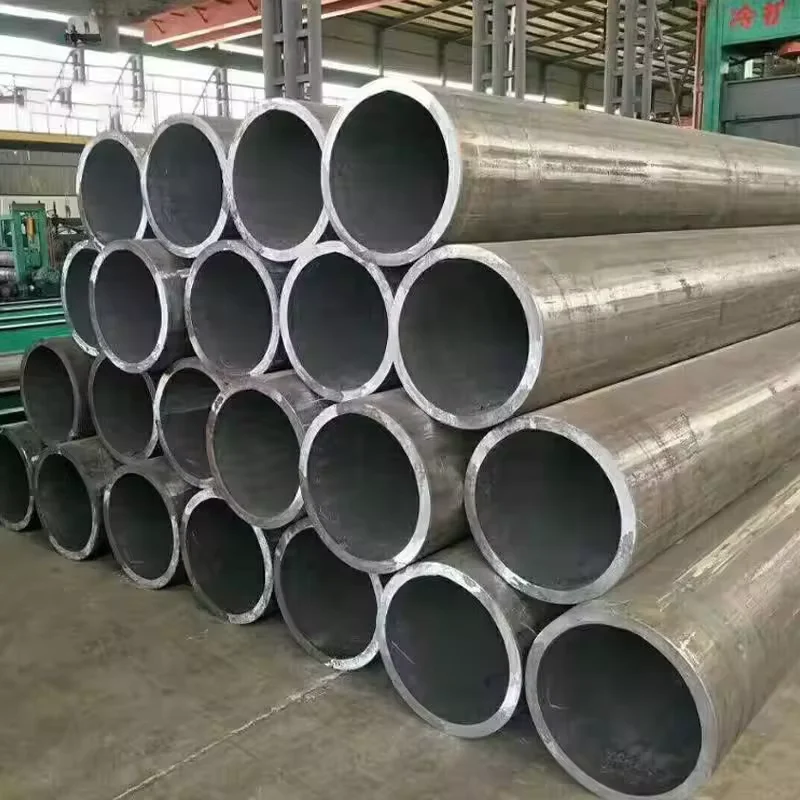
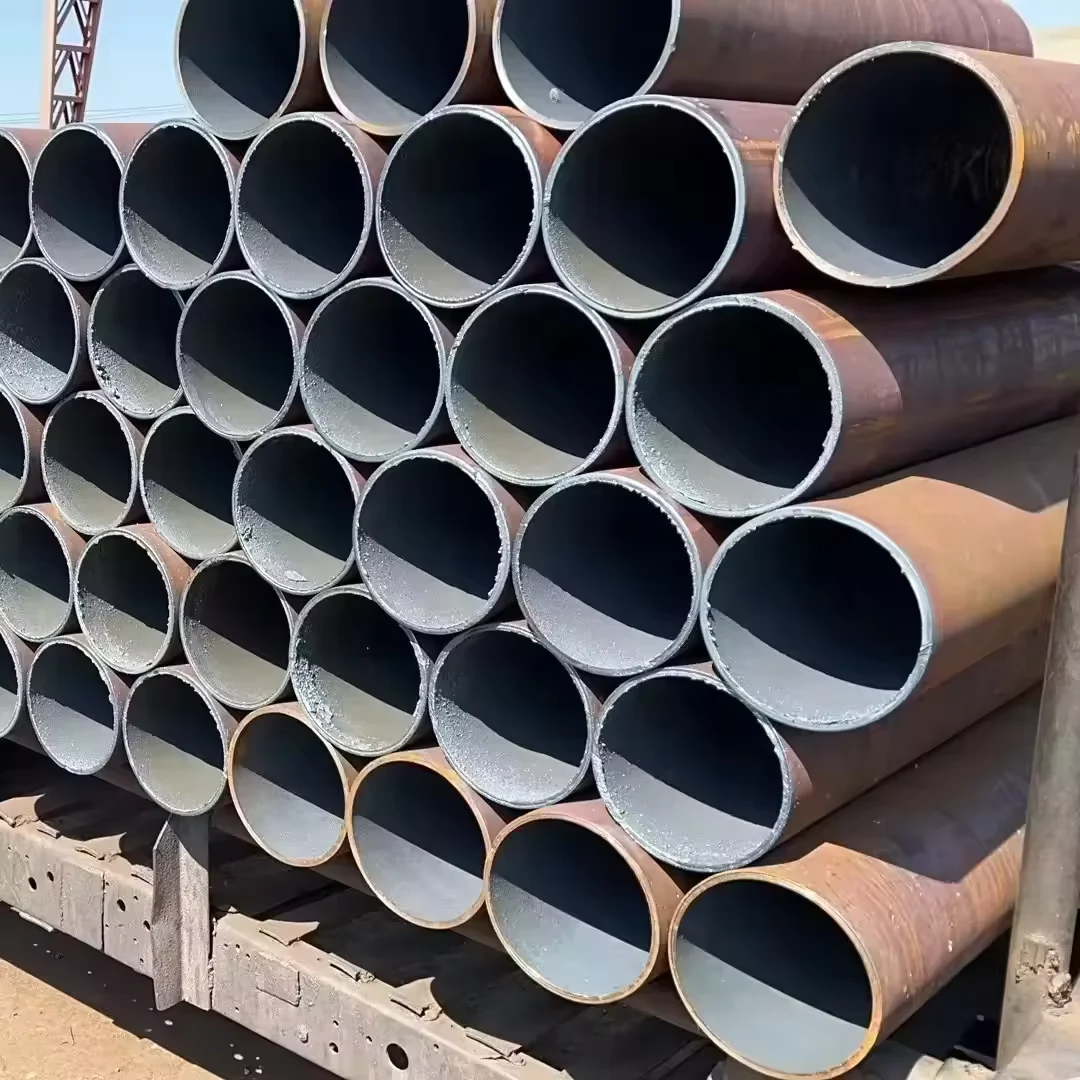
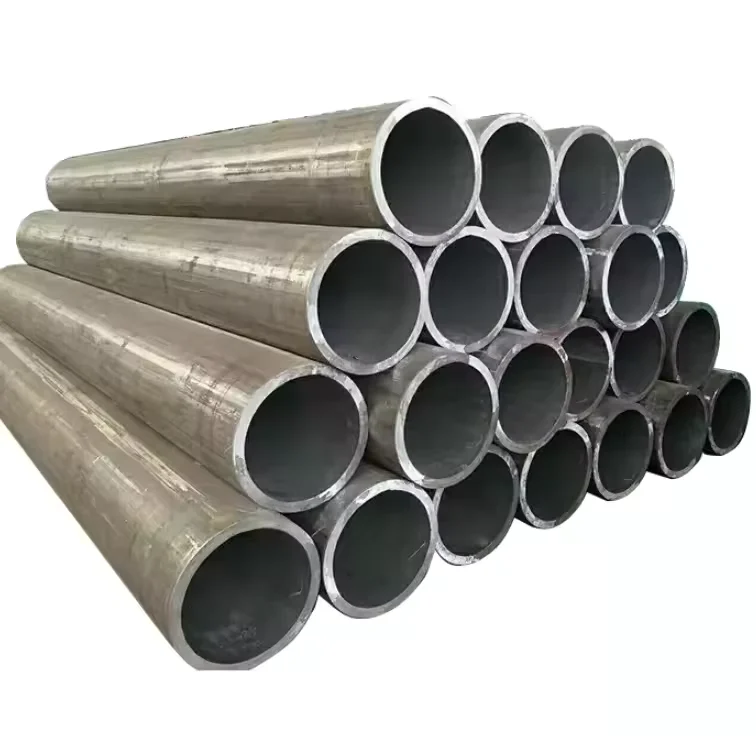
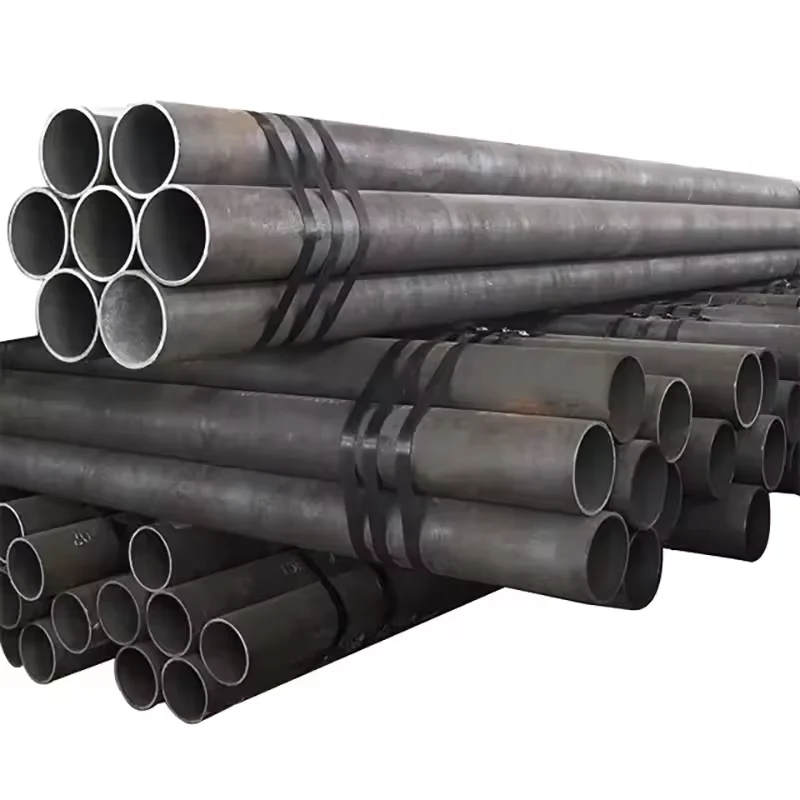
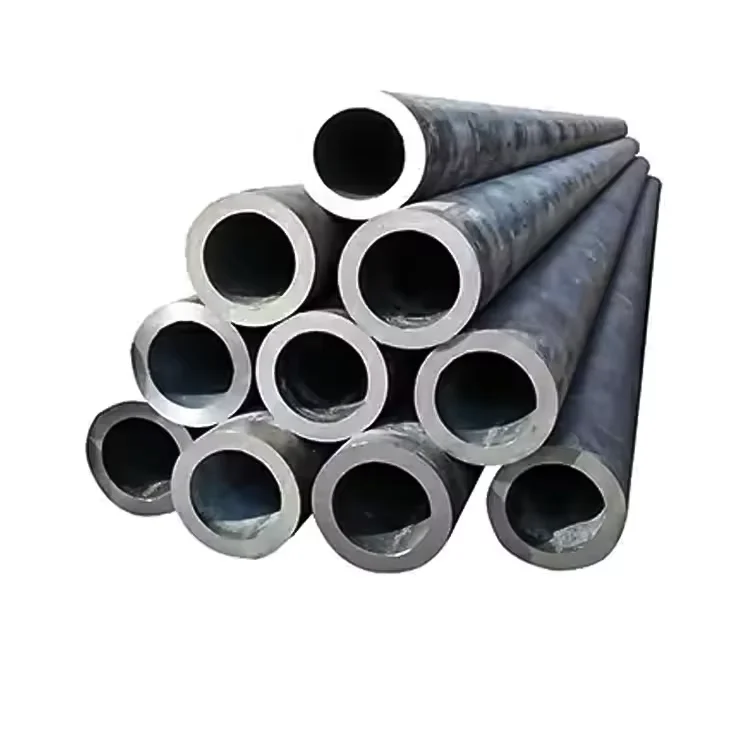
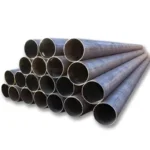
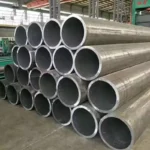
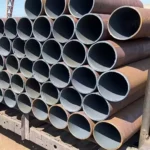
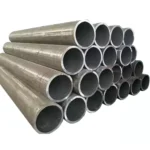
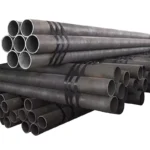
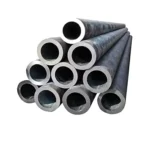
Description
Direct Mill Supply — 2,800+ raw material specifications in stock
Technical Specifications
| Parameter | Value |
|---|---|
| Designation | ASTM A53 / Q235 ERW Spiral Welded Steel Pipe |
| Product Type | ERW / Spiral Welded Steel Pipe (Round) |
| Steel Grade | Q235, Q235B, Q345, Q345B, SS400, A53 (A, B), A106 (B, C), A269, S235JR, S275JR, S355J2, API 5L (Gr.A, Gr.B, X42, X52, X60, X70) |
| Standard | ASTM A53, ASTM A106, ASTM A213, API 5L, DIN EN 10217-1, JIS G3466, GB/T 9711 |
| Section Shape | Round |
| Size Range | Outer Diameter 10 mm – 1200 mm |
| Wall Thickness | 1 mm – 50 mm |
| Length | 6000 mm / 12000 mm (or customized) |
| Technique | ERW / SSAW / LSAW / Seamless |
| Surface Treatment | Black Painted / Varnished / Galvanized (Hot-Dip / Electro) / 3LPE / 3LPP Coated / Oiled |
| Tolerance | ±1% |
| Ends | Plain / Beveled / Threaded |
| Application | Fluid Pipe / Gas Pipe / Oil Pipe / Boiler Pipe / Drill Pipe / Chemical Fertilizer Pipe |
| Origin | Shandong, China |
Application Suitability
| Industry | Typical Applications |
|---|---|
| Oil & Gas | Pipeline transmission, drilling operations, buried flow lines with 3LPE coating |
| Industrial Infrastructure | Fluid and gas transport networks, structural frameworks for factories and warehouses |
| Construction | Scaffolding systems, building frames, conveyor support structures |
| Marine & Offshore | Shipbuilding piping, offshore platform structural members, marine fluid lines |
| Machinery | Hydraulic and pneumatic system tubing, exhaust systems, chassis components |
Dimensional Tolerance Decides Whether Your ASTM A53 ERW Welded Steel Pipe Supplier Delivers or Delays
A ±1% tolerance on OD and wall thickness is not a marketing line — it is the difference between passing site inspection and scrapping an entire shipment.
When you source welded steel pipe from overseas, dimensional deviation compounds at every joint. A pipe that is 0.5 mm under nominal wall thickness may pass mill inspection but fail ultrasonic testing at the weld seam after coating. I have seen 30-ton containers rejected at port because the buyer’s监理 pulled out a caliper and found ovality beyond acceptable limits. The root cause was never the steel grade — it was the loading method and the tolerance discipline at the mill. [NEED_CITE: dimensional tolerance requirements for ASTM A53 pipe]
Matching Wall Thickness and Coating to Buried Pipeline Environments
For oil and gas transmission lines, the ASTM A53 ERW welded steel pipe supplier must deliver pipes with wall thickness matched to operating pressure and external coating selected for soil corrosivity. API 5L X42 through X70 grades serve high-pressure buried lines where 3LPE or 3LPP coating provides decades of cathodic-disbondment resistance. Q235 and Q345 grades with hot-dip galvanizing suit above-ground structural and fluid transport applications where UV exposure and atmospheric corrosion are the primary concerns. Our mill produces both ERW and SSAW variants from the same raw coil, allowing engineers to select the optimal process based on diameter-to-thickness ratio and cost efficiency.
Structural Code Compliance and Certification for Cross-Border Procurement
Engineering specifications for structural frameworks and scaffolding demand conformity to EN 10217-1 for European projects or ASTM A53 for North American destinations. The steel grade — whether S235JR, S355J2, or A53 Grade B — must be traceable to its heat number through a mill test certificate accepted by the project’s supervising engineer. [NEED_CITE: EN 10217-1 welded steel tube requirements for structural applications] Customs authorities in the EU and Middle East increasingly require CE marking documentation linked to specific production batches. Pipes without proper certification face hold at port, regardless of physical quality.
Understanding the ERW vs. SSAW vs. Seamless Decision
ERW (Electric Resistance Welded) pipe is formed by rolling steel coil into a cylinder and welding the seam through electrical resistance — suitable for diameters up to 610 mm with consistent wall thickness. Spiral Submerged Arc Welded (SSAW) pipe uses a helical welding process that allows larger diameters from narrower coil, making it cost-effective for OD 600–1200 mm applications. Seamless pipe, produced by piercing a solid billet, eliminates the weld seam entirely and is specified for high-pressure or critical-service conditions. The choice between them affects both unit cost and inspection requirements. [NEED_CITE: comparison of ERW SSAW and seamless pipe manufacturing processes]
Surface treatment selection follows the service environment: black painted or varnished for indoor structural use, hot-dip galvanized for atmospheric exposure, and 3LPE/3LPP for buried or submerged pipelines. Each coating adds weight and affects loading calculations — a factor often overlooked until the container is overweight at the weighbridge.
The Hidden Cost of Unverified Material Traceability
Pipes supplied without heat-number traceability create a chain-of-custody gap that no amount of visual inspection can close. If a project inspector requests a mill test certificate and the supplier cannot link the certificate to the specific pipes delivered, the entire batch may be rejected — even if the material is physically compliant. [NEED_CITE: material traceability requirements in EN 10204 inspection documents] Replacing rejected pipes after shipment means paying for new material, new shipping, and project delay penalties that far exceed the original price difference between a verified and unverified source.
Why Procurement Teams Choose Our Mill for ASTM A53 ERW Welded Steel Pipe
Our facility integrates raw steel production with pipe fabrication across three dedicated production lines, holding over 2,800 raw material specifications in inventory. This vertical integration eliminates the gap between material supplier and fabricator — one heat number, one quality system, one point of accountability. Every pipe undergoes in-house dimensional inspection, non-destructive testing at the weld seam, and coating thickness verification before release. We hold ISO 9001 certification and welcome third-party inspection by SGS, BV, or Lloyd’s Register at any production stage. For export projects, we prepare complete documentation packages including WPS/PQR records, weld maps, and coating reports aligned with AWS and EN standards.
Documentation & Compliance
- Mill Test Certificate documenting Q235B and A53 Grade B chemical composition and mechanical properties per ASTM A53 and GB/T 9711, linked to individual heat numbers
- CE Certificate confirming conformity to EN 10217-1 for structural hollow sections destined for European Union markets
- ISO 9001 Quality Management System certificate covering the full production chain from coil procurement to finished pipe dispatch
- SGS or BV Third-Party Inspection Report available for pre-shipment verification of dimensions, coating thickness, and weld seam integrity
- Material Traceability Record mapping each pipe to its original coil heat number, welding parameters, and coating batch
- Customs Documentation including packing list, bill of lading, and certificate of origin formatted for destination-country clearance requirements
Packaging, Loading & Delivery
- ERW and SSAW pipes bundled with galvanized steel strips at intervals matched to the 6000 mm or 12000 mm length, with end protectors to prevent bevel damage during transit
- Hot-dip galvanized pipes wrapped with waterproof paper and edge protectors to preserve the zinc coating from scratching and moisture condensation during ocean freight
- 3LPE/3LPP coated pipes loaded with timber separators and nylon slings to prevent coating abrasion — no steel-to-coating contact permitted at any stage
- Container loading optimized by diameter: small-bore pipes (OD 10–200 mm) nested for maximum cubic utilization; large-bore pipes (OD 600–1200 mm) loaded as breakbulk or flat-rack with lashing plans approved by the shipping line
- Each bundle marked with heat number, steel grade, size, and purchase order reference for immediate site identification
- Delivery terms available as FOB, CIF, or DDP with professional oversized-cargo loading plans and real-time tracking until site arrival
Requesting a Quotation for Your ASTM A53 ERW Welded Steel Pipe Project
To receive a detailed quotation with production schedule and mill test certificate sample, submit your project drawings or specification sheet including steel grade, outer diameter, wall thickness, length, surface treatment, and destination port. Our engineering team reviews each inquiry within 24 hours and responds with a preliminary technical assessment and pricing breakdown covering material, fabrication, coating, packing, and shipping. For non-standard dimensions or custom coating requirements, we provide fabrication sequencing and shop drawing support before contract execution.
Frequently Asked Questions
Q: What is the difference between ERW, SSAW, LSAW, and Seamless pipe — which should I choose for my project?
A: ERW pipe is formed from rolled coil with a straight longitudinal seam, suitable for OD up to 610 mm with tight tolerance. SSAW uses a helical weld allowing larger diameters from narrower coil, cost-effective for OD 600–1200 mm. LSAW uses a straight submerged arc weld for heavy-wall, large-diameter applications. Seamless pipe has no weld seam and is specified for high-pressure or critical service. The choice depends on diameter, pressure rating, and project code requirements.
Q: Can you provide API 5L / EN 10217 / ASTM A53 material certificates accepted in the EU and Middle East?
A: Yes. We issue Mill Test Certificates conforming to EN 10204 3.1 format, documenting chemical composition and mechanical properties for each heat number. Our certificates are accepted by supervising engineers across the EU, Middle East, Southeast Asia, and Africa. Third-party verification by SGS, BV, or Lloyd’s Register is available upon request.
Q: What surface treatment options are available for buried or offshore pipeline applications?
A: For buried pipelines, we offer 3LPE (three-layer polyethylene) and 3LPP (three-layer polypropylene) anti-corrosion coating, which provide long-term cathodic-disbondment resistance. For offshore and marine environments, hot-dip galvanizing or specialized epoxy coating systems are available. Indoor and above-ground structural applications typically use black painted, varnished, or electro-galvanized finishes.
Q: How do you ensure material traceability from raw steel coil to finished pipe?
A: Every coil received at our mill is assigned a heat number linked to the original steelmaker’s certificate. This heat number is carried through every production stage — slitting, forming, welding, coating — and appears on the final Mill Test Certificate for each pipe. Our integrated quality system ensures no gap between raw material source and finished product documentation.
Q: What are your standard packing and loading methods for oversized pipe shipments?
A: Small-bore pipes are bundled and loaded into standard containers with optimized nesting. Large-bore pipes (OD 600 mm and above) are loaded as breakbulk or on flat-rack containers with timber separators, nylon slings, and lashing plans approved by the shipping line. All coated pipes receive end protectors and wrapping to prevent surface damage during ocean transit.
Start Your ASTM A53 ERW Welded Steel Pipe Inquiry Today
Submit your project specifications — steel grade, dimensions, coating, and destination — to receive a detailed quotation with mill test certificate sample within 24 hours.
Contact us at admin@xjystructure.com or WhatsApp +86 188 5315 7756.