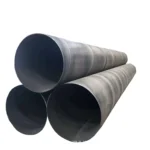
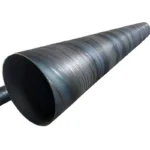
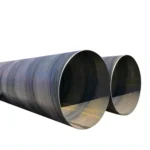
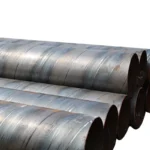
Description
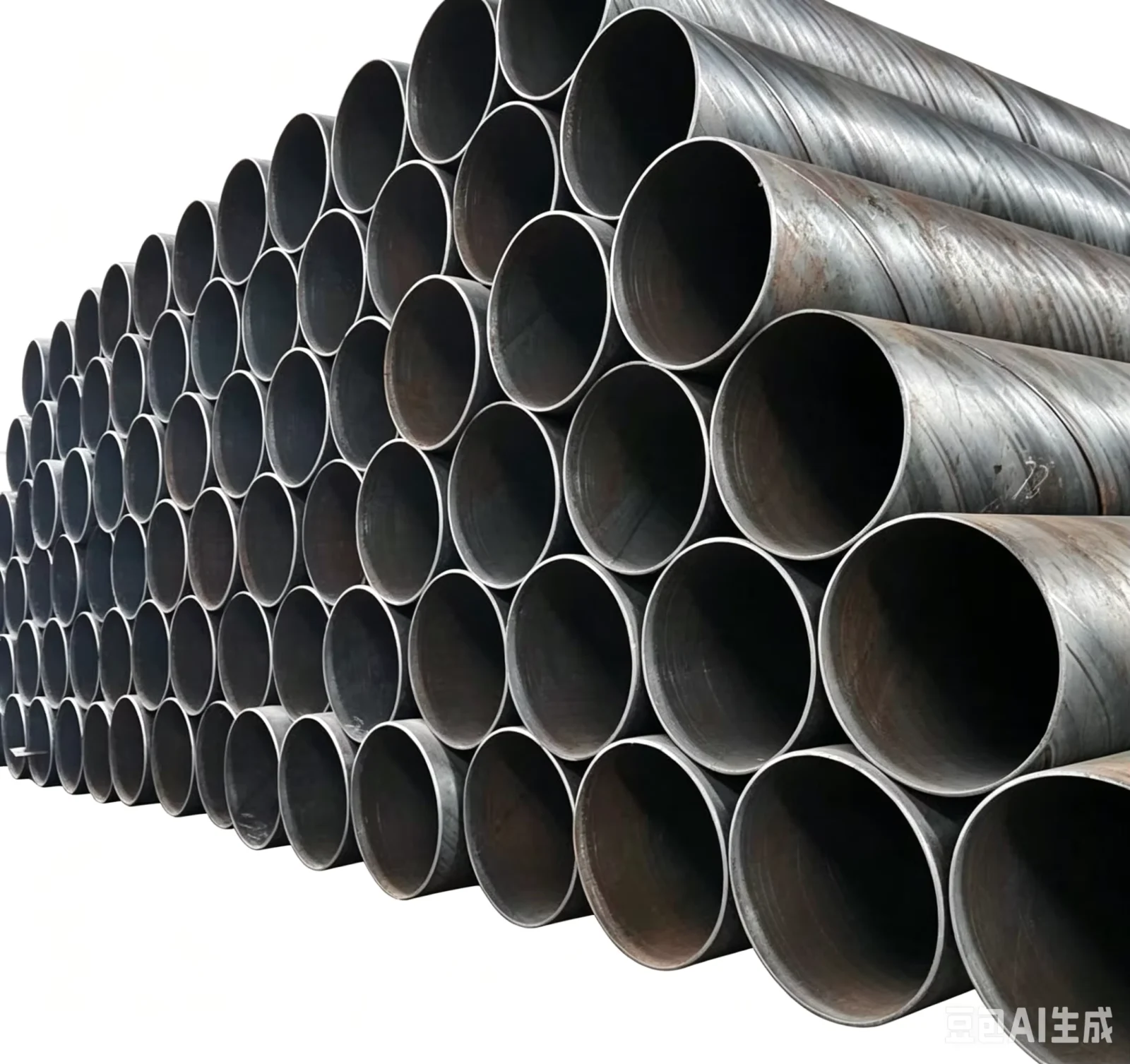
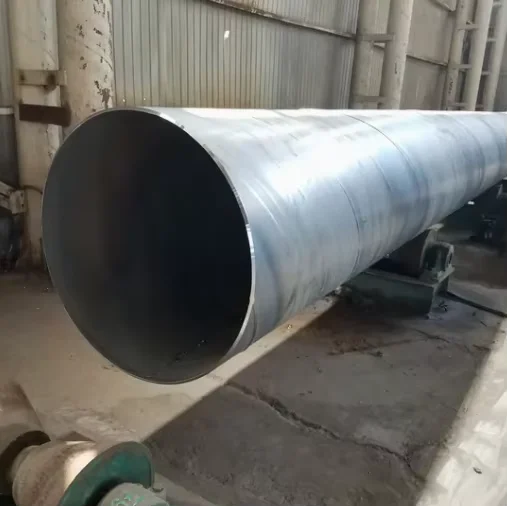
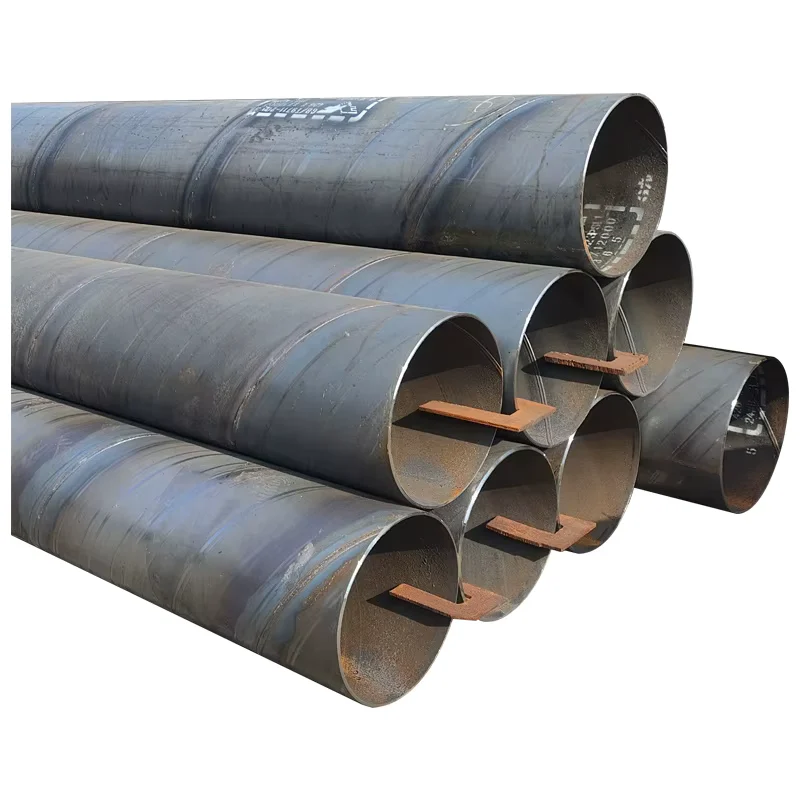
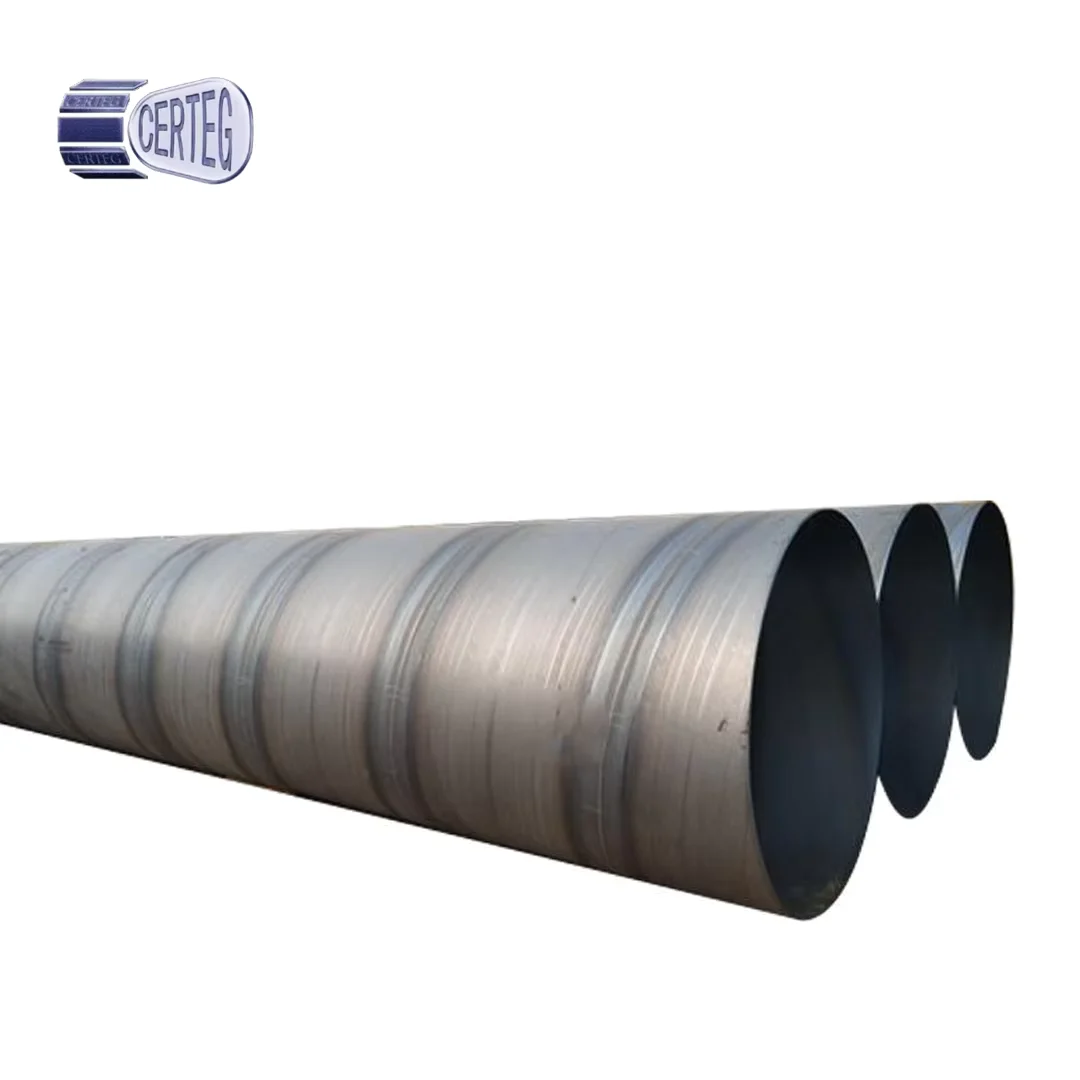
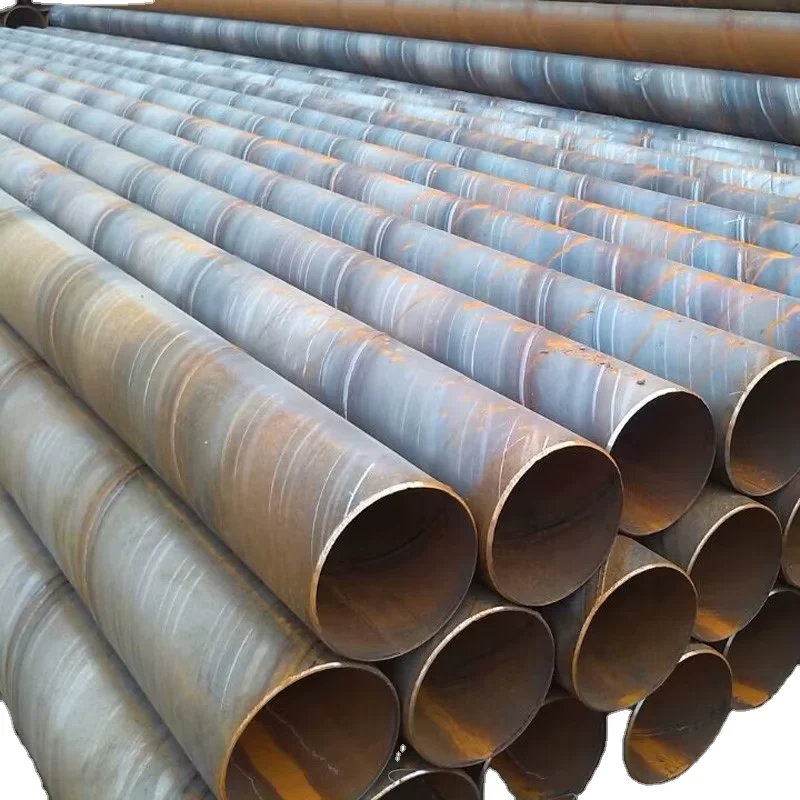
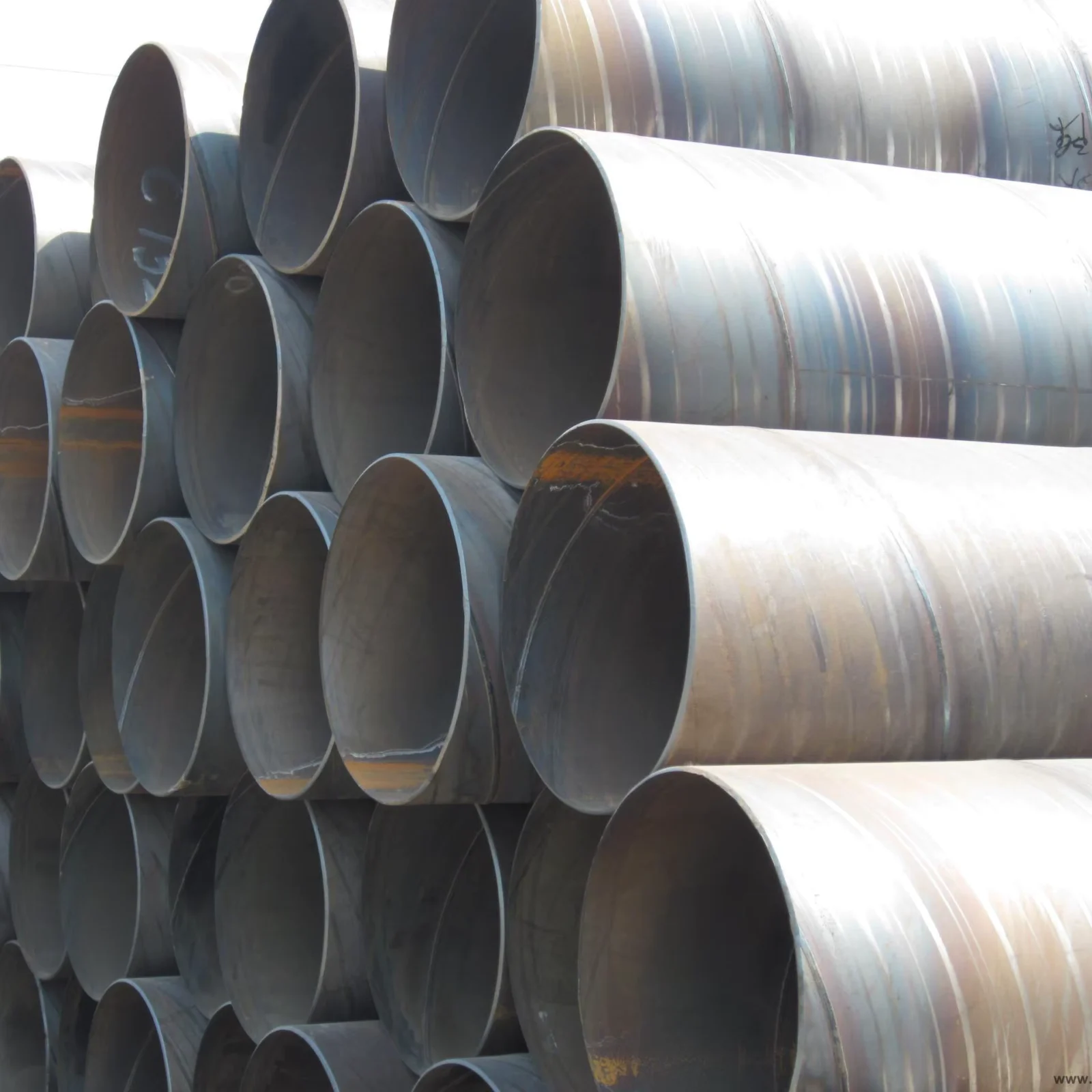
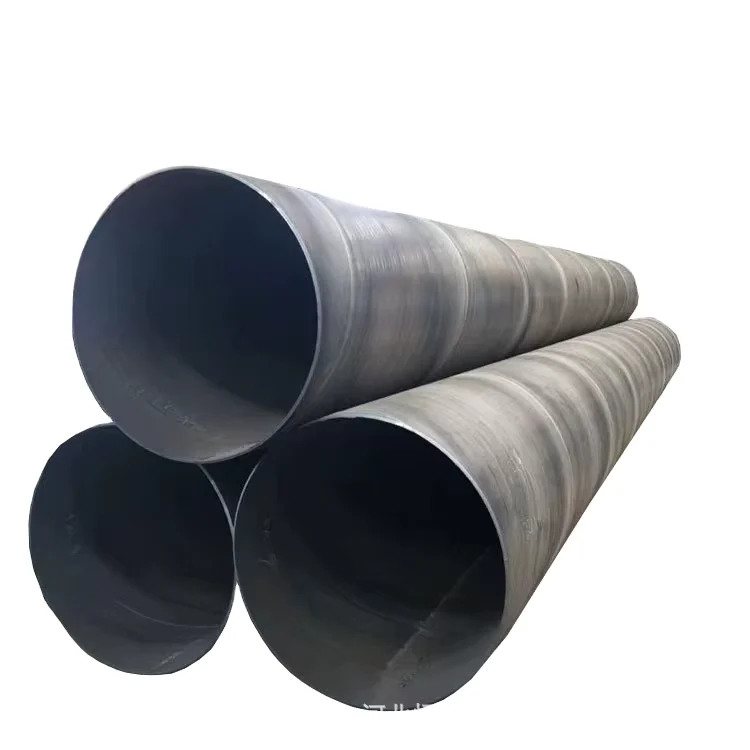
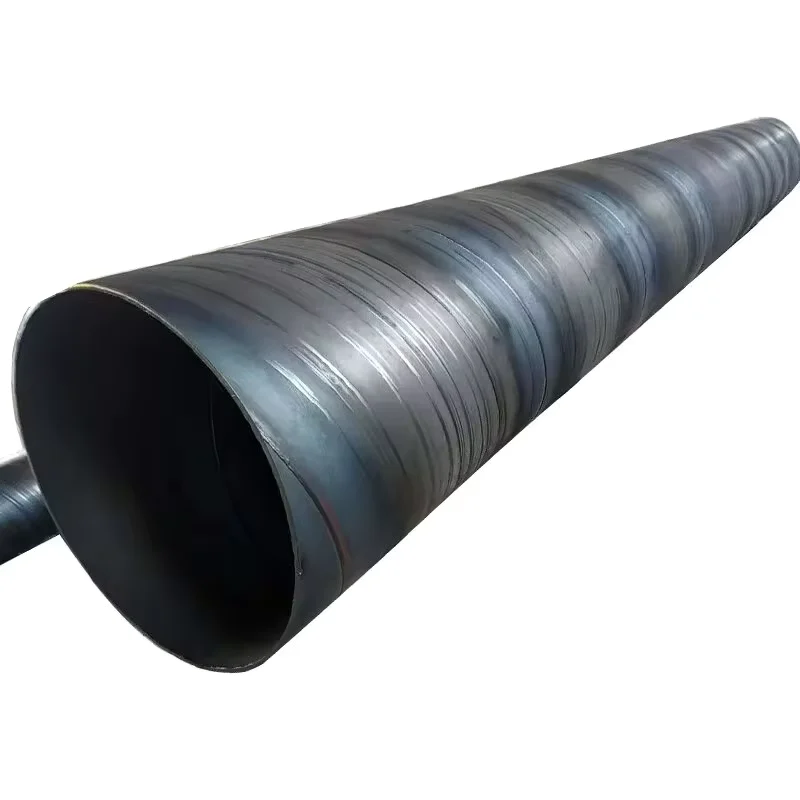
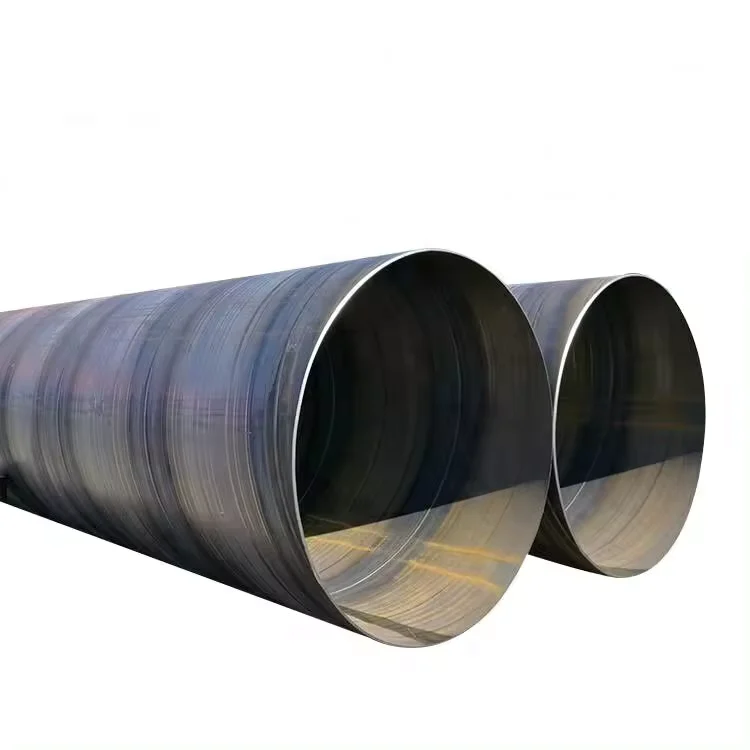
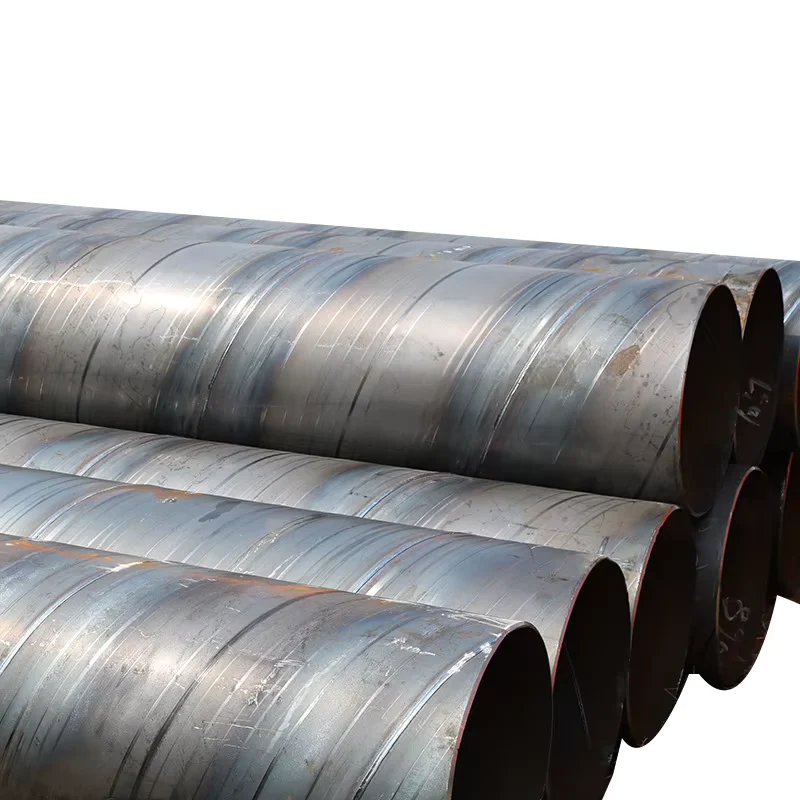
Direct Mill Supply for API 5L Spiral Welded Pipes — Full material traceability from raw steel plate to finished SSAW pipe through our vertically integrated production line, covering grades from B to X65.
Technical Specifications
| Parameter | Value |
|---|---|
| Designation | SSAW Spiral Welded Steel Pipe |
| Product Type | Round Steel Pipe (Spiral Welded) |
| Steel Grade | Grade B, X42, X52, X65, Q195, Q235B, Q345B, S235JR, S355JR |
| Standard | API 5L, GB/T 9711, SY/T 5037, ASTM A252, ASTM A53 |
| Section Shape | Round |
| Outer Diameter | Large Diameter (custom per project) |
| Length | Customized (6m, 12m, or as required) |
| Technique | SSAW (Double-Sided Submerged Arc Welding / DSAW) |
| Surface Treatment | Black coating / Painted / Galvanized |
| Ends | Plain / Beveled (per project requirement) |
| Application | Water transmission / Oil & gas transport / Sewage systems / Piling / Long-distance fluid and gas pipelines |
| Origin | Shandong, China |
Application Suitability
| Industry | Typical Applications |
|---|---|
| Municipal Infrastructure | Raw water transmission mains, sewage outfall pipelines, stormwater drainage systems |
| Oil & Gas | Gathering lines, distribution networks, low-pressure transport pipelines |
| Industrial Construction | Foundation piling, pile sleeves, structural support for heavy equipment platforms |
| EPC Projects | Long-distance fluid conveyance, cross-country pipeline segments, industrial water supply networks |
What Weld Defects Cost When You Cannot Inspect the Factory Floor
Overseas buyers ordering large diameter spiral welded pipes face a fundamental problem: you cannot see the weld until the pipe arrives at your site.
When fabrication is outsourced across borders, weld defects, coating failures, and missing material certifications become expensive surprises discovered only during third-party inspection or installation. A single heat number mismatch can halt an entire pipeline section. Inconsistent wall thickness across spiral seams creates weak points that only surface under hydrostatic testing — or worse, under service pressure years after commissioning. [NEED_CITE: API 5L weld inspection requirements for spiral submerged arc welded pipes]
Matching Pipe Specifications to Pipeline Operating Conditions
Large diameter SSAW pipes for water transmission and piling projects require precise alignment between steel grade selection, wall thickness, and operating environment. The DSAW process produces uniform weld seams with consistent penetration across the full wall thickness, critical for pipes handling pressurized fluids or bearing structural loads in piling applications. Our integrated mill-to-pipe production ensures that X65 grade plates are welded using qualified procedures matching the base metal chemistry, eliminating the grade mismatch risks common when fabricators source plates from third-party suppliers.
Engineering Compliance Across International Standards
Pipeline projects spanning multiple jurisdictions demand compliance with overlapping standards — API 5L for oil and gas transport, ASTM A252 for piling, EN 10219-equivalent requirements for European EPC specifications. The SSAW spiral welding technique allows production of large diameters beyond the capacity of most LSAW mills, but this advantage only holds if the welding procedure specifications are qualified for the full grade range from B through X65. Surface treatment selection — whether black coating for temporary protection, painted finishes for moderate environments, or galvanized coatings for corrosive soils — must align with both the installation timeline and the long-term service conditions. [NEED_CITE: surface treatment selection criteria for buried steel pipelines]
Understanding Steel Grade Selection and Welding Metallurgy
The grade range from B to X65 represents fundamentally different yield strength classes within the API 5L framework. Grade B and Q235B serve low-pressure water transmission where structural loads are minimal, while X42 and X52 handle higher operating pressures in oil and gas gathering systems. X65 grade requires stricter control of carbon equivalent values to prevent hydrogen-induced cracking in the heat-affected zone during welding. The DSAW process deposits weld metal on both inner and outer surfaces simultaneously, ensuring full penetration and uniform mechanical properties across the spiral seam — a critical advantage over single-sided welding for thick-wall pipes.
Wall thickness tolerance directly affects both theoretical weight calculations and actual load-bearing capacity. When plates are rolled to the lower end of the tolerance range, the finished pipe may meet dimensional specifications but fall short of design pressure ratings. This is where integrated production provides verification: the same facility that rolls the plate also fabricates the pipe, allowing ultrasonic testing at multiple stages rather than relying solely on final inspection.
The Hidden Costs of Unverified Material Sources
Purchasing SSAW pipes from fabricators who source plates from multiple mills creates documentation gaps that surface during customs clearance or third-party inspection. Missing heat number traceability means you cannot verify whether the X52 pipe in your shipment actually contains X52 chemistry. Incomplete mill test certificates force costly re-testing at destination ports. Coating applied without proper surface preparation fails within months, requiring complete re-coating at site — a process that costs multiples of the original factory-applied finish. [NEED_CITE: material traceability requirements for API 5L line pipe]
Why Integrated Production Eliminates Supply Chain Risks
Our facility operates three production lines with direct access to over 2,800 specifications of raw steel plate, meaning every SSAW pipe we produce originates from plates we control from the melting stage. This vertical integration allows us to provide complete documentation packages — mill test certificates with full chemical composition and mechanical properties, welding procedure specifications qualified for each grade, non-destructive testing reports covering 100% of weld seams, and dimensional inspection records for every length. Third-party inspection through SGS, BV, or TÜV is available at any production stage, not just final acceptance. For projects requiring EN 1090 or AWS D1.1 compliance, our certified welding procedures and qualified welders ensure fabrication meets international standards without the audit gaps common in fragmented supply chains.
Documentation & Compliance
- Mill test certificate documenting chemical composition and mechanical properties for each heat number, covering grades from B to X65 per API 5L requirements
- Welding procedure specifications and performance qualification records for DSAW processes qualified to API 5L and AWS D1.1
- Non-destructive testing reports including ultrasonic examination of 100% weld seams and hydrostatic test results for each pipe length
- Surface treatment inspection records documenting coating thickness, adhesion test results, and holiday detection for painted or galvanized finishes
- Third-party inspection certificates from SGS, BV, or TÜV verifying dimensional accuracy, weld quality, and coating integrity
- Complete export documentation package including packing list, bill of lading, certificate of origin, and material traceability records by heat number
Packaging, Loading & Delivery
- Large diameter SSAW pipes bundled with steel strip ties and edge protectors to prevent coating damage during ocean transit, with bundle weights optimized for container or breakbulk loading
- Black coated or painted pipes receive additional wrapping at weld ends to preserve surface treatment during handling and transport
- Custom length pipes (6m, 12m, or project-specific) loaded with dunnage separation to prevent contact damage, optimized for 40ft open-top or flat-rack containers when diameter permits
- Beveled ends protected with plastic caps to prevent damage to preparation geometry required for field welding
- Each pipe marked with heat number, steel grade, outer diameter, wall thickness, and length for site identification and traceability verification
- FOB, CIF, or DDP shipping terms available with professional oversized cargo loading plans and complete tracking until site delivery
Initiating Your Procurement Process
Submit your project drawings, steel grade requirements, quantity, and destination port to receive a detailed quotation including material costs, fabrication charges, surface treatment, and shipping options. We respond within 24 hours with a preliminary assessment and shop drawing timeline. For projects requiring third-party inspection or specific certification packages, confirm these requirements at inquiry stage to ensure documentation aligns with your compliance framework.
Frequently Asked Questions
Q: What is the difference between SSAW and LSAW pipes, and when should each be specified?
A: SSAW pipes are produced by spirally winding steel plate and welding both sides simultaneously, allowing production of large diameters beyond typical LSAW mill capacity. SSAW is preferred for water transmission, piling, and low-to-medium pressure applications where large diameters are required. LSAW pipes use straight seam welding and are specified for higher pressure applications or where strict dimensional tolerances are critical.
Q: How do you ensure weld quality in large diameter spiral welded pipes?
A: Our DSAW process uses qualified welding procedure specifications for each steel grade, with 100% ultrasonic examination of weld seams. In-process dimensional checks verify seam alignment, and hydrostatic testing confirms pressure integrity. Complete documentation includes WPS, PQR, NDT reports, and dimensional inspection records.
Q: Can you provide material certification and third-party inspection for international projects?
A: Yes. We provide mill test certificates with full chemical composition and mechanical properties per API 5L, ASTM A252, or other specified standards. Third-party inspection through SGS, BV, or TÜV is available at any production stage. Material traceability is maintained from raw plate heat number through finished pipe.
Q: What surface treatment options are available for corrosion protection?
A: We offer black coating for temporary protection, painted finishes for moderate environments, galvanized coating for corrosive conditions, and 3PE coating for aggressive buried applications. Surface preparation and coating thickness are documented in inspection reports.
Q: How do you handle packing and shipping for large diameter pipes?
A: Pipes are bundled with steel strips and edge protectors, loaded with dunnage separation to prevent coating damage. Oversized cargo loading plans are prepared for breakbulk or specialized container shipping. Complete export documentation and tracking are provided until site delivery.
Request Your Quotation with Full Material Traceability
Send your project specifications, steel grade requirements, and quantity to receive a detailed quotation including mill test certificates and fabrication documentation.
Shandong Xin Jiyuan Special Steel Tube Co., Ltd
Website: www.xjystructure.com
Email: admin@xjystructure.com
Mobile/WhatsApp/WeChat: +86 188 5315 7756