
EN10025 vs ASTM A992 Beam Cross-Reference Wholesale Supplier
“Grade 50” is not “S355”.
Substituting ASTM A992 beams for EN10025 S355 sections without formal engineering approval triggers structural compliance failures, customs seizures, and welding procedure rejections. The two standards differ fundamentally in mandatory impact testing, chemical composition limits for weldability, and dimensional tolerances, making them non-interchangeable in regulated construction projects.
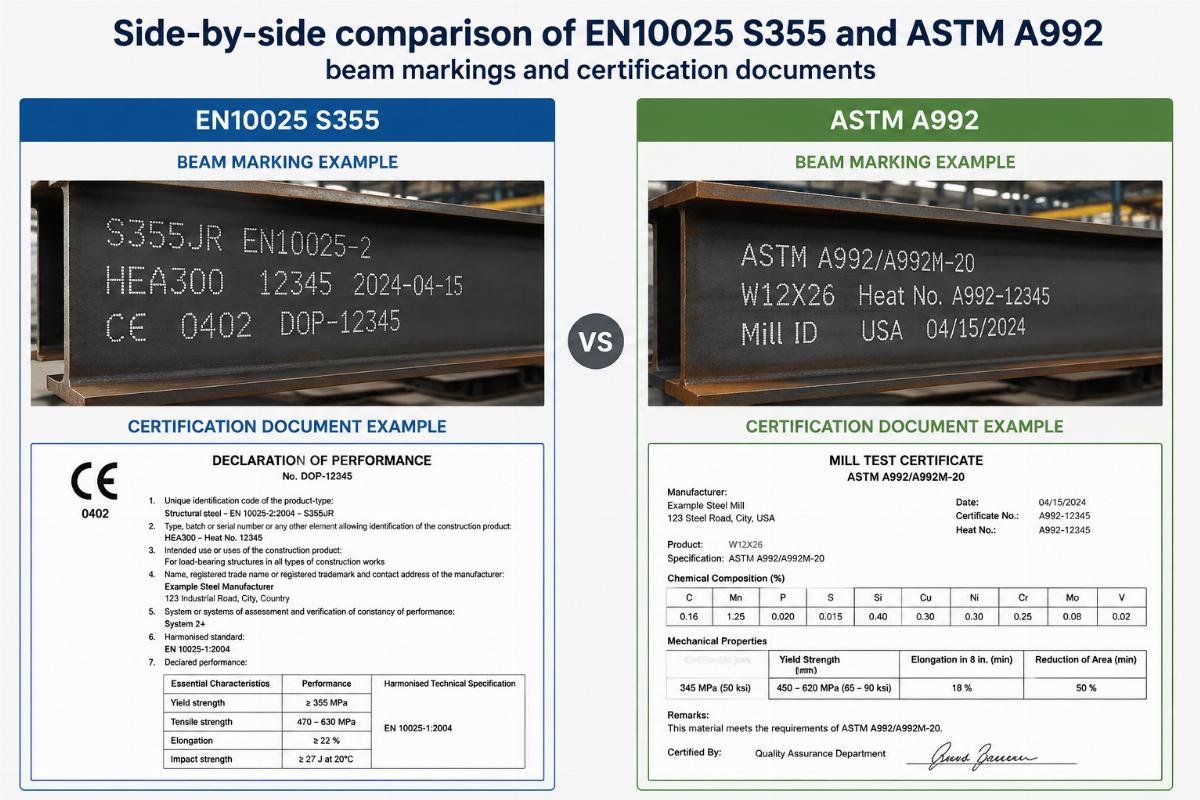
I still remember the humidity on the dock at Lagos Port, watching a container of wide-flange beams sit untouched while customs officials flagged the paperwork. The project specification called for EN10025-2 S355J2. The mill test certificate provided was for ASTM A992 Grade 50. On paper, the yield strengths looked similar. In reality, the missing Charpy V-Notch impact data for minus twenty degrees Celsius and the absence of a Declaration of Performance meant the cargo was legally invisible to the European-standard inspector. It sat there for weeks, accruing demurrage charges that dwarfed the material savings. This is not an isolated incident. Across emerging markets, procurement teams often assume that similar mechanical properties equate to regulatory equivalence. They do not. Understanding the specific technical divergences between these standards is critical for any EN10025 vs ASTM A992 beam cross-reference wholesale supplier aiming to deliver compliant structural steel.
The confusion stems from a superficial reading of yield strength tables. While both grades serve as the workhorse for structural frameworks, their underlying metallurgical requirements and quality assurance protocols are designed for different regulatory ecosystems. Ignoring these differences does not just risk rejection; it risks the structural integrity of the build in specific environmental conditions.
Why Can’t I Simply Swap ASTM A992 for EN10025 S355?
Regulatory incompatibility extends far beyond basic strength metrics.
The primary barrier to substitution is not the steel itself, but the legal and technical framework governing its use. EN10025 is a harmonized European standard tied to the Construction Products Regulation, requiring CE marking and a Declaration of Performance. ASTM A992 is an American Society for Testing and Materials standard, widely used in North America but lacking the specific conformity assessment modules required for EU-coded projects. [NEED_CITE: Regulatory requirements for CE marking under CPR for structural steel]
When a project specifies EN10025, it mandates a chain of custody that verifies not just the chemistry, but the manufacturing process control. ASTM mills produce excellent steel, but their standard Mill Test Certificates do not include the specific fields required by EN inspectors, such as the declared performance values for fire resistance or specific impact toughness tiers unless explicitly ordered and tested to EN protocols.
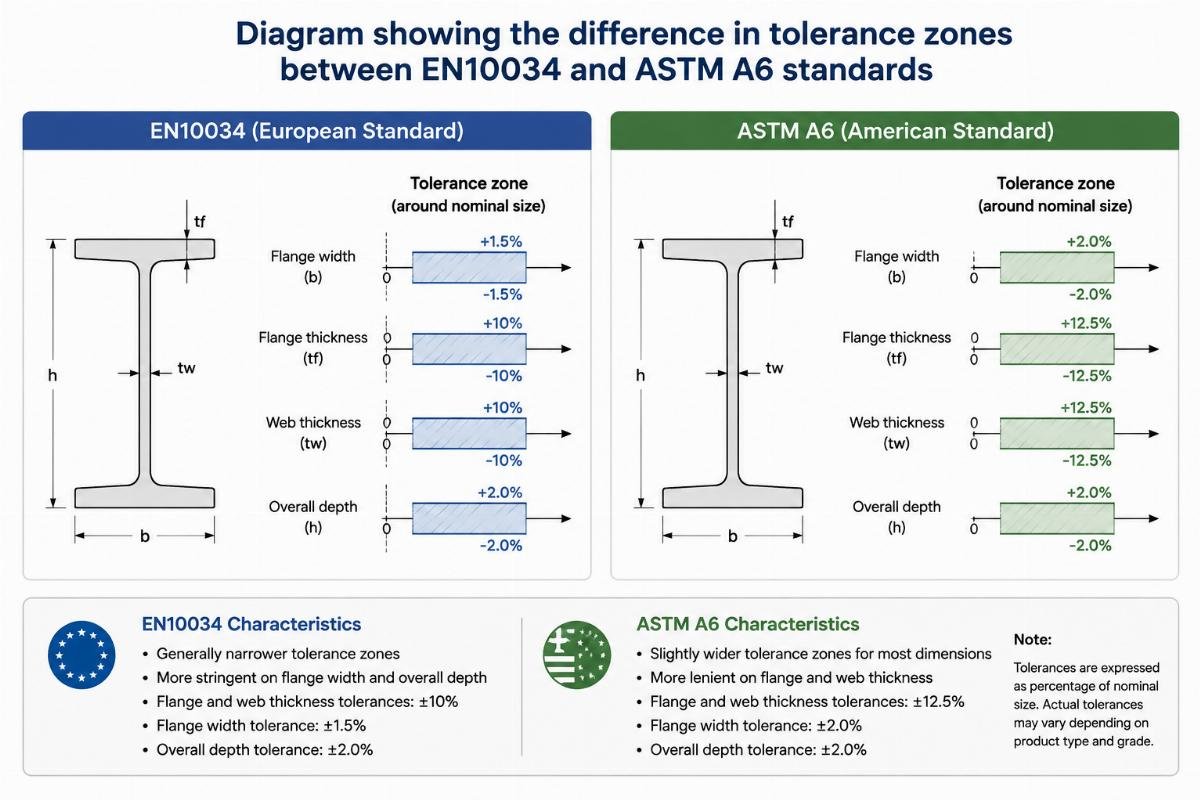
Consider a recent industrial park project in East Africa. The design team specified HEA sections per EN10210. To cut lead times, the contractor sourced ASTM W-shapes of equivalent weight and depth. The physical installation proceeded smoothly until the final audit. The auditor rejected the submission because the dimensional tolerances followed ASTM A6, which allows for different out-of-squareness and sweep variations compared to EN10034. The beams fit, but they did not comply. The fabrication shop had to rework connections to accommodate the slight geometric deviations, costing more in labor than the initial material savings. This highlights why a reliable EN10025 vs ASTM A992 beam cross-reference wholesale supplier must prioritize documentation compliance over mere physical similarity.
Key Technical Differences: Chemistry, Toughness, and Tolerances
Chemical limits and impact testing mandates create distinct performance profiles.
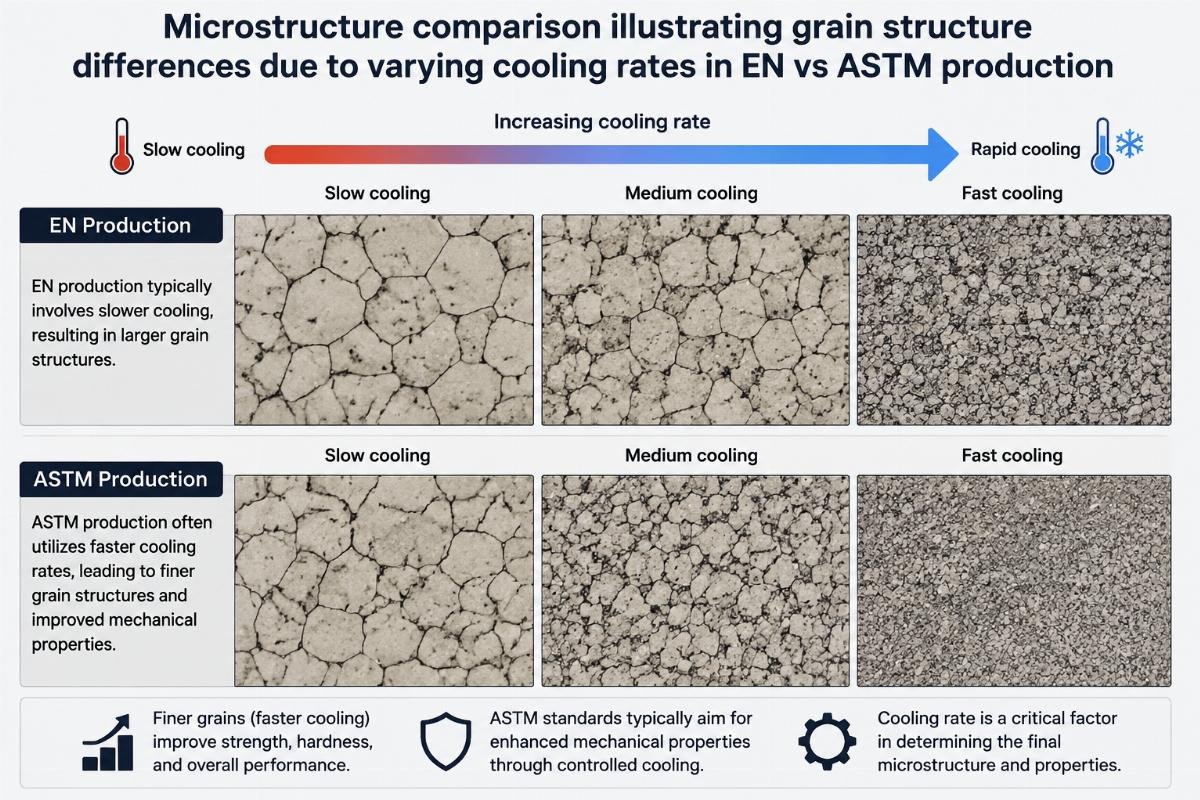
While the yield strength of S355 and A992 Grade 50 appears comparable, the path to achieving that strength differs. EN10025 places stricter controls on carbon equivalent values to ensure weldability without preheating in many cases. ASTM A992 allows for a broader range of manganese and carbon content, which can increase the carbon equivalent value. [NEED_CITE: Comparison of Carbon Equivalent Value limits in EN10025 vs ASTM A992]
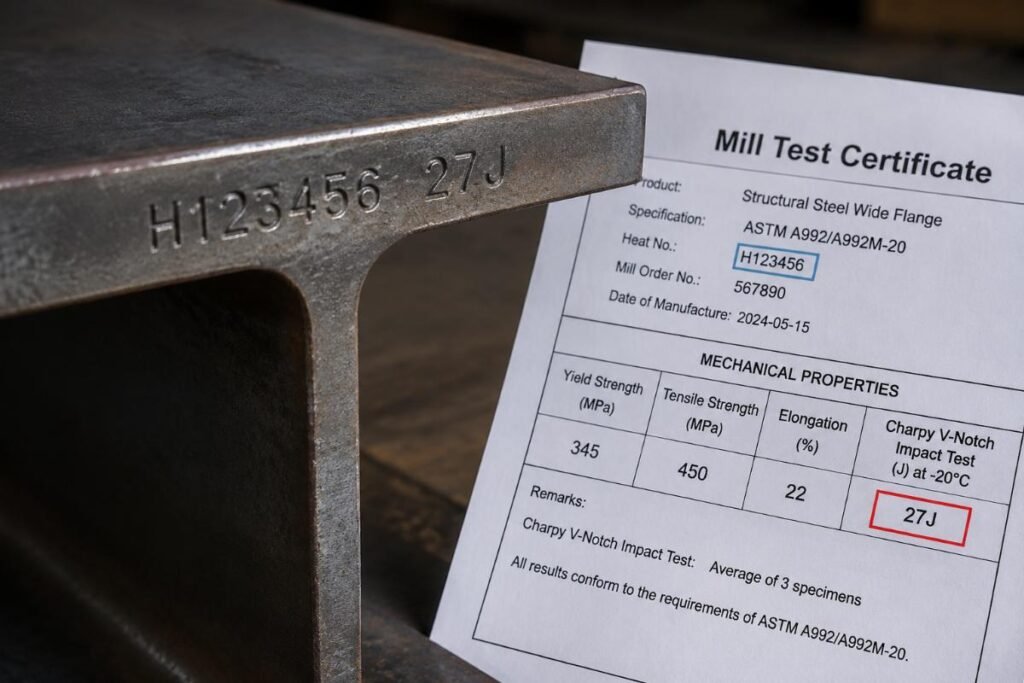
The most critical divergence lies in impact toughness. EN10025 grades like S355J2 require mandatory Charpy V-Notch testing at minus twenty degrees Celsius. This ensures the steel retains ductility in cold environments. ASTM A992 does not mandate notch toughness testing unless specifically requested via supplemental requirements. For structures in regions with significant temperature drops, using non-tested A992 steel introduces a risk of brittle fracture that S355J2 is designed to prevent.
| Feature | EN10025 S355J2 | ASTM A992 Grade 50 |
|---|---|---|
| Yield Strength | Min 355 MPa | Min 345 MPa (50 ksi) |
| Impact Testing | Mandatory at -20°C | Optional (Supplemental) |
| Carbon Equivalent | Strictly controlled for weldability | Broader range allowed |
| Dimensional Standard | EN10034 | ASTM A6 |
| Certification | CE Mark + DoP Required | MTC per ASTM A700 |
In a warehouse project in Southern Africa, a fabricator switched from S355JR to A992 to save cost. During welding procedure qualification, the higher carbon equivalent of the A992 steel caused cracking in the heat-affected zone under the existing welding parameters. The workshop had to rewrite their welding procedures, introducing preheat steps that slowed production. This operational delay underscores the importance of verifying chemical compatibility, not just strength. A knowledgeable EN10025 vs ASTM A992 beam cross-reference wholesale supplier will flag these chemical differences before the order is placed.
The Documentation Trap: MTCs, CE Marking, and Customs Clearance
Missing EN-specific declarations cause shipment rejections at ports.
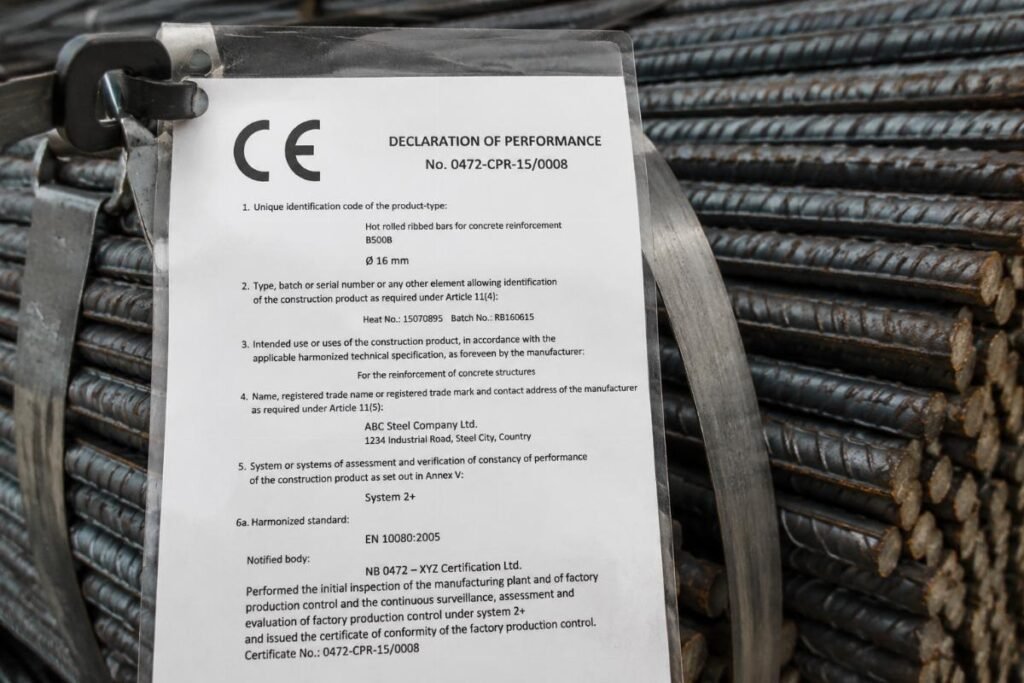
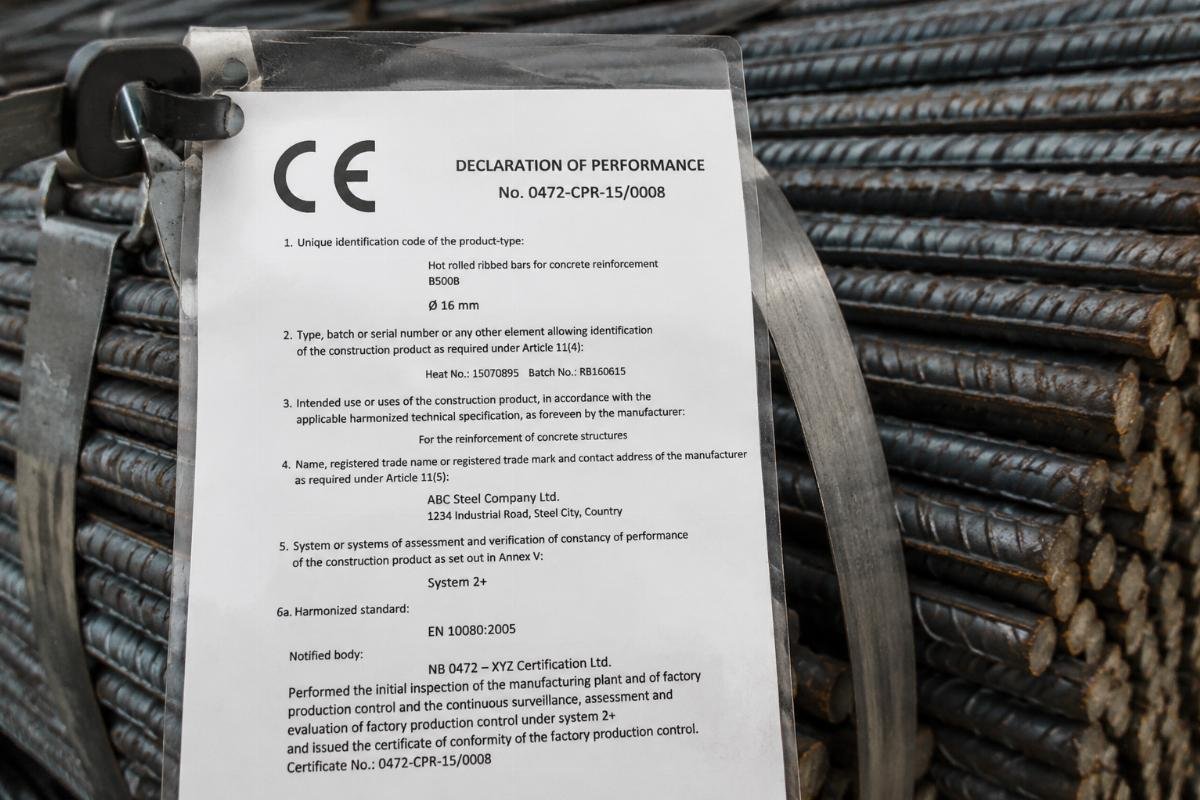
Customs authorities and project consultants in markets adopting European standards look for specific markers of compliance. The Mill Test Certificate is not enough. For EN10025 materials, the Declaration of Performance is a legal document stating that the product meets the declared characteristics. ASTM mills do not issue this document by default.
I have seen shipments held because the MTC listed “ASTM A992” while the import license specified “EN10025 S355”. Even though the chemical analysis might have been identical, the lack of the correct standard reference on the certificate triggered a manual review. This review process can take weeks. In some jurisdictions, the goods may be deemed non-compliant and forced to be re-exported or destroyed if no local engineer is willing to sign off on the equivalence.
The trap is subtle. Buyers assume that a high-quality US mill certificate is universally accepted. It is not. The CE mark is not just a logo; it represents a verified audit trail. Without it, the steel has no legal standing in an EN-specified project. This is why working with a manufacturer who can provide full EN10219/EN10210 certification is crucial. It eliminates the guesswork and the risk of customs delays. A professional EN10025 vs ASTM A992 beam cross-reference wholesale supplier ensures that the documentation matches the destination country’s regulatory expectations, not just the material’s physical properties.
When Is Substitution Possible? The Engineer’s Approval Process
Formal technical equivalence approval is mandatory for any grade swap.
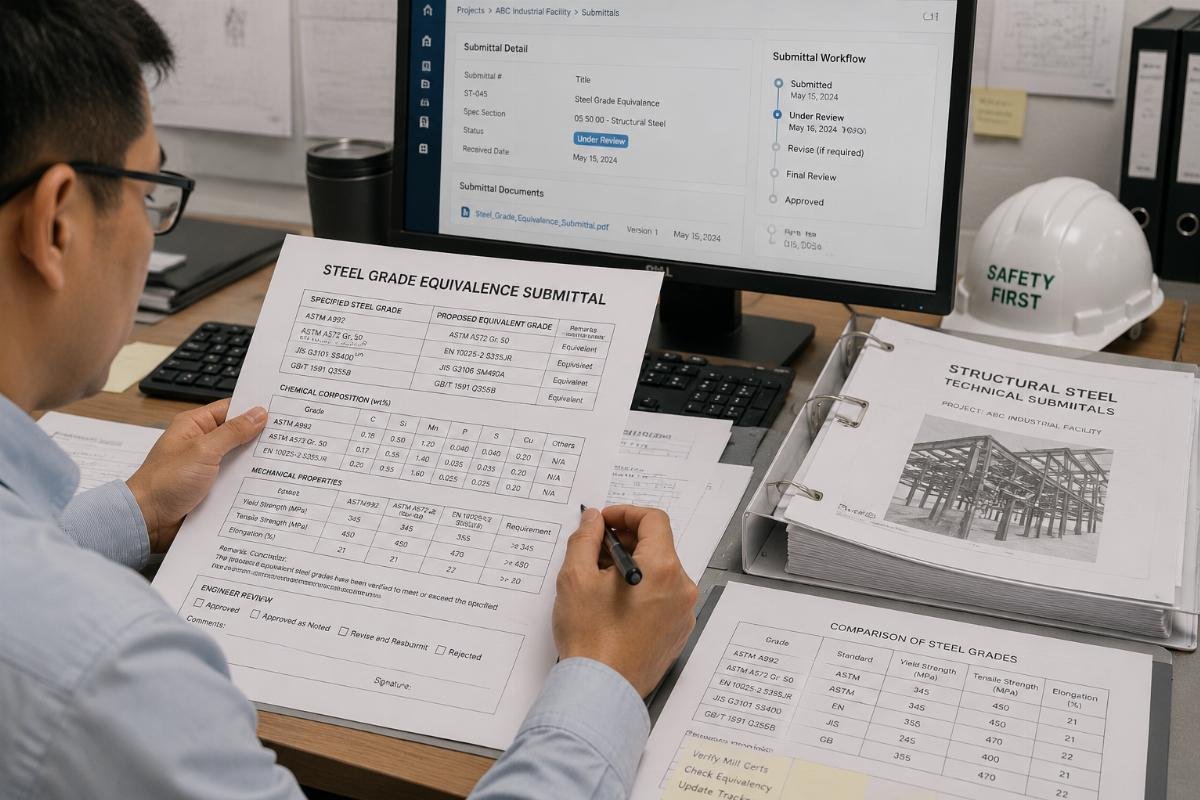
Substitution is not impossible, but it is never automatic. It requires a formal request for information submitted to the project’s structural engineer. This process involves providing detailed chemical analysis, mechanical test results, and a comparison of dimensional tolerances. The engineer must then perform a recalculation to ensure that the substitute material meets all design criteria, including deflection limits and connection capacities.
This process is time-consuming and costly. It often requires third-party testing to verify impact toughness if the original ASTM material was not tested. In many cases, the cost of this validation exceeds the savings from sourcing the alternative grade. Therefore, substitution is rarely economically viable for large orders. It is typically only considered for small, urgent replacements where lead time is the primary constraint.
For new projects, the best strategy is to source the correct standard from the beginning. Manufacturers with dual-certification capabilities can produce steel that meets both EN and ASTM requirements, but this must be specified at the order stage. Producing to EN10025 standards ensures that the material has the necessary impact testing and chemical controls. If the project is in a region that accepts both, having the EN certification provides a higher level of assurance regarding toughness and weldability.
At our production facilities, we maintain separate quality control streams for EN and ASTM orders. For EN10025 requirements, we enforce strict impact testing protocols and generate the necessary CE documentation. This approach prevents the substitution dilemma entirely. Clients receive exactly what the spec calls for, with no need for expensive engineering reviews. This reliability is what defines a true EN10025 vs ASTM A992 beam cross-reference wholesale supplier. We do not just sell steel; we sell compliance.
Conclusion
Standards are not suggestions; they are legal and technical boundaries.
Attempting to swap ASTM A992 for EN10025 S355 without rigorous engineering approval invites customs delays, welding failures, and potential structural risks. The differences in impact testing, chemical composition, and documentation requirements are significant. Procurement decisions must prioritize regulatory compliance over perceived material similarity. Sourcing from a manufacturer capable of delivering fully certified EN10025 products eliminates these risks and ensures smooth project execution. Always verify the standard required by the design and insist on matching certification.
Tags
Share this article

Written by
author
Editor covering global sourcing, supplier verification, and industrial product knowledge. Content is compiled from manufacturer specifications, industry standards, and hands-on experience with international B2B buyers. Every article is fact-checked before publishing to help procurement professionals make informed decisions.
View all posts →Keep Reading
Related Articles
August 15, 2026
S355JR Structural Steel Beam EN Certified Manufacturer for EU
Avoid S355JR Structural Steel Beam Certification rejection in EU and Middle East projects by ensuring explicit impact energy values of...
Read article →Discussion