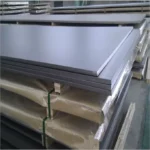
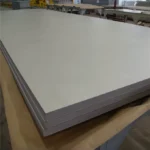
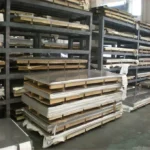
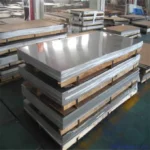
Description
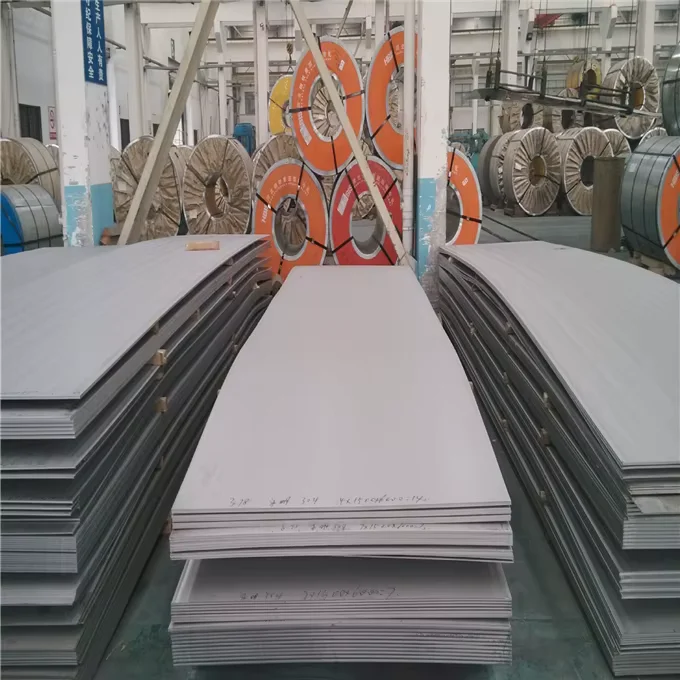
Direct Mill Supply for 300 Series Stainless Steel Plate — Vertically integrated production from raw slab to finished plate eliminates material traceability gaps common in fragmented supply chains.
Technical Specifications
| Parameter | Value |
|---|---|
| Designation | 300 Series Stainless Steel Plate |
| Product Type | Stainless Steel Plate / Sheet |
| Steel Grade | 304, 304L, 316L, 316Ti, 317L, 309S, 310S, 321, 301, 904L, 201, 410S, 420J1, 430, S30815 |
| Standard | ASTM A240 / ASME SA240, JIS 4305, DIN EN 10088-2, AISI, GB |
| Thickness | 0.1–200mm |
| Width | 3mm–2500mm |
| Length | 5mm–13000mm |
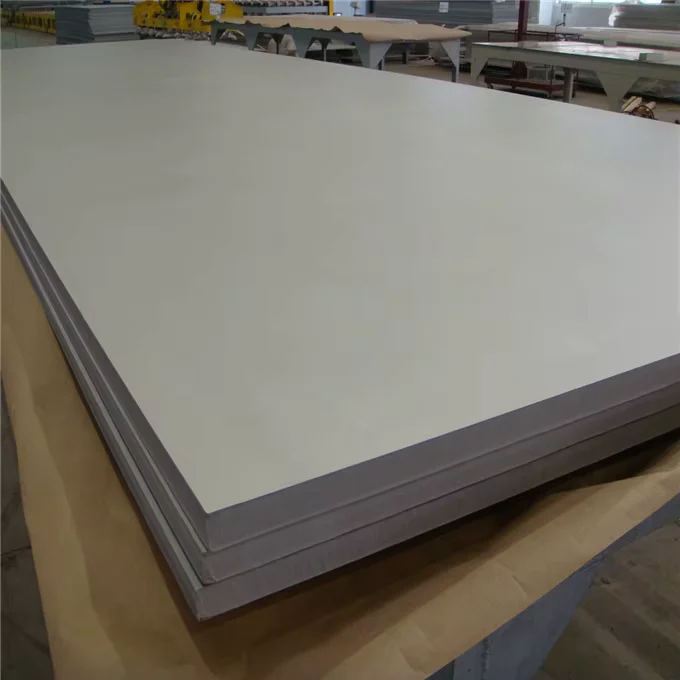
| Technique | Hot Rolled / Cold Rolled |
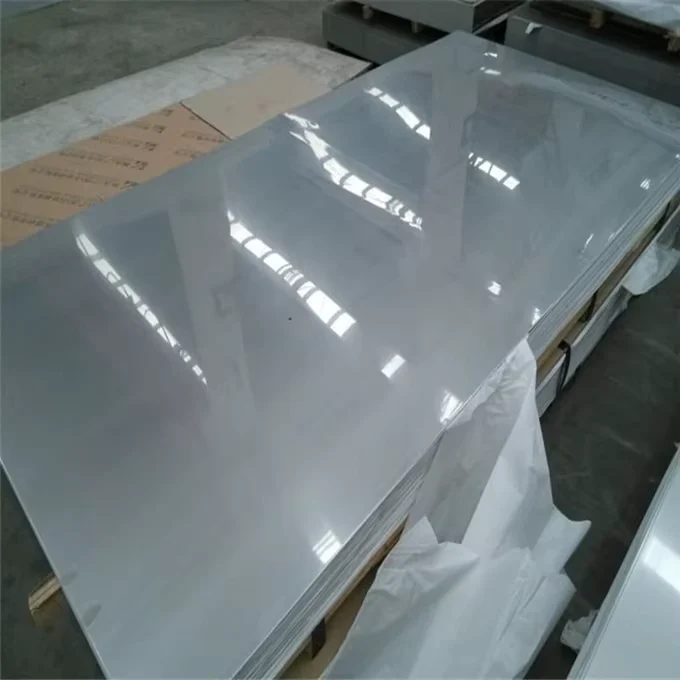
| Surface Finish | No.1, 2B, BA, HL (Hairline), No.4, 8K (Mirror), Satin, Brushed |
| Tolerance | ±1% |
| Edge | Slit Edge / Mill Edge |
| Processing Service | Bending, Welding, Decoiling, Punching, Cutting (Laser/Plasma/Waterjet), Sawing, Shearing |
| Application | Construction, Chemical industry, Petrochemical equipment, Machinery manufacturing, Shipbuilding, Automotive, Kitchen equipment, Architectural decoration, Pressure vessels |
| Origin | Shandong, China |
Application Suitability
| Industry | Typical Applications |
|---|---|
| Chemical & Petrochemical | Reaction vessels, heat exchangers, piping systems for aggressive media handling |
| High-Temperature Processing | Industrial furnace components, annealing baskets, radiant tubes up to 1200°C service |
| EPC Construction | Architectural cladding, structural columns, decorative facades with specified surface finishes |
| Marine & Offshore | Deck fittings, corrosion-resistant platforms, ballast water treatment systems |
| Pressure Vessel Manufacturing | Storage tanks, reactor shells, ASME-code compliant vessel components |
Material Certification Gaps That Trigger Customs Holds
Heat number traceability from slab to finished plate separates compliant shipments from rejected containers.
When overseas buyers source stainless steel plates from China, the material certification chain often breaks at the fabrication stage. Third-party processors purchasing plates from multiple mills cannot guarantee consistent chemistry or provide unified EN 10204 3.1 certificates. Customs authorities in EU and Middle East markets increasingly require mill test certificates with traceable heat numbers — missing documentation triggers inspection delays or outright rejection [NEED_CITE: EN 10204 inspection document types for metallic products]. Surface finish inconsistencies compound the problem: plates specified as 2B finish arriving with visible roll marks or inconsistent roughness force on-site rework or scrap.
Matching Grade Selection to Corrosive Service Environments
Selecting the correct 300 series grade determines whether a chemical plant’s reactor vessel survives five years or fails in eighteen months. The 300 series stainless steel plate range covers environments from general atmospheric exposure to concentrated sulfuric acid service. For standard corrosion resistance, 304 and 304L handle most architectural and food processing applications. Marine environments and chloride-bearing media require 316L or 316Ti with molybdenum addition for pitting resistance. When service temperatures exceed 800°C, 309S and 310S provide oxidation resistance through higher chromium and nickel content. Our vertically integrated mill produces plates across this full spectrum under one quality system — the same laboratory verifies chemistry from raw materials through final inspection, eliminating the certification gaps that plague multi-vendor procurement.
Engineering Compliance for Pressure Vessels and Structural Applications
Pressure vessel fabrication to ASME Section VIII demands material certified to ASTM A240 with documented chemistry and mechanical properties. Structural applications in European markets require EN 10088-2 compliance with CE marking for load-bearing components [NEED_CITE: EN 10088-2 stainless steel flat product requirements]. The ±1% thickness tolerance across our 0.1–200mm range ensures dimensional consistency for welded assemblies where fit-up gaps affect joint integrity. For architectural cladding on EPC projects, surface finish specification per ASTM A480 or EN ISO 9445 must match between production batches — color variation across heat lots creates visible defects on building facades. Third-party inspection through SGS or TUV verifies compliance before shipment, providing independent confirmation for project owners and engineering firms.
Understanding Hot Rolled versus Cold Rolled Surface Characteristics
Hot rolled 300 series stainless steel plate in No.1 finish provides cost-effective solutions for industrial applications where surface appearance is secondary to corrosion resistance. The scale layer from high-temperature rolling requires pickling to restore passive film integrity. Cold rolled plates in 2B, BA, or HL finishes deliver controlled surface roughness for architectural and decorative applications. The 8K mirror finish achieves reflectivity through progressive polishing sequences — surface quality depends on substrate uniformity and polishing compound consistency. For bending operations, rolling direction relative to bend radius affects grain boundary behavior: plates bent perpendicular to rolling direction resist cracking better than parallel orientation. This metallurgical principle guides our processing protocols for formed components [NEED_CITE: stainless steel forming guidelines for bend radius].
Hidden Costs of Unverified Material Sources
Purchasing stainless steel plate from trading companies without mill affiliation creates three categories of hidden cost. First, material substitution risk: without direct mill access, buyers cannot verify whether 316L plates contain specified molybdenum content or whether chemistry meets ASTM A240 limits. Second, certification fragmentation: plates from multiple sources carry different heat numbers, forcing buyers to manage separate MTC packages or face customs documentation gaps. Third, processing delays: when fabrication requires cutting, bending, or edge preparation, multi-vendor coordination extends lead times and introduces dimensional tolerance drift between stages. A single source controlling material production through finished processing eliminates these failure points — one quality system, one certification package, one accountability point for project delivery.
Why Project Teams Specify Our 300 Series Stainless Steel Plate
Our Shandong production facility operates three rolling lines with 2,800+ specifications in inventory, enabling same-week shipment for standard grades and sizes. The vertically integrated model means we produce plates from raw slab through final finishing — chemical composition verification occurs at melting, after rolling, and before shipment. Our laboratory issues EN 10204 3.1 certificates with heat number traceability for every order. For projects requiring third-party verification, we coordinate SGS, TUV, or BV inspection at our facility before container loading. Custom processing capabilities include laser cutting to ±0.1mm tolerance, plasma cutting for thick plates up to 200mm, and CNC bending with rolling direction verification. Professional packing with edge protectors and moisture barriers preserves surface finish during ocean transit to Middle East, Southeast Asia, and African project sites.
Documentation & Compliance
- Mill Test Certificate documenting 316L chemical composition including molybdenum content per ASTM A240 requirements
- EN 10204 3.1 type certificate with heat number traceability from slab to finished plate
- ISO 9001 quality management certification covering production and inspection processes
- SGS third-party inspection reports available for chemistry verification and dimensional checks
- Material traceability records linking heat numbers to specific production batches and test results
- Export documentation package including packing list, bill of lading, and certificate of origin
Packaging, Loading & Delivery
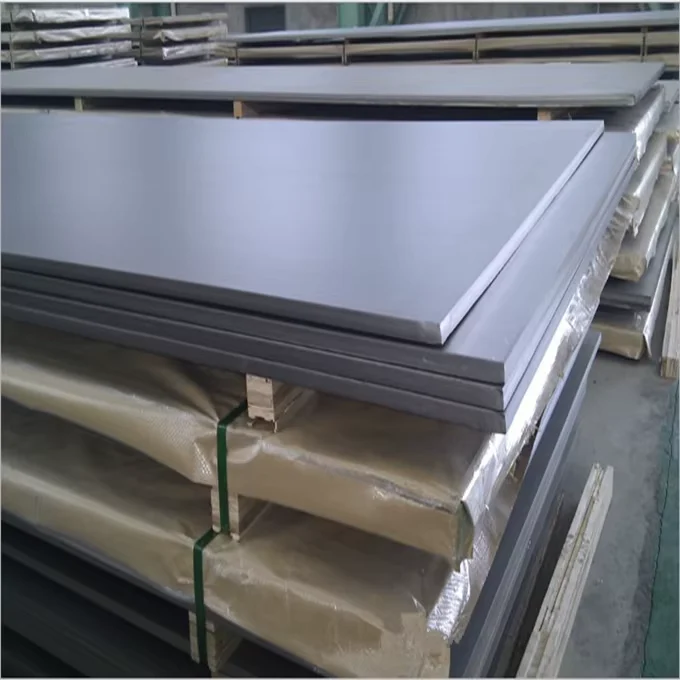
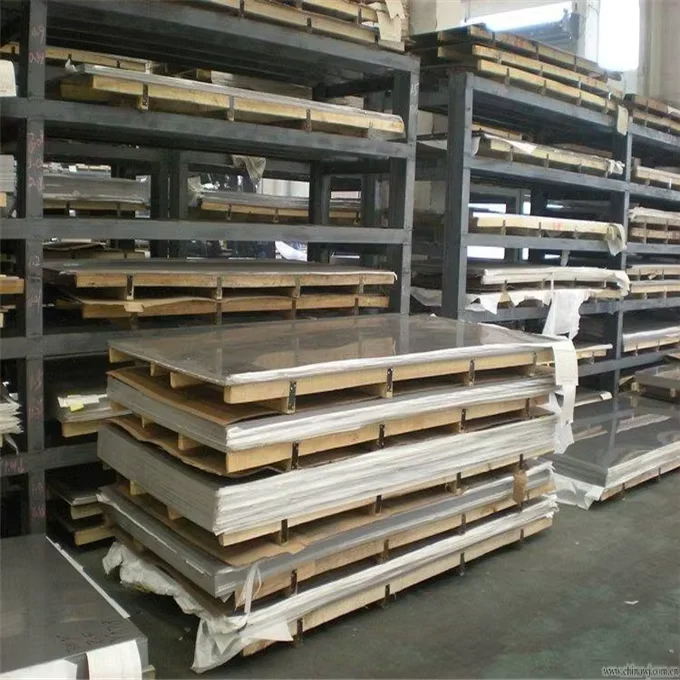
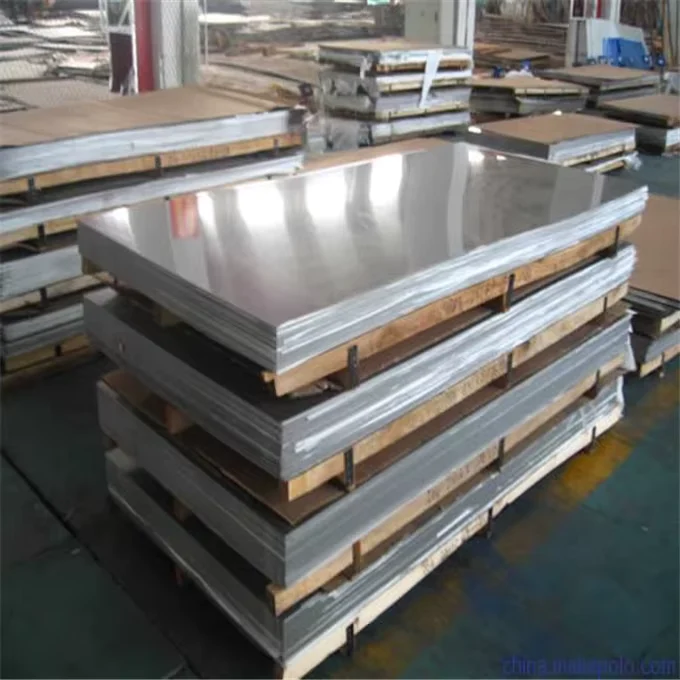
- Stainless steel plates bundled with steel straps and edge protectors to preserve 2B and BA surface finishes during handling
- Interleaving paper between plates prevents surface scratching for HL and 8K mirror finish orders
- Moisture barrier wrapping with VCI paper protects against chloride contamination during ocean transit to coastal project sites
- Container loading optimization for plates up to 13000mm length maximizes 20ft and 40ft container utilization
- Heat number marking on each plate edge enables site identification without removing protective packaging
- FOB, CIF, and DDP shipping terms available with door-to-door logistics coordination for EPC project sites
Initiating Your 300 Series Stainless Steel Plate Inquiry
Submit project specifications including steel grade, dimensions, surface finish requirements, and quantity to receive pricing with mill test certificate documentation. For custom processing requirements — laser cutting, bending, or edge preparation — share fabrication drawings for engineering review and processing timeline confirmation. Our team responds within 24 hours with preliminary assessment including material availability, production schedule, and certification package details.
Frequently Asked Questions
Q: Can you provide EN 10204 3.2 certificates for European pressure vessel projects?
A: Yes, we issue EN 10204 3.1 certificates as standard for all 300 series stainless steel plate orders. For projects requiring 3.2 certification with independent inspector witness, we coordinate third-party inspection through SGS or TUV at our facility before shipment.
Q: What is the minimum order quantity for custom-cut plates?
A: Standard stock sizes ship in single plate quantities. For custom cutting to specific dimensions, minimum order depends on grade and thickness — typically 1-2 tons for standard grades like 304 and 316L, with higher minimums for specialty grades like 904L or S30815.
Q: How do you ensure surface finish consistency across multiple heat lots?
A: Our cold rolling and finishing lines maintain controlled parameters for each surface type. For architectural projects requiring visual consistency, we source plates from single heat lots when possible and provide surface finish samples for approval before full production.
Q: Can you bend 316L plates without causing grain boundary cracking?
A: Yes, our bending operations verify rolling direction relative to bend radius before processing. Plates bent perpendicular to rolling direction resist intergranular cracking better than parallel orientation. We confirm bend radius compatibility with material thickness and grade before quoting formed components.
Q: What export documents are included with shipment?
A: Every shipment includes commercial invoice, packing list, bill of lading, certificate of origin, and mill test certificates. For projects requiring additional documentation such as welding procedure specifications or coating reports, we prepare complete quality packages per project requirements.
Request Your 300 Series Stainless Steel Plate Quote
Send specifications including grade, dimensions, surface finish, and quantity to receive pricing with mill test certificate documentation within 24 hours.
Contact: Shandong Xin Jiyuan Special Steel Tube Co., Ltd
Website: www.xjystructure.com
Tel: +86 531 8573 6315
Mobile/WhatsApp/WeChat: +86 188 5315 7756
Email: admin@xjystructure.com
Address: No.11889, Jingshi West Road, Lulian Group, Jinan City, Shandong Province, China