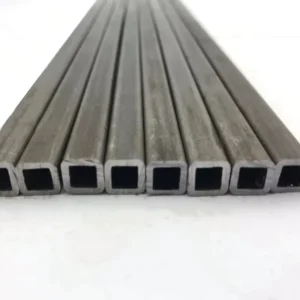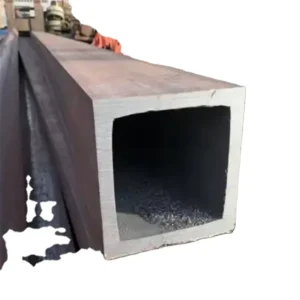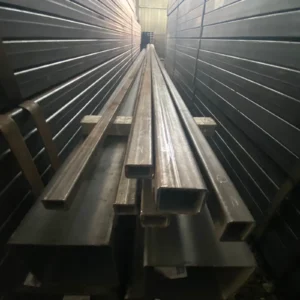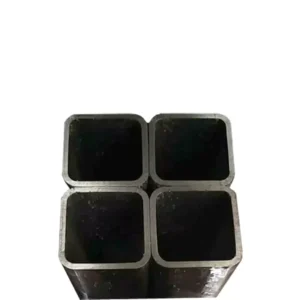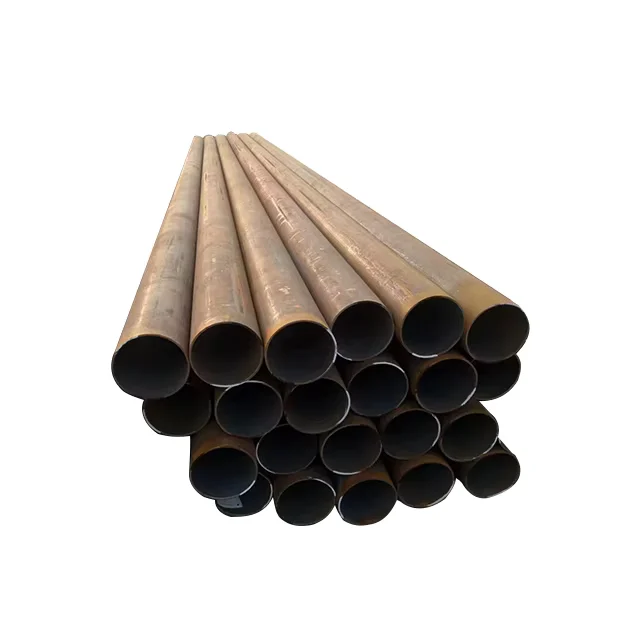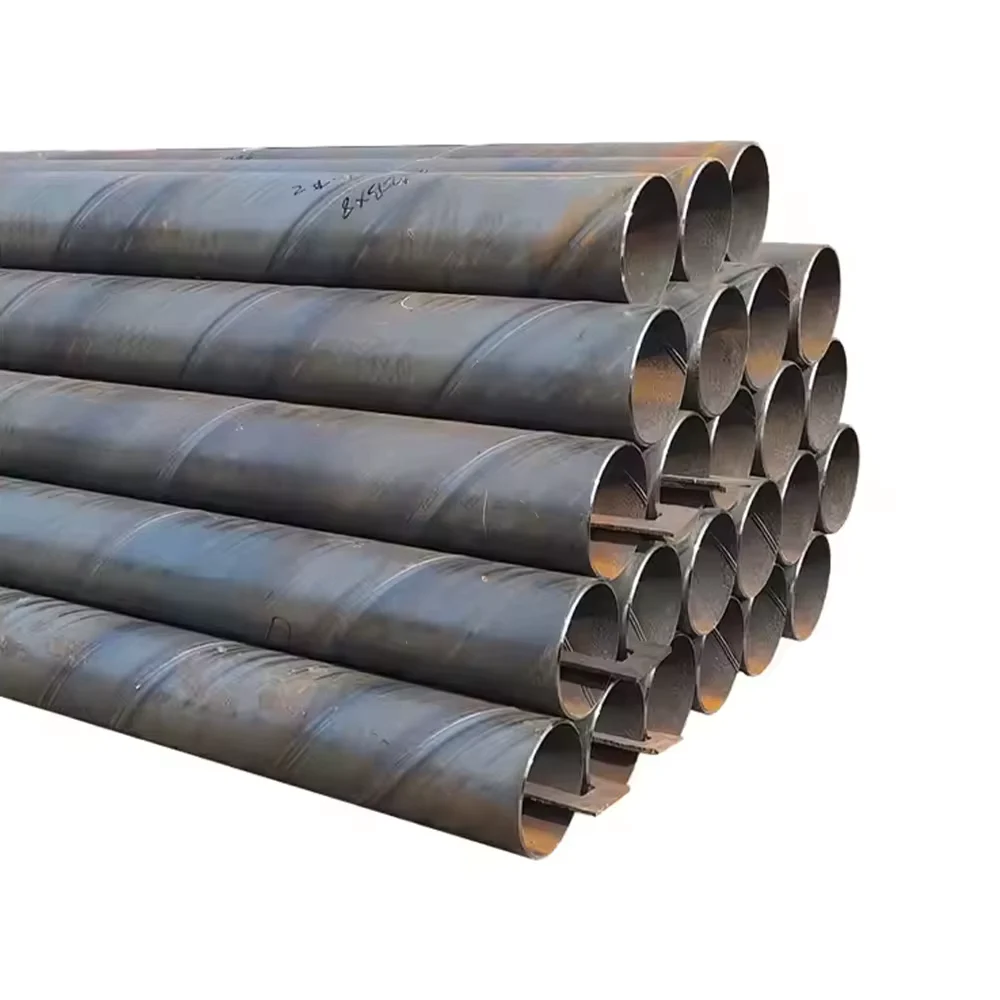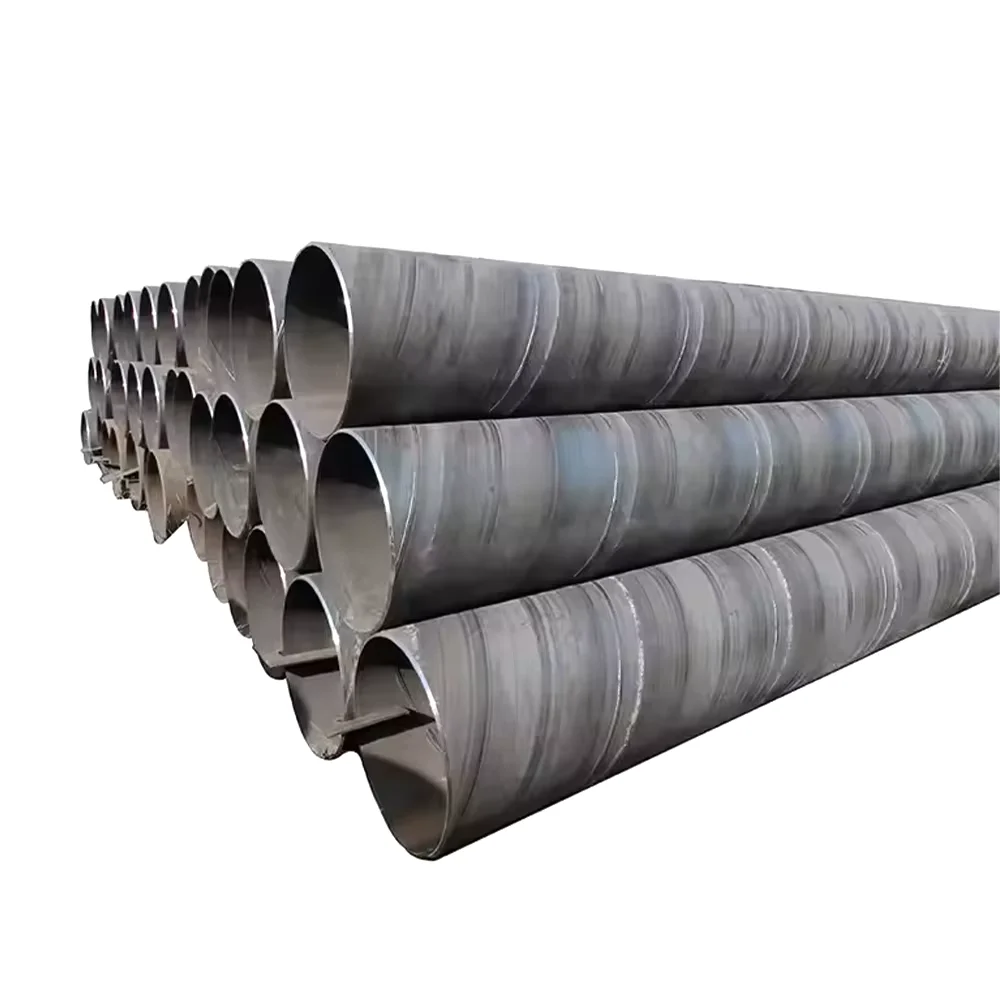
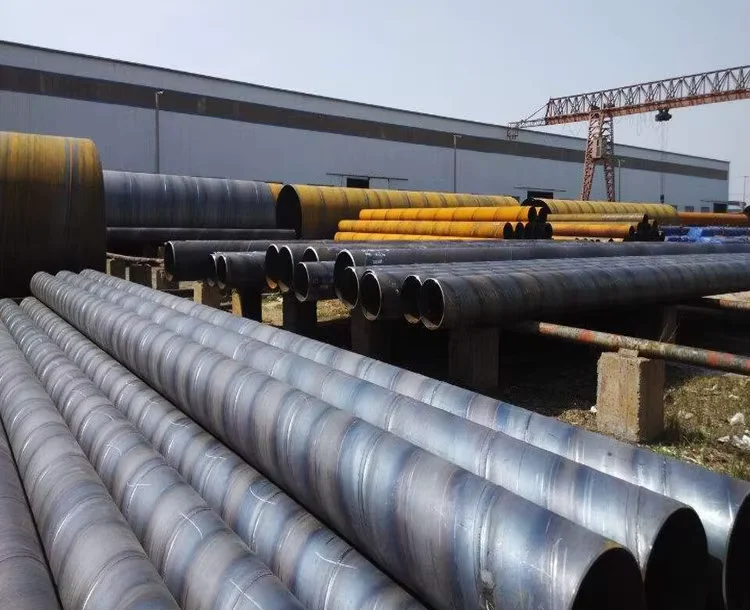
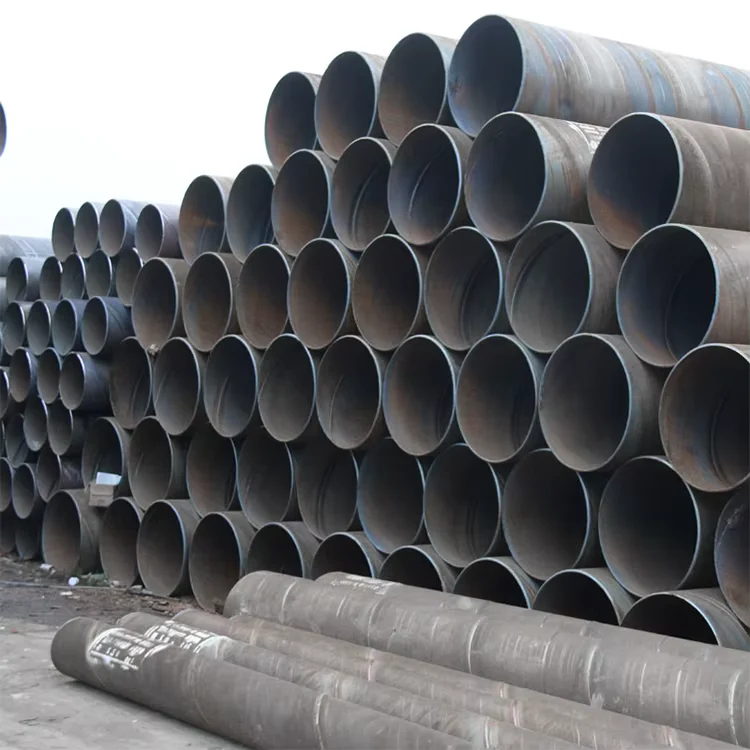
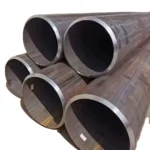
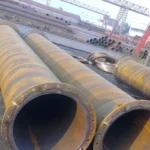
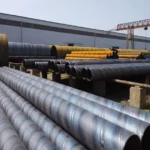
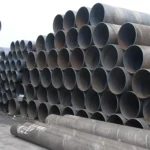
Description
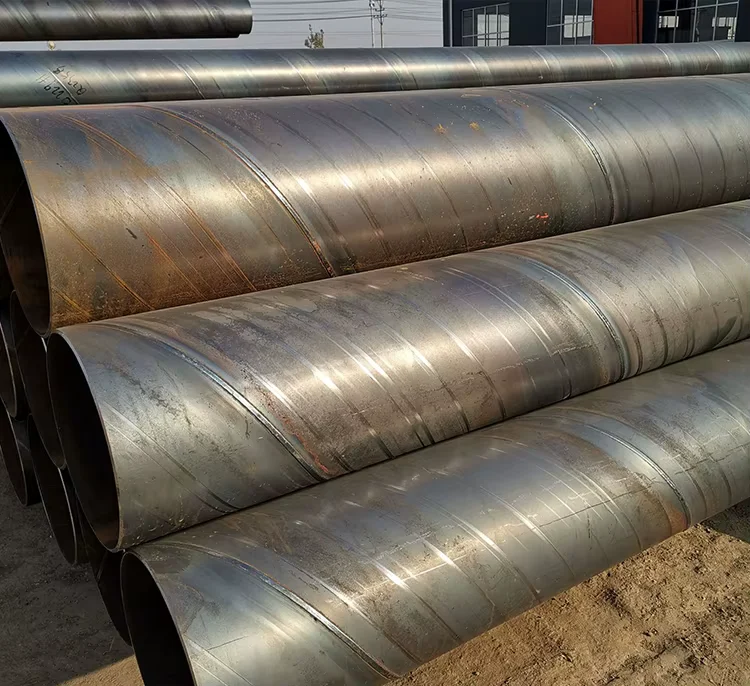
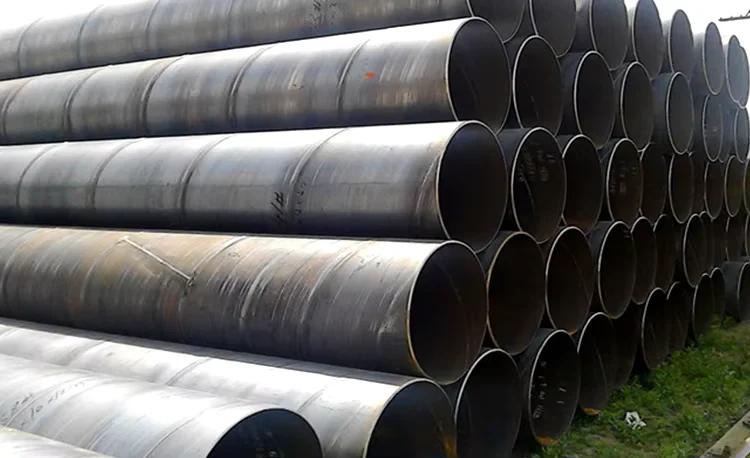
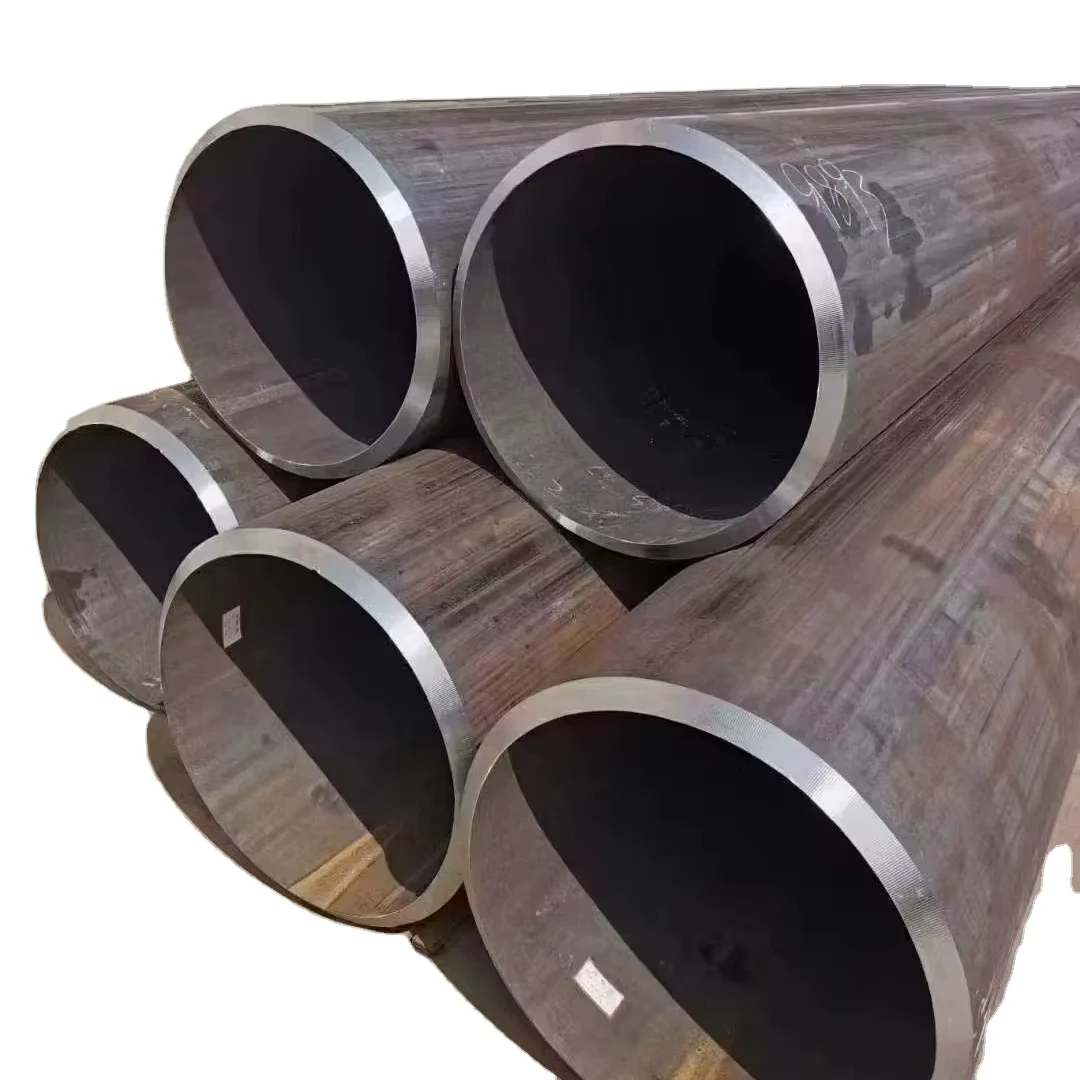
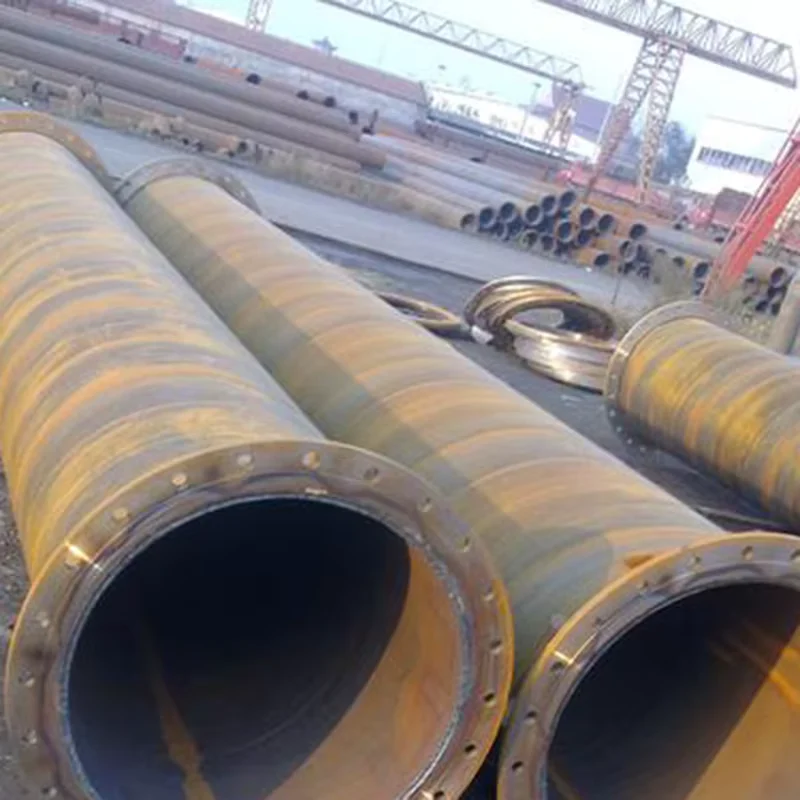
Direct Mill Supply — ASTM A106 seamless carbon steel pipe produced in-house with full heat-level traceability from billet to finished pipe.
Technical Specifications
| Parameter | Value |
|---|---|
| Designation | ASTM A106 Seamless Carbon Steel Pipe |
| Product Type | Seamless Steel Pipe |
| Steel Grade | ASTM A106 Grade A, ASTM A106 Grade B |
| Standard | ASTM A106, API 5CT, API 5L, JIS, BS, DIN |
| Section Shape | Round |
| Size Range | OD 10–609 mm |
| Wall Thickness | 1.65–59.54 mm |
| Length | 5.8–12 m (standard export length) |
| Technique | Seamless (Hot Rolled / Cold Rolled) |
| Surface Treatment | Hot Rolled, Oiled / Non-oiled |
| Tolerance | ±5% / ±1% |
| Ends | Plain / Beveled (per standard) |
| Invoicing | By Theoretical Weight |
| Origin | Shandong, China |
Application Suitability
| Industry | Typical Applications |
|---|---|
| Oil & Gas / EPC | High-temperature process piping, flow lines, transmission pipelines |
| Power Generation | Boiler tubes, superheater systems, steam lines in thermal and combined-cycle plants |
| Chemical Processing | Reactor feed lines, heat exchanger piping, fertilizer plant process loops |
| Industrial Infrastructure | Hydraulic systems, compressed air mains, structural columns and machinery frames |
Why Negative Tolerance on Seamless Pipe Costs More Than You Think
A 1.5 mm shortfall on a 12.7 mm wall can void an entire hydrotest batch.
Early in my career I specified ASTM A106 Grade B at 12.7 mm wall for a Southeast Asian power plant. Mill certificates read correctly, but independent caliper checks showed 11.2 mm across the lot — well beyond the ±12.5 % allowance permitted by ASTM A106. The业主 rejected the shipment on SGS re-inspection, and two months of schedule evaporated before replacement pipe arrived. Since then I have seen the same pattern repeat: buyers trust paper data, skip incoming dimensional audits, and discover the gap only when the welder’s fit-up fails or the hydrotest pressure drops. For any ASTM A106 seamless carbon steel pipe order exceeding a few containers, third-party dimensional verification at the mill gate is not optional — it is the only line of defence against negative-tolerance invoicing that erodes both pressure rating and project margin. [NEED_CITE: ASTM A106 dimensional tolerance requirements for seamless pipe]
Matching High-Temperature Service Across Pressure and Corrosion Environments
ASTM A106 Grade B remains the default choice for continuous service above 400 °C because its manganese-silicon deoxidation chemistry retains creep strength where killed carbon steels designed for ambient service would soften. The OD range of 10–609 mm and wall thickness from 1.65 mm to 59.54 mm covers everything from instrument lines to heavy-wall boiler headers within a single procurement package. When the same ASTM A106 seamless carbon steel pipe is routed through corrosive atmospheres — offshore platforms, chemical fertilizer plants — the hot-rolled oiled surface provides short-term transit protection, while long-term service demands either field-applied 3PE coating or specification of a corrosion allowance in the wall calculation.
Engineering Compliance and Certification Pathways
Pressure piping governed by ASME B31.1 (power) or B31.3 (process) requires documented proof that the pipe conforms to ASTM A106 in both chemistry and tensile properties, verified by a Mill Test Certificate traceable to the original heat number. For projects entering the European market, the same pipe may need to satisfy EN 10216-2 equivalence or carry a CE mark under the Pressure Equipment Directive, which means the mill’s quality system must be ISO 9001 certified and open to notified-body audits. Beveled ends per ASTM A106 facilitate butt-weld field joints, but the bevel angle and root face must match the approved WPS — a detail frequently overlooked until spool fabrication begins. [NEED_CITE: ASME B31.3 material requirements for carbon steel seamless pipe]
Steel Grade Selection and Seamless Process Fundamentals
ASTM A106 covers three grades — A, B, and C — differentiated primarily by carbon and manganese content, which directly governs yield strength and weldability. Grade A suits low-pressure steam and water lines; Grade B handles the majority of refinery and power-plant process piping; Grade C is reserved for higher-pressure applications where additional manganese boosts strength without sacrificing ductility. The seamless manufacturing route — piercing a solid billet and elongating it over a mandrel — produces a homogeneous grain structure with no longitudinal weld seam, eliminating the weakest link present in ERW alternatives under cyclic thermal loading. Hot-rolled pipes in the heavier wall range (above 20 mm) retain as-rolled scaling that must be removed before coating adhesion can be guaranteed, while cold-drawn variants offer tighter dimensional tolerance at the cost of reduced elongation.
Hidden Costs of Unverified Pipe Procurement
Specifying ASTM A106 Grade B on a purchase order means nothing if the delivered product carries a non-conforming chemistry or an untraceable heat number. Customs authorities in the Middle East and Southeast Asia increasingly demand EN 10204 3.2 certificates witnessed by a third-party surveyor; paperwork generated by a trading desk rather than the producing mill will not survive scrutiny. Beyond clearance delays, sub-standard wall thickness reduces the allowable working pressure calculated under ASME B31.3, forcing either costly re-engineering or outright rejection during the client’s pre-commissioning inspection. The financial exposure is not the unit price difference — it is the crane time, weld repair, and schedule penalty when a spool fails radiographic examination because the base metal chemistry drifted outside the A106 envelope. [NEED_CITE: material traceability requirements under EN 10204 3.1 and 3.2]
Procurement Confidence Through Vertical Integration
XJY Structure operates its own steel production facility with three dedicated production lines and access to over 2,800 raw material specifications, meaning the ASTM A106 seamless carbon steel pipe you order is melted, rolled, and tested under one quality system from billet to bundle. There is no intermediate trader inserting margin or obscuring the supply chain. Every heat is sampled for chemical composition and mechanical properties in our in-house laboratory before the pipe leaves the mill, and the resulting Mill Test Certificate travels with the shipment — not as a favour, but as a standard deliverable. For projects requiring independent verification, we coordinate SGS, BV, or TÜV inspections at the mill gate at the buyer’s request, with full dimensional, ultrasonic, and hydrostatic test reports included in the documentation package. Custom cut-to-length, beveled-end preparation, and non-standard minimum orders are handled within the same facility, eliminating the coordination gap that arises when material sourcing and fabrication are split between separate vendors.
Documentation & Compliance
- Mill Test Certificate per EN 10204 3.1 documenting ASTM A106 Grade B chemical composition (C, Mn, Si, P, S) and tensile properties traceable to the original heat number
- Third-party inspection reports from SGS, BV, or TÜV covering dimensional checks, surface quality, and hydrostatic test results upon request
- ISO 9001 quality management certificate confirming the producing mill’s certified quality system
- Material traceability matrix linking each pipe bundle to its heat number, chemical analysis, and mechanical test results
- Full export documentation package: commercial invoice, packing list, bill of lading, and certificate of origin formatted for destination-country customs requirements
- Welding procedure documentation (WPS/PQR) available when pipe is supplied as part of a fabricated spool or structural assembly
Packaging, Loading & Delivery
- ASTM A106 Grade B pipes bundled with galvanized steel strips at regular intervals, with end caps on beveled-end pipes to protect the weld preparation during ocean transit
- Hot-rolled oiled surface pipes wrapped in waterproof kraft paper or woven belts to prevent moisture-induced staining and preserve the oil film in humid port environments
- Heavy-wall pipes (above 30 mm) loaded in single-tier cradles within the container to prevent bundling distortion and facilitate crane-off at site without re-handling
- Cut-to-length pipes between 5.8 m and 12 m optimised for 20-ft and 40-ft open-top containers, with dunnage placed at quarter-points to prevent sagging during transit
- Each bundle tagged with heat number, steel grade, size, and length for immediate identification at the laydown area without opening the pack
- Shipment available FOB, CIF, or DDP with professional oversized-cargo lashing planning for pipes exceeding standard container dimensions
Starting Your ASTM A106 Pipe Inquiry
Send your project drawings or a specification sheet listing the required steel grade, outer diameter, wall thickness, total tonnage, and destination port. We respond within 24 hours with a detailed quotation covering material, fabrication, coating, packing, and shipping costs, together with a Mill Test Certificate sample and production timeline. For projects requiring third-party inspection or non-standard end preparation, confirm these at the inquiry stage so the inspection hold points and tooling setup are built into the schedule from day one.
Frequently Asked Questions
Q: What is the difference between ASTM A106 Grade A and Grade B?
A: Grade B contains higher carbon and manganese than Grade A, resulting in greater tensile and yield strength suitable for higher-pressure and higher-temperature service. Grade A is typically specified for low-pressure steam, water, and air lines, while Grade B covers the majority of refinery, power plant, and process piping applications.
Q: Can you provide third-party inspection before shipment?
A: Yes. We coordinate SGS, BV, or TÜV inspections at the mill gate covering dimensional verification, surface quality assessment, and witness of hydrostatic testing. The inspection scope and acceptance criteria should be confirmed at the contract stage.
Q: How do you handle negative tolerance and invoicing?
A: All ASTM A106 seamless pipes are invoiced by theoretical weight per the ordered dimensions. Actual wall thickness is measured and recorded on the Mill Test Certificate. We maintain production controls within the ASTM A106 permitted tolerance range (±12.5 % on wall thickness for hot-rolled pipe) and welcome buyer-nominated dimensional checks at the mill.
Q: What surface treatment options are available?
A: Standard supply is hot-rolled with an oiled or non-oiled finish. For corrosive service environments, field-applied coatings such as 3PE, epoxy, or galvanizing can be arranged as a secondary operation. Surface treatment selection should be confirmed at the inquiry stage.
Q: Do you supply pipes cut to non-standard lengths?
A: Yes. Standard export lengths range from 5.8 m to 12 m. Custom cut-to-length, beveled-end preparation, and threading are available within the same facility. Non-standard lengths should be specified at the inquiry stage to confirm tooling availability and lead time.
Get Your ASTM A106 Quote with Full Mill Documentation
Submit your pipe specification — grade, size, wall thickness, quantity, and destination — to receive a detailed quotation and sample Mill Test Certificate within 24 hours.
Shandong Xin Jiyuan Special Steel Tube Co., Ltd | Tel: +86 531 8573 6315 | Mobile/WhatsApp/WeChat: +86 188 5315 7756 | Email: admin@xjystructure.com