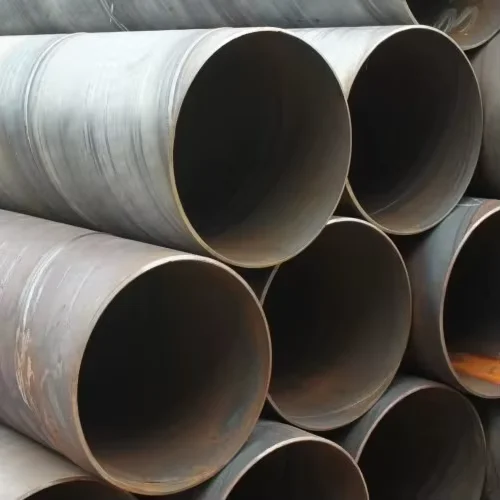
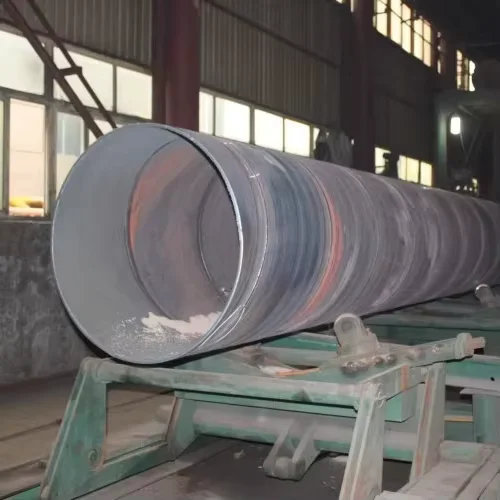
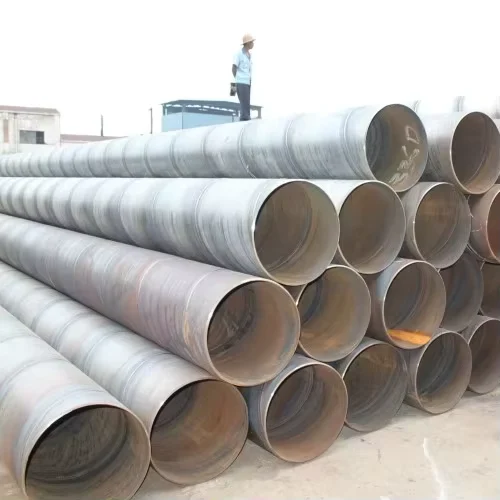
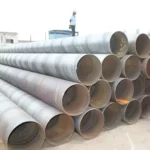
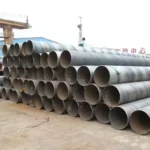
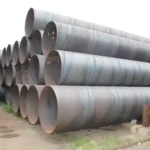
Description
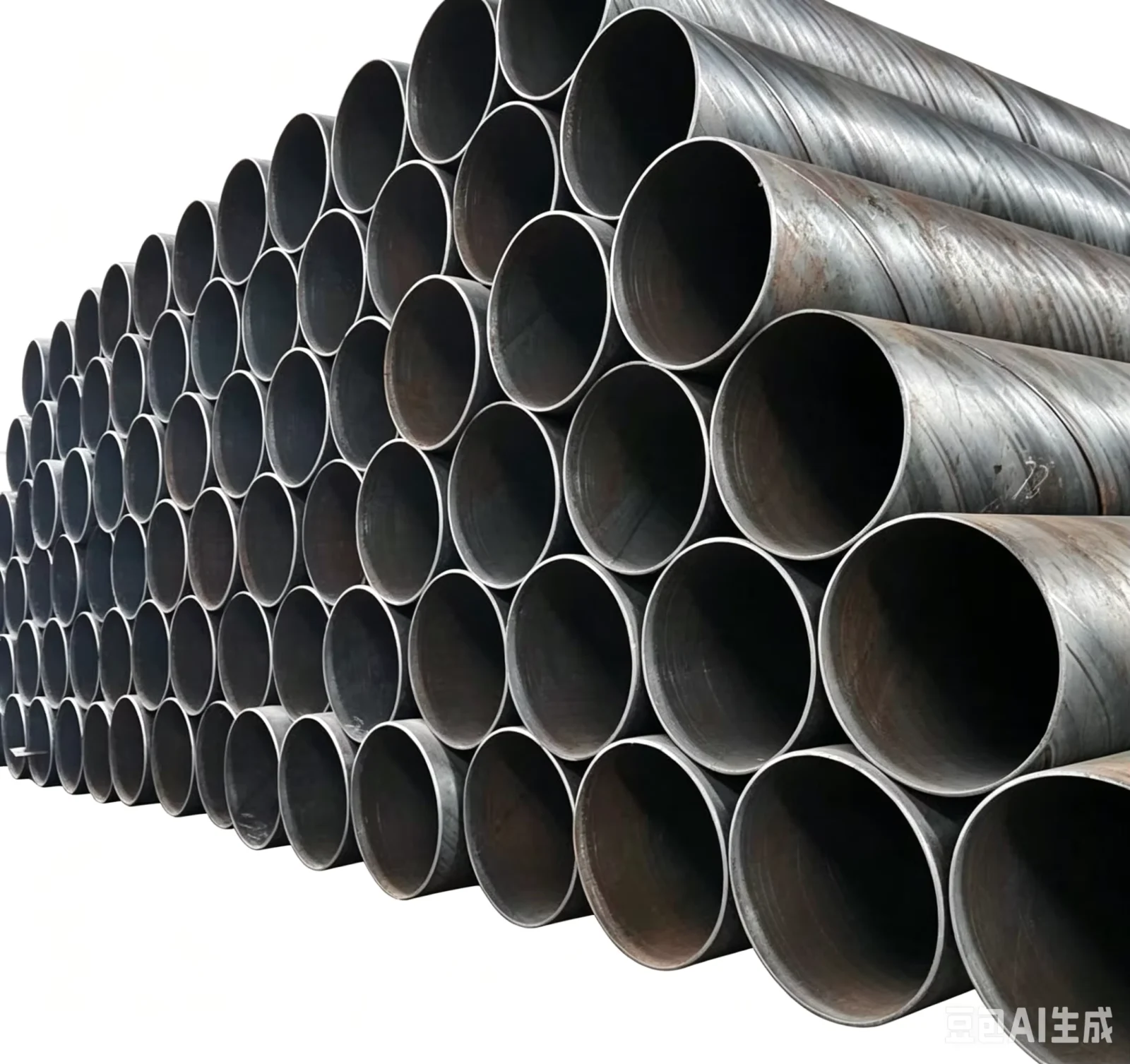
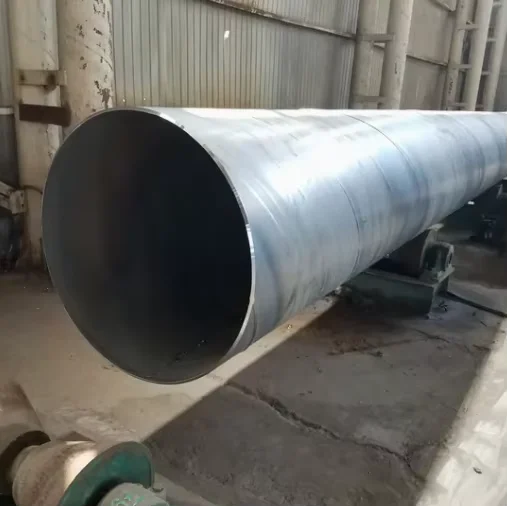
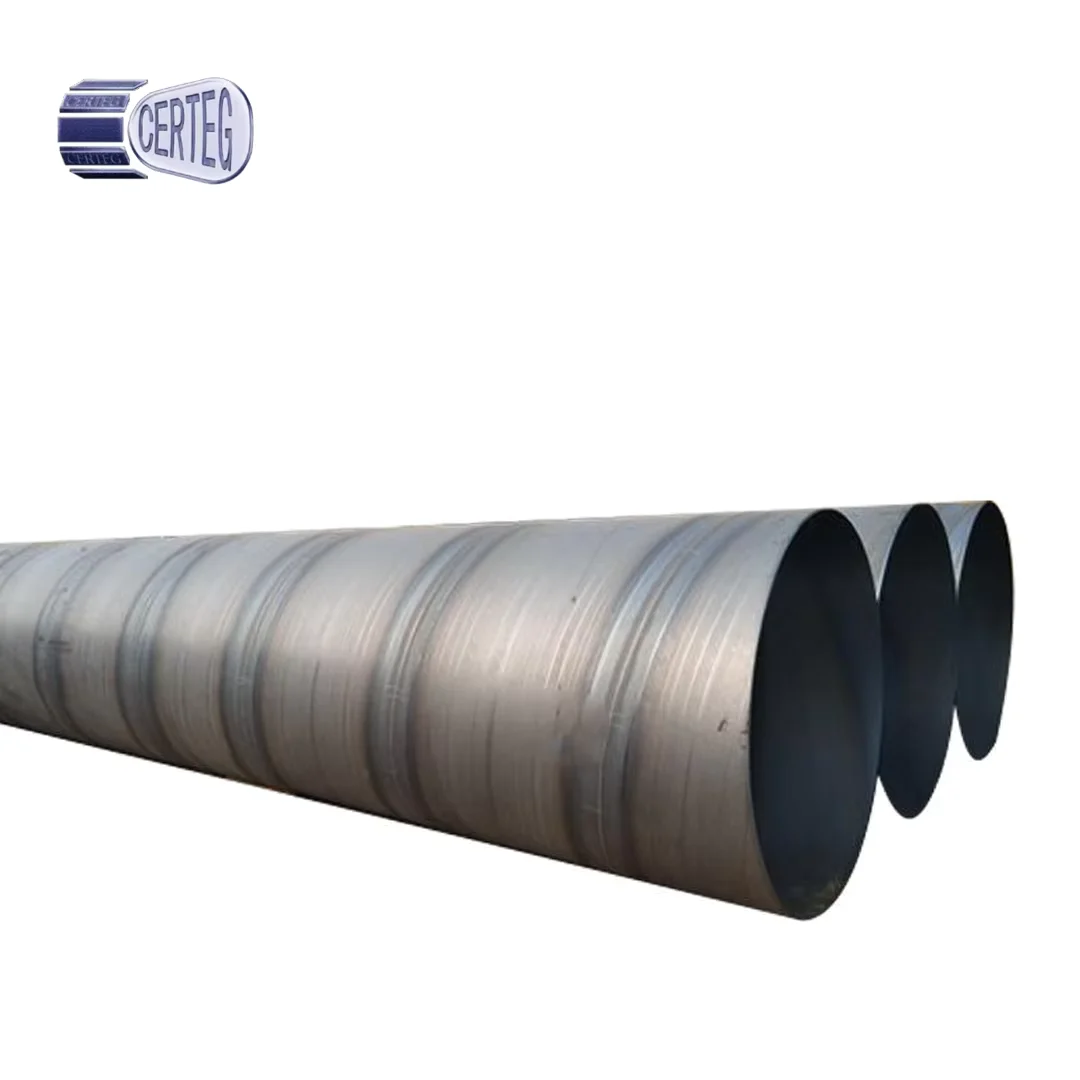
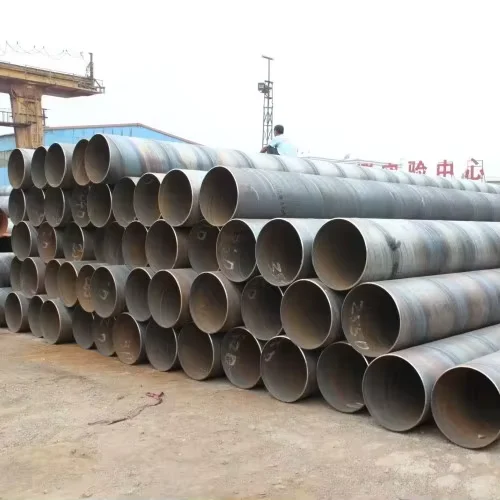
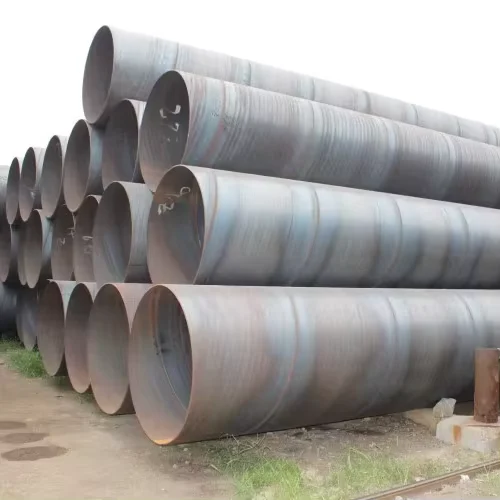
Factory-direct SSAW piling pipes — Vertically integrated steel mill producing spiral welded pipes up to 3520mm OD with full material traceability from raw slab to finished pile.
Technical Specifications
| Parameter | Value |
|---|---|
| Designation | SSAW Spiral Welded Steel Pipe for Piling |
| Product Type | Spiral Welded Steel Pipe (SSAW) |
| Steel Grade | Carbon Steel, Galvanized Steel |
| Standard | API 5L, GB/T 9711.1-1997, SY/T 5037-2000 |
| Section Shape | Round |
| Outer Diameter | 219–3520 mm |
| Wall Thickness | 5–30 mm |
| Technique | SAW (Spiral Submerged Arc Welded) |
| Surface Treatment | Bare / Black Painted / PE Coated / Epoxy Coating |
| Application | Steel Pipe Pile / Fluid Pipe / Structural Pipe / Concrete Reinforcement / Villa / Sports Venues / School / Supermarket / Warehouse |
Application Suitability
| Industry | Typical Applications |
|---|---|
| Infrastructure & Civil Engineering | Bridge foundation piling, highway sound barrier supports, port quay wall structures |
| Industrial Construction | Factory column bases, warehouse frame supports, equipment platform foundations |
| Commercial Building | High-rise building deep foundation piles, shopping mall structural supports |
| Energy & Utilities | Solar panel mounting pile foundations, wind turbine base supports, pipeline casing |
Why Material Traceability Decides Piling Pipe Acceptance on Site
A missing heat number on a mill test certificate can halt an entire foundation pour.
Overseas EPC contractors sourcing SSAW spiral welded steel pipe for piling from fragmented suppliers face a recurring problem: the fabrication shop sources raw coils from multiple traders, each with incomplete or inconsistent certification chains. When inspectors arrive at the project site, material traceability gaps surface as rejected batches, delayed foundation work, and costly re-procurement. [NEED_CITE: material traceability requirements for structural piling in international construction projects]
How Large-Diameter SSAW Pipes Match Foundation Load Requirements
The 219–3520mm outer diameter range of this SSAW spiral welded steel pipe for piling covers virtually all foundation engineering demands, from light commercial structures to heavy bridge abutments. The spiral submerged arc welding technique produces continuous helical seams that distribute axial loads uniformly around the pipe circumference, making it suitable for driven piles and bored pile casings. Wall thickness options from 5mm to 30mm allow engineers to specify adequate section modulus for soil bearing capacity and lateral earth pressure conditions. Our vertically integrated production ensures that every coil used in these piling pipes originates from our own steel mill, eliminating third-party material substitution risks.
Compliance Frameworks for Piling Pipe Procurement
Piling pipes must conform to recognized standards that govern both material properties and dimensional tolerances. API 5L and SY/T 5037-2000 define chemical composition limits, tensile requirements, and hydrostatic testing protocols for spiral welded pipes used in structural and pressure applications. For projects in corrosive soil environments or marine conditions, surface treatment selection becomes critical: PE coating provides mechanical protection during driving, while epoxy coating offers chemical resistance against aggressive groundwater. Third-party inspection by SGS or BV verifies dimensional accuracy, weld quality through NDT testing, and coating thickness compliance before shipment. [NEED_CITE: international standards for spiral welded steel pipe in piling applications]
Understanding SAW Welding and Steel Grade Selection for Piling
Spiral submerged arc welding (SAW) differs from longitudinal welding in its helical seam geometry, which allows production of large diameters from relatively narrow coil widths while maintaining consistent weld penetration. The process uses flux-covered wire and granular flux to shield the molten weld pool, producing defect-free joints suitable for load-bearing piling applications. Carbon steel grades in this range provide adequate yield strength for most foundation applications while maintaining weldability and formability during site fabrication. When corrosion resistance is required, galvanized steel options extend service life in aggressive soil conditions without sacrificing structural integrity. The round section shape ensures uniform stress distribution under axial compression and bending moments typical in pile foundations.
Hidden Costs of Non-Compliant Piling Pipe Procurement
Purchasing SSAW spiral welded steel pipe for piling from suppliers without proper certification creates risks that extend far beyond unit price differences. Material without valid mill test certificates faces rejection during customs clearance or site inspection, triggering project delays and emergency re-procurement at premium prices. Welds produced without qualified WPS procedures may pass visual inspection but fail ultrasonic testing, requiring costly repairs or complete pile replacement. Negative tolerance abuse reduces actual wall thickness below design specifications, compromising load-bearing capacity and creating structural safety liabilities. [NEED_CITE: consequences of non-compliant steel materials in structural piling projects]
Why Source Piling Pipes from an Integrated Mill-Fabricator
Our production model eliminates the traditional gap between material supplier and fabricator by operating both steel melting facilities and pipe fabrication workshops under single management control. This vertical integration means every SSAW spiral welded steel pipe for piling we produce carries complete material traceability from iron ore to finished product, with chemical composition and mechanical properties documented at each processing stage. Our own steel mill produces over 2,800 specifications of raw material, ensuring consistent quality and eliminating the batch-to-batch variations that plague traders sourcing from multiple mills. Certified welding procedures (WPS/PQR) and qualified welders ensure every spiral seam meets API 5L and SY/T 5037 requirements. Complete quality documentation packages including weld maps, dimensional inspection reports, and coating thickness measurements support customs clearance and project handover across EU, Middle East, Southeast Asia, and African markets.
Documentation & Compliance
- Mill test certificate documenting Carbon Steel chemical composition and mechanical properties per API 5L and SY/T 5037-2000 for each heat number
- Material traceability report linking finished SSAW spiral welded steel pipe for piling to original coil heat number and steel mill production batch
- Third-party inspection report from SGS or BV confirming dimensional accuracy, weld quality through NDT testing, and coating thickness compliance
- Welding procedure specification (WPS) and procedure qualification record (PQR) for spiral submerged arc welding parameters
- Dimensional inspection report verifying outer diameter, wall thickness, and length tolerances against SY/T 5037-2000 requirements
- Coating thickness measurement report for PE coated or epoxy coated pipes with adhesion test results
Packaging, Loading & Delivery
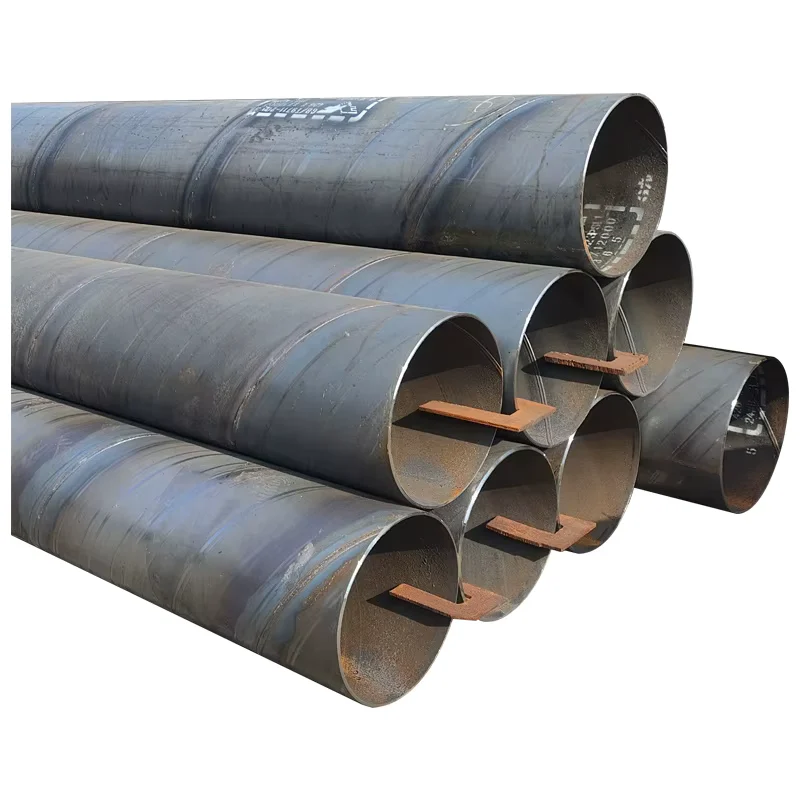
- Bare SSAW spiral welded steel pipe for piling bundled with steel strips and edge protectors to prevent surface damage during ocean transit
- PE coated and epoxy coated pipes wrapped with protective film and separated by rubber spacers to preserve coating integrity during handling and shipping
- Large diameter pipes (above 1500mm OD) loaded as breakbulk cargo with custom cradles and lashing systems to prevent rolling and deformation
- Galvanized steel pipes bundled with non-metallic separators to avoid zinc coating scratches and white rust formation
- Pipe ends protected with plastic caps to prevent moisture ingress and internal corrosion during storage and transportation
- Professional loading plans optimized for container stuffing (smaller diameters) or flat rack/platform trailer transport (large diameters) with complete export documentation
Request Quotation with Complete Technical Documentation
Submit your project specifications including outer diameter, wall thickness, length, steel grade, surface treatment requirements, and destination port to receive detailed pricing with mill test certificate samples. Our engineering team reviews drawings within 24 hours and provides shop drawing confirmation, production schedule, and complete quality documentation package outline. Confirm API 5L or SY/T 5037 compliance requirements, third-party inspection needs, and loading specifications to ensure smooth customs clearance and site delivery.
Start Your Piling Pipe Procurement with Verified Material Traceability
Share your project drawings and specifications to receive quotation with complete mill test certificate documentation within 24 hours.
Contact: Shandong Xin Jiyuan Special Steel Tube Co., Ltd
Website: www.xjystructure.com
Tel: +86 531 8573 6315
Mobile/WhatsApp/WeChat: +86 188 5315 7756
Email: admin@xjystructure.com
Address: No.11889, Jingshi West Road, Lulian Group, Jinan City, Shandong Province, China
Frequently Asked Questions
Q: What is the difference between SSAW and LSAW pipes for piling applications?
A: SSAW (spiral submerged arc welded) pipes use helical welding seams that allow production of large diameters from narrower coil widths, making them cost-effective for diameters above 500mm. LSAW (longitudinal submerged arc welded) pipes have straight seam welding and are typically used for smaller diameters or applications requiring specific grain orientation. For piling applications, SSAW pipes offer advantages in large diameter ranges (up to 3520mm) while maintaining structural integrity through continuous helical weld geometry.
Q: How does vertical integration ensure material traceability for piling pipes?
A: Our vertically integrated production means we control the entire supply chain from steel melting to finished pipe fabrication. Each SSAW spiral welded steel pipe for piling carries a unique heat number that traces back to the original steel coil produced in our own mill. This eliminates third-party material sourcing gaps and ensures complete chemical composition and mechanical property documentation from raw material to finished product, supporting customs clearance and project quality audits.
Q: Which surface treatment is suitable for piling pipes in corrosive soil conditions?
A: Surface treatment selection depends on soil chemistry and groundwater conditions. PE (polyethylene) coating provides excellent mechanical protection during pile driving and resistance to soil abrasion. Epoxy coating offers superior chemical resistance against aggressive groundwater and acidic soil conditions. Galvanized steel provides long-term corrosion protection through zinc sacrificial layer. Bare pipes with black paint are suitable for temporary applications or non-corrosive environments. Our technical team can recommend appropriate coating systems based on your specific site conditions.
Q: What quality documentation is provided for customs clearance and project handover?
A: Each shipment includes complete documentation package: mill test certificates with chemical composition and mechanical properties per API 5L/SY/T 5037-2000, material traceability reports linking pipes to original heat numbers, third-party inspection reports (SGS/BV) if requested, welding procedure specifications, dimensional inspection reports, coating thickness measurements, packing lists, bills of lading, and certificates of origin. All documents support customs clearance in EU, Middle East, Southeast Asia, and African markets.
Q: How are large diameter SSAW piling pipes packed and shipped?
A: Small diameter pipes (below 600mm OD) are bundled and loaded in standard containers with optimized stuffing plans. Medium diameter pipes (600-1500mm OD) are loaded on flat rack containers or open-top containers with proper lashing. Large diameter pipes (above 1500mm OD) require breakbulk shipping with custom cradles, rubber padding, and steel wire lashing systems to prevent rolling and coating damage. All pipes receive end caps for moisture protection and are marked with heat numbers and specifications for site identification.