Description
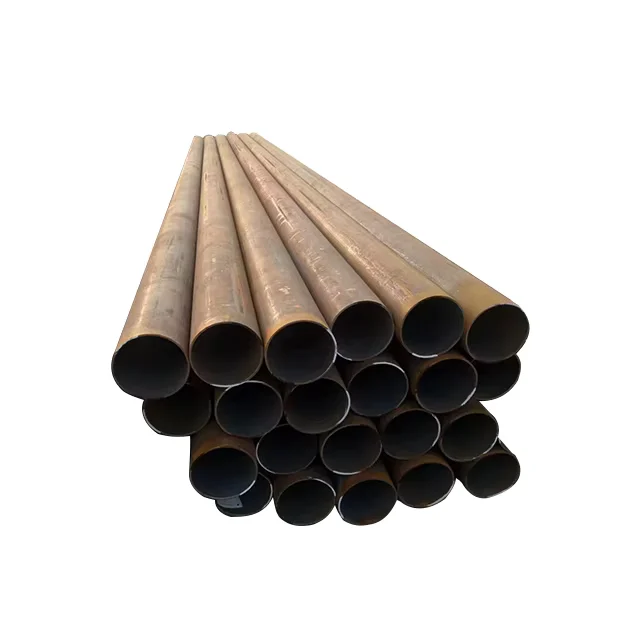
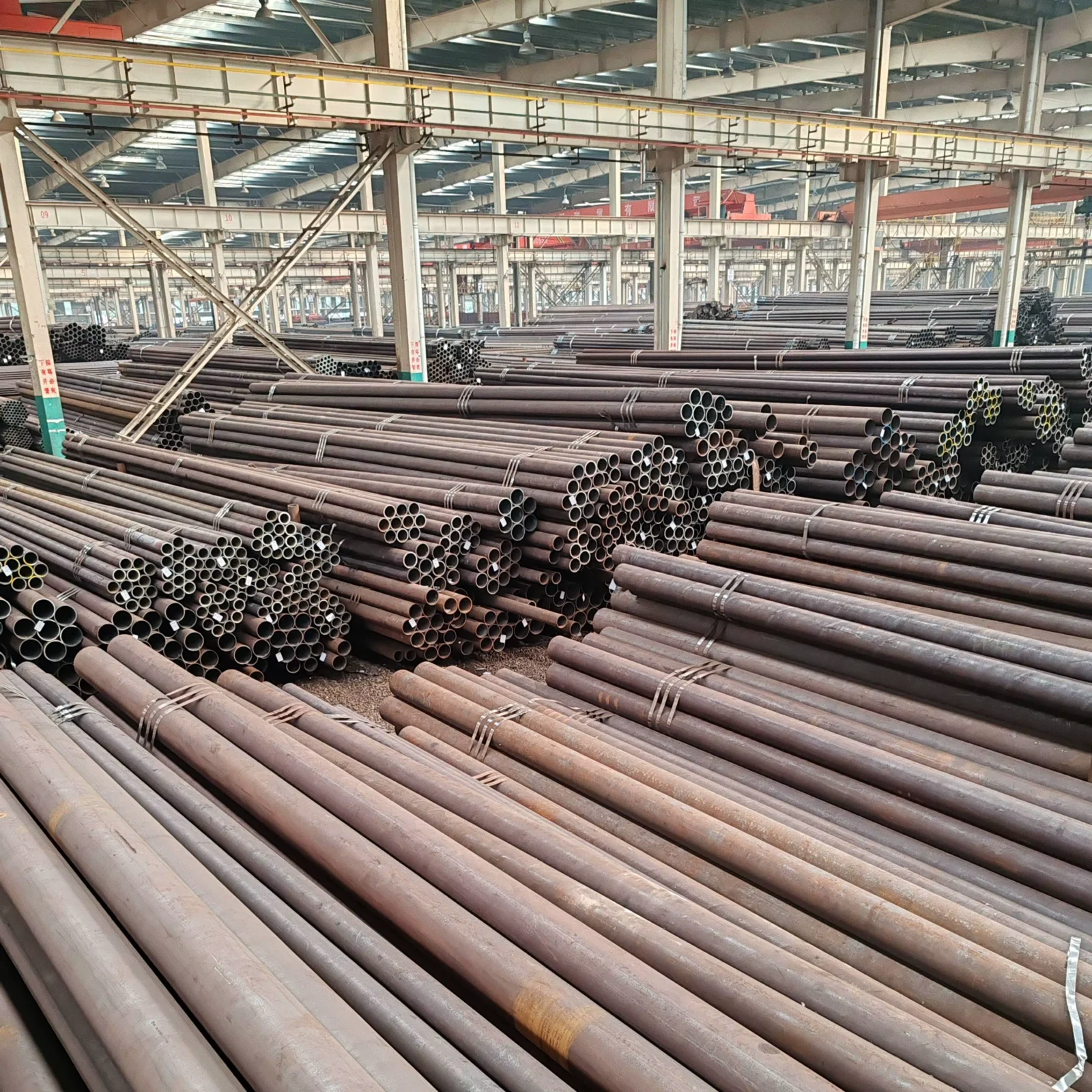
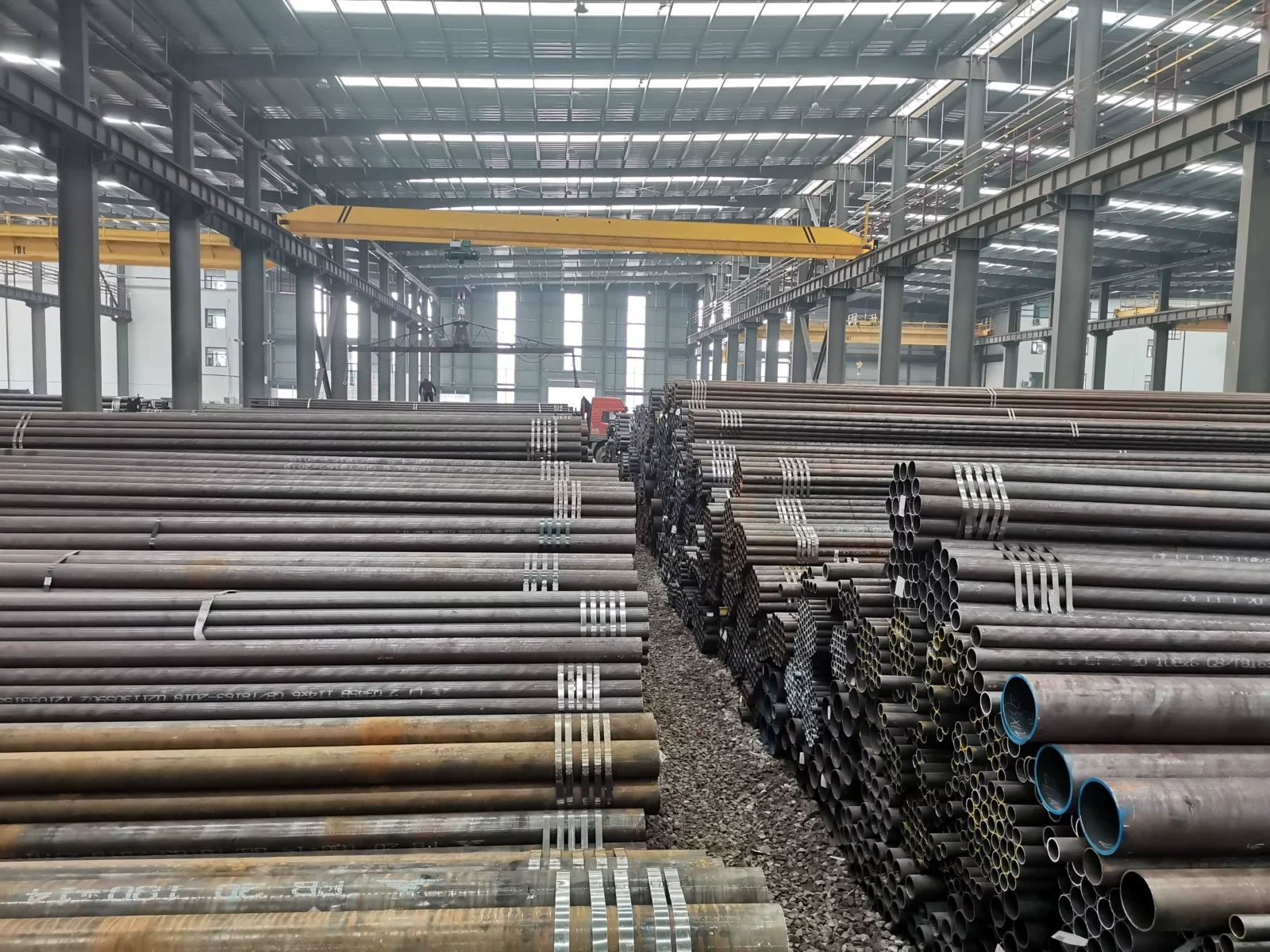
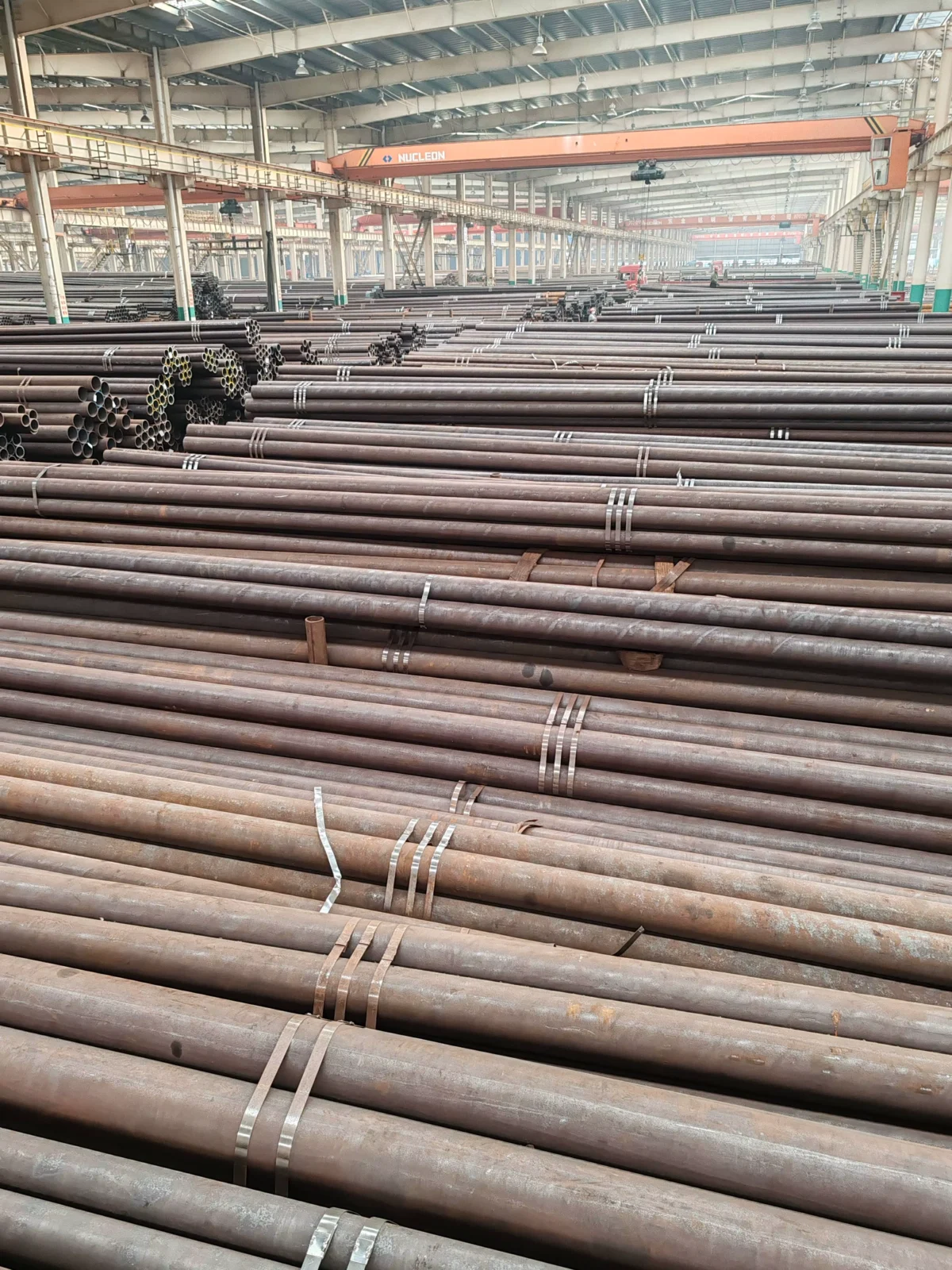
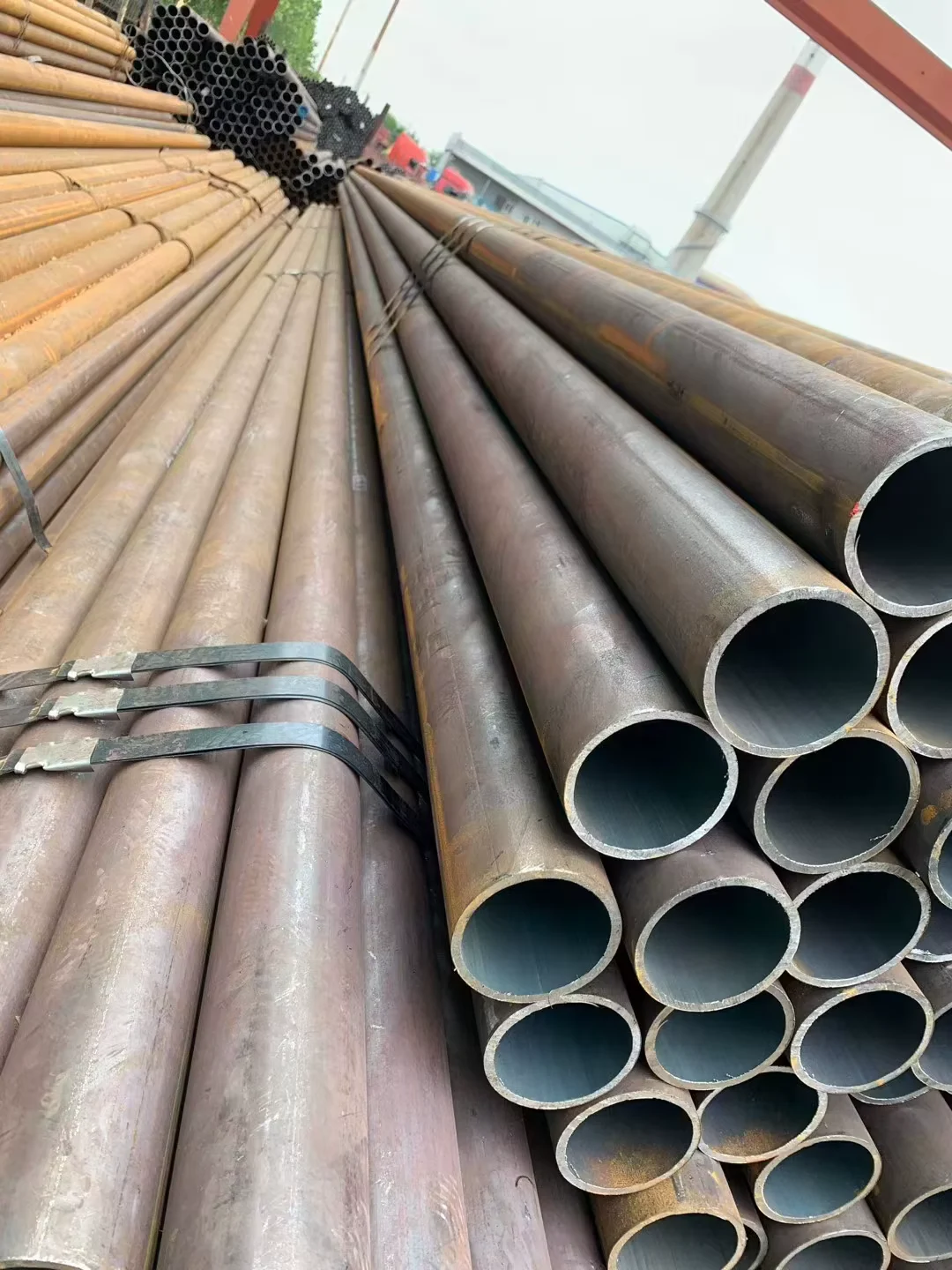
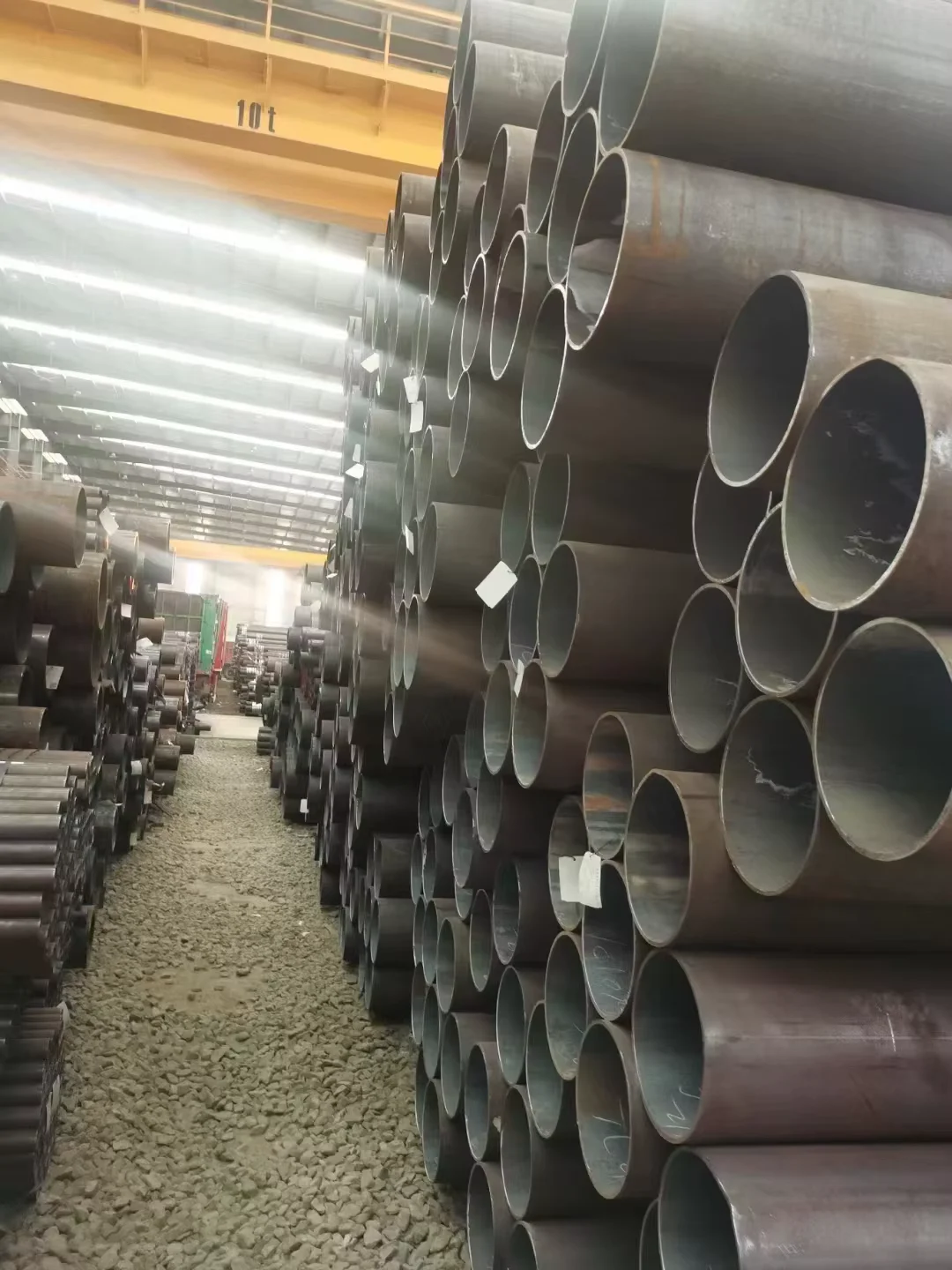
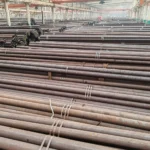
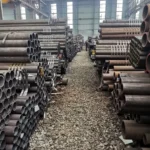
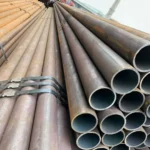
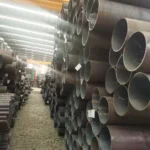
Factory-direct ERW round steel pipe — Produced in-house from billet to finished pipe under one quality system, covering Q195 through S355JR grades with full MTC traceability.
Technical Specifications
| Parameter | Value |
|---|---|
| Designation | Q235/Q345/S355JR Round Steel Pipe |
| Product Type | Round Steel Pipe (ERW) |
| Steel Grade | Q195, Q235, Q345, S235JR, S275JR, S355JR |
| Standard | JIS (also API, CE, ISO 9001 certified) |
| Section Shape | Round |
| Outer Diameter | Customization |
| Wall Thickness | Customization |
| Length | 1–12 m (also 6 m / 6.4 m / 12 m available) |
| Technique | ERW |
| Surface Treatment | Black Painted / Cold Rolled |
| Tolerance | ±1% |
| Ends | Plain (default) |
| Oiled or Non-oiled | Non-oiled |
| Invoicing | By Theoretical Weight |
| Application | Structure Pipe / Fluid Pipe / Boiler Pipe / Gas Pipe / Oil Pipe / Hydraulic Pipe / Construction and infrastructure projects |
| MOQ | 20 Tons |
| Origin | Shandong, China |
Application Suitability
| Industry | Typical Applications |
|---|---|
| General Construction | Building frames, column supports, roof truss systems, scaffolding uprights |
| Industrial Infrastructure | Conveyor structures, platform handrails, equipment support frames, pipe racks |
| Fluid & Energy Transport | Low-pressure gas lines, water supply mains, boiler feed pipes, hydraulic conduits |
| EPC Projects | Structural bracing, purlin systems, foundation anchor assemblies, modular skid frames |
When Negative Tolerance Turns a Pipe Order Into a Site Rejection
A ±1% tolerance guarantee means every caliper reading stays within spec — no exceptions at the port.
Outsourced pipe procurement often breaks down at the receiving end. A buyer in the Middle East once accepted a shipment where wall thickness sat at the very edge of negative tolerance — the third-party inspector at Jebel Ali flagged nearly half the container. Rework costs mounted, the relationship nearly collapsed, and the lesson was permanent. When fabricators source raw material from third-party mills, material traceability gaps widen and dimensional consistency becomes a gamble. For ERW round steel pipe suppliers who do not control their own mill, the chain of accountability fractures between the material certificate and the finished product. [NEED_CITE: EN 10219 dimensional tolerance requirements for cold-formed welded hollow sections]
Matching ERW Round Pipe to Structural and Fluid Applications
Every project demands a precise match between pipe geometry, steel grade, and service environment. For structural frames, Q345 or S355JR delivers the higher yield strength needed for load-bearing columns and truss members, while Q235 and S235JR serve adequately for secondary bracing and non-critical supports. In fluid transport applications — gas lines, water mains, hydraulic conduits — the ERW weld seam must meet the same dimensional integrity as the parent metal, which is why our ±1% tolerance protocol applies to both wall thickness and outer diameter. As an ERW round steel pipe supplier operating a vertically integrated mill, we control the entire chain from billet to finished pipe, ensuring the weld seam quality matches the base material across every heat number.
Engineering Compliance and Certification Requirements
Structural steel pipe used in load-bearing applications must conform to recognized engineering standards — EN 10219 for cold-formed welded hollow sections in European markets, ASTM A500 or A53 for North American projects, and JIS G3444 / G3452 for Japanese-spec work. The choice between Q-series (Chinese GB standards) and S-series (European EN standards) depends entirely on the project specification and the engineer of record. CE marking under EN 10219 is mandatory for structural pipe entering the EU, while API certification opens doors in oil and gas infrastructure. Third-party inspection by SGS, BV, or TÜV provides independent verification that chemical composition and dimensional accuracy meet the purchase order — a requirement most EPC firms now write into their procurement specifications as standard. [NEED_CITE: steel grade equivalence mapping between GB Q-series and EN S-series standards]
Understanding ERW Process, Grade Selection, and Surface Treatment
ERW (Electric Resistance Welding) forms the pipe by rolling steel coil into a cylindrical shape and fusing the seam through electrical resistance heat — no filler metal is added. This process produces a consistent weld seam suitable for structural and low-to-medium pressure fluid applications, at a lower cost than seamless pipe for the same outer diameter range. Steel grade selection follows the project’s structural demand: Q195 and S235JR cover general-purpose structural and fencing applications; Q235 and S275JR step up for moderate load-bearing frames; Q345 and S355JR serve heavy structural members where higher yield strength reduces section size and overall weight. Surface treatment options — black painted for indoor or temporary protection, cold rolled for tighter dimensional finish — depend on the service environment and whether downstream galvanizing or coating will be applied at the fabrication stage. Wall thickness tolerance directly affects both theoretical weight invoicing and actual load capacity: a pipe that measures consistently within ±1% delivers predictable structural performance, while one that drifts into excessive negative tolerance creates both weight disputes and engineering risk. [NEED_CITE: ERW vs seamless steel pipe application comparison by pressure and diameter range]
The Hidden Cost of Buying the Wrong Grade or Unverified Tolerance
Choosing a lower steel grade to save on unit price can increase total project cost when additional members are needed to meet the same load requirement. More critically, pipes with unverified wall thickness or undocumented chemical composition create problems at every downstream stage: third-party inspectors reject shipments at the port, structural engineers refuse to sign off on as-built documentation, and customs authorities hold containers pending material certification review. The cost of a rejected shipment — re-smelting, re-fabricating, re-shipping — dwarfs the initial price difference between a verified ERW round steel pipe supplier and an unverified source. [NEED_CITE: consequences of non-compliant steel material certification in international construction projects]
Why Procurement Teams Choose Our Mill for ERW Round Pipe
We operate our own steel production facility with three production lines, giving us direct control over billet quality, rolling parameters, and final dimensional accuracy — there is no gap between the material supplier and the pipe fabricator. Every pipe is caliper-checked before packing, with full dimensional reports attached to the shipment. Our in-house理化 laboratory issues Mill Test Certificates documenting chemical composition and mechanical properties per heat number, and we welcome SGS, BV, or TÜV third-party inspection at any stage. With over 2,800 specifications in our inventory system, we can consolidate mixed-size orders into a single shipment, reducing the logistics complexity that comes from sourcing multiple diameters and wall thicknesses from separate suppliers. We also provide shop drawing review, material optimization, and fabrication sequencing support — services that matter when the ERW round steel pipe must integrate into a larger structural package. Custom non-standard dimensions and fixed-length cutting are available within our production capability, and every shipment includes complete export documentation for smooth customs clearance at destination.
Documentation & Compliance
- Mill Test Certificate (MTC 3.1) documenting Q235/Q345/S355JR chemical composition and mechanical properties per heat number, with full material traceability from our own steel mill
- CE certificate confirming compliance with EN 10219 for cold-formed welded structural hollow sections, required for EU market entry
- ISO 9001 quality management system certificate covering the entire production process from billet reception to finished pipe dispatch
- SGS / BV / TÜV third-party inspection report available upon request, verifying dimensional accuracy, weld seam quality, and surface treatment
- Material traceability by heat number linking each pipe bundle back to the original melt chemistry and rolling records
- Complete customs documentation package including packing list, bill of lading, and certificate of origin for destination-country clearance
Packaging, Loading & Delivery
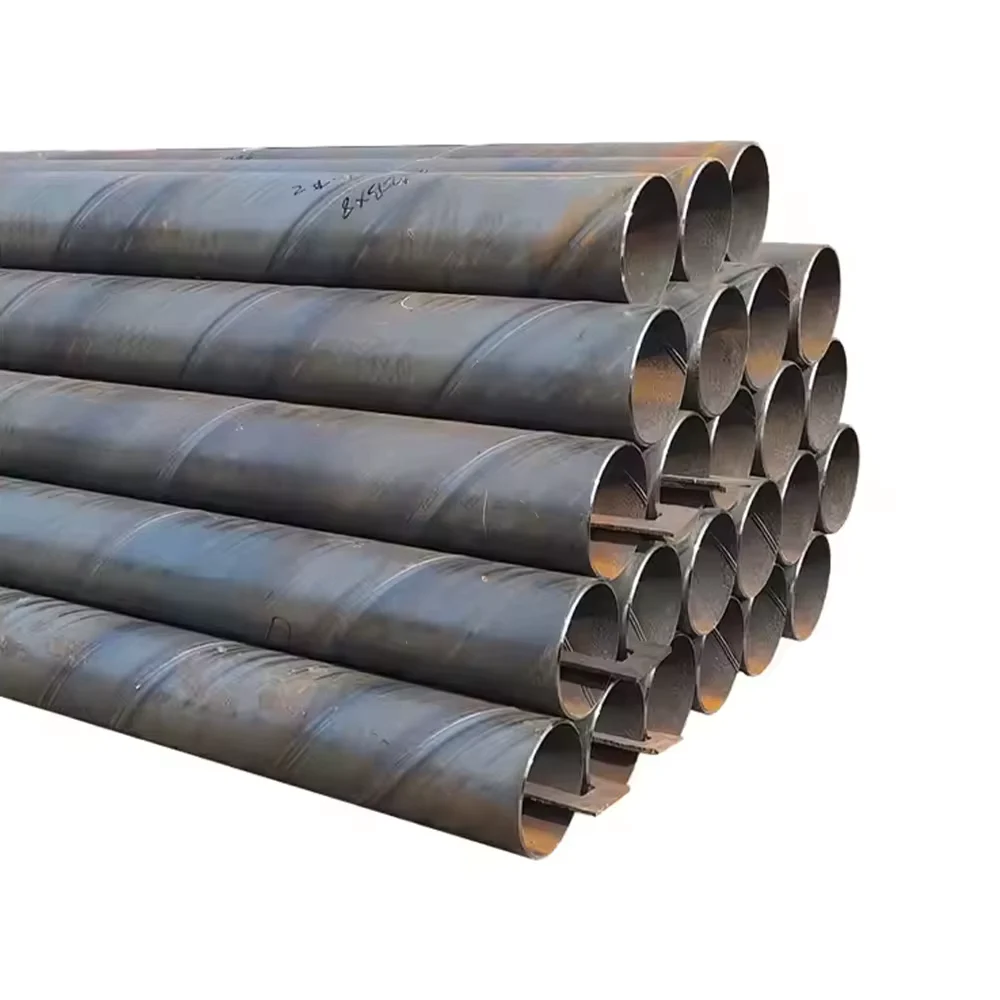
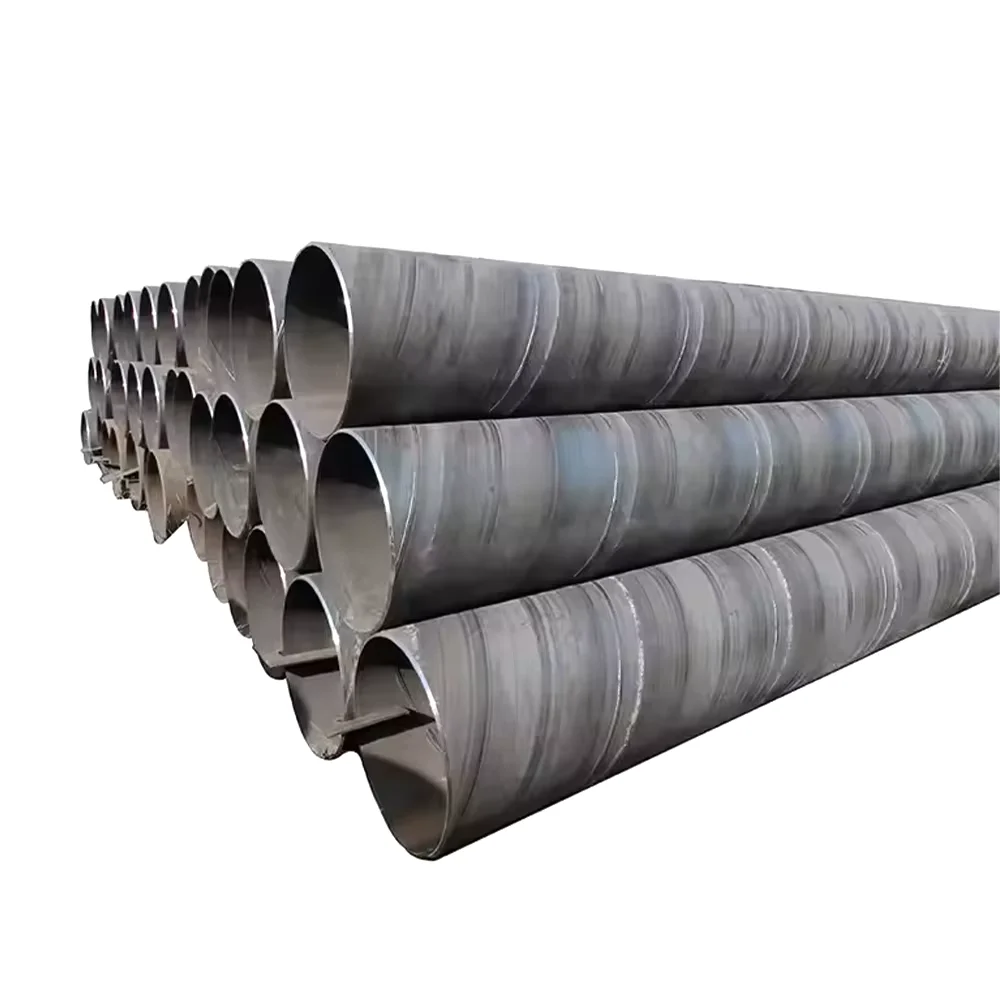
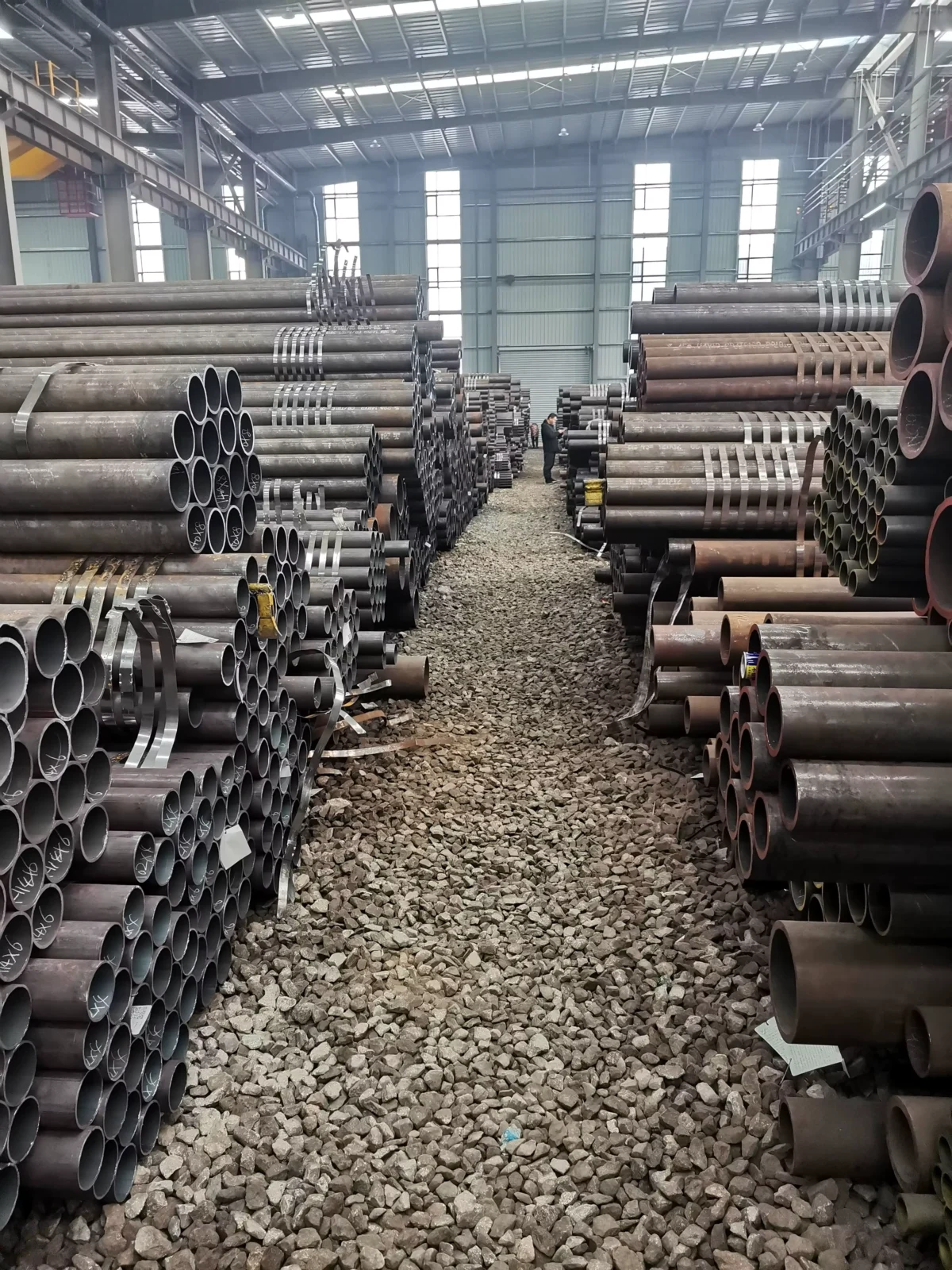
- ERW round steel pipes bundled with steel strip ties and edge protectors, packed in seaworthy bundles sized to suit the 1–12 m length range and container door dimensions
- Black painted surface protected by interlayer separators to prevent coating damage during ocean transit; non-oiled finish available per project specification
- Mixed-diameter and mixed-wall-thickness orders consolidated into full container loads, optimizing weight distribution for 20-ton MOQ shipments
- Fixed-length cutting available at 6 m, 6.4 m, or 12 m to match project requirements and reduce on-site waste and secondary cutting
- Each bundle tagged with heat number, steel grade (Q235/Q345/S355JR), outer diameter, and wall thickness for immediate site identification
- Shipping terms FOB / CIF / DDP available with professional oversized cargo loading plans and full tracking until site delivery
Start Your ERW Round Steel Pipe Inquiry
Share your project drawings, required steel grades, dimensions, quantities, and destination port — we respond within 24 hours with a detailed quotation including material cost, fabrication charges, coating, packing, and shipping. Our engineering team will review your specifications, confirm dimensional feasibility, and prepare shop drawings for approval before production begins.
Request a Quote with Mill Test Certificate
Send your specifications and drawing files to receive pricing, MTC samples, and third-party inspection options.
Mobile / WhatsApp / WeChat: +86 188 5315 7756
Email: admin@xjystructure.com
Website: www.xjystructure.com
Frequently Asked Questions
Q: What is the difference between Q235, Q345, and S355JR steel grades for round pipe?
A: Q235 and Q345 follow Chinese GB standards, while S235JR, S275JR, and S355JR follow European EN standards. S355JR and Q345 offer higher yield strength than Q235 and S235JR, making them suitable for heavier structural loads. The choice depends on your project specification and the engineer of record.
Q: Can you arrange third-party inspection before shipment?
A: Yes. We welcome SGS, BV, or TÜV inspection at our facility at any stage — during production, after welding, or before packing. The inspection report is included in the shipping documentation package.
Q: What is the minimum order quantity and can I mix sizes in one container?
A: The MOQ is 20 tons. You can mix outer diameters, wall thicknesses, and lengths within a single order, and we consolidate everything into full container loads to optimize shipping cost.
Q: Do you provide fixed-length cutting or only random lengths?
A: We offer both random lengths (1–12 m) and fixed-length cutting at 6 m, 6.4 m, or 12 m per your project requirements. Custom non-standard lengths are also available within our production capability.
Q: How do you ensure wall thickness tolerance on every pipe?
A: Every pipe is caliper-checked before packing, with full dimensional inspection reports attached. Our vertically integrated mill controls the entire process from billet to finished pipe, eliminating the traceability gaps that occur when fabricators source from third-party mills.
Ship Your Next ERW Round Steel Pipe Order from a Verified Mill Source
Submit your project specifications, steel grade requirements, and destination port to receive a detailed quotation with Mill Test Certificate documentation and third-party inspection options.
Mobile / WhatsApp / WeChat: +86 188 5315 7756
Email: admin@xjystructure.com