
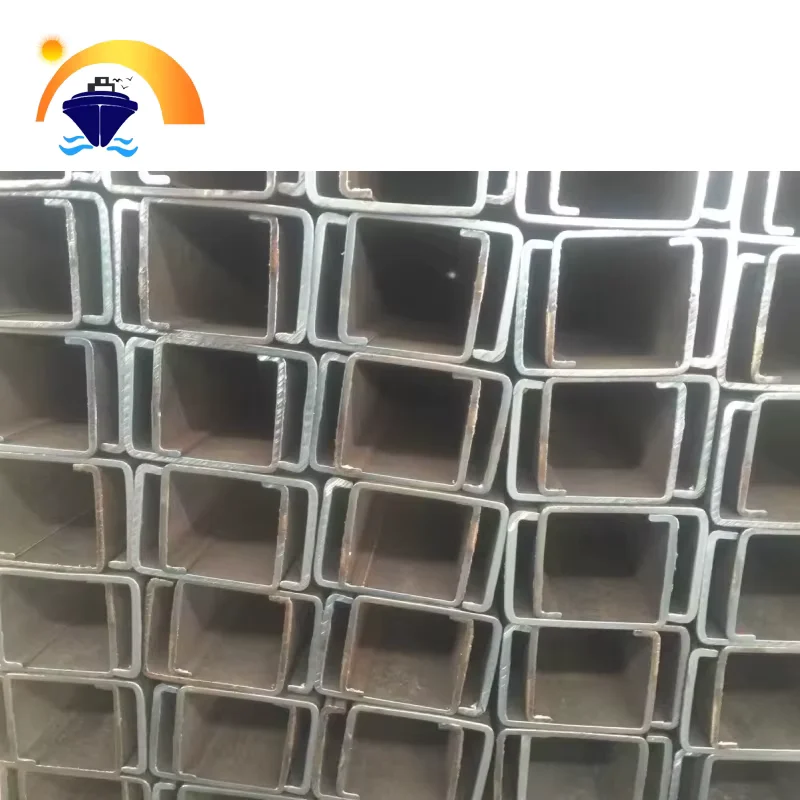
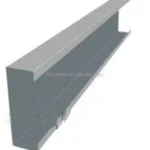
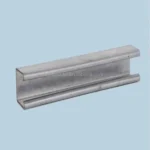
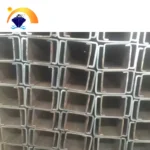
Description
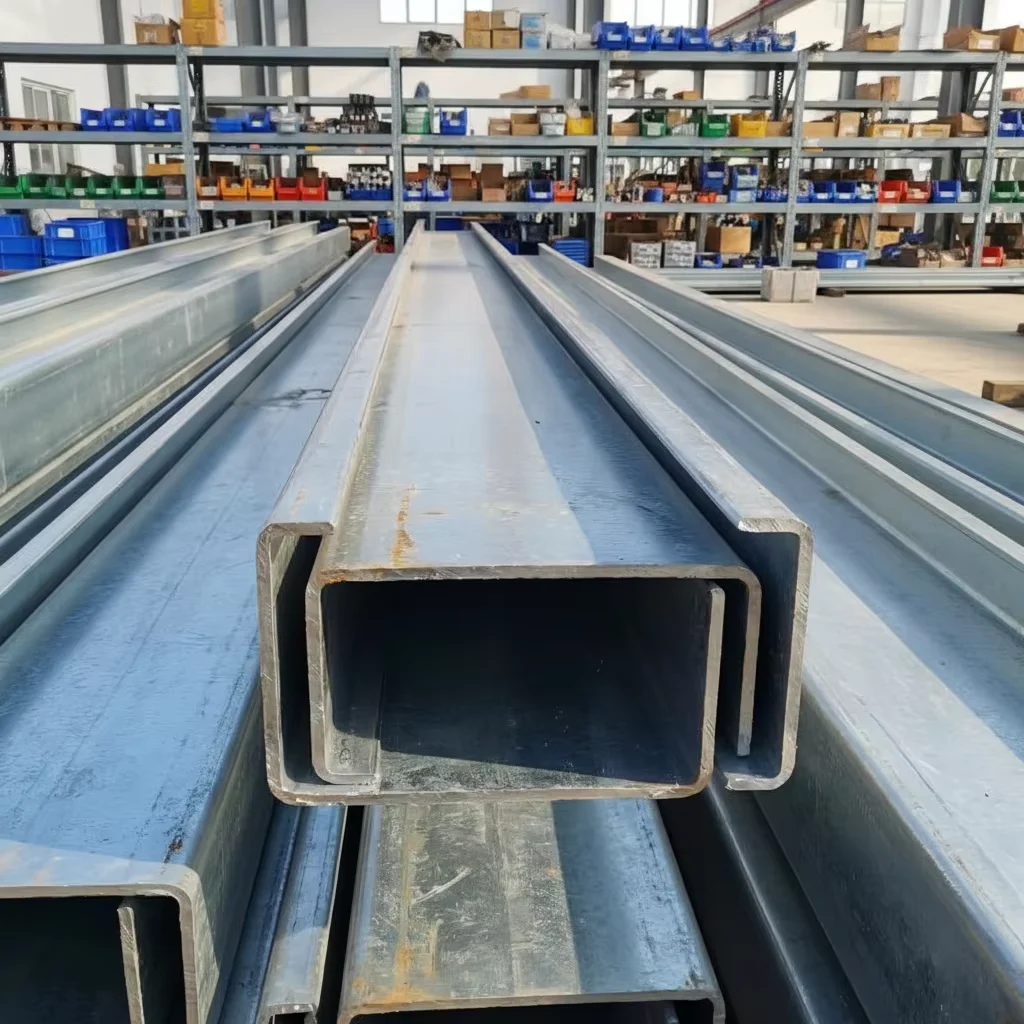
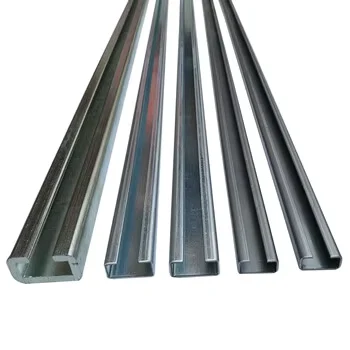
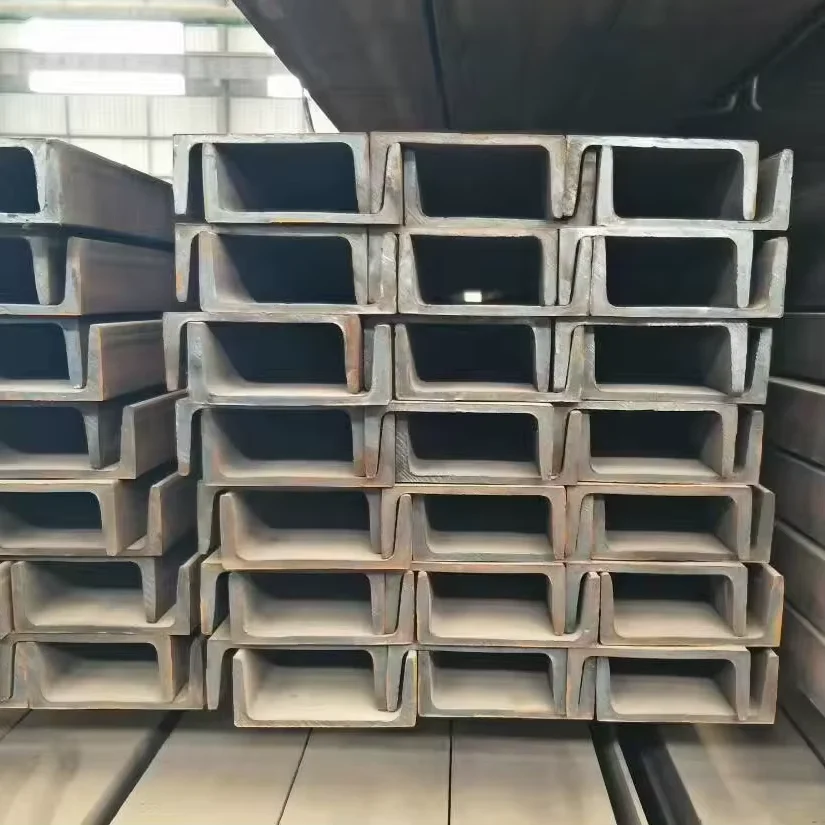
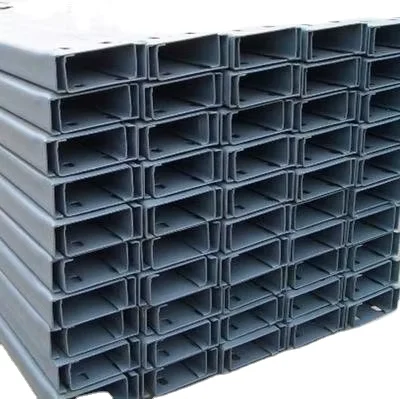
Factory-direct C channel steel with full material traceability — every Q235B C channel steel section is produced from our own steel mill coils, eliminating third-party sourcing gaps that cause certification failures on site.
Technical Specifications
| Parameter | Value |
|---|---|
| Designation | Q235B C Channel Steel |
| Product Type | C Channel Steel |
| Steel Grade | Q195, Q235, Q235B, Q345, Q345B, SS400 |
| Standard | AISI, ASTM, JIS, DIN, BS, EN |
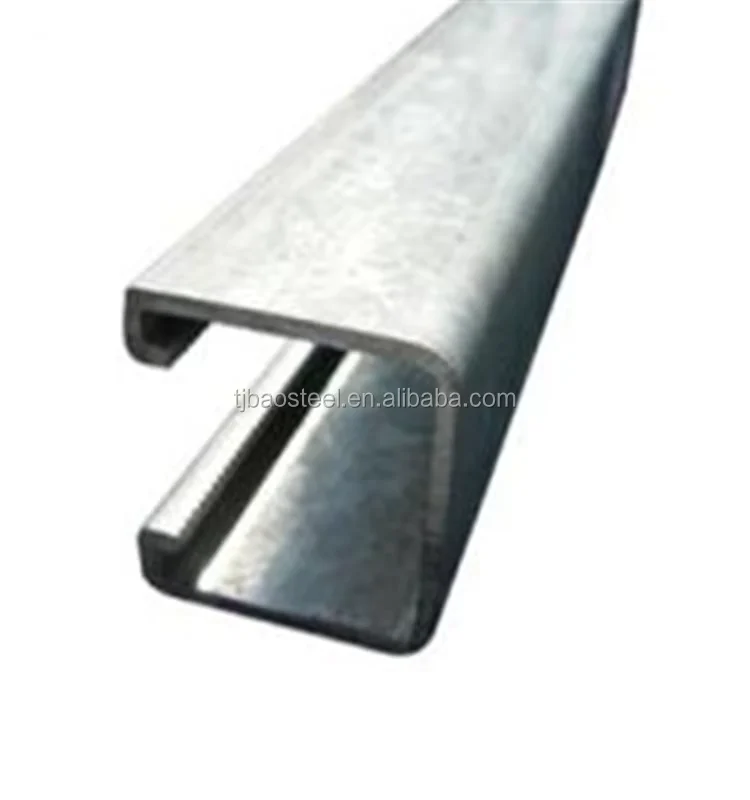
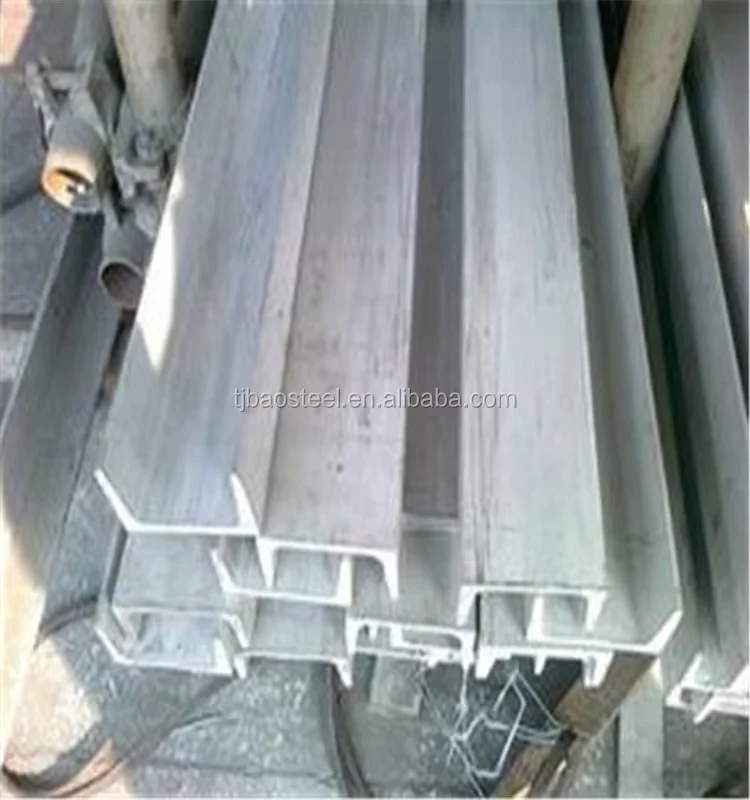
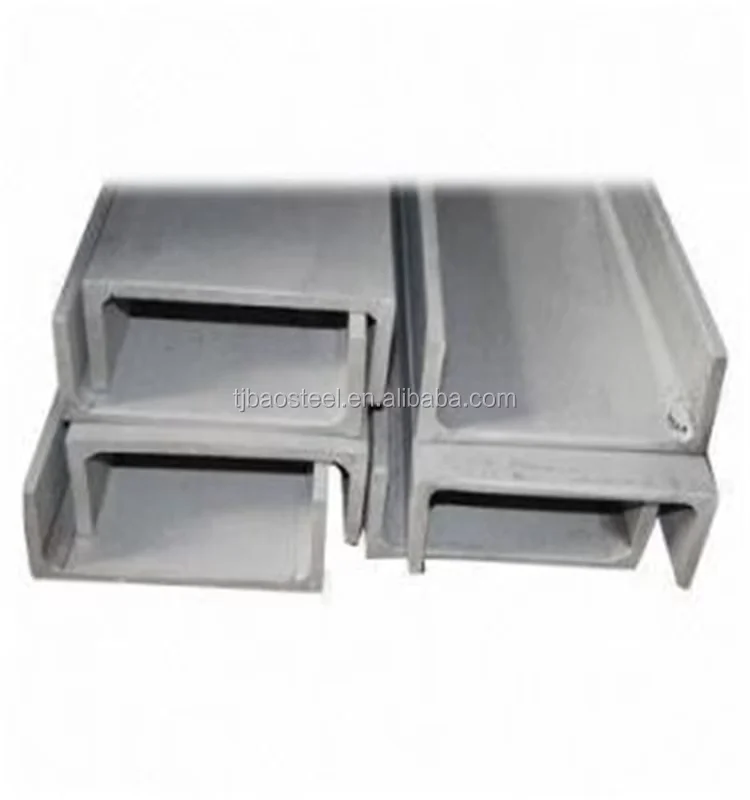
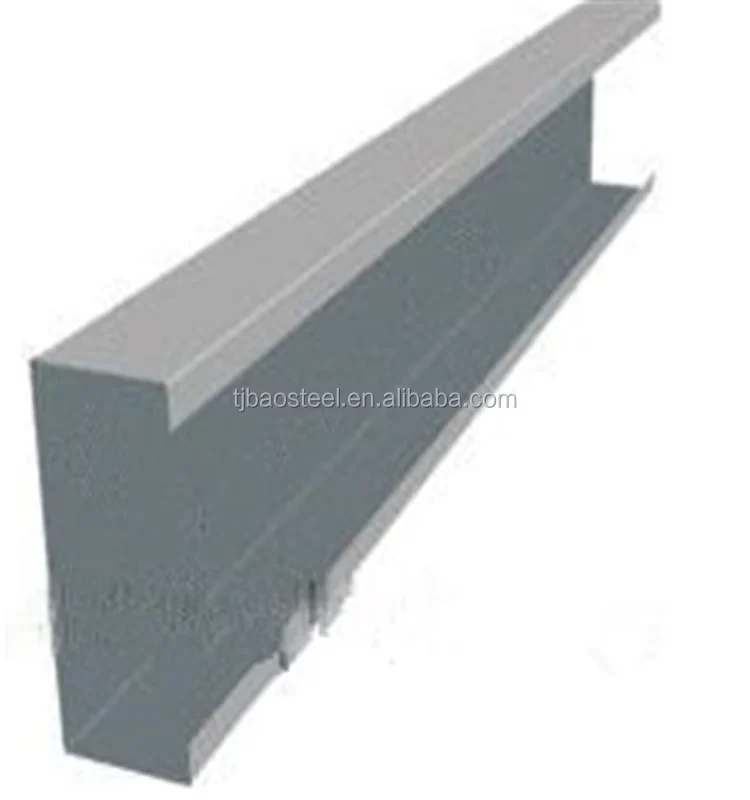
| Section Shape | C Channel |
| Length | As customer requested |
| Technique | Cold Rolled / Hot Rolled |
| Surface Treatment | Black / Bright / Galvanized / Painted |
| Tolerance | ±3% |
| Application | Industrial structure bearing brackets / Underground engineering steel piles and retaining structures / Petrochemical and electric power equipment structures / Large span steel bridge components / Ship and machinery manufacturing frames / Port conveyor belt and high speed damper brackets / Commercial buildings |
| MOQ | 25 Tons |
| Origin | Shandong, China |
Application Suitability
| Industry | Typical Applications |
|---|---|
| Industrial Construction | Equipment support frames, bearing brackets, platform purlins for petrochemical and power plants |
| Infrastructure & Civil Engineering | Steel pile retaining structures, large span bridge secondary members, port conveyor belt supports |
| Commercial Buildings | Warehouse frames, logistics center purlins, roof and wall secondary structural members |
| Ship & Machinery Manufacturing | Hull stiffener frames, machinery base brackets, high speed damper support structures |
Where Material Traceability Gaps Cause Customs Rejection on C Channel Orders
A missing heat number on a mill test certificate can halt an entire container at EU or Middle East customs.
When buyers source C channel steel from China through trading companies or fabricators who purchase raw material from multiple mills, the chain of custody breaks. The mill test certificate references a heat number that does not match the markings on the steel, or the chemical composition listed does not correspond to the Q235B grade specified in the contract. On a recent project supplying structural supports to West Africa, a batch of channels arrived with certificates from a mill that had no record of producing that heat — the entire shipment was held for third-party re-inspection at the buyer’s expense. [NEED_CITE: EN 10204 inspection document types and traceability requirements]
How Q235B C Channel Steel Matches Structural Load and Corrosion Requirements
For industrial bearing brackets and platform frames, Q235B provides adequate yield strength for secondary structural members where ultimate load capacity is governed by connection design rather than section capacity alone. Hot rolled Q235B C channel steel delivers consistent mechanical properties across the full section, while cold rolled variants offer tighter dimensional tolerance for precision-fit applications such as conveyor support brackets. When the installation environment involves outdoor exposure or corrosive atmospheres — port facilities, petrochemical plants — hot-dip galvanized finish extends service life without ongoing maintenance. Our vertically integrated production line allows us to roll, cut, and galvanize Q235B C channel steel within a single facility, so the heat number on the certificate matches the stamp on every piece shipped.
Engineering Compliance and Surface Treatment Selection for C Channel Projects
Structural engineers specifying C channels for European market projects must verify that the supplied steel meets EN standards for chemical composition and mechanical properties, and that the fabricator holds EN 1090 certification for structural steel components. [NEED_CITE: EN 1090 execution classes for structural steel fabrication] For projects in the Middle East and Southeast Asia, ASTM and JIS equivalents are frequently required, and grade substitution between Q235B and S235JR or SS400 must be documented with test certificates accepted by the project consultant. Surface treatment selection directly affects both corrosion resistance and coating adhesion: black finish suits indoor, dry environments; bright finish provides mild rust prevention for short-term storage; galvanized coating is specified for outdoor or humid conditions; painted finishes allow color matching for architectural exposure. Each treatment requires different surface preparation, and the choice must be confirmed before production begins to avoid rework.
Steel Grade Selection and Rolling Process: What Buyers Need to Know
The Q-series grades (Q195, Q235, Q235B, Q345, Q345B) follow the Chinese GB standard system where the “Q” prefix denotes yield strength and the number indicates the minimum yield value in MPa. Q235B is the most commonly specified grade for general structural C channels, offering a balance of formability, weldability, and strength. Q345B provides higher yield strength for load-bearing applications where section size must be minimized. SS400, a Japanese JIS grade, is frequently requested for projects in Southeast Asia and is broadly equivalent to Q235B in mechanical properties. [NEED_CITE: steel grade equivalence between GB Q-series and JIS SS-series standards]
Hot rolled C channels are produced from steel slabs reheated and passed through rolling mills, resulting in a scaled surface and slightly rounded edges — suitable for structural framing where appearance is secondary. Cold rolled C channels are formed from coil at room temperature, producing sharper edges, tighter dimensional tolerance, and a smoother surface finish — preferred for visible architectural applications and precision-fit connections. Both processes are available in Q235B, and the choice depends on the project’s dimensional tolerance requirements and aesthetic expectations.
Tolerance on flange width, web height, and thickness is held to ±3% per our production standard. Buyers should note that negative tolerance — where actual dimensions fall at the lower end of the allowable range — reduces theoretical weight and may affect load calculations if the structural engineer has not accounted for this. Our mill test certificates report actual measured dimensions alongside chemical composition and mechanical properties, so there is no discrepancy between what is specified and what is delivered.
The Hidden Cost of Buying C Channel Steel Without Verified Certification
Purchasing Q235B C channel steel from a supplier who cannot provide heat-number-traceable mill test certificates creates risk at multiple stages of a project. At customs, missing or inconsistent documentation triggers inspection delays and potential rejection. On site, if the inspector requests witness testing and the material does not match the certificate, the entire batch may be refused — forcing the buyer to source replacement steel at spot market prices while the project schedule slips. [NEED_CITE: consequences of non-compliant structural steel in international construction projects] For galvanized C channels, coating thickness that falls below specification accelerates corrosion and voids the project warranty. These costs are invisible at the time of purchase but become significant when they materialize as delays, rework, or structural failure.
Why Engineering Procurement Teams Source Q235B C Channel Steel From XJY Structure
Our production begins with our own steel mill, which operates three production lines and stocks over 2,800 raw material specifications. This means the Q235B C channel steel you order is rolled from coils we control, tested in our own laboratory, and certified under a single quality management system. There is no gap between the material supplier and the fabricator — one entity is responsible for the chemistry, the dimensions, the surface treatment, and the documentation.
We maintain ISO 9001 certification and produce structural steel components in compliance with EN 1090, AWS, and AISC standards. Our engineering team reviews shop drawings before production begins, identifies potential fabrication issues, and proposes material optimizations that reduce waste without compromising structural integrity. For overseas buyers, we provide complete export documentation packages including mill test certificates with full chemical composition and mechanical properties per heat number, packing lists, bills of lading, and certificates of origin.
Our loading team has direct experience with the deformation risks specific to C channel profiles. Channels must be loaded with the open side oriented to prevent water accumulation during transit, stacked with interlayer separators to prevent friction damage to galvanized coatings, and secured with dunnage that prevents lateral shift during ocean rolling. This attention to loading detail comes from hard-learned lessons — not from manuals.
Documentation & Compliance
- Mill test certificate documenting Q235B chemical composition (C, Si, Mn, P, S) and yield/tensile strength per GB/T 700, with heat number traceability from coil to finished C channel
- CE certificate confirming EN 1090 compliance for structural steel components exported to European Union member states
- ISO 9001 quality management system certificate covering the full production process from raw material procurement through final inspection
- SGS or BV third-party inspection report available for dimensional accuracy, coating thickness measurement, and visual weld quality verification
- Material traceability report linking each C channel section to its parent coil heat number, with test results for both chemical composition and mechanical properties
- Complete customs documentation package including commercial invoice, packing list, bill of lading, and certificate of origin formatted for the destination country’s import requirements
Packaging, Loading & Delivery
- Q235B C channel steel sections bundled with high-tensile steel strips at intervals calculated to prevent sagging during handling, with each bundle tagged showing steel grade, heat number, length, and piece count
- Galvanized C channels packed with edge protectors and interlayer separators to preserve the zinc coating from friction damage and white rust formation during ocean transit
- Custom-length C channels cut to customer-specified dimensions and bundled separately by length to simplify on-site sorting and reduce cutting waste
- Loading plans prepared for each shipment based on C channel dimensions and weight, optimizing container utilization while ensuring weight distribution meets transport safety requirements
- Each bundle marked with weather-resistant tags showing steel grade (Q235B), heat number, section dimensions, length, and gross/net weight for easy identification at destination
- Delivery terms available including FOB, CIF, and DDP, with professional logistics coordination for oversized cargo and project-site delivery to ports across the Middle East, Southeast Asia, Africa, and Europe
How to Request a Quotation for Q235B C Channel Steel
To receive a detailed quotation including material cost, fabrication, surface treatment, packaging, and shipping, submit your project drawings (PDF or DWG format) along with the required steel grade, section dimensions, total quantity, surface treatment preference, and destination port. Our team responds within 24 hours with a preliminary assessment and production timeline. For projects requiring EN 1090 or ASTM compliance, confirm the applicable standard and execution class so we can include the correct certification documentation in the quotation.
Request Your Q235B C Channel Steel Quotation Today
Submit your project specifications, steel grade requirements, and destination port to receive a detailed quotation with mill test certificate documentation and production timeline.
Contact XJY Structure
Tel: +86 531 8573 6315
Mobile/WhatsApp/WeChat: +86 188 5315 7756
Email: admin@xjystructure.com
Website: www.xjystructure.com
Frequently Asked Questions
Q: How does Q235B compare to S235JR and SS400 in terms of mechanical properties?
A: Q235B, S235JR, and SS400 are broadly equivalent in yield strength and tensile strength, though minor differences exist in chemical composition limits and impact testing requirements. Q235B follows the Chinese GB/T 700 standard, S235JR follows EN 10025, and SS400 follows JIS G 3101. For most general structural applications, these grades are interchangeable, but the project consultant must approve any grade substitution and the corresponding mill test certificate must reflect the specified standard.
Q: Can you provide EN 10204 3.1 or 3.2 certificates with third-party witness?
A: Yes. We provide EN 10204 3.1 certificates as standard, issued by our own quality department and signed by an authorized inspection representative independent of production. For projects requiring EN 10204 3.2 certificates, we arrange third-party witness inspection by SGS, BV, or TÜV during production and testing, with the certificate co-signed by the third-party inspector. This service should be confirmed at the time of order placement.
Q: When should I specify hot-dip galvanized versus painted finish for C channels?
A: Hot-dip galvanized finish is recommended for outdoor exposure, humid environments, or applications where ongoing maintenance access is difficult — such as port conveyor supports, bridge secondary members, and petrochemical plant structures. Painted finish is suitable when color matching is required for architectural exposure or when the C channels will be installed in controlled indoor environments. Black or bright finish is appropriate for indoor, dry conditions where the C channels will be further coated or enclosed within a building envelope.
Q: What are the standard tolerances for Q235B C channel dimensions?
A: Our standard tolerance for Q235B C channel steel is ±3% on flange width, web height, and thickness. For projects requiring tighter tolerance, cold rolled C channels offer improved dimensional accuracy compared to hot rolled sections. The mill test certificate includes actual measured dimensions for each heat, allowing the project engineer to verify compliance before installation.
Q: How do you pack and load C channels to prevent deformation during ocean freight?
A: C channels are bundled with steel strips at calculated intervals to prevent sagging, with the open side oriented to prevent water accumulation. Interlayer separators are used for galvanized sections to protect the zinc coating. Loading plans are prepared for each container based on the specific dimensions and weight of the C channels, ensuring proper weight distribution and securement to prevent lateral shift during ocean transit. Our loading team has extensive experience with C channel profiles and understands the specific deformation risks associated with improper stacking and securing.