
Narrow Flange Beam for Sale | EN-Standard Wholesale Supplier
Narrow Flange Beam for Sale | EN-Standard Wholesale Supplier
Most buyers reject narrow flange beams not because the steel is weak, but because the wing thickness misses the tolerance by a fraction of a millimeter.
Sourcing compliant Narrow Flange Beam units requires prioritizing EN-standard dimensional tolerances and verified yield strength over simple cross-sectional matching. A valid procurement strategy mandates third-party dimensional verification at the factory gate and strict alignment of Mill Test Certificates with physical batches to prevent port rejection.
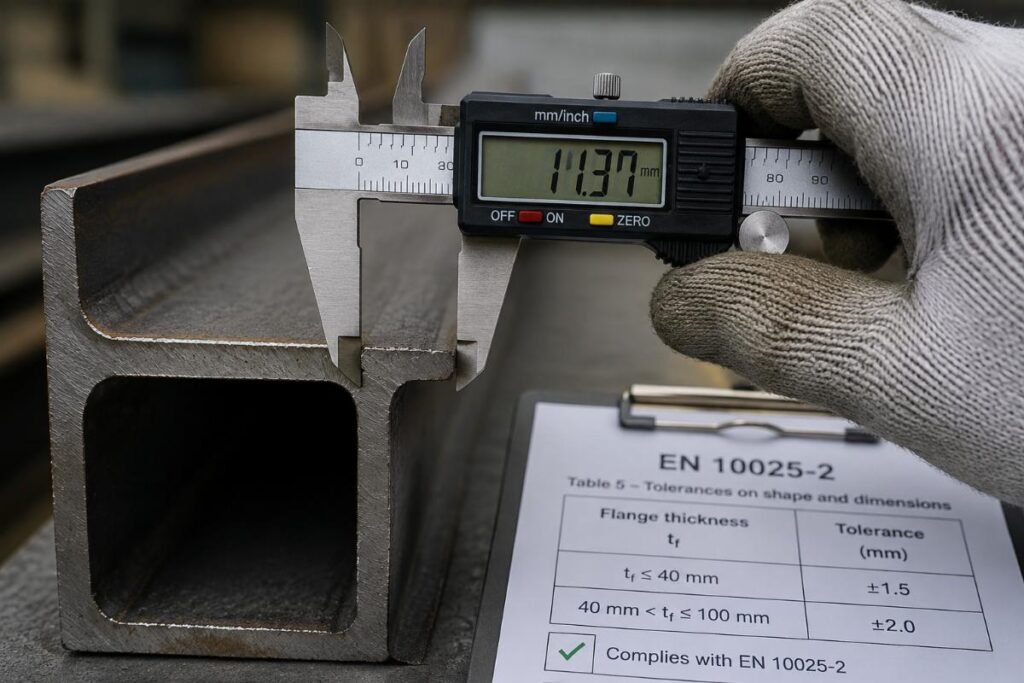
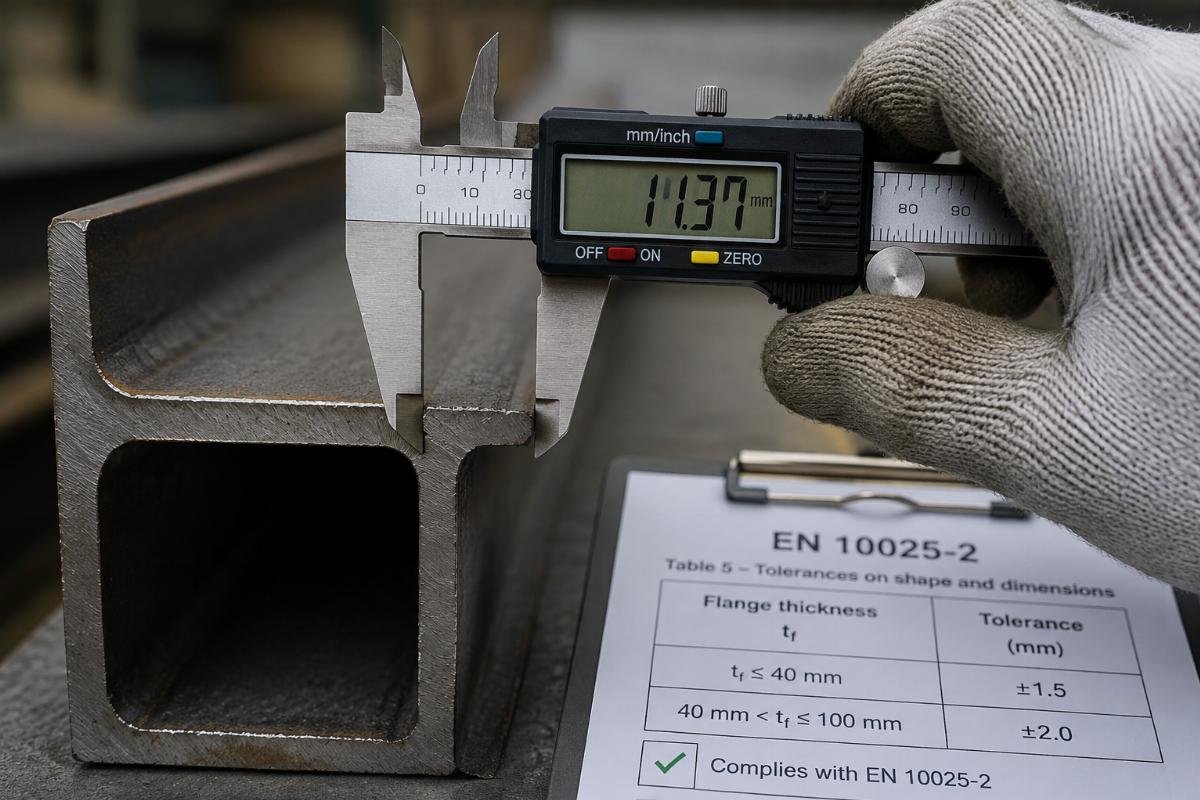
I still remember the humidity in the warehouse that day. The air smelled of cutting oil and hot metal. We had just finished loading a container destined for Jebel Ali Port. The order was straightforward: NFB 200×100 sections, wall thickness 6mm, standard EN10219. On paper, everything looked perfect. The dimensions matched the drawing, and the price was competitive. But when the cargo arrived, the third-party inspector didn’t even bother checking the chemical composition. He pulled out a digital caliper, measured the flange thickness on three random pieces, and flagged the entire shipment. The deviation was less than half a millimeter, but it exceeded the negative tolerance limit for S355JR grade under European norms. The container sat at the port for weeks, accumulating demurrage charges that wiped out our margin. That incident changed how I view structural steel. It is not just about weight and size; it is about precision compliance. [NEED_CITE: EN 10219 tolerance classes for cold-formed welded structural hollow sections]
The market is flooded with suppliers who claim compliance but lack the rigorous quality control infrastructure to back it up. Understanding the difference between a generic steel section and a certified Narrow Flange Beam is the first step toward securing your project’s structural integrity and avoiding costly logistical nightmares.
What Defines a Compliant Narrow Flange Beam?
Compliance is defined by strict adherence to dimensional tolerances and surface quality, not just by the nominal size of the section.
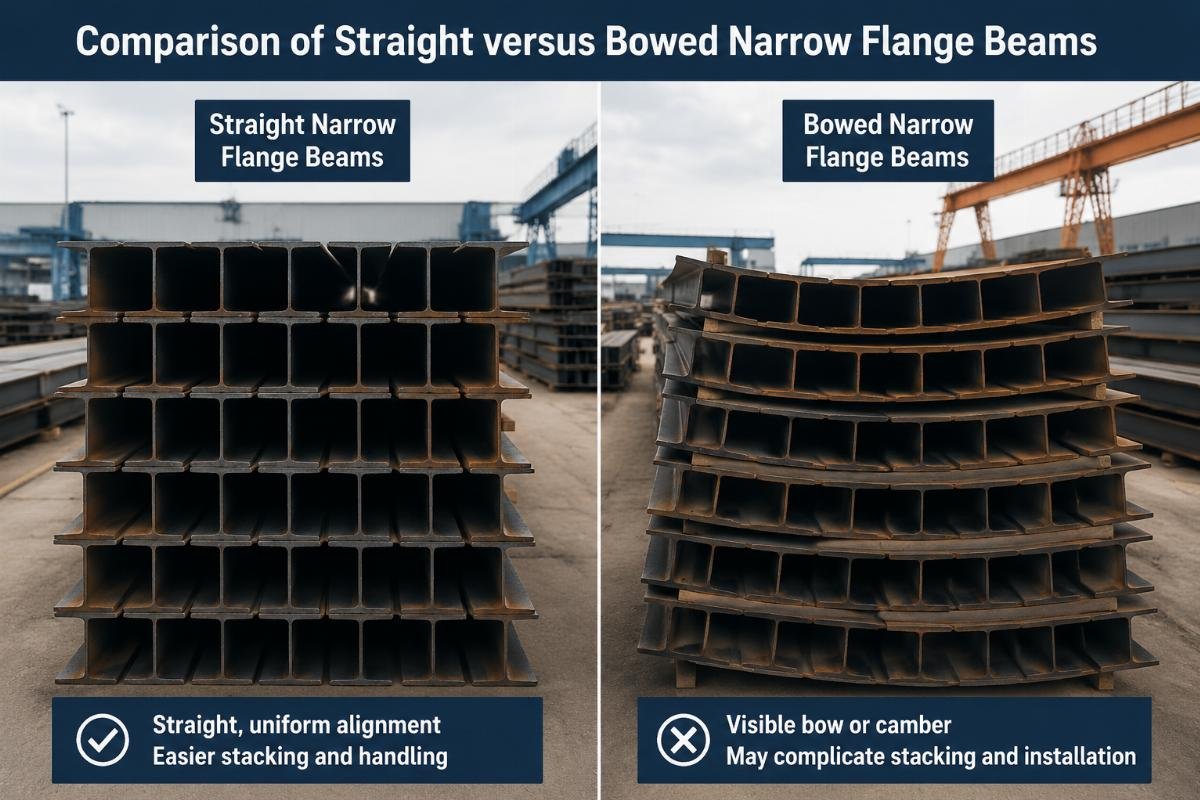
Many distributors assume that if a beam fits the general shape, it is acceptable. This is a dangerous misconception. European standards, particularly EN10219 and EN10210, impose stringent limits on straightness, twist, and flatness. For a Narrow Flange Beam, the ratio of width to height creates specific challenges during rolling or welding. If the cooling process is uneven, the flanges can warp, leading to “bowing” or “camber” issues that make assembly on-site nearly impossible.
Consider the difference between hot-rolled and cold-formed processes. Hot-rolled sections generally offer better residual stress distribution, while cold-formed sections allow for tighter tolerances on thinner walls. However, cold forming introduces work-hardening effects that must be accounted for in structural calculations. [NEED_CITE: Mechanical property changes due to cold forming in EN 10219]
| Feature | Basic Commercial Grade | EN-Certified Structural Grade |
|---|---|---|
| Dimensional Tolerance | Loose, often exceeds ±2mm | Strict, adheres to EN class limits |
| Surface Finish | Visible rust, mill scale present | Shot-blasted or primed, clean |
| Straightness | Visual check only | Measured against strict camber limits |
| Certification | Self-declared | Third-party verified MTC |
A buyer once shared a photo of a beam stack where every single piece had a visible curve along its length. They had purchased based on the lowest FOB price, ignoring the supplier’s lack of in-house leveling equipment. When they tried to weld these beams into a framework, the gaps were inconsistent, requiring expensive rework. In contrast, a compliant Narrow Flange Beam from a certified manufacturer undergoes straightening processes before leaving the facility. The manufacturer’s production facilities typically use hydraulic presses or roller levelers to ensure that the deviation per meter remains within acceptable limits. This attention to detail is what separates a usable product from scrap metal.
S355JR vs. Q345B: Which Grade Fits Your Project?
Material substitution is not a cost-saving strategy; it is a legal and safety liability in critical structures.
One of the most common questions I encounter is whether Q345B can replace S355JR. Both are structural steels with similar yield strengths, but their certification requirements and impact resistance properties differ significantly. S355JR is a European standard grade that requires specific impact testing at room temperature, whereas Q345B is a Chinese standard grade with different testing protocols. [NEED_CITE: Difference in impact test temperatures between EN 10025 and GB/T 1591]
For projects in regions with fluctuating temperatures, such as parts of Africa or the Middle East where night-time drops can be significant, the toughness of the steel matters. S355J0 or S355J2 grades offer guaranteed impact energy at lower temperatures, which Q345B does not automatically provide unless specifically tested and certified. Using a lower-grade substitute in a high-rise building or a bridge structure can lead to catastrophic failure under dynamic loads.
I recall a dispute involving a warehouse project in West Africa. The contractor had accepted beams labeled as S355JR, but upon independent testing, the chemical composition matched Q345B. While the strength was adequate for static loads, the lack of proper European certification meant the structure could not pass the final engineering audit. The entire batch had to be replaced, causing months of delay. This highlights why the Mill Test Certificate (MTC) must match the physical markings on each beam. A reputable Narrow Flange Beam supplier will ensure that every bundle is tagged with heat numbers that trace back to the original ladle analysis.
| Parameter | S355JR (EN Standard) | Q345B (GB Standard) |
|---|---|---|
| Yield Strength | Min 355 MPa | Min 345 MPa |
| Impact Test Temp | +20°C | +20°C (but different method) |
| Certification Body | EU Notified Body | Chinese Factory Lab |
| Global Acceptance | High in EPC tenders | Limited to specific regions |
When sourcing, always request the full MTC and verify the standard reference. If the document cites GB/T instead of EN, you are not getting the product specified in your tender. This discrepancy is not just bureaucratic; it affects insurance coverage and liability in case of structural failure.

How to Verify Quality Before Shipment?
Verification must happen at the factory, not at the destination port.
Waiting until the cargo arrives to check quality is too late. By then, you are dealing with returns, claims, and stalled projects. The only effective way to ensure quality is to implement a pre-shipment inspection protocol. This involves both documentary review and physical measurement.
First, check the MTC. It should list the heat number, chemical composition, and mechanical properties. Cross-reference this with the tags on the steel bundles. If the numbers do not match, reject the shipment immediately. Second, perform dimensional checks. Use calibrated calipers to measure flange width, flange thickness, and web thickness at multiple points along the beam. EN standards allow for small deviations, but these must be consistent. [NEED_CITE: EN 10210 dimensional tolerances for hot-finished structural hollow sections]
At our manufacturing partner’s facility, we implemented a dual-check system. After the initial rolling or welding, each beam passes through a laser scanning system that detects bowing and twist. Then, a quality control team performs random manual checks. This redundancy catches defects that automated systems might miss, such as surface pits or weld seams that are not fully penetrated.
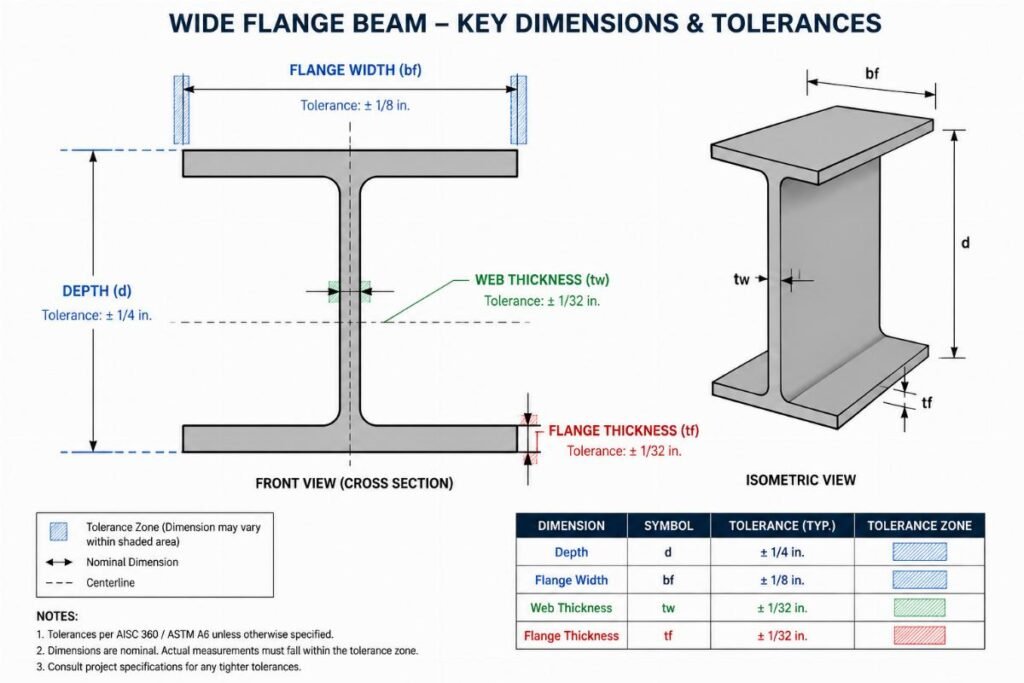
A common defect in Narrow Flange Beam production is edge cracking or laminations. These can be identified by visual inspection of the cut ends. If the edges look jagged or show signs of separation, the material is likely flawed. Another issue is squareness. If the flanges are not perpendicular to the web, welding becomes difficult and stress concentrations increase. Using a simple square tool during inspection can reveal this issue quickly.
| Inspection Step | Tool Required | Acceptance Criteria |
|---|---|---|
| Dimensional Check | Digital Caliper | Within EN tolerance limits |
| Straightness | Straightedge/String | Deviation < L/1000 |
| Surface Quality | Visual | No cracks, heavy rust, or pits |
| Marking Verification | Camera/Log | Heat number matches MTC |
By catching these issues early, you avoid the embarrassment and cost of rejecting a full container load at the port. It also builds trust with your clients, showing that you prioritize quality over quick sales.

Wholesale Pricing & Logistics for Distributors
Price is determined by specification complexity and logistics efficiency, not just raw steel weight.
When evaluating wholesale offers, look beyond the per-ton price. Consider the total landed cost, which includes packaging, loading efficiency, and documentation accuracy. A slightly higher unit price from a supplier who optimizes container loading can result in lower overall costs due to reduced freight expenses.
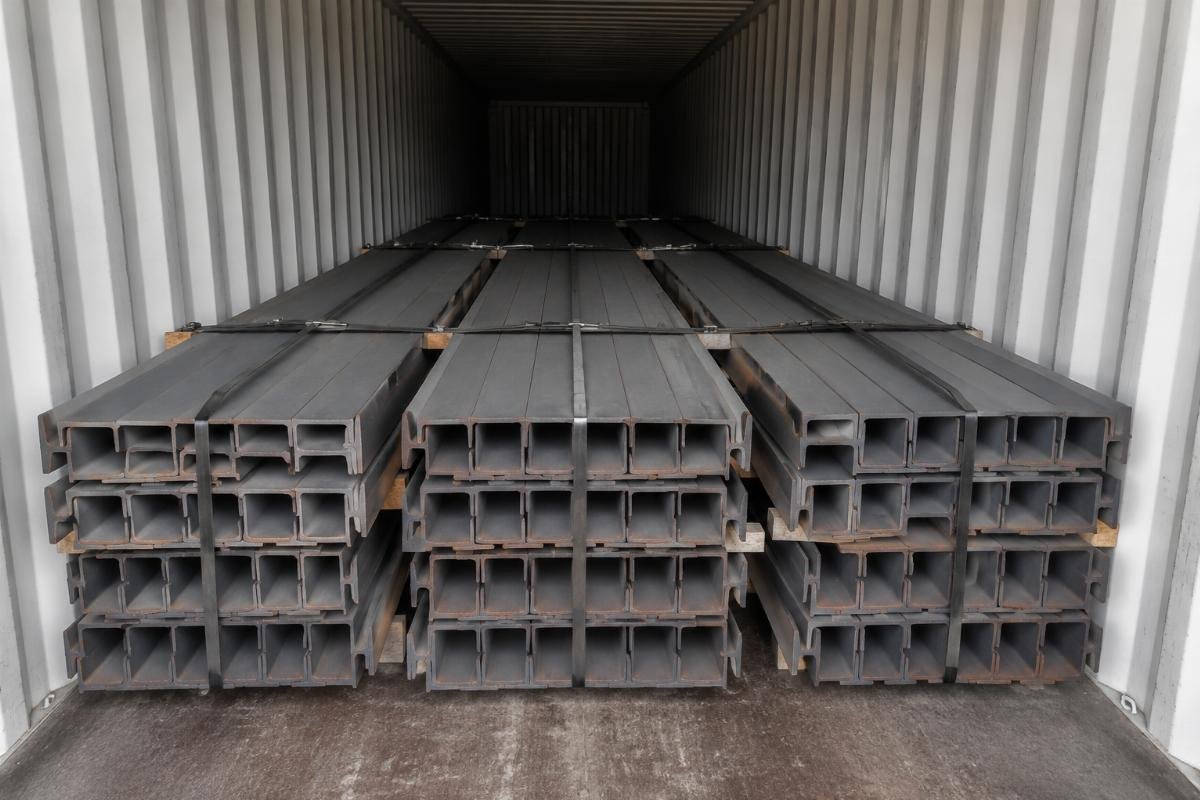
Container consolidation is key for distributors. Mixing different sizes of Narrow Flange Beam with other structural products like square hollow sections or plates can maximize space utilization. However, this requires precise planning to prevent damage during transit. Heavy beams should be placed at the bottom, with lighter items secured on top. Proper dunnage and strapping are essential to prevent movement that could cause bending or surface damage.
Another factor influencing price is the level of customization. Standard lengths are cheaper, but many projects require specific cuts to reduce waste on-site. Suppliers with in-house cutting capabilities can provide these services, adding value without significant cost increases. This reduces the need for secondary processing by the end-user, saving time and labor.
| Cost Factor | Impact on Price | Mitigation Strategy |
|---|---|---|
| Raw Material Volatility | High | Lock prices with forward contracts |
| Custom Cutting | Moderate | Bundle orders to reduce setup time |
| Packaging | Low | Use standard export packing |
| Documentation | Low | Ensure accurate MTC preparation |
Logistics also play a role in pricing. Suppliers located near major ports can offer faster turnaround times and lower inland transportation costs. Additionally, experienced exporters understand the documentation requirements for different countries, reducing the risk of customs delays. For example, certain markets require specific certificates of origin or legalization of documents, which can take time to process. A knowledgeable supplier will handle these details proactively.
Conclusion
Successful procurement of structural steel relies on precision, verification, and compliance.
Sourcing a Narrow Flange Beam is not merely a transaction; it is a technical partnership. By focusing on EN-standard tolerances, verifying material grades through rigorous MTC checks, and implementing pre-shipment inspections, buyers can mitigate risks and ensure project success. The cost of diligence is far less than the cost of failure. Choose suppliers who demonstrate transparency and technical competence, ensuring that every beam delivered meets the highest standards of quality and reliability.
Share this article

Written by
author
Editor covering global sourcing, supplier verification, and industrial product knowledge. Content is compiled from manufacturer specifications, industry standards, and hands-on experience with international B2B buyers. Every article is fact-checked before publishing to help procurement professionals make informed decisions.
View all posts →Keep Reading
Related Articles
August 14, 2026
Wide Flange Beam Specs: EN-Certified Manufacturer for Global Buyers
Secure compliant Wide Flange Beam Specifications by defining tolerance classes, material grades, and surface treatments beyond nominal dimensions. Avoid customs...
Read article →Discussion