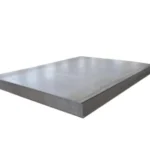
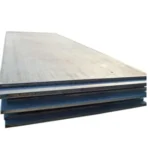
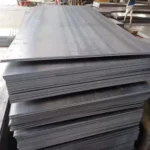
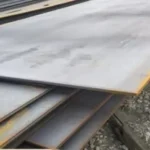
Description
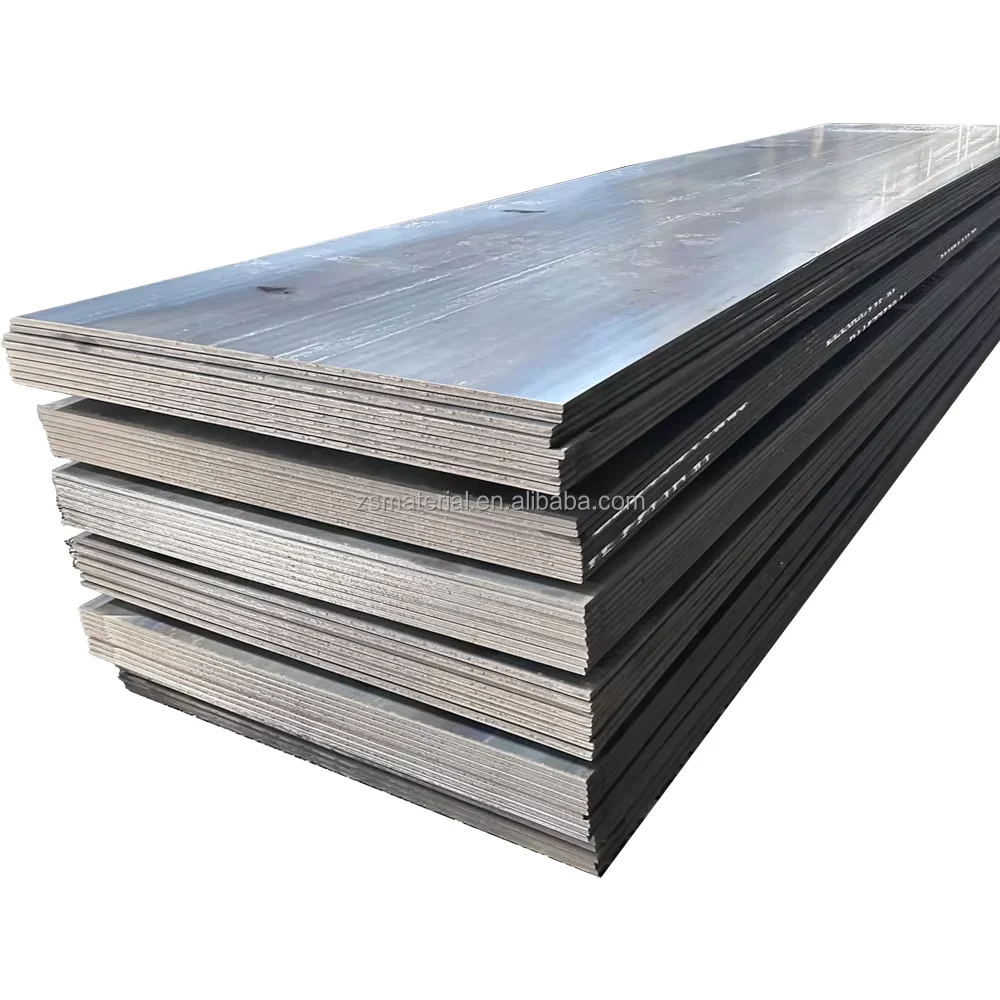
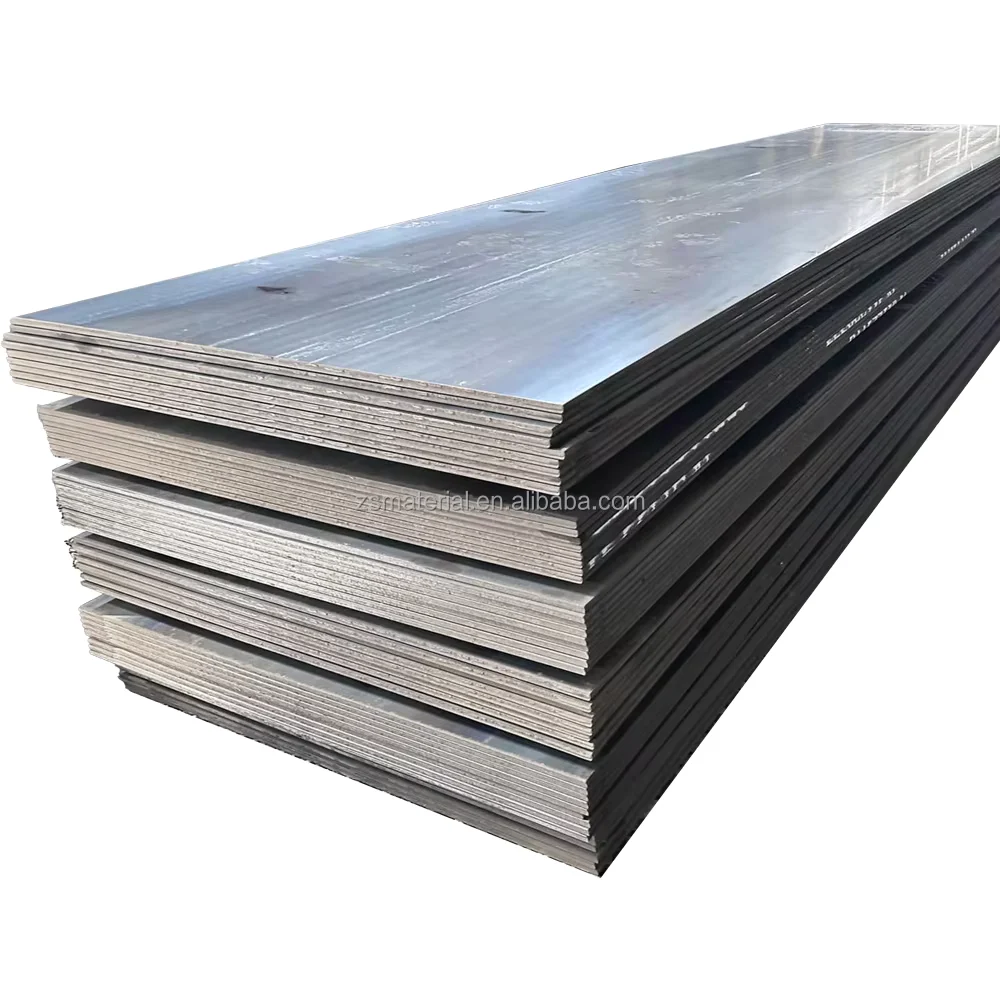
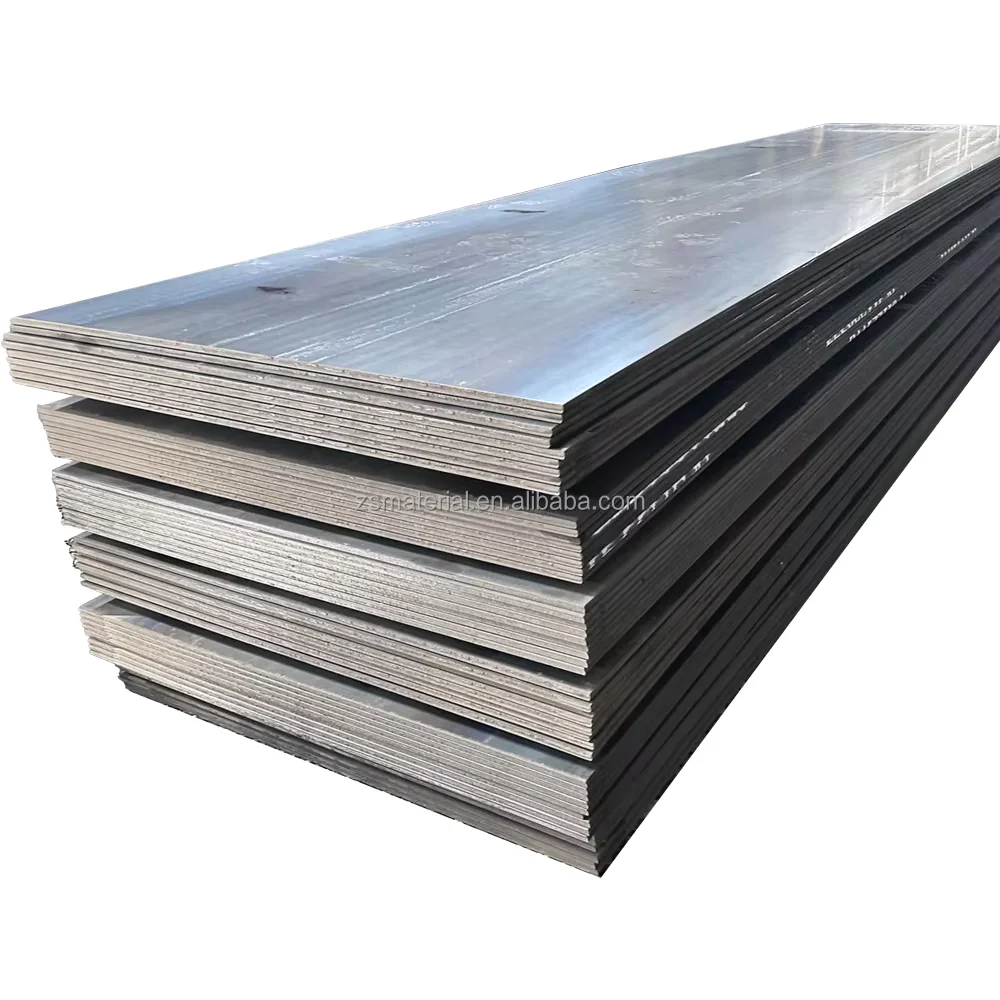
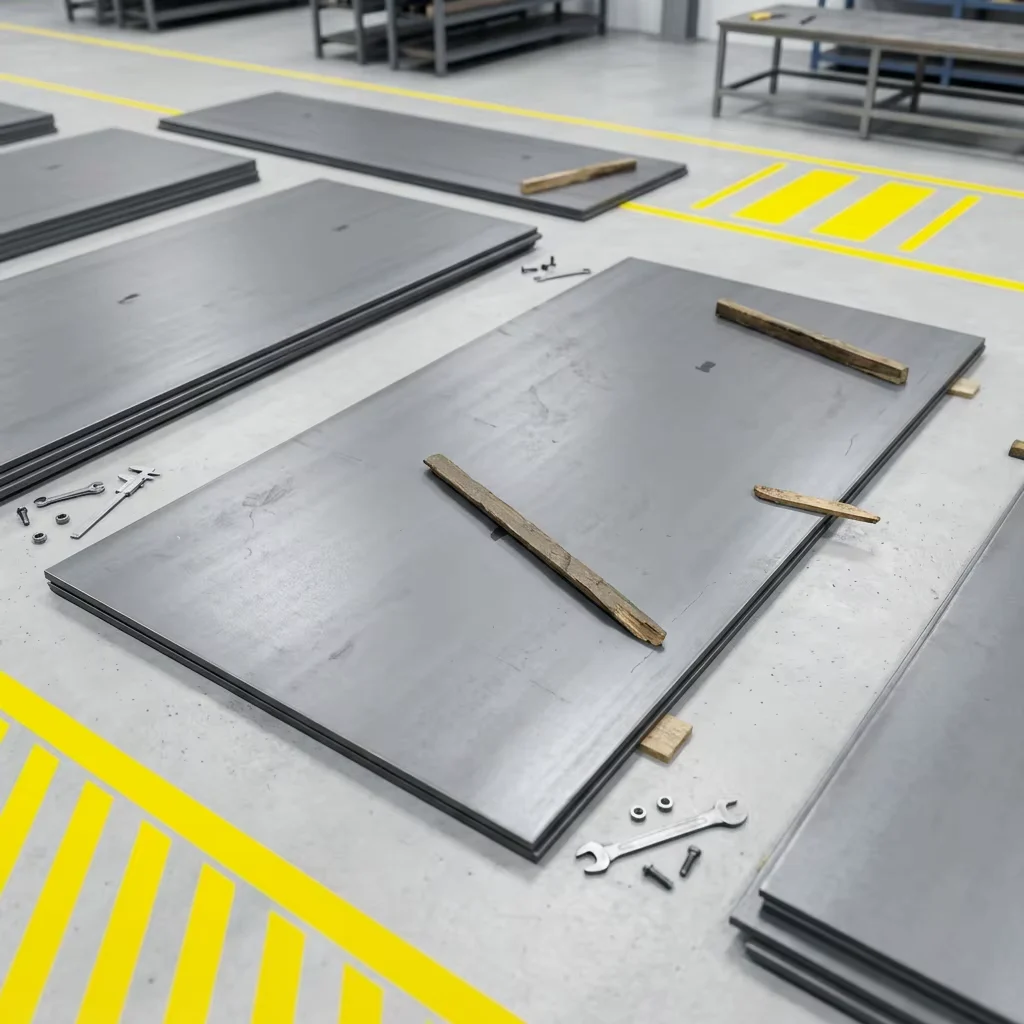
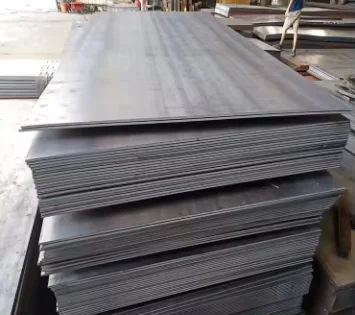
Vertically Integrated Mill & Fabrication — Q235B and Q345B hot rolled plates produced, cut, and welded under a single quality system from our own steel mill.
Technical Specifications
| Parameter | Value |
|---|---|
| Designation | Q235B/Q345B Wear Resistant Steel Plate |
| Product Type | Steel Plate |
| Steel Grade | Q235B, Q345B |
| Standard | ASTM, JIS, BS, DIN, AISI, GB |
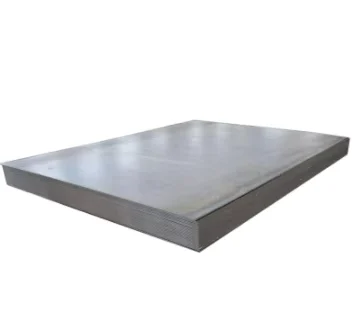
| Technique | Hot Rolled |
| Surface Treatment | Hot Rolled |
| Tolerance | ±1% |
| Processing | Cutting, Bending, Welding |
| Application | Construction, Petrochemical, Machinery |
| Origin | Shandong, China |
Application Suitability
| Industry | Typical Applications |
|---|---|
| Construction | Warehouse floor plates, conveyor support bases, structural base plates for steel frames |
| Petrochemical | Pressure vessel end caps, tank base rings, pipe support saddles |
| Machinery | Excavator bucket liners, crusher jaw plates, conveyor skirting and impact beds |
What Thickness Tolerance Gaps Cost on a Fabrication Order
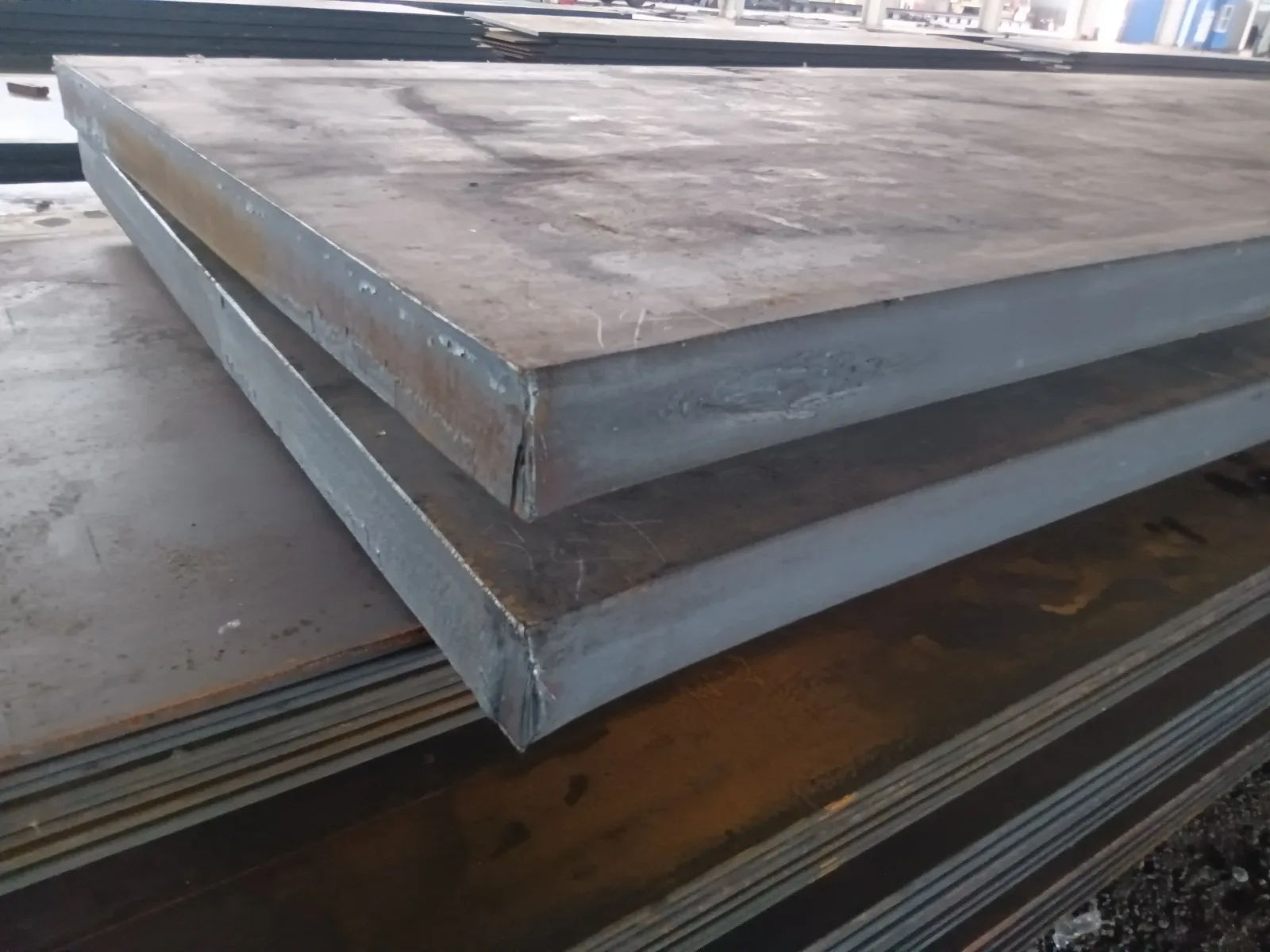
A ±1% tolerance on hot rolled Q235B/Q345B plates means the difference between a part that fits the jig and one that gets sent back for re-machining.
When overseas buyers source a Q235B Q345B wear resistant carbon steel plate supplier without mill-level control, thickness variation often exceeds acceptable limits by the time the plate reaches the fabrication floor. I have seen 20mm spec plates arrive at 17.8mm — rejected on arrival, three weeks of installation window lost, and the client absorbing air freight for replacements. The root cause is never the steel itself; it is the gap between the rolling mill and the cutting shop, where no single party owns the dimensional chain. [NEED_CITE: tolerance stacking in structural steel fabrication per EN 1090-2]
Matching Plate Grade to Load and Wear Conditions in Heavy Industry
Q235B serves general structural bases and non-critical wear surfaces where formability and weldability matter more than surface hardness. Q345B steps up the yield strength for conveyor frames, crane runway beams, and crusher components where repeated impact and abrasion demand higher resistance. As a Q235B Q345B wear resistant carbon steel plate supplier operating our own hot rolling line, we control the chemistry and rolling temperature that define these performance boundaries — then cut, bend, and weld the same plates in-house per approved WPS, so the material certificate matches the finished component.
Engineering Compliance and Certification for International Projects
Structural plates in petrochemical and construction projects must comply with the governing code — GB/T 709 for domestic supply, ASTM A36 or A572 for North American spec, EN 10025 for European delivery. The Q235B Q345B wear resistant carbon steel plate supplier you select must provide full chemical and mechanical traceability by heat number, not just a commercial invoice. For EU-bound shipments, EN 1090-2 execution class documentation and CE marking become customs-critical; for Middle East and African EPC projects, third-party inspection by SGS or BV is often a contractual prerequisite before loading. [NEED_CITE: EN 1090-2 structural steel execution class requirements]
Hot Rolling, Grade Selection, and Tolerance Control Explained
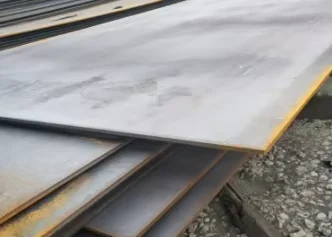
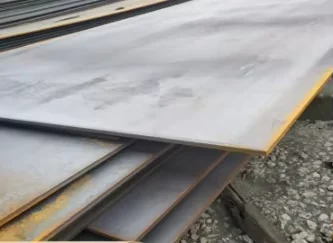
Hot rolling produces a mill scale surface with uniform grain structure through the thickness — essential for plates that will be flame-cut and welded into load-bearing assemblies. Q235B offers lower carbon equivalence, making it easier to weld without preheat on thinner sections; Q345B delivers higher yield for applications where plate thickness cannot be increased due to weight or space constraints. The ±1% tolerance on our hot rolled plates is held at the rolling mill through controlled pass scheduling and online gauge measurement — not by selective sorting after production. This is why a vertically integrated Q235B Q345B wear resistant carbon steel plate supplier can guarantee dimensional consistency across a 50-ton order, while a trading company sourcing from multiple mills cannot. [NEED_CITE: hot rolling tolerance standards for structural steel plates per GB/T 709]
The Hidden Cost of Sourcing Plates Without Mill Traceability
When a Q235B Q345B wear resistant carbon steel plate supplier cannot link each plate to its original heat number and rolling record, the buyer inherits risk at every downstream stage: weld procedure qualification may fail if actual carbon equivalence differs from the certificate, NDT inspection can be rejected if base metal chemistry is unverified, and customs authorities may hold shipment without proper MTC. The cost is never just the plate — it is the re-welding, the schedule delay, and the structural engineer’s refusal to sign off. [NEED_CITE: material traceability requirements in AWS D1.1 structural welding code]
Why Project Buyers Source from Our Mill and Fabrication Line
We roll our own Q235B and Q345B slabs on three production lines, then move the plates directly to our fabrication workshop for CNC cutting, bending, and welding — no intermediate warehouse, no third-party sorting, no break in the material chain. Our in-house laboratory issues Mill Test Certificates covering chemical composition and mechanical properties for every heat, and we maintain 2,800+ raw material specifications in stock so project-specific grades and thicknesses do not trigger minimum order surcharges. Certified welding procedures (AWS/EN) and qualified welders ensure that when we cut and weld your plates, the WPS matches the base metal certificate you receive. For oversized components, our loading team plans container and break-bulk stowage based on actual fabricated dimensions — not theoretical plate sizes.
Documentation & Compliance
- Mill Test Certificate documenting Q235B/Q345B chemical composition (C, Mn, Si, S, P) and mechanical properties per GB/T 700 and GB/T 1591, traceable by heat number
- Third-party inspection report from SGS or BV covering dimensional verification, surface quality, and UT testing where specified
- ISO 9001 quality management system certificate covering the full production chain from hot rolling to finished fabricated component
- Welding procedure specification (WPS) and procedure qualification record (PQR) for all cutting and welding operations performed on Q235B/Q345B plates
- Export customs documentation including packing list, bill of lading, and certificate of origin formatted for destination port requirements
Packaging, Loading & Delivery
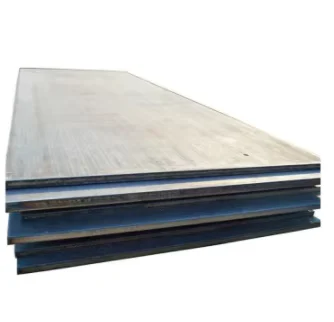
- Hot rolled Q235B/Q345B plates bundled with steel strips and edge protectors to prevent surface damage and preserve the mill scale finish during ocean transit
- Custom cutting to project-specific lengths before packing, reducing on-site waste and secondary cutting for warehouse and petrochemical applications
- Container loading optimized for plate dimensions — 20ft and 40ft OT/FR containers for heavy gauge Q345B plates, with timber dunnage and lashing rated for sea freight
- Heat number and steel grade stenciled on each plate surface for site traceability, matching the Mill Test Certificate package
- FOB, CIF, and DDP delivery terms available from Jinan port, with professional oversized cargo handling for plates exceeding standard container dimensions
Starting Your Plate Procurement with Drawings and Specifications
Send your project drawings (PDF/DWG), steel grade requirements (Q235B or Q345B), thickness and dimension schedule, and destination port — we respond within 24 hours with a preliminary assessment covering material availability, fabrication scope, and Mill Test Certificate documentation. For projects requiring EN 1090 or AWS compliance, confirm the execution class and welding standards upfront so our engineering team can align the WPS and shop drawing review before production begins.
Frequently Asked Questions
Q: Can you provide Mill Test Certificates for Q235B and Q345B plates?
A: Yes. Every plate we supply includes an MTC documenting chemical composition and mechanical properties per GB/T 700 (Q235B) and GB/T 1591 (Q345B), traceable to the original heat number from our own rolling mill.
Q: Do you offer cutting and welding services on the plates you supply?
A: Yes. As a vertically integrated Q235B Q345B wear resistant carbon steel plate supplier, we perform CNC cutting, bending, and welding in-house per approved WPS, so the finished component carries the same material traceability as the raw plate.
Q: What is the thickness tolerance on your hot rolled plates?
A: We hold ±1% tolerance on hot rolled Q235B and Q345B plates, controlled at the rolling mill through online gauge measurement and pass scheduling — not by post-production sorting.
Q: Can third-party inspection be arranged before shipment?
A: Yes. SGS and BV third-party inspections are available for dimensional verification, surface quality checks, and ultrasonic testing where project specifications require independent validation.
Q: How do you handle shipping for heavy or oversized plates?
A: We plan container and break-bulk loading based on actual fabricated dimensions, using timber dunnage and rated lashing for sea freight. FOB, CIF, and DDP terms are available from Jinan port.
Get Your Q235B/Q345B Plate Quote with Full Mill Documentation
Submit your project drawings, steel grade, thickness schedule, and destination port — we will return a detailed quotation including material, fabrication, coating, and Mill Test Certificate documentation within 24 hours.
Contact: admin@xjystructure.com | WhatsApp/WeChat: +86 188 5315 7756