
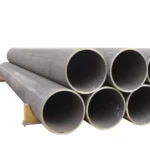
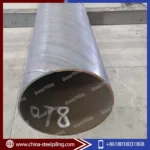
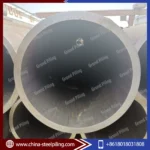
Description
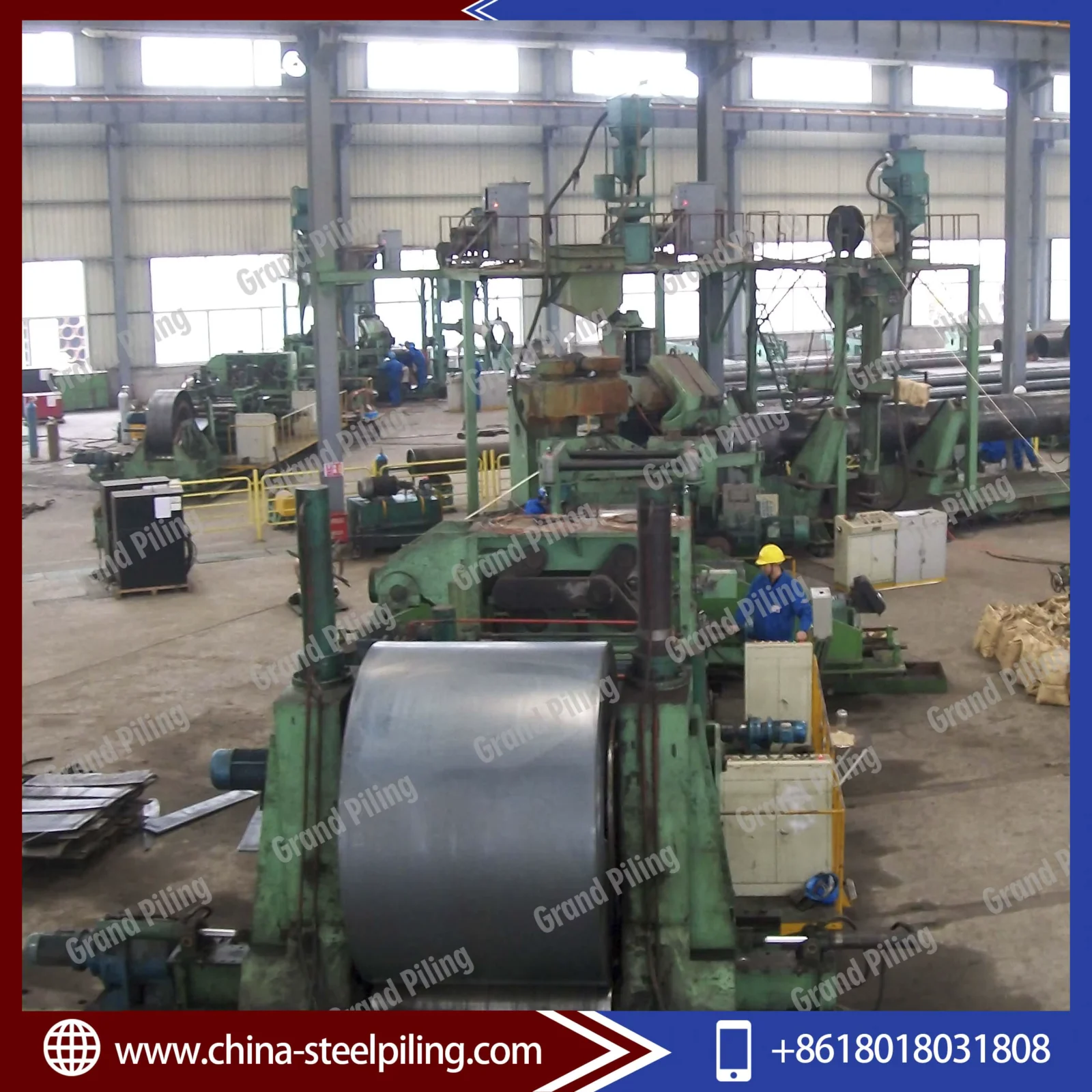
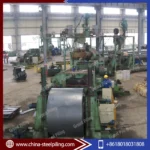
Vertically integrated JCOE pipe pile mill — own steel production and fabrication under one quality system, eliminating traceability gaps between material supplier and coater.
Technical Specifications
| Parameter | Value |
|---|---|
| Designation | JCOE Welded Steel Pipe Pile |
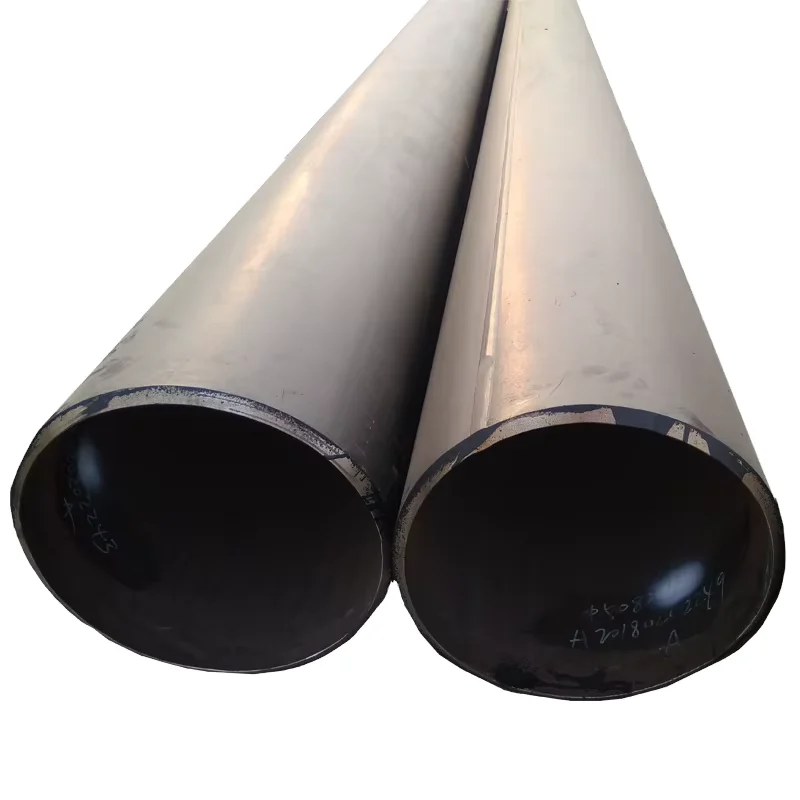
| Product Type | JCOE Welded Steel Pipe / Pipe Pile |
| Steel Grade | Q235B, Q275B, Q345B, Q195, Q420B, ST37, 15CrMo, 15Mo3, STPA25, 1Cr13Mn9Ni1N; API 5L B–X70; EN10219/EN10025 S235–S460; ASTM A572 Gr.42–Gr.65; ASTM A690; ASTM A252 Gr.1/2/3; AS 1163 C250/C350/C450 |
| Standard | API 5L, EN10219, EN10025, EN10210, ASTM A572, ASTM A690, ASTM A252, AS 1163, GB/T 700, GB/T 1591 |
| Section Shape | Round |
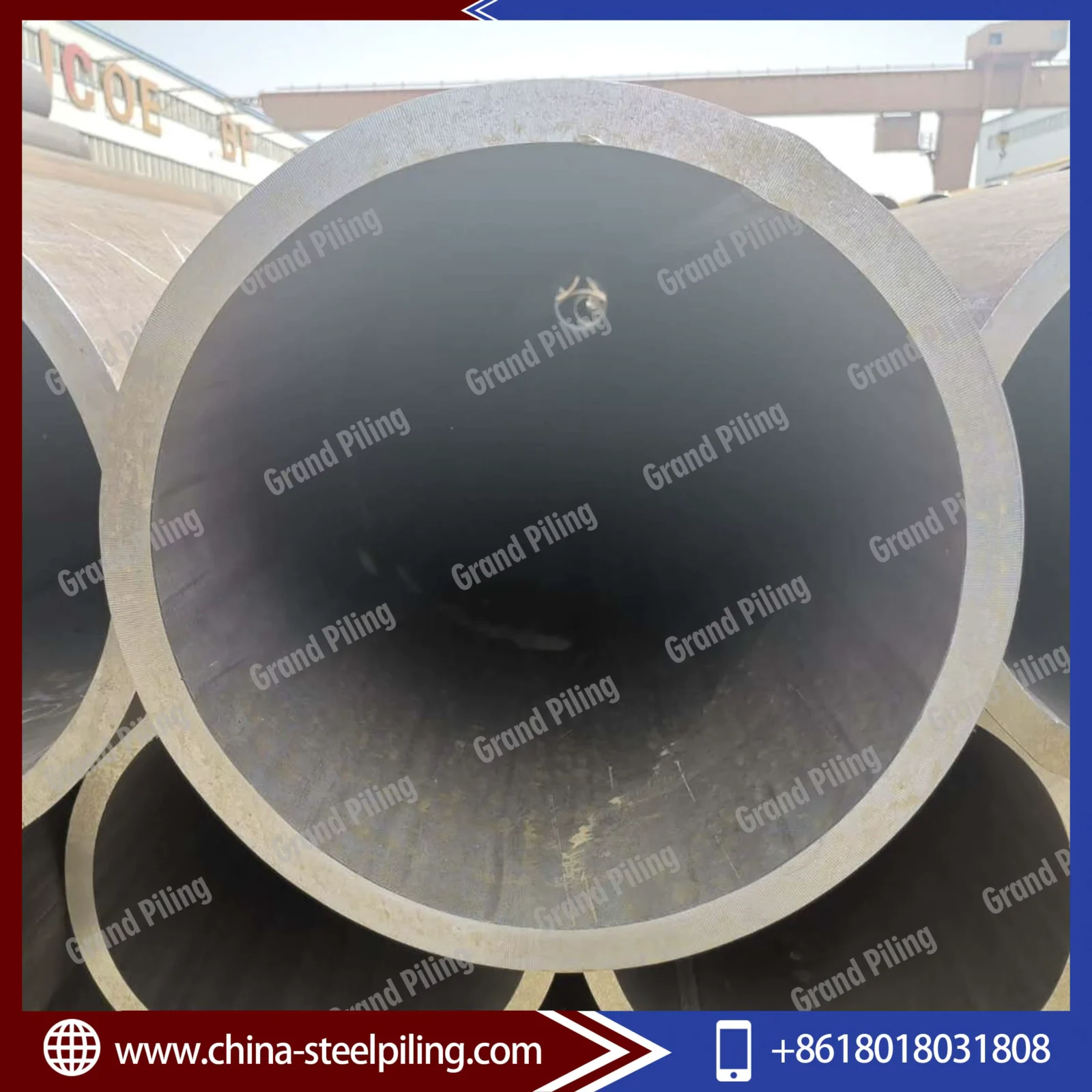
| Outer Diameter | 325–5500 mm (12.80–216.54 in) |
| Wall Thickness | 2–22 mm (0.08–0.87 in) |
| Length | Up to 120 m (pipe pile); up to 36 m (ERW) |
| Technique | JCOE / Longitudinally Welded / ERW / SSAW (Spiral) |
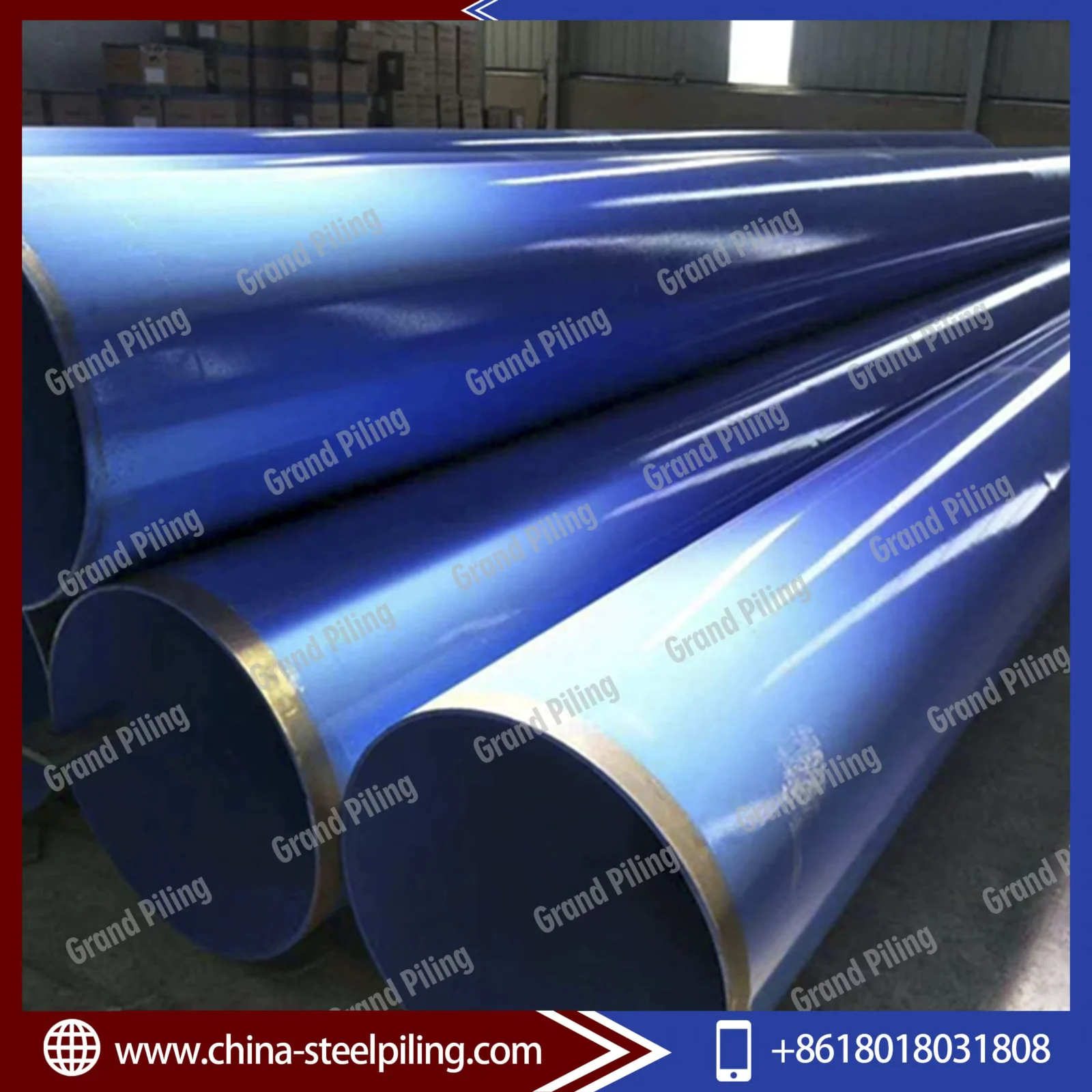
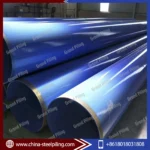
| Surface Treatment | Galvanized, 3PE Coat, FBE Coat, Marine Paint, Anti-corrosion protection |
| Tolerance | ±5% |
| Ends | Bevelled Ends available |
| Accessories | Pipe pile interlock/clutch, pipe shoe, flanges, waling strut, elbow, L-T/P-T connectors |
| Application | Marine foundations, port & harbour construction, bridge piers, land reclamation, offshore structures, industrial piling, infrastructure projects |
| Origin | Shandong, China |
Application Suitability
| Industry | Typical Applications |
|---|---|
| Marine & Port Construction | Container terminal jetties, harbour quay walls, berth structures, dolphin piles |
| Bridge & Infrastructure | Bridge piers, highway overpass foundations, railway viaduct piles |
| Land Reclamation | Seawall retaining structures, coastal fill support piles, dredging zone barriers |
| Offshore & Industrial | Offshore platform support legs, wind turbine transition piece foundations, heavy industrial plant piling |
Where Material Traceability Decides Pile Acceptance on Marine Sites
A missing heat number on a JCOE welded steel pipe pile can halt an entire foundation pour.
Overseas EPC buyers sourcing pipe piles from China often face fragmented procurement — steel from one mill, fabrication from another, coating from a third. When壁厚公差 drifts negative at the coater or weld seams lack proper NDT records, third-party inspectors at ports like Jebel Ali or Tanjung Pelepas flag the entire batch. Rework, re-shipment, or outright rejection follow — all because no single entity owned the full chain from slab to coated pile. [NEED_CITE: material traceability requirements for structural piling in marine environments]
Matching Large-Diameter JCOE Piles to Marine and Infrastructure Loads
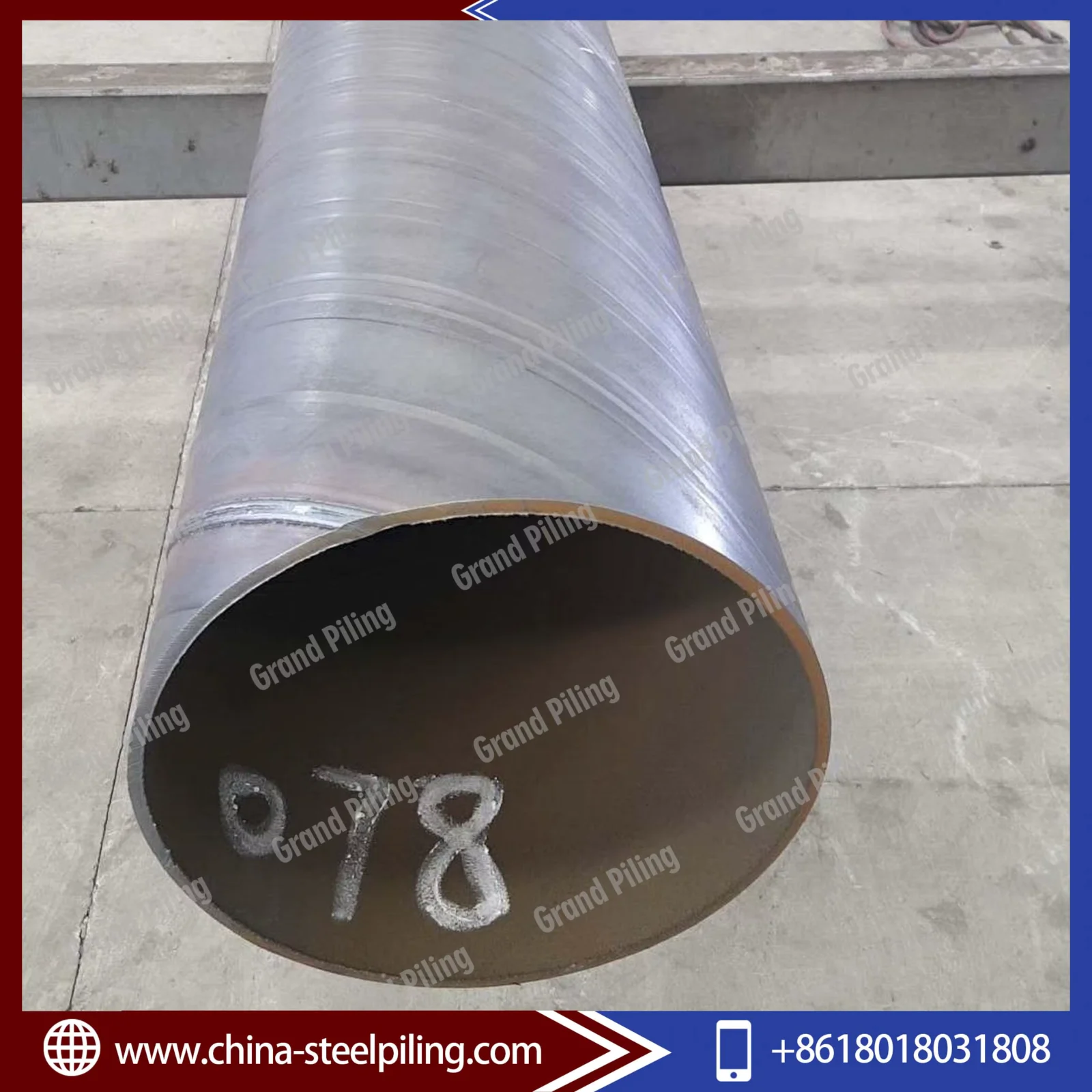
JCOE welded steel pipe piles in OD 325–5500 mm cover the full spectrum from light industrial piling to heavy marine foundation monopiles. The JCOE forming process allows step-by-step press forming of heavy-wall plates into round sections, making it suitable for thick-wall piles where SSAW spiral welding reaches its geometric limits. For port quay walls and bridge piers, the combination of high-yield grades like Q345B or ASTM A572 Gr.50 with 3PE or FBE anti-corrosion coating ensures long-term resistance to chloride ingress and tidal splash zones.
Engineering Compliance and Certification for Pile Foundations
Structural pipe piles must conform to design codes such as EN 1993 (Eurocode 3) for steel structures or AISC 360 for American projects. Steel grade selection directly affects load-bearing capacity — S355 and Q345B offer higher yield strength than S235 or Q235B, reducing wall thickness requirements for the same design load. For European projects, EN 10219 compliance with CE marking is mandatory for customs clearance; for North American infrastructure, ASTM A252 or A572 certification with full MTC documentation is required. [NEED_CITE: EN 10219 cold-formed structural hollow section compliance] Surface treatment selection — hot-dip galvanizing for splash zones, 3PE coating for buried sections, marine paint for atmospheric exposure — must match the corrosion environment specified in the project’s durability design.
Steel Grade Selection and JCOE Forming Process Explained
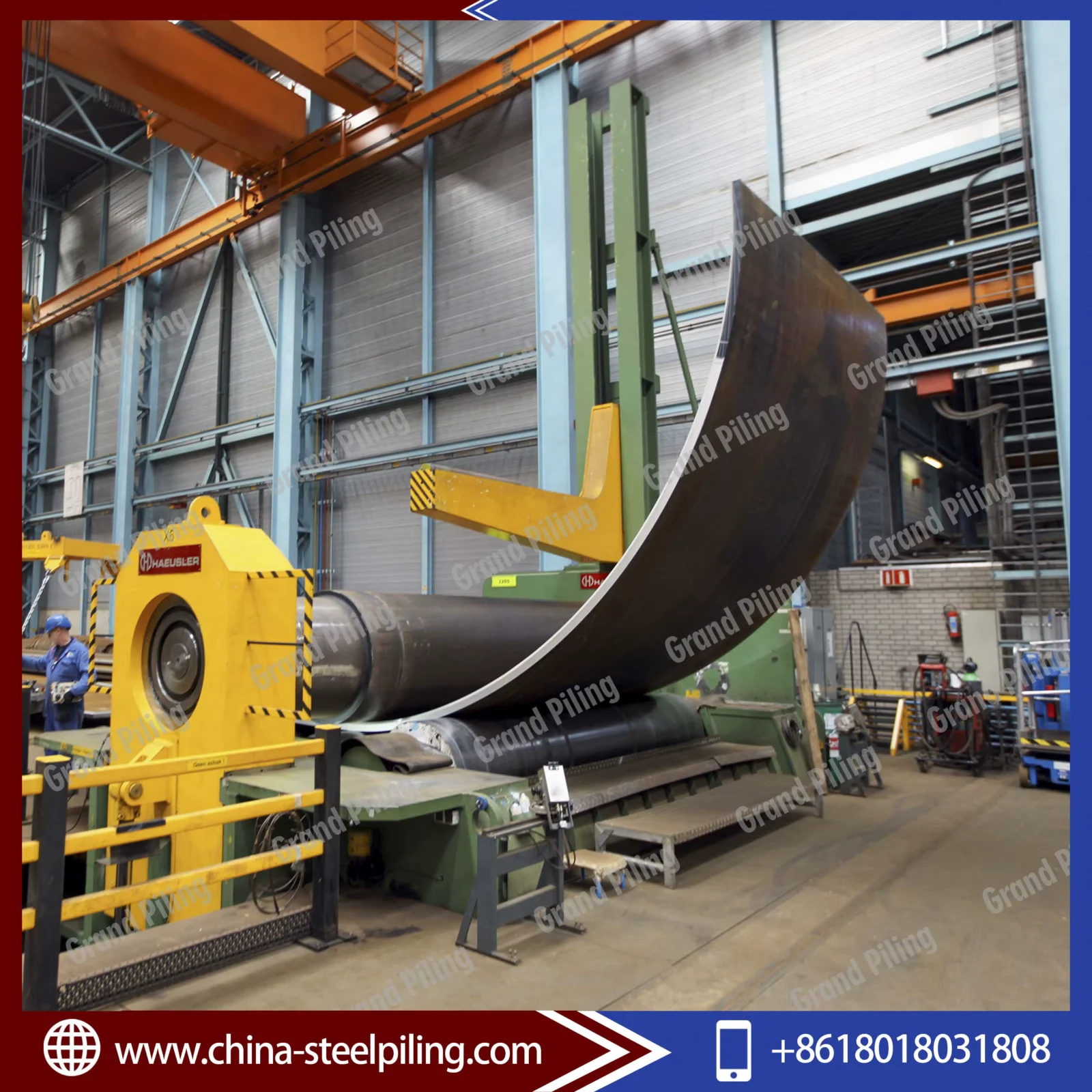
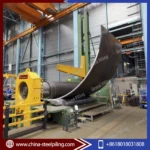
The JCOE process begins with plate edge pre-bending, followed by progressive J-C-O-E press forming steps that gradually shape the plate into a round open tube before final submerged arc welding. This method suits large-diameter, heavy-wall pipe piles where uniform roundness and weld seam quality are critical. Steel grade coverage spans Chinese GB standards (Q235B, Q275B, Q345B, Q420B), European EN grades (S235–S460 per EN10219/EN10025), American ASTM grades (A252 Gr.1/2/3, A572 Gr.42–Gr.65, A690), API 5L line pipe grades (B–X70), and Australian AS 1163 (C250/C350/C450). Higher yield grades reduce section weight for equivalent bearing capacity — critical when shipping costs scale with tonnage. For corrosive marine environments, multi-layer anti-corrosion systems such as 3PE (three-layer polyethylene) or FBE (fusion-bonded epoxy) provide barrier protection plus cathodic disbondment resistance, outperforming single-layer paint systems in long-term immersion conditions.
Hidden Costs of Specifying the Wrong Grade or Tolerance
Ordering Q235B when the structural engineer specified S355 means the pile cannot carry the design load — resulting in foundation redesign, pile replacement, or costly structural reinforcement after installation. Negative wall thickness tolerance beyond ±5% reduces the actual cross-sectional area, compromising buckling resistance in long slender piles driven into soft marine soils. Missing or incomplete MTC documentation triggers customs holds at destination ports, delaying project timelines and incurring demurrage charges. [NEED_CITE: structural steel tolerance standards for piling applications]
Why Source JCOE Pipe Piles from Xin Jiyuan
Xin Jiyuan operates its own steel mill with three production lines and over 2,800 raw material specifications, meaning every JCOE welded steel pipe pile starts from in-house produced steel plates with full chemical and mechanical traceability. The fabrication division handles JCOE forming, submerged arc welding, shot blasting, and multi-layer coating application under one roof — no handoff between separate suppliers. Certified welding procedures (WPS/PQR) and AWS/EN qualified welders ensure every longitudinal seam meets international standards. The engineering team provides shop drawing review, material optimization, and fabrication sequencing support before production begins. Complete quality documentation packages include WPS, PQR, weld maps, dimensional inspection reports, coating thickness measurements, and NDT test records. Third-party inspection by SGS, BV, or Lloyd’s is available for every shipment.
Documentation & Compliance
- Mill Test Certificate documenting Q345B or S355JR chemical composition and mechanical properties per GB/T 1591 or EN10219, with heat number traceability from own steel mill
- CE Certificate confirming EN 10219 compliance for structural hollow sections exported to European Union markets
- ISO 9001 Quality Management System certificate covering the full fabrication and coating process
- SGS or BV Third-Party Inspection Report covering dimensional checks, NDT weld testing, and coating thickness verification
- Material Traceability Package linking each pipe pile to its heat number, plate batch, and welding records
- Customs Documentation including packing list, bill of lading, and certificate of origin for destination port clearance
Packaging, Loading & Delivery
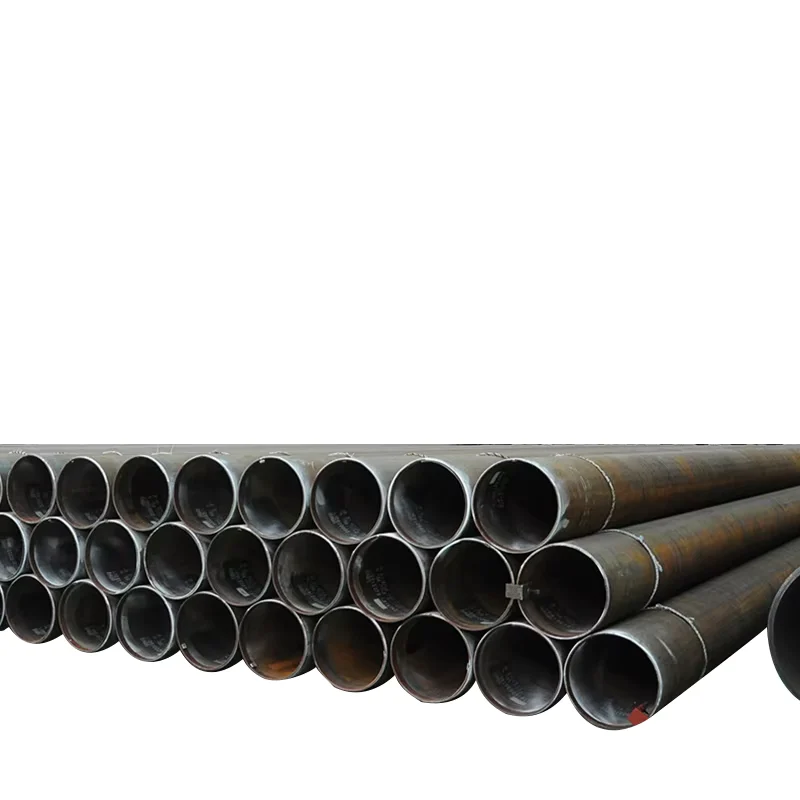
- JCOE welded steel pipe piles bundled with steel strip bands and edge protectors to prevent coating damage during ocean transit
- 3PE or FBE coated piles wrapped with protective sleeves at bevelled ends to preserve anti-corrosion layer integrity
- Oversized pipe piles up to 120 m length loaded via breakbulk vessel with professional lashing and dunnage planning
- Pipe pile interlocks, piling shoes, and L-T/P-T connectors packed separately in steel frames for easy site identification
- Heat number and steel grade stencilled on each pile end for traceability verification at installation
- FOB, CIF, and DDP shipping terms available with door-to-door logistics coordination to project sites
Start Your JCOE Pipe Pile Inquiry
Share your project drawings (PDF/DWG), steel grade requirements, outer diameter and wall thickness specifications, and destination port. The engineering team responds within 24 hours with a preliminary assessment, detailed quotation including material, fabrication, coating, and shipping costs, plus shop drawing timeline and production schedule.
Get Your JCOE Pipe Pile Quote with Full MTC Documentation
Submit your specifications and steel grade requirements to receive a detailed quotation and mill test certificate preview.
Tel: +86 531 8573 6315
Mobile/WhatsApp/WeChat: +86 188 5315 7756
Email: admin@xjystructure.com
Website: www.xjystructure.com
Frequently Asked Questions
Q: What is the difference between JCOE, UOE, and SSAW forming processes for pipe piles?
A: JCOE uses progressive press forming to shape heavy-wall plates into large-diameter round sections, suitable for OD 325–5500 mm and wall thickness up to 22 mm. UOE is a high-volume process for standard sizes but less flexible for custom heavy-wall piles. SSAW (spiral submerged arc welding) suits larger diameters at lower cost but has geometric limitations for thick-wall applications. JCOE offers the best balance for custom marine and infrastructure pipe piles.
Q: How do steel grades Q345B, S355, and ASTM A572 Gr.50 compare for pipe pile applications?
A: Q345B (GB/T 1591), S355 (EN10219/EN10025), and ASTM A572 Gr.50 all offer minimum yield strength around 345–355 MPa, making them equivalent for structural piling design. Selection depends on project specification requirements — European projects typically require EN grades with CE marking, American infrastructure specifies ASTM standards, and Chinese-designed projects use GB grades. Full material equivalence documentation and cross-reference tables are provided with every shipment.
Q: Which anti-corrosion coating is best for marine pipe pile environments?
A: For tidal splash zones and long-term immersion, 3PE (three-layer polyethylene) coating provides superior barrier protection and cathodic disbondment resistance. FBE (fusion-bonded epoxy) suits buried pile sections below seabed level. Hot-dip galvanizing is effective for atmospheric exposure zones above water. Marine paint systems work for temporary protection or less aggressive environments. Coating selection should match the corrosion zone specified in the project’s durability design.
Q: Can you fabricate pipe pile interlocks and piling shoes in-house?
A: Yes. The fabrication workshop produces pipe pile interlocks (hot-rolled and cold-rolled clutch profiles), piling shoes, flanges, waling struts, elbows, and L-T/P-T connectors to match the pipe pile specifications. All accessories are fabricated from compatible steel grades and welded per certified WPS procedures, ensuring structural continuity and load transfer at connections.
Q: How are oversized JCOE pipe piles up to 120 m shipped internationally?
A: Pipe piles exceeding container length are shipped via breakbulk vessel with professional loading plans, lashing systems, and dunnage to prevent coating damage and movement during ocean transit. Smaller diameter piles in standard lengths can be containerized for cost efficiency. Complete export documentation, customs clearance support, and tracking until site delivery are included in the supply scope.