
EN S355 Bridge Steel Beams Manufacturer for EPC Bulk Supply
EN S355 Bridge Steel Beams Manufacturer for EPC Bulk Supply
Not all S355 steel is created equal.
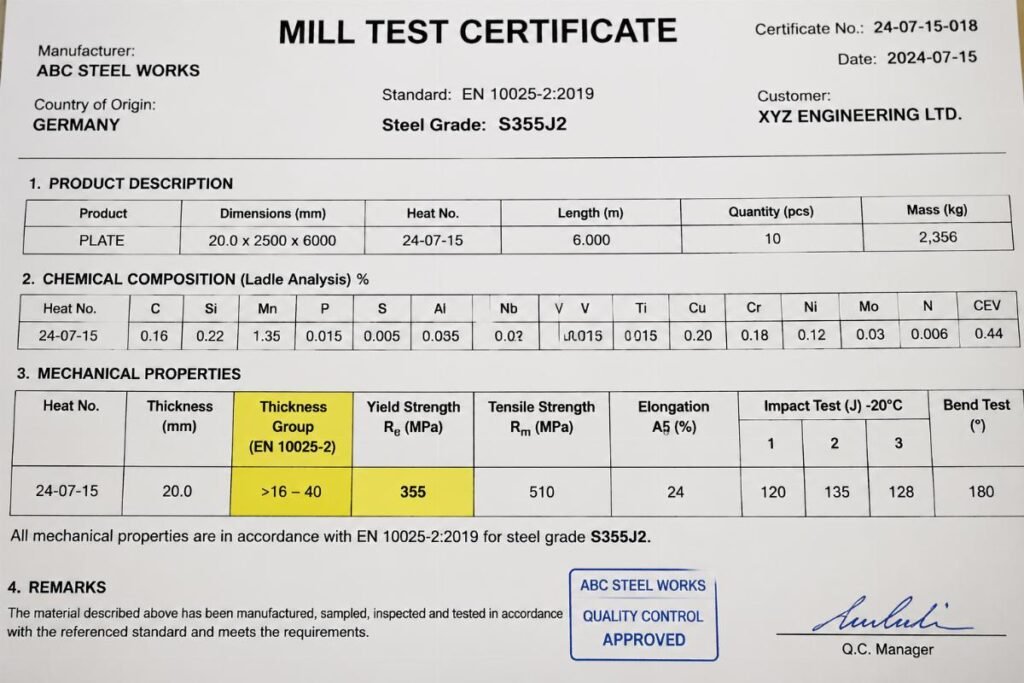
The primary reason bridge steel beams get stuck at customs or fail third-party inspection is not material quality, but a mismatch between the specified yield strength and the actual thickness of the delivered sections. Successful procurement requires aligning material specifications with EN10025 thickness-dependent yield strength groups to prevent costly port delays.
I still remember the humidity and the noise at the Lagos port terminal a few years ago. A container of H-beams destined for a regional bridge project was sitting idle, surrounded by frustrated clearing agents and a stern third-party inspector. The paperwork looked perfect. The mill test certificates stated S355J2, a standard grade for structural steel. The purchase order matched. Yet, the shipment was flagged for rejection. The issue was not that the steel was weak; it was that the buyer had specified a yield strength of 355 MPa based on the standard reference thickness of 16mm, while the actual beams supplied were 50mm thick. In the world of European standards, yield strength drops as thickness increases. The inspector was technically correct to flag the discrepancy, even if the steel itself was perfectly safe for the design load. That incident shifted my entire approach to sourcing. It taught me that technical compliance is not just about the grade name, but about the precise intersection of grade, thickness, and certification.
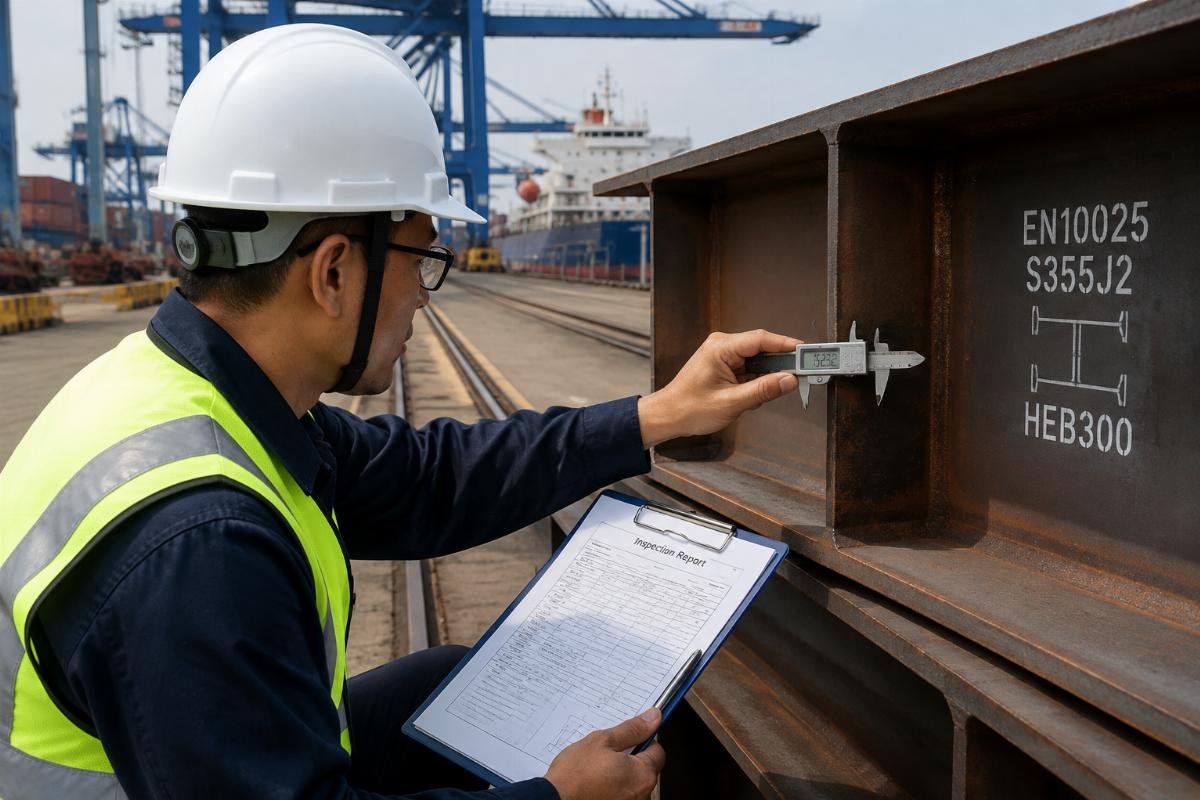
This misunderstanding is common among procurement teams who treat steel grades as static values rather than dynamic properties defined by geometry. When sourcing an EN10025 S355J2 H-beam for bridges, the devil is in the details of the standard’s grouping tables. Ignoring these nuances turns a routine delivery into a logistical nightmare.
Why Do Bridge Steel Beams Get Stuck at Customs?
Customs delays for structural steel are rarely about tariffs; they are almost always about technical verification failures. In many emerging markets, local authorities or appointed third-party inspectors use simplified checklists that do not account for the nuances of international standards. They see “S355” on the invoice and expect every piece of steel to meet a 355 MPa yield strength, regardless of its dimensions.
When a shipment arrives, inspectors often perform spot checks. If they pull a thick flange beam and compare its certified yield value against the generic 355 MPa benchmark, it appears non-compliant. This is a fundamental misalignment between the quoted specifications and the actual thickness groups defined in EN10025-2. The standard explicitly categorizes steel into thickness groups, with lower yield strength requirements for thicker sections to account for the metallurgical realities of hot rolling. [NEED_CITE: EN10025-2 thickness grouping and mechanical property requirements]
A Middle Eastern infrastructure contractor once faced a similar hurdle during a tender verification phase. The project required strict adherence to EN standards, and the third-party verifier rejected the initial batch of mill test certificates because they did not clearly delineate the thickness group for each heat number. The certificates listed the average properties for the entire batch, which included varying thicknesses. Without a clear breakdown showing that the thicker sections were tested against the correct, lower yield threshold, the verifier could not confirm compliance. This delay pushed back the fabrication schedule by weeks, costing the contractor significantly more than the price of the steel itself.
To avoid this, the specification must be explicit. The purchase order should not just say “S355J2.” It should reference the specific thickness range and the corresponding minimum yield strength required by the standard. This clarity ensures that the mill test certificates generated at the factory will match the expectations of the inspectors at the destination port.
How Does Thickness Affect S355 Yield Strength?
The assumption that higher yield strength is always better is a common pitfall in structural steel procurement. In reality, specifying the correct thickness group prevents both over-engineering costs and inspection failures. The physical process of hot rolling steel affects its microstructure. Thinner sections cool faster and undergo more deformation per unit volume, resulting in a finer grain structure and higher yield strength. Thicker sections cool slower, leading to a coarser grain structure and slightly lower yield strength. [NEED_CITE: Metallurgical principles of hot rolling and grain structure in structural steel]
EN10025-2 codifies this physical reality into distinct mechanical property groups. For S355 steel, the minimum yield strength is 355 MPa for thicknesses up to 16mm. However, for thicknesses between 16mm and 40mm, the requirement drops to 345 MPa. For thicknesses between 40mm and 63mm, it drops further to 335 MPa. If a buyer insists on 355 MPa for a 50mm thick beam, they are asking for a material property that is not standard for that grade and thickness, potentially requiring special alloying or processing that drives up cost without adding structural value.
Understanding this correlation is critical for structural steel beam thickness tolerance and specification. When engineers design a bridge, they calculate loads based on the actual material properties. If the design assumes 355 MPa for a thick section, but the standard only guarantees 335 MPa, the safety factor is compromised. Conversely, if the design correctly accounts for the lower yield strength of thicker sections, the structure is safe, and the material is compliant. The problem arises when the documentation does not reflect this understanding.
| Thickness Range (mm) | Minimum Yield Strength ReH (MPa) | Compliance Status for Generic 355 MPa Spec |
|---|---|---|
| ≤ 16 | 355 | Compliant |
| > 16 to ≤ 40 | 345 | Non-Compliant if 355 is strictly enforced |
| > 40 to ≤ 63 | 335 | Non-Compliant if 355 is strictly enforced |
| > 63 to ≤ 80 | 325 | Non-Compliant if 355 is strictly enforced |
This table highlights why a blanket specification fails. Inspectors who do not understand these groups will mark compliant steel as defective. Procurement managers must ensure that their suppliers provide mill test certificates that explicitly state the thickness group and the corresponding yield strength for each batch. This transparency eliminates ambiguity and protects the buyer from unjustified rejections.
What Documents Ensure Smooth Clearance for EPC Projects?
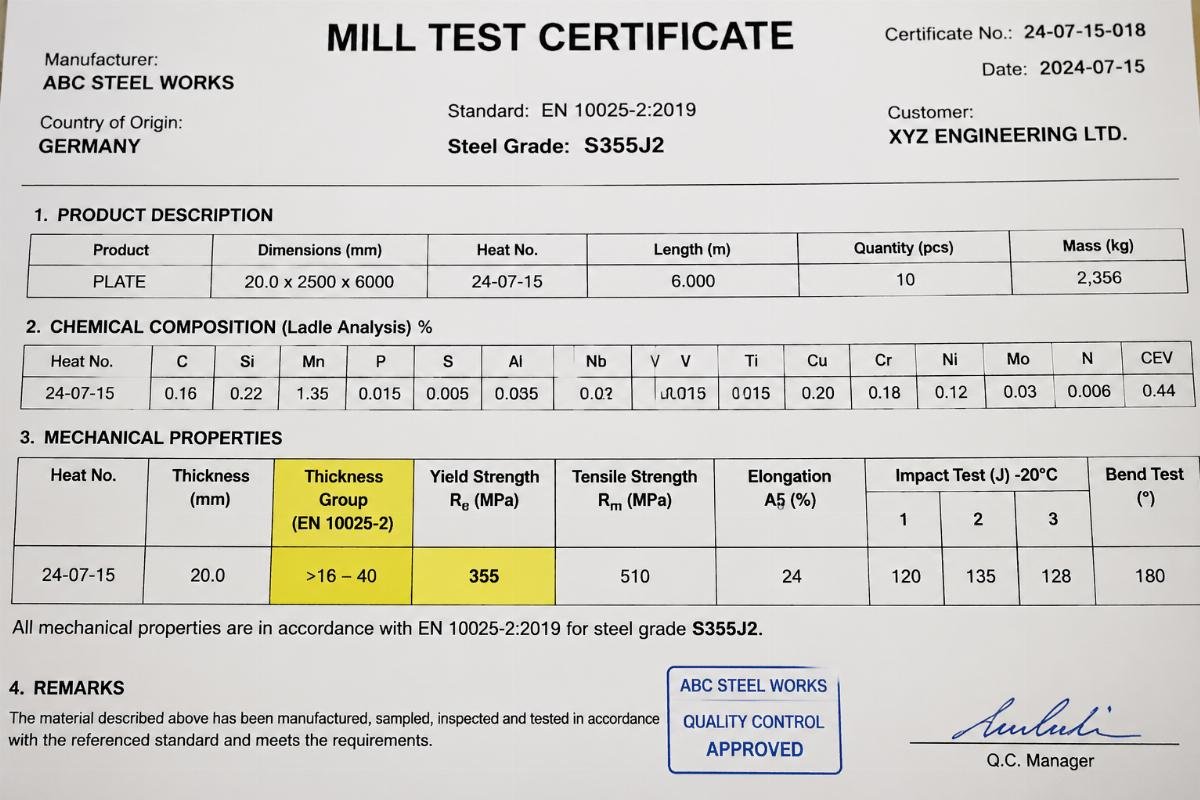
For EPC contractors, the bill of lading and commercial invoice are just the beginning. The real key to smooth customs clearance lies in the technical documentation, specifically the Mill Test Certificates (MTC). An MTC is not just a piece of paper; it is the legal and technical proof that the material meets the specified standard. For bridge projects, where safety is paramount, these documents undergo rigorous scrutiny.
A proper MTC for EN10025 steel must include the heat number, chemical composition, mechanical properties, and crucially, the thickness of the tested sample. It must also reference the specific part of the standard, such as EN10025-2, and the impact testing temperature, such as J2 for -20°C. [NEED_CITE: Requirements for EN10025-2 Mill Test Certificates and traceability] If any of these elements are missing or inconsistent with the physical goods, the shipment is vulnerable to detention.
In Southeast Asia, a bridge retrofit project required urgent replacement of non-standard H-beams. The supplier provided MTCs that listed the average properties for the entire production run but did not specify the properties for the custom-cut sections. The local authority, unfamiliar with the supplier’s internal quality control, rejected the documents as insufficient. The project team had to wait for revised certificates that broke down the properties by thickness group, causing a significant delay in the retrofit timeline.
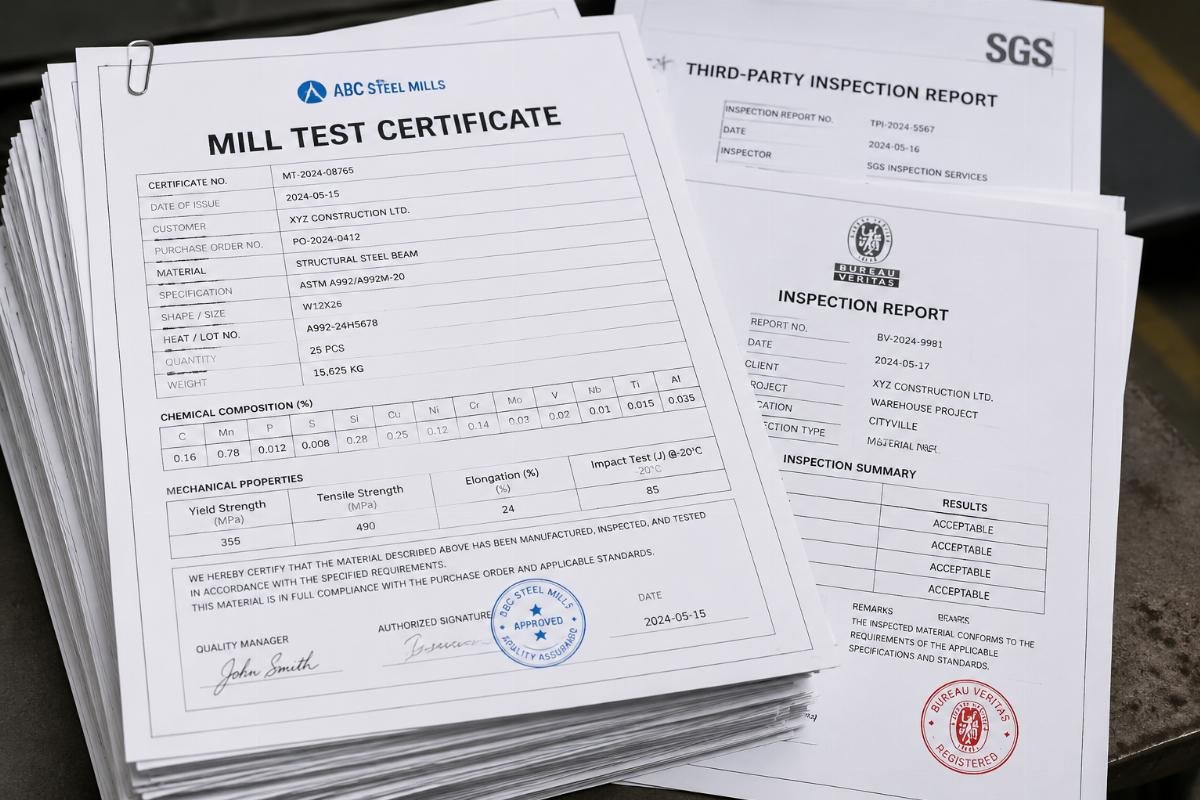
To prevent this, buyers should request MTCs that are batch-specific and thickness-specific. The certificate should clearly show that the tested samples represent the actual thickness of the delivered beams. Additionally, for high-stakes projects, third-party inspection reports from recognized agencies like SGS or Bureau Veritas can provide an extra layer of assurance. These reports verify that the physical dimensions and surface conditions match the documentation, reducing the risk of disputes at the port.
How to Select the Right Supplier for Complex Bridge Specs?
Selecting a supplier for bridge steel is not just about finding the lowest price; it is about finding a partner who understands the technical complexities of international standards. Many traders can source steel, but few manufacturers have the in-house capability to verify compliance with EN standards across varying thickness groups.
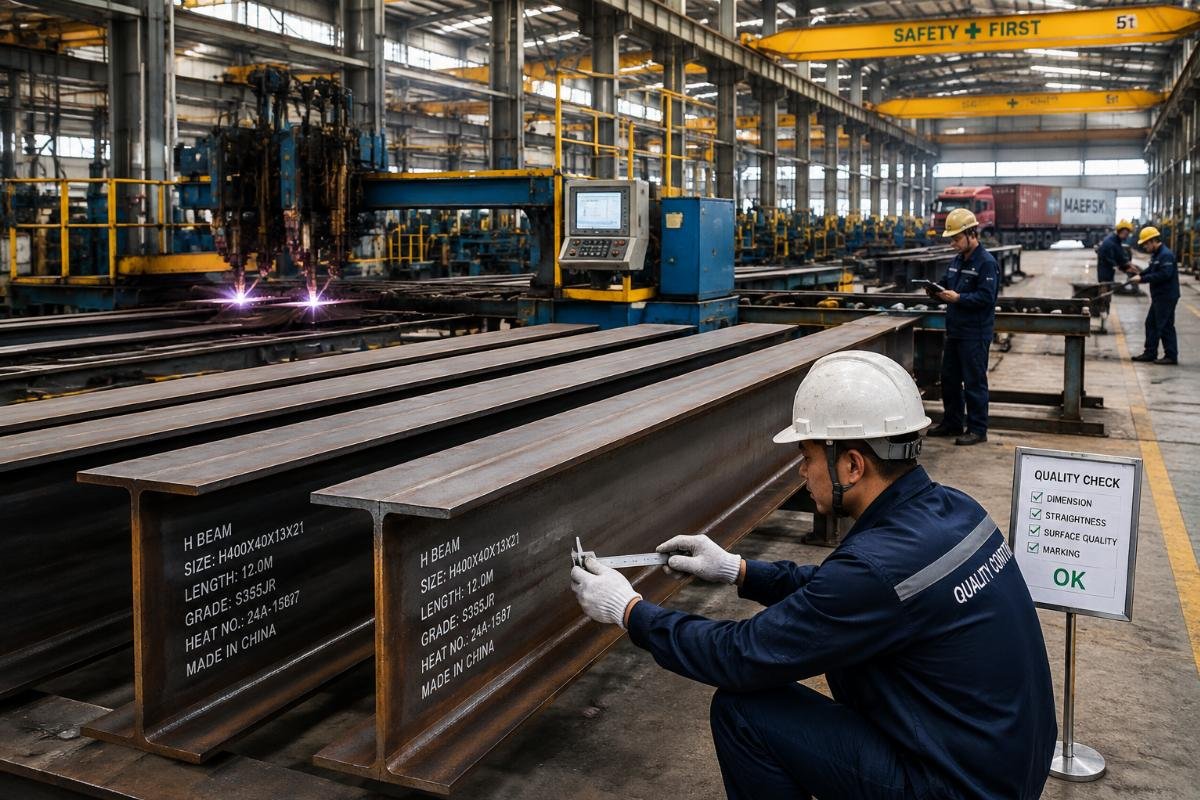
A reliable Bridge Construction Steel Beam Supply partner will have an in-house laboratory equipped to perform tensile and impact tests according to EN10025. They will be able to provide pre-shipment lab testing results that match the final MTCs. This capability is crucial for custom non-standard sizes, where standard stock may not be available. For instance, if a project requires H-beams with specific flange widths that are not common in the local market, the supplier must be able to cut and process them while maintaining the integrity of the material properties.
Furthermore, the supplier should have experience with export documentation. They should understand the importance of clear labeling, proper packaging to prevent corrosion during transit, and accurate declaration of weights and dimensions. A supplier who proactively discusses thickness groups and yield strength variations during the quotation phase demonstrates a level of technical competence that reduces risk for the buyer.
In my own work, I prioritize manufacturers who can provide custom-cut H-beams with verified compliance. They do not just ship what is in stock; they engineer the solution to match the project’s specific needs. This approach minimizes the risk of technical discrepancies and ensures that the steel arrives ready for fabrication, not stuck in a customs warehouse.
Conclusion
Technical precision prevents logistical paralysis.
Sourcing bridge steel beams requires a deep understanding of how thickness affects yield strength under EN10025. By specifying the correct thickness groups and ensuring mill test certificates reflect these nuances, EPC contractors can avoid costly customs delays and ensure project timelines remain on track. The right Bridge Construction Steel Beam Supply partner acts as a technical ally, not just a vendor, guiding buyers through the complexities of international standards to deliver compliant, high-quality materials.
Tags
Share this article

Written by
author
Editor covering global sourcing, supplier verification, and industrial product knowledge. Content is compiled from manufacturer specifications, industry standards, and hands-on experience with international B2B buyers. Every article is fact-checked before publishing to help procurement professionals make informed decisions.
View all posts →Keep Reading
Related Articles
August 13, 2026
EN S355JR Steel Beams for Warehouse Framework Wholesale Supplier
Sourcing Steel Beams for Warehouse Framework requires prioritizing EN10219 compliance and impact toughness grades over base price to prevent structural...
Read article →
August 13, 2026
EN10219 S355JR Steel Structural Components for Multi-Level Car Park Wholesale Supplier
Sourcing Steel Structural Components for Multi-Level Car Park requires strict EN10219 compliance to prevent costly assembly rework. Generic S355JR often...
Read article →Discussion