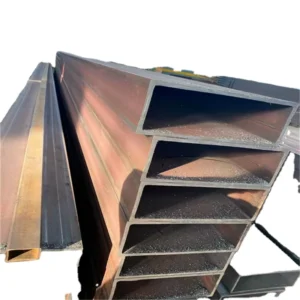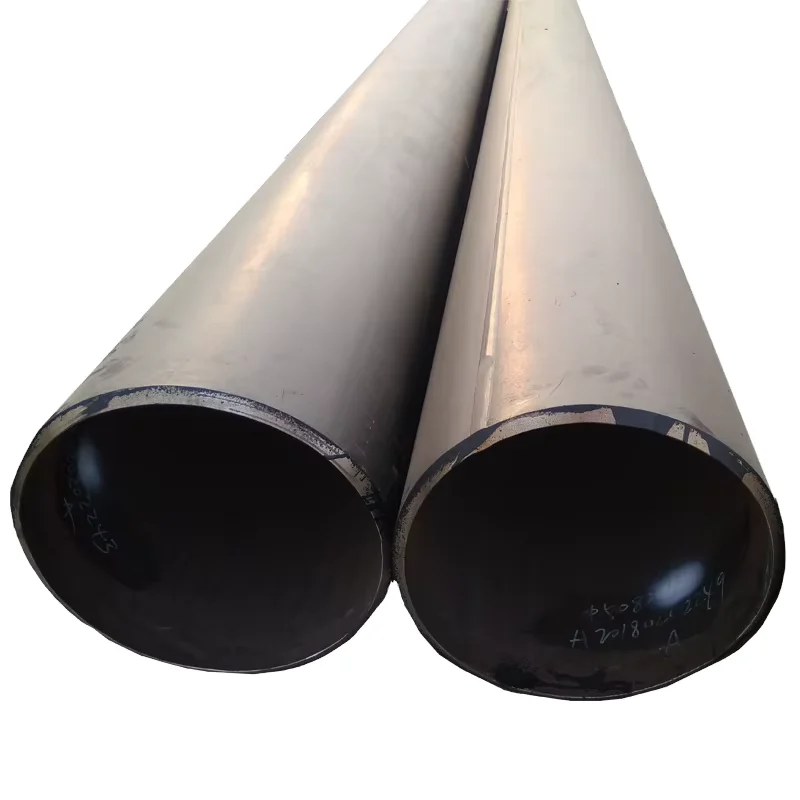
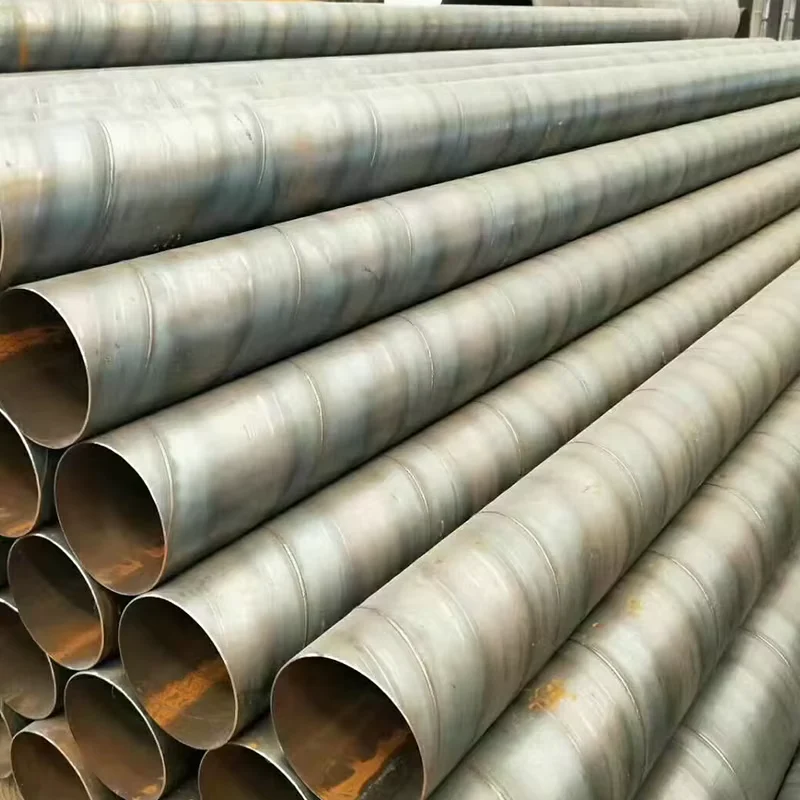
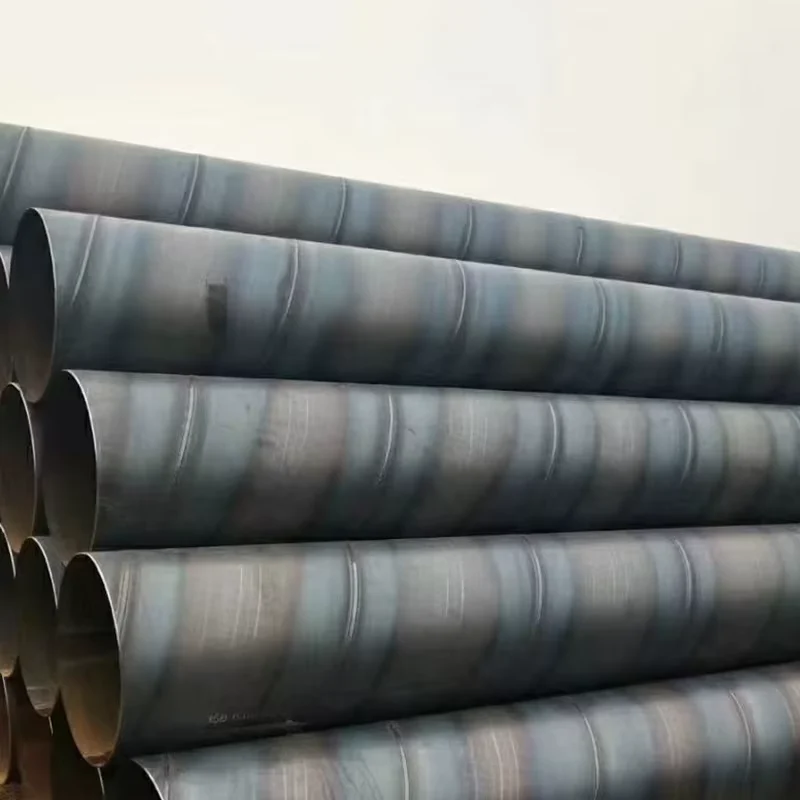
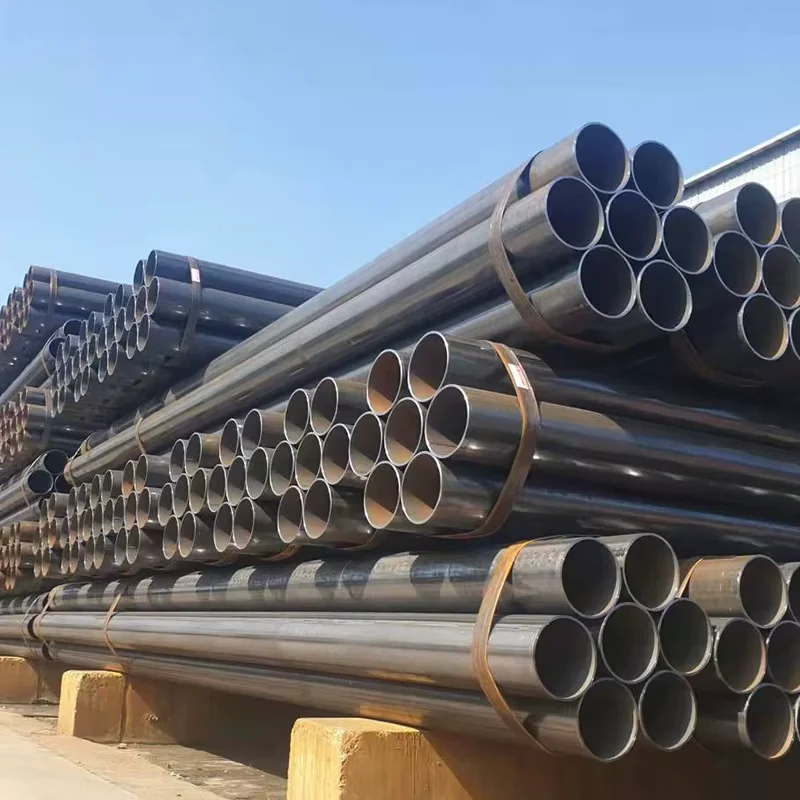
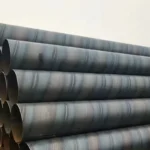
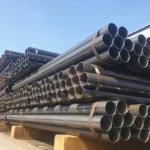
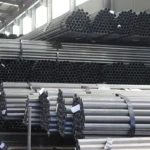
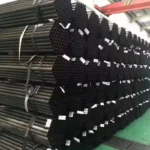
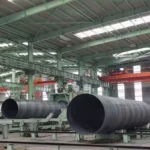
Description
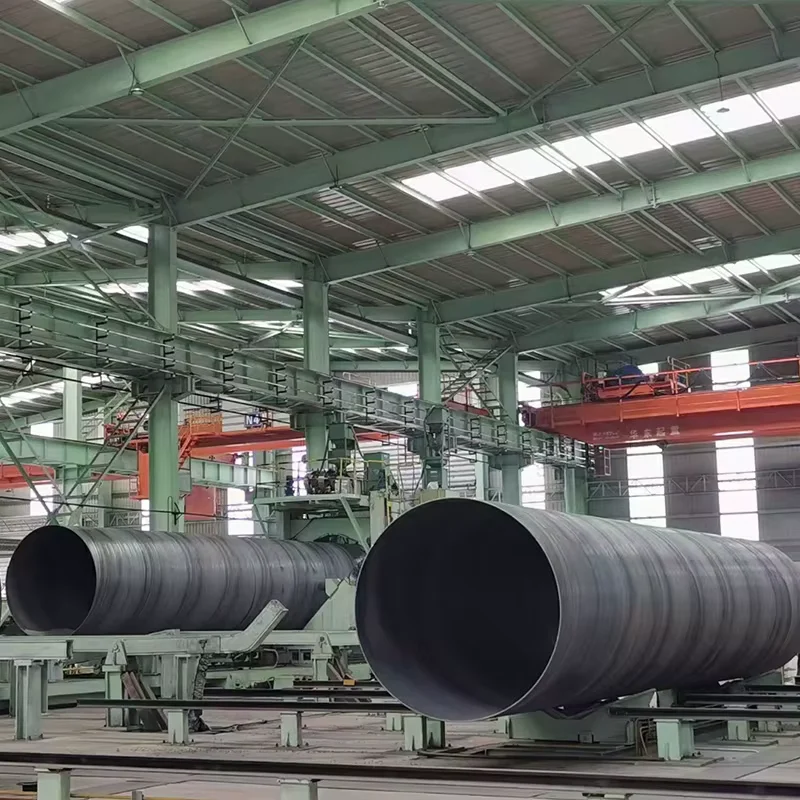
Vertically Integrated Pipe Supply — Our own steel mill produces Q195 raw material, eliminating third-party sourcing gaps and ensuring full heat-number traceability from slab to finished pipe.
Technical Specifications
| Parameter | Value |
|---|---|
| Designation | Q195 ERW Welded Steel Pipe |
| Product Type | ERW / Welded Steel Pipe |
| Steel Grade | Q195, SS400, A36, ASTM 1020, SPHC, St15, St37, St44, St52, S235JR |
| Standard | ASTM, JIS G3131, DIN1614, EN10111, JIS G3101, DIN17100 (EN10025), JIS G3106 |
| Section Shape | Round |
| Size Range | DN15 (21.3mm) – DN150 (165mm) |
| Wall Thickness | 2.75mm – 5.5mm |
| Length | 5.8–14m (standard export length) |
| Technique | ERW (Electric Resistance Welded) / Laser Welded / Submerged Arc Welded |
| Surface Treatment | Black / Oiled / Galvanized (per project requirement) |
| Tolerance | ±1% |
| Ends | Plain / Beveled / Threaded |
| Application | Fluid transportation / Low-pressure fluid delivery / Mining / Belt conveyor rollers / Structural piping / Scaffolding / Making pipes and cold rolled steel products |
| Origin | Shandong, China |
Application Suitability
| Industry | Typical Applications |
|---|---|
| Mining & Mineral Processing | Low-pressure slurry lines, dewatering pipes, conveyor roller tubes |
| Construction & Infrastructure | Scaffolding tubes, structural columns, handrail posts, fence frameworks |
| Industrial Manufacturing | Belt conveyor idler rollers, cold rolled steel product feedstock, machine guards |
| Agriculture & Irrigation | Water distribution lines, greenhouse framing, drainage systems |
What Wall-Thickness Tolerance Costs on a Low-Pressure Fluid Line
A ±1% tolerance on 2.75mm wall Q195 ERW welded steel pipe means the difference between passing hydrostatic acceptance and failing on-site rejection.
I once watched a West African project reject an entire container of Q195 pipes because wall thickness ran 8% under nominal — the caliper reading alone was enough for the site engineer to halt installation. Negative tolerance beyond acceptable limits doesn’t just affect theoretical weight; it compromises pressure rating, weld joint fit-up, and structural load capacity. When pipes arrive at a mining site with inconsistent wall profiles, the contractor faces rework, replacement shipments, and schedule delays that dwarf the original unit price savings. [NEED_CITE: EN 10219 cold-formed hollow section dimensional tolerance requirements]
Matching DN15–DN150 Round Pipes to Conveyor and Scaffolding Loads
The Q195 ERW welded steel pipe range from DN15 to DN150 covers the most common diameters used in belt conveyor roller shells and scaffolding uprights. For conveyor idlers, the 2.75mm–3.25mm wall thickness provides adequate rigidity for roller rotation under loaded belt conditions, while scaffolding applications typically require the 3.25mm–4.0mm range to meet load-bearing codes. Our vertically integrated production — from steelmaking through ERW forming — ensures that every pipe carries consistent mechanical properties matched to these structural demands, with the Q195 ERW welded steel pipe maintaining weld seam integrity verified through in-process NDT.
Engineering Compliance Across EN, ASTM, and JIS Frameworks
Q195 ERW welded steel pipe production conforms to multiple international standards including ASTM, JIS G3101, JIS G3131, DIN1614, EN10111, and DIN17100 (EN10025), allowing project engineers to specify material under their preferred code without cross-referencing equivalence tables. For European projects requiring EN 10219 compliance, the S235JR grade option provides certified yield strength documentation. Surface treatment selection — black, oiled, or galvanized — directly addresses corrosion environment severity, from indoor scaffolding storage to outdoor mining installations exposed to moisture and particulate abrasion. [NEED_CITE: steel grade equivalence between Chinese Q-series and European S-series standards]
Understanding Q195, St37, and S235JR Grade Selection
Q195 belongs to the Chinese GB carbon structural steel system, offering mild steel characteristics suitable for low-stress structural and fluid conveyance applications. Its European equivalents St37 and S235JR share similar carbon content ranges and forming behavior, though certification pathways differ — Q195 pipes ship with GB-standard mill test certificates, while S235JR orders carry EN 10025-compliant documentation. The ERW welding process creates a longitudinal seam through electric resistance heating, producing a cost-effective joint suitable for pressures up to 1.6MPa in the thickened wall variant. For projects requiring higher pressure ratings or larger diameters beyond DN150, submerged arc welded options become relevant. Galvanized surface treatment extends service life in corrosive environments by providing sacrificial zinc protection, while oiled black pipes serve temporary or indoor applications where appearance is secondary to function.
Hidden Costs of Unverified Pipe Procurement
Sourcing Q195 ERW welded steel pipe from traders without mill-level quality control introduces risks that surface only during project inspection. Material certificates forged or transferred between batches break the traceability chain, causing customs holds in markets requiring heat-number verification. Wall thickness below tolerance triggers structural engineer rejection, forcing costly replacement shipments while the original cargo occupies port storage. Weld seam defects — lack of fusion, porosity, or excessive flash — remain invisible until cutting or bending operations expose them, turning a material cost saving into a fabrication disaster. [NEED_CITE: consequences of non-compliant steel imports on project timelines]
Why Project Teams Source Q195 Pipe From Our Facility
Our production begins at our own steel mill, where Q195 slab chemistry is controlled before the first pipe is formed — this vertical integration eliminates the material certification gaps that plague trader-sourced orders. Every Q195 ERW welded steel pipe ships with a mill test certificate documenting chemical composition and dimensional verification tied to specific heat numbers. Our fabrication workshop holds certified welding procedures under AWS and EN standards, with qualified welders performing in-process inspection at every stage. The facility maintains over 2,800 specifications in raw material inventory, enabling rapid response to mixed-diameter orders without external procurement delays. Third-party inspection through SGS or BV is available before shipment, providing independent verification for projects requiring additional quality assurance. Professional loading teams handle the 5.8–14m pipe lengths with appropriate cradle spacing and lashing to prevent transit damage.
Documentation & Compliance
- Mill test certificate documenting Q195 chemical composition and dimensional verification per GB standards, with heat number traceability from slab to finished pipe
- Third-party inspection reports from SGS or BV confirming wall thickness, outer diameter, and weld seam quality before container sealing
- Certified welding procedure specifications (WPS) and procedure qualification records (PQR) for ERW seam integrity under AWS/EN frameworks
- Export customs documentation including packing list, bill of lading, and certificate of origin for destination-country clearance
- Coating thickness reports for galvanized orders verifying zinc layer compliance with project specifications
Packaging, Loading & Delivery
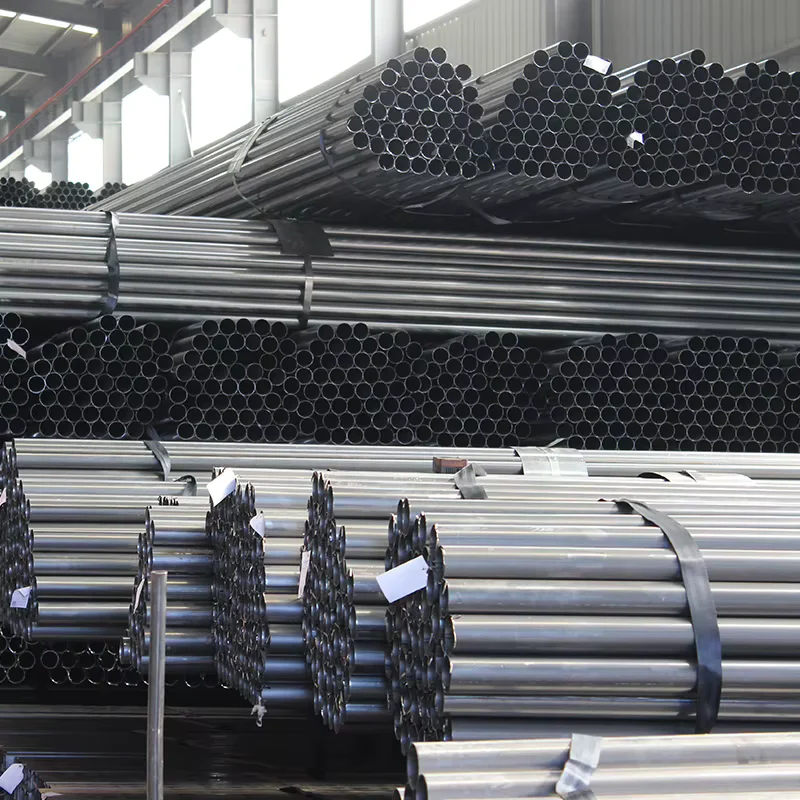
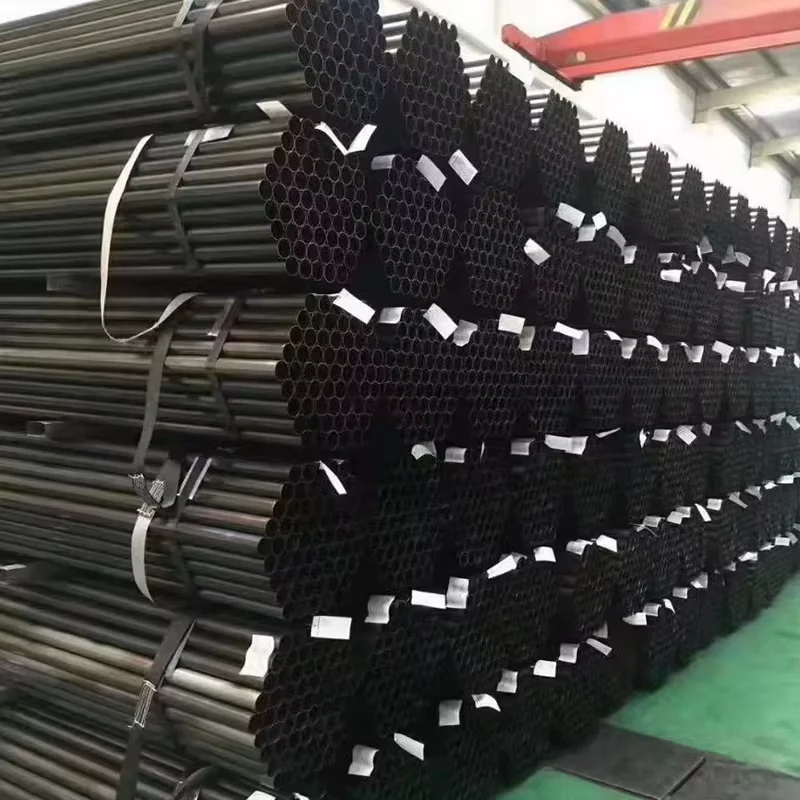
- Q195 ERW welded steel pipe bundled with steel strip ties at intervals preventing sag during ocean transit, with edge protectors preserving galvanized coating integrity
- Black pipes receive anti-rust oil coating before bundling, preventing surface oxidation during humid port storage and container shipping
- Standard 5.8m and 6m lengths optimize 20ft container loading for DN15–DN65 diameters, while 12m lengths suit 40ft containers for DN80–DN150
- Heat number stenciling on each pipe end enables site-level identification and traceability verification during installation
- FOB, CIF, and DDP shipping terms available with professional stowage planning to maximize container utilization across mixed-diameter orders
Requesting Your Q195 Pipe Quotation and Mill Documentation
Submit your project specifications — including diameter range, wall thickness, total quantity, surface treatment preference, and destination port — to receive a detailed quotation with production timeline and mill test certificate samples. Our engineering team reviews drawings for material optimization and confirms compliance with your specified standard before contract execution.
Start Your Q195 Pipe Procurement With Verified Documentation
Share your project drawings and specifications to receive a quotation with full material traceability and compliance documentation within 24 hours.
Company: Shandong Xin Jiyuan Special Steel Tube Co., Ltd
Website: www.xjystructure.com
Tel: +86 531 8573 6315
Mobile/WhatsApp/WeChat: +86 188 5315 7756
Email: admin@xjystructure.com
Address: No.11889, Jingshi West Road, Lulian Group, Jinan City, Shandong Province, China
Frequently Asked Questions
Q: What is the difference between Q195, St37, and S235JR for welded pipe applications?
A: Q195 is a Chinese GB standard mild steel grade, while St37 and S235JR are European equivalents under DIN17100 and EN10025 respectively. All three share similar carbon content and forming characteristics suitable for low-pressure fluid conveyance and light structural applications. The primary difference lies in certification documentation — Q195 pipes ship with GB-standard mill test certificates, while S235JR orders carry EN-compliant documentation required for European projects.
Q: Can you provide third-party inspection before shipment?
A: Yes, we arrange SGS or BV third-party inspection at our facility before container loading. The inspection covers dimensional verification, wall thickness measurement, visual weld seam examination, and surface treatment quality. Inspection reports are issued alongside our internal mill test certificates for complete quality documentation.
Q: What surface treatment options are available for Q195 ERW welded steel pipe?
A: We offer black (bare), oiled, and galvanized surface treatments based on project requirements. Black pipes suit indoor or temporary applications, oiled pipes provide short-term rust prevention during transit and storage, while galvanized pipes offer long-term corrosion protection for outdoor or humid environments. Coating thickness for galvanized orders is verified and documented per project specifications.
Q: Do you supply non-standard lengths or custom wall thickness?
A: Standard export lengths are 5.8m and 6m, with 12m and 14m available for larger diameter orders. Custom cutting to project-specific lengths is available upon request. Wall thickness ranges from 2.75mm to 5.5mm within the DN15–DN150 diameter range, with ordinary pressure rating up to 1.0MPa and thickened wall options up to 1.6MPa.
Q: How do you ensure material traceability from steelmaking to finished pipe?
A: Our vertically integrated facility produces raw steel and forms pipes within the same operation. Each pipe carries a heat number linked to the original slab chemistry and rolling records. Mill test certificates document this traceability from raw material through ERW forming, welding, and final inspection, eliminating certification chain breaks common in trader-sourced orders.
Deliver Your Project Specifications for Verified Q195 Pipe Supply
Send your diameter, wall thickness, quantity, and destination port details to receive a comprehensive quotation with mill test certificate samples and production timeline.