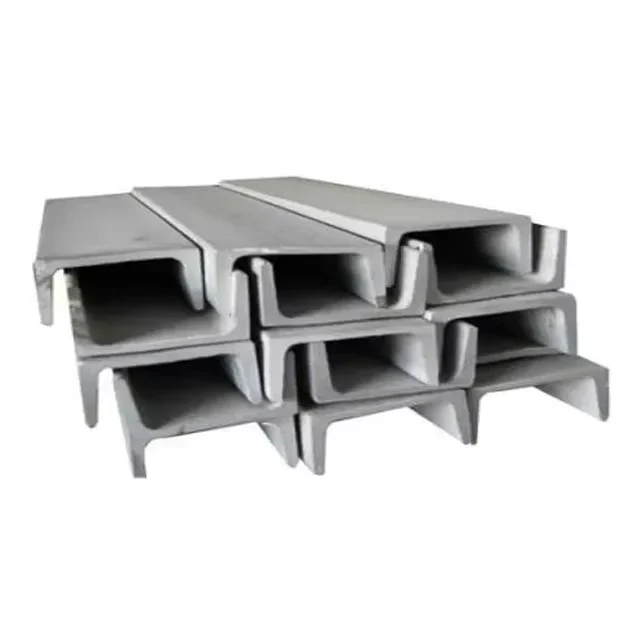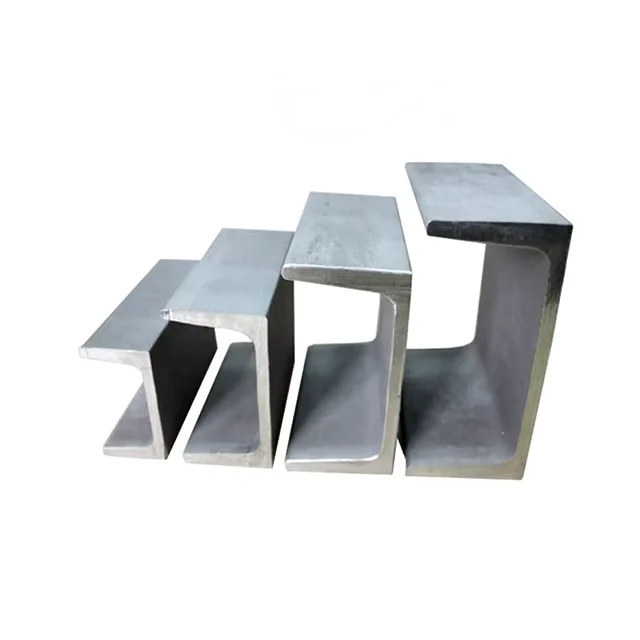
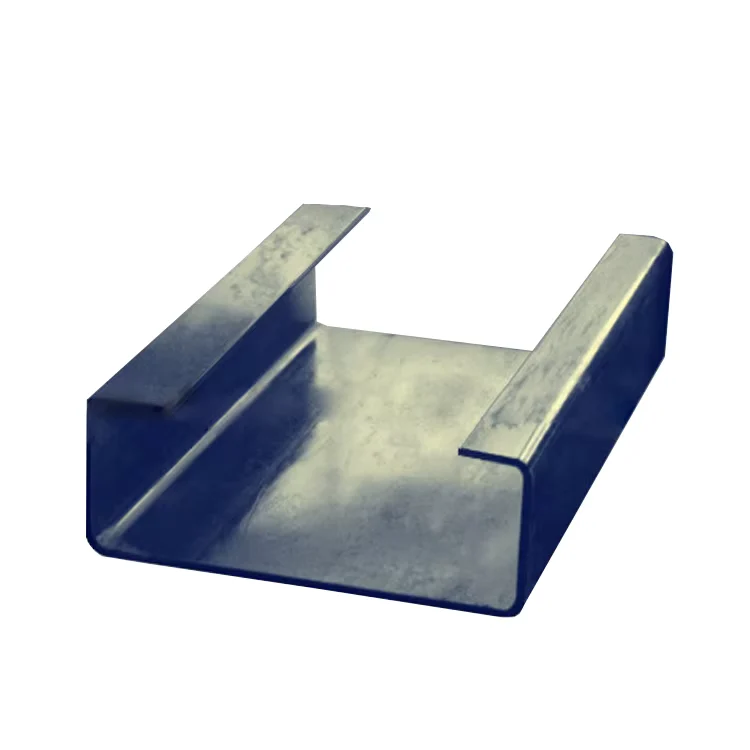

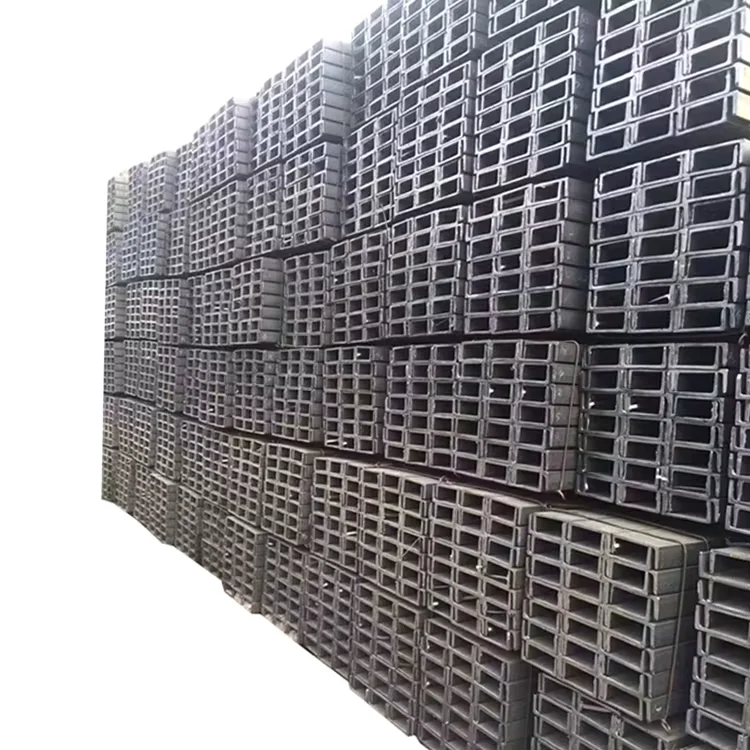
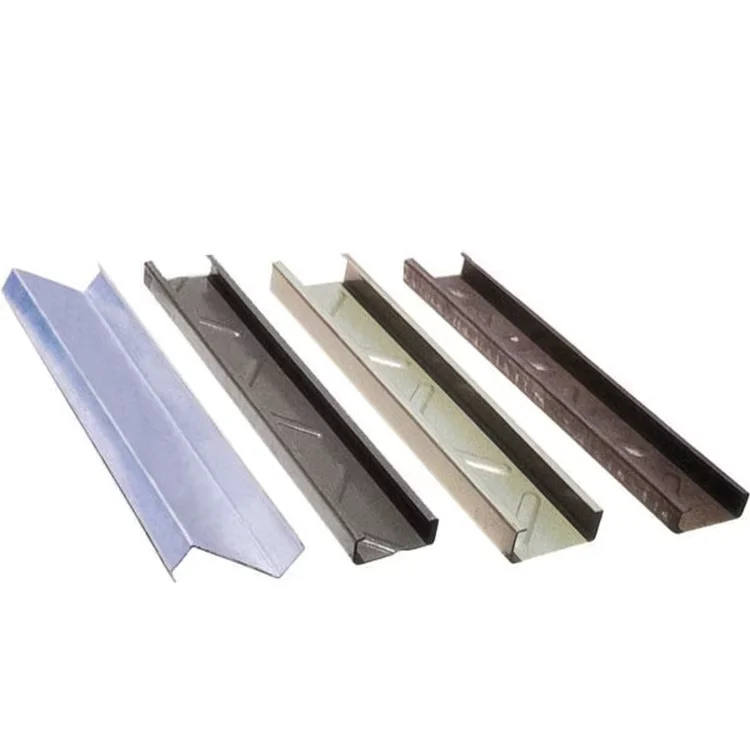
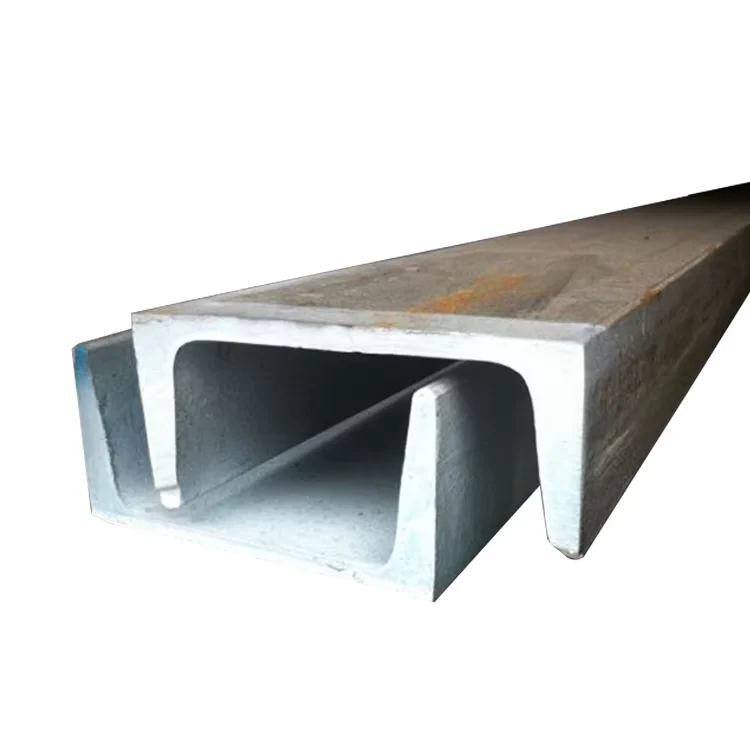
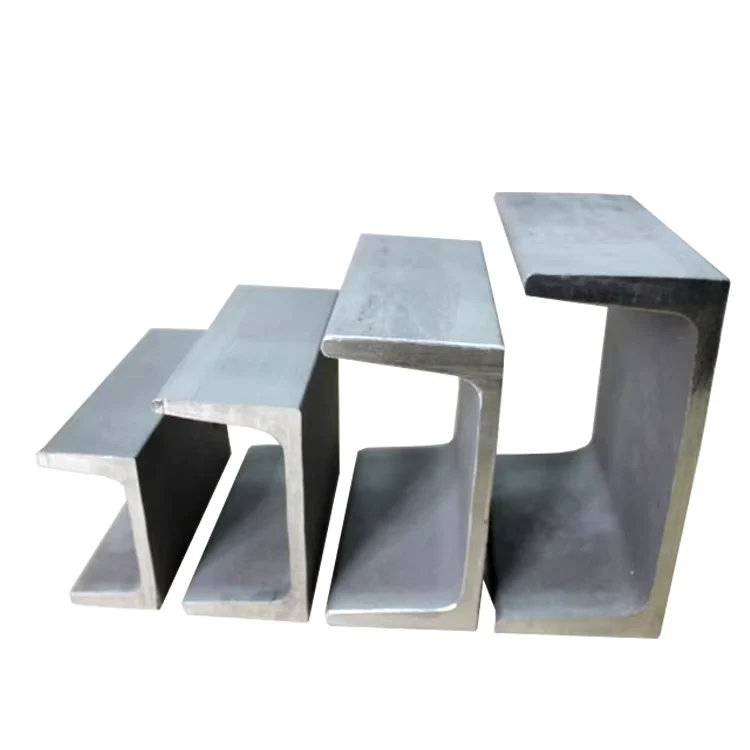

Description
Direct Mill Supply — Raw steel production and U channel fabrication under one quality system, eliminating third-party material gaps.
Technical Specifications
| Parameter | Value |
|---|---|
| Designation | Q235/Q345/SS400 U Channel Steel |
| Product Type | U Channel Steel |
| Steel Grade | Q235, Q345, SS400, ST37-2, ST52, Q420, Q460, S235JR, S275JR, S355JR |
| Standard | ASTM |
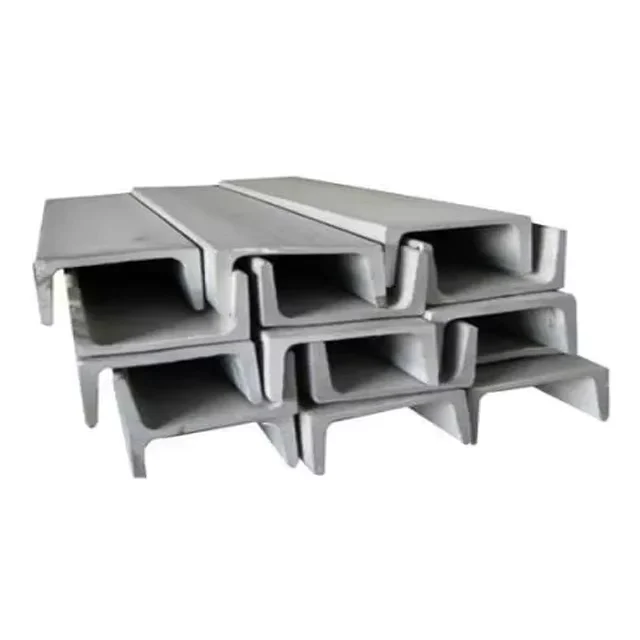
| Section Shape | U Channel |
| Thickness | 0.8mm–3.0mm |
| Length | As requested |
| Technique | Hot Rolled / Cold Rolled |
| Surface Treatment | Black, Bright, Galvanized, Painted |
| Tolerance | ±1% |
| Perforated | Yes |
| Processing Service | Bending, Welding, Punching, Decoiling, Cutting |
| Application | Metal construction, Building structures, Welding and bending fabrication |
| Origin | Shandong, China |
Application Suitability
| Industry | Typical Applications |
|---|---|
| Commercial Construction | Building frame purlins, roof support channels, wall girt systems |
| Industrial Facilities | Equipment support platforms, conveyor frame rails, mezzanine beam brackets |
| Infrastructure Projects | Bridge walkway supports, cable tray mounting channels, drainage grating frames |
| Warehouse & Logistics | Racking upright bracing, loading dock structural supports, roof truss bracing |
What Theoretical Weight vs. Actual Weight Gaps Cost on a U Channel Order
Tolerance drift between mill output and design calculations creates budget overruns and structural re-evaluation.
When procurement teams order ASTM U Channel Steel based on theoretical weight tables, the actual delivered weight can deviate significantly if thickness tolerance is not tightly controlled. On a recent warehouse project in Southeast Asia, a batch of U channels arrived at site with wall thickness consistently at the lower boundary — the third-party inspector flagged negative tolerance exceeding acceptable limits, and the entire shipment was held pending re-measurement. The gap between theoretical and actual weight was not just a paperwork issue; it raised questions about load-bearing capacity under the project’s structural engineer’s review. [NEED_CITE: tolerance standards for hot rolled steel channels in structural applications]
How Perforated U Channels Match Structural Fabrication Requirements
Perforated ASTM U Channel Steel in Q235 and Q345 grades serves as a ready-to-assemble component for projects requiring bolted connections, cable routing, or integrated drainage. The perforation pattern eliminates on-site drilling, reducing labor time and avoiding heat-affected zones near weld joints. Our fabrication division processes these channels to project-specific hole spacing and diameter, with edge deburring and surface treatment applied after punching — ensuring the galvanized or painted coating covers cut edges uniformly. This integrated approach means the ASTM U Channel Steel arrives at site with dimensional accuracy verified against shop drawings, not generic catalog dimensions.
Structural Compliance and Surface Protection for Field Conditions
Load-bearing U channel installations in industrial and commercial construction must satisfy dimensional tolerances that align with connection design assumptions. When channels are welded into frames or bolted as bracing members, thickness variation beyond ±1% affects fit-up at gusset plates and moment connections. For outdoor or corrosive environments, the choice between galvanized and painted surface treatment on the ASTM U Channel Steel determines maintenance intervals and coating thickness compliance. Hot-dip galvanizing provides sacrificial protection for coastal or chemical plant applications, while painted finishes suit enclosed structures where appearance matters. [NEED_CITE: surface preparation and coating standards for structural steel in corrosive environments]
Steel Grade Selection and Rolling Process Explained
The Q235 and Q345 grades represent the most commonly specified carbon structural steels in Chinese mill production, with Q345 offering higher yield strength for load-critical framing members. When international projects specify S235JR or S355JR, these European grades align closely with Q235 and Q345 in chemical composition and mechanical behavior, though certification documentation must reference the correct standard for customs and engineering approval. Hot rolled U channels in thicknesses above 1.5mm suit primary structural framing, while cold rolled channels in the 0.8mm–1.5mm range serve lighter secondary supports and purlin systems. The perforated variant adds versatility for modular construction and adjustable mounting systems without compromising the base material’s structural properties.
Hidden Costs of Tolerance and Certification Failures
Ordering ASTM U Channel Steel without verified mill test certificates creates downstream risk: customs authorities in the EU and Middle East increasingly require EN or ASTM compliance documentation, and shipments without proper MTCs face detention or rejection. Negative tolerance exceeding design assumptions forces structural engineers to recalculate member capacity — a process that delays erection schedules and may require supplementary reinforcement. Material traceability gaps between the steel mill and the fabrication shop mean that if a weld failure occurs during assembly, the project team cannot identify which heat of steel is affected, complicating liability and replacement decisions. [NEED_CITE: material traceability requirements for structural steel in international construction projects]
Why Project Teams Source ASTM U Channel Steel from Our Integrated Facility
Our steel production facility operates three rolling lines producing over 2,800 specifications of raw material, which then feeds directly into our structural steel fabrication division. This vertical integration means the Q235, Q345, and S355JR grades used in your U channels come from our own melt shop — the mill test certificate traces from chemical composition through rolling to finished dimensions, with no third-party material sourcing creating documentation gaps. Our fabrication workshop handles CNC cutting, drilling, bending, and welding per approved WPS procedures, with welders certified to AWS and EN standards. Every shipment includes a complete quality documentation package: dimensional inspection reports, coating thickness measurements, weld maps, and material traceability by heat number. Third-party inspection through SGS or BV is available before loading to verify tolerance and surface treatment compliance.
Documentation & Compliance
- Mill test certificate documenting Q235 and Q345 chemical composition and mechanical properties per ASTM standards, traceable by heat number from our own steel production
- Third-party inspection report from SGS or BV verifying thickness tolerance, perforation dimensions, and coating thickness on galvanized ASTM U Channel Steel
- Material traceability sheet linking each bundle to its original heat number, rolling date, and test results from our in-house laboratory
- Export customs documentation including packing list, bill of lading, and certificate of origin formatted for destination port requirements
- Welding procedure specifications and welder qualification records for any fabricated U channel assemblies with welded connections
- Coating inspection report specifying surface preparation grade and dry film thickness for painted or galvanized finishes
Packaging, Loading & Delivery
- Hot rolled Q235 and Q345 U channels bundled with steel strip ties and edge protectors to prevent coating damage during ocean transit
- Galvanized ASTM U Channel Steel wrapped in waterproof paper with desiccant packets to prevent white rust formation in humid container environments
- Perforated channels separated by wooden spacers within bundles to avoid interlocking and surface scratching during handling
- Custom-length U channels cut to project specifications and marked with heat number and steel grade at both ends for site identification
- Container loading plans optimized for 20ft and 40ft shipments, with weight distribution calculated to maximize payload while respecting road transport limits at destination
- FOB, CIF, and DDP shipping terms available with professional oversized cargo lashing for long-length U channel shipments
Getting Your ASTM U Channel Steel Quote Started
Share your project drawings in PDF or DWG format along with steel grade requirements, thickness specifications, surface treatment preference, and destination port. Our engineering team reviews the shop drawings within 24 hours and returns a detailed quotation covering material, fabrication, coating, packing, and shipping costs — with a clear production timeline and mill test certificate commitment included.
Request Your ASTM U Channel Steel Quotation
Submit your project specifications, steel grades, and required quantities to receive a detailed quotation with mill test certificate documentation and production schedule.
Company: Shandong Xin Jiyuan Special Steel Tube Co., Ltd
Website: www.xjystructure.com
Tel: +86 531 8573 6315
Mobile/WhatsApp/WeChat: +86 188 5315 7756
Email: admin@xjystructure.com
Address: No.11889, Jingshi West Road, Lulian Group, Jinan City, Shandong Province, China
Frequently Asked Questions
Q: What is the difference between Q235 and S235JR for U channel applications?
A: Q235 and S235JR are closely matched in chemical composition and yield strength, both suitable for general structural framing. The primary difference lies in certification standards — Q235 follows Chinese GB standards while S235JR follows European EN standards. For projects requiring ASTM U Channel Steel with European customs clearance, specifying S235JR simplifies documentation, though our mill test certificates confirm equivalence for engineering approval.
Q: Can perforated U channels be custom-punched to non-standard hole patterns?
A: Yes, our fabrication division processes perforated ASTM U Channel Steel to project-specific hole spacing, diameter, and layout based on your shop drawings. CNC punching ensures dimensional accuracy within ±1% tolerance, and surface treatment is applied after perforation to coat all cut edges. Lead times for custom perforation depend on pattern complexity and order quantity.
Q: How do you control thickness tolerance to avoid negative tolerance issues?
A: Our integrated steel production and fabrication facility maintains ±1% thickness tolerance through in-process dimensional checks at multiple rolling stages. Each bundle of ASTM U Channel Steel is verified against theoretical weight calculations before shipment, and third-party inspection through SGS or BV is available to confirm tolerance compliance before loading.
Q: Which surface treatment is best for outdoor U channel installations?
A: Hot-dip galvanized ASTM U Channel Steel provides long-term corrosion protection for outdoor and coastal environments, with typical coating thickness meeting structural engineering requirements. Painted finishes suit enclosed structures or projects where color matching is needed. Our coating inspection reports document surface preparation grade and dry film thickness for quality verification.
Q: What documentation is included with each shipment?
A: Every shipment of ASTM U Channel Steel includes mill test certificates with chemical composition and mechanical properties traceable by heat number, dimensional inspection reports, coating thickness measurements, and export customs documents. Third-party inspection reports from SGS or BV are available upon request for projects requiring independent verification.