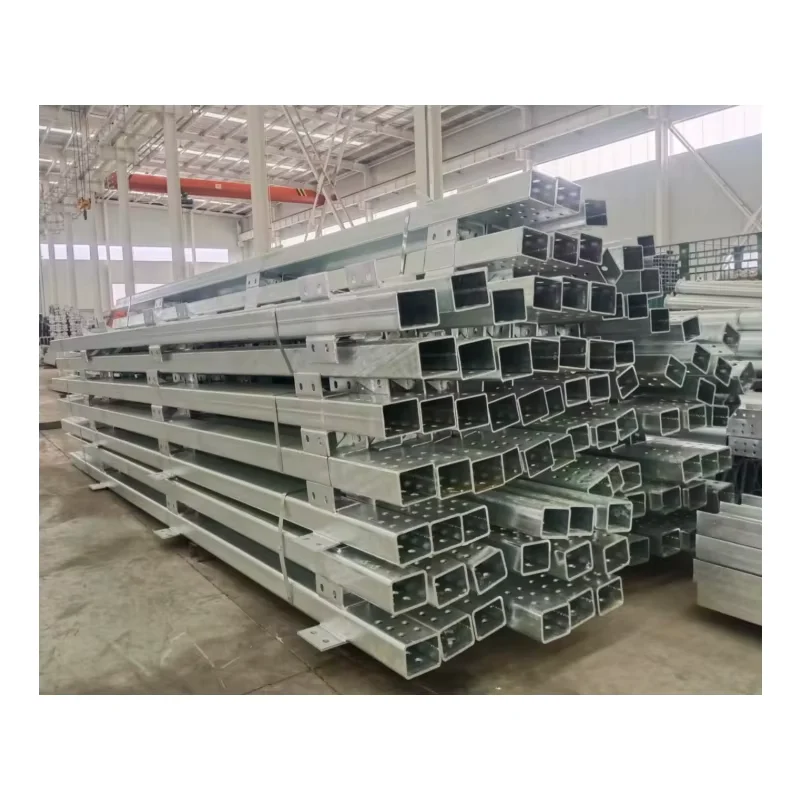
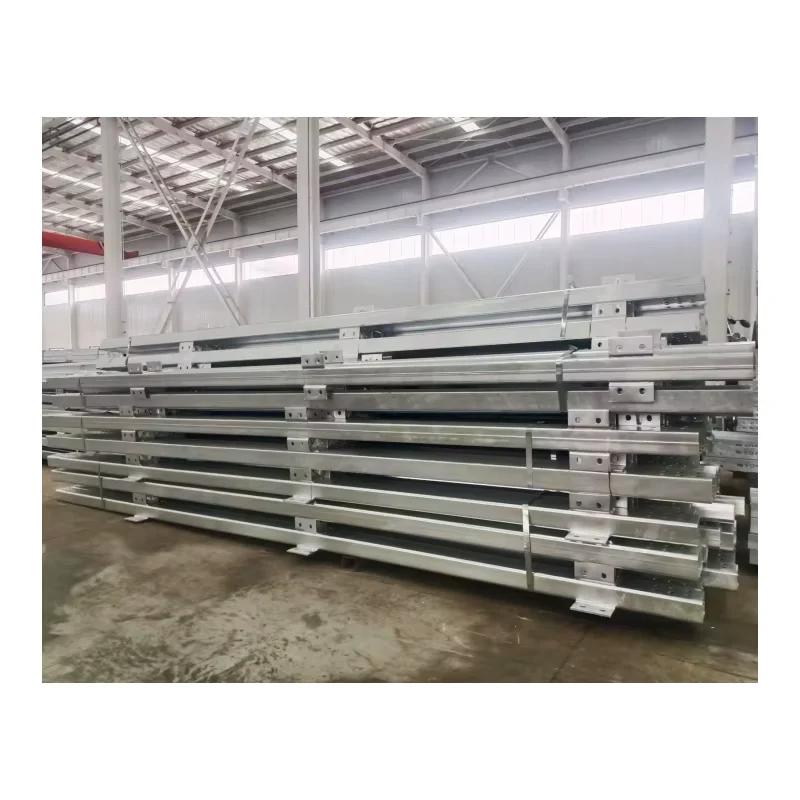
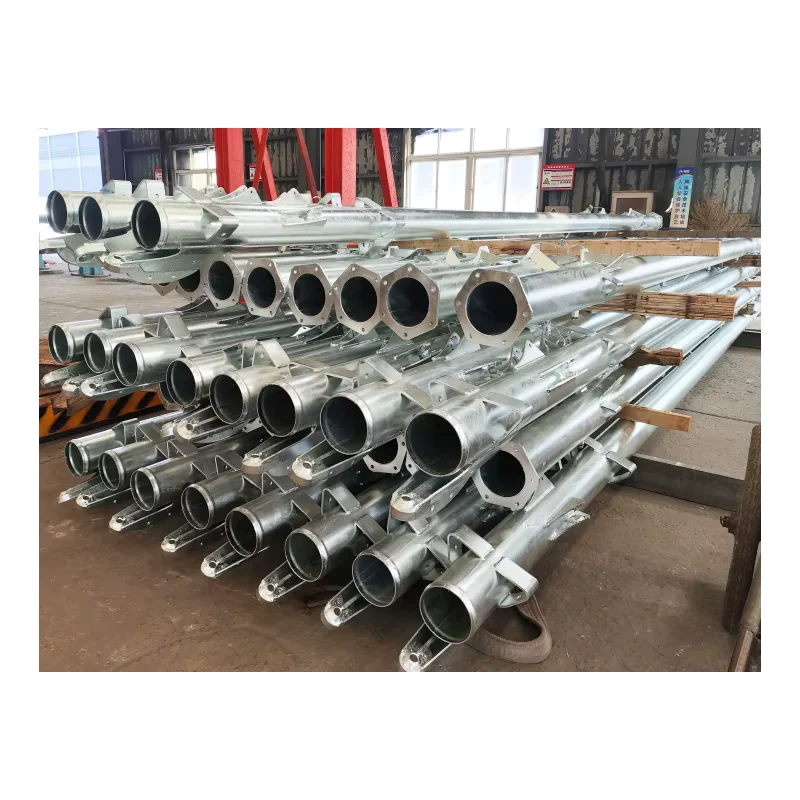
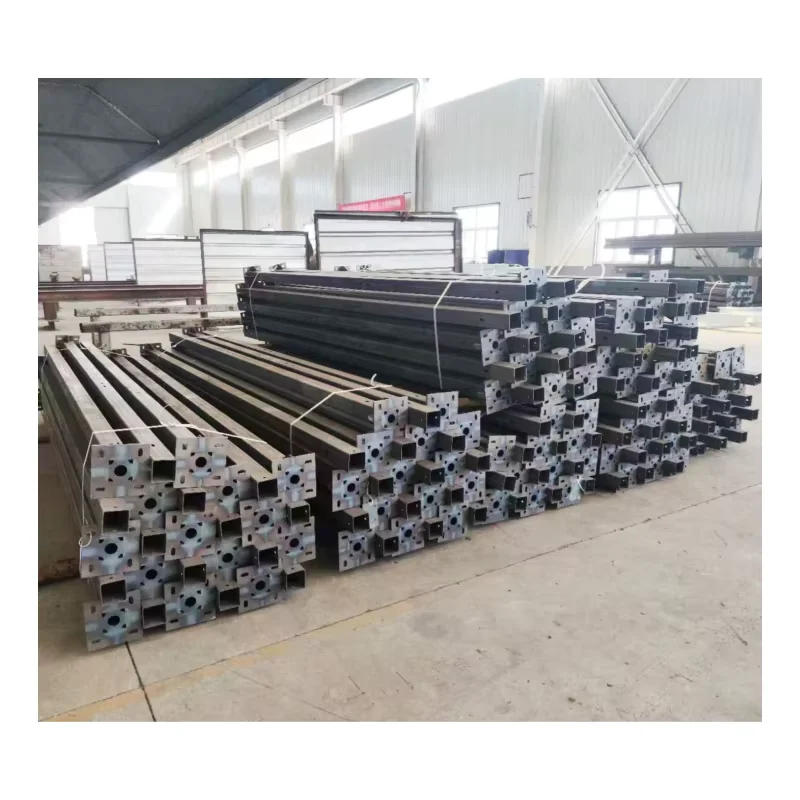
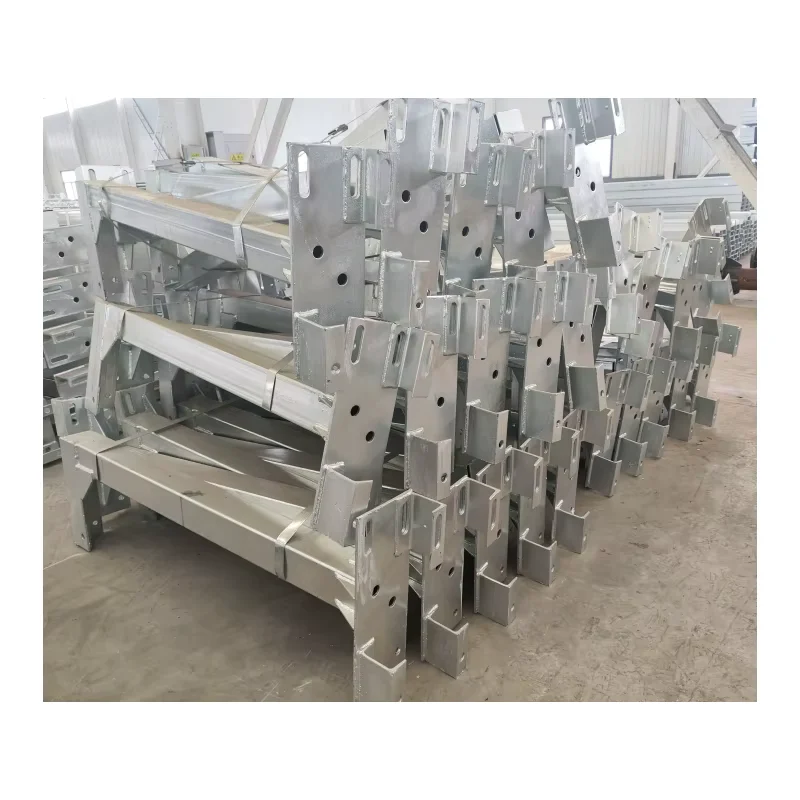
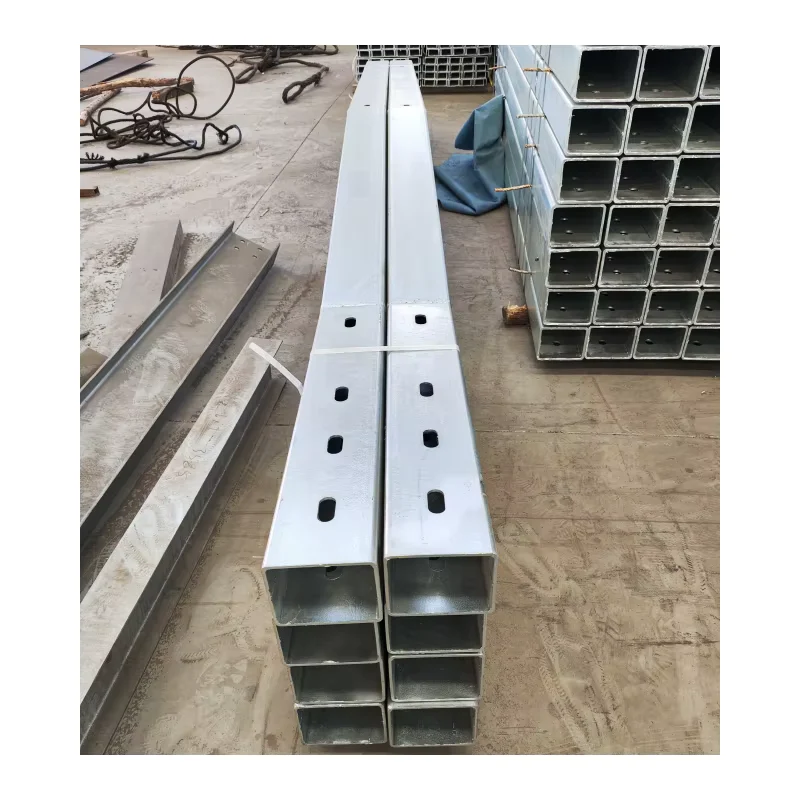

Description
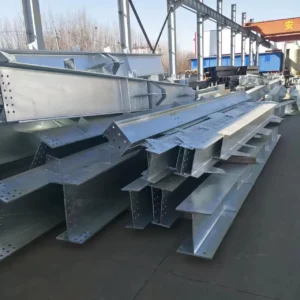
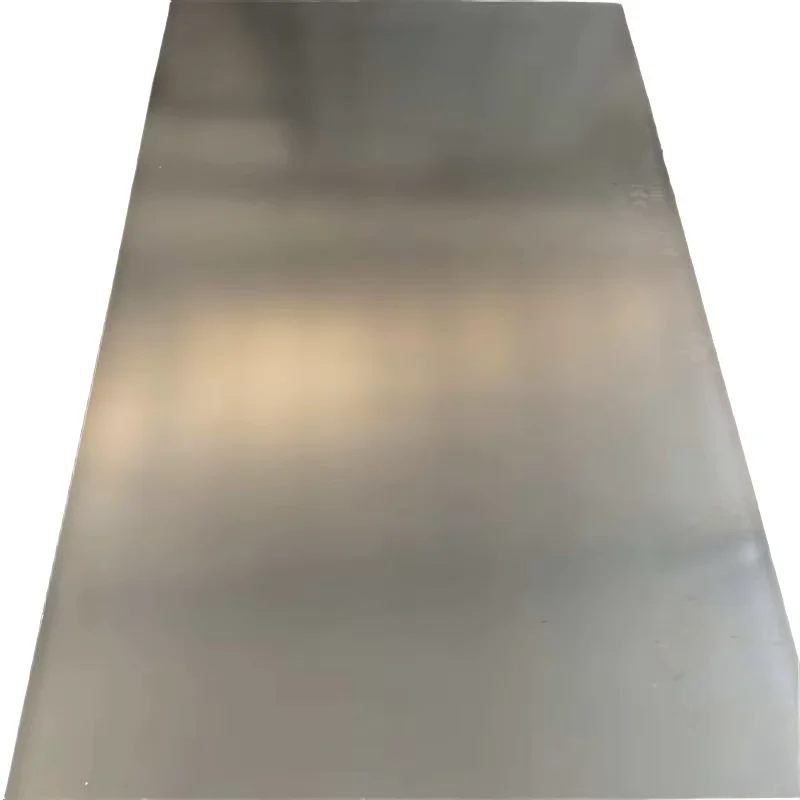
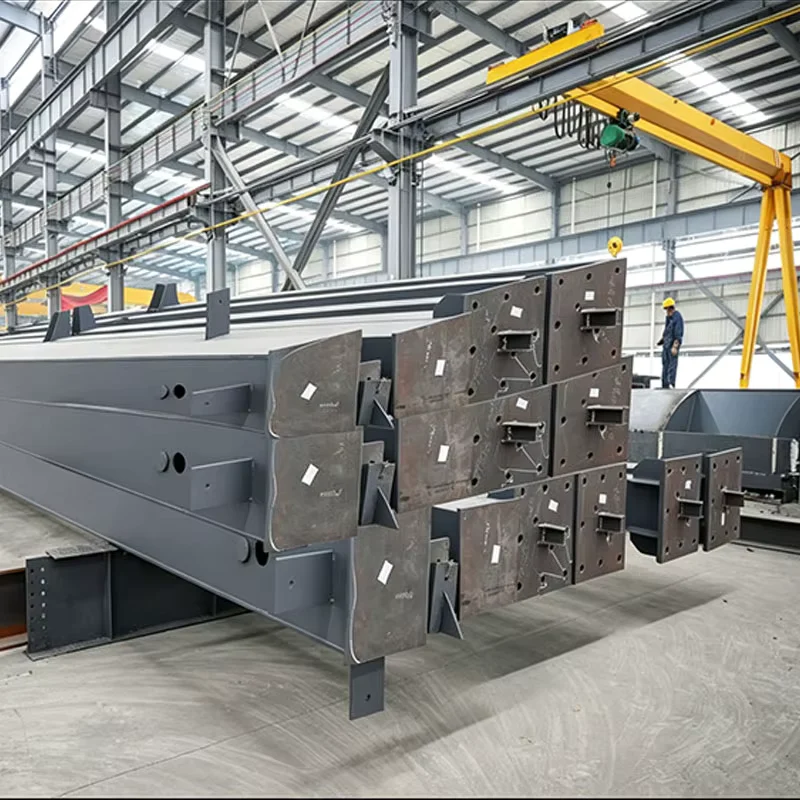
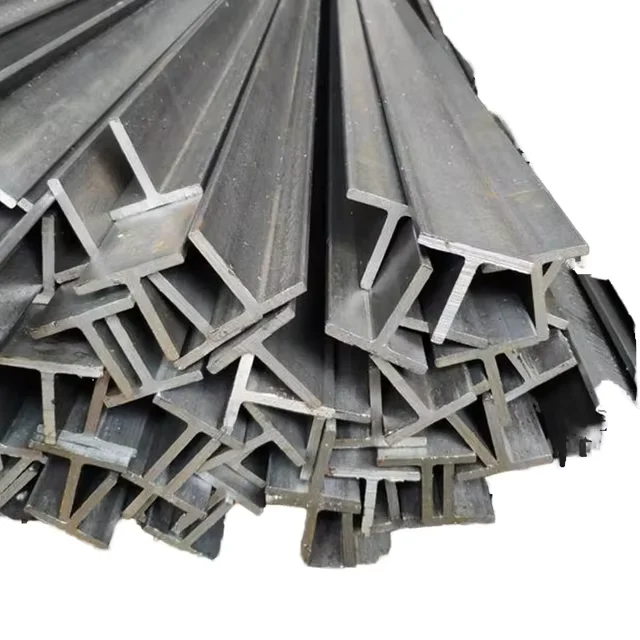
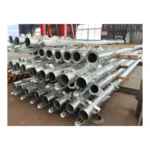
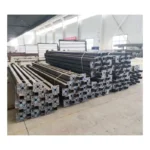
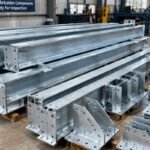
Vertically Integrated Carbon Steel Fabrication — Raw material from our own mill flows directly into laser profiling, welding, and galvanizing under one quality system.
Technical Specifications
| Parameter | Value |
|---|---|
| Designation | Galvanized Structural Steel Beam Fabrication |
| Product Type | Fabricated Steel Structure |
| Steel Grade | Carbon Steel |
| Standard | GB / AISI / ASTM / BS / DIN / JIS |
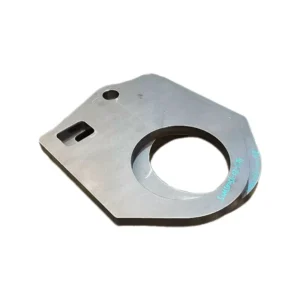
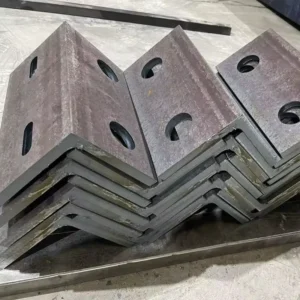
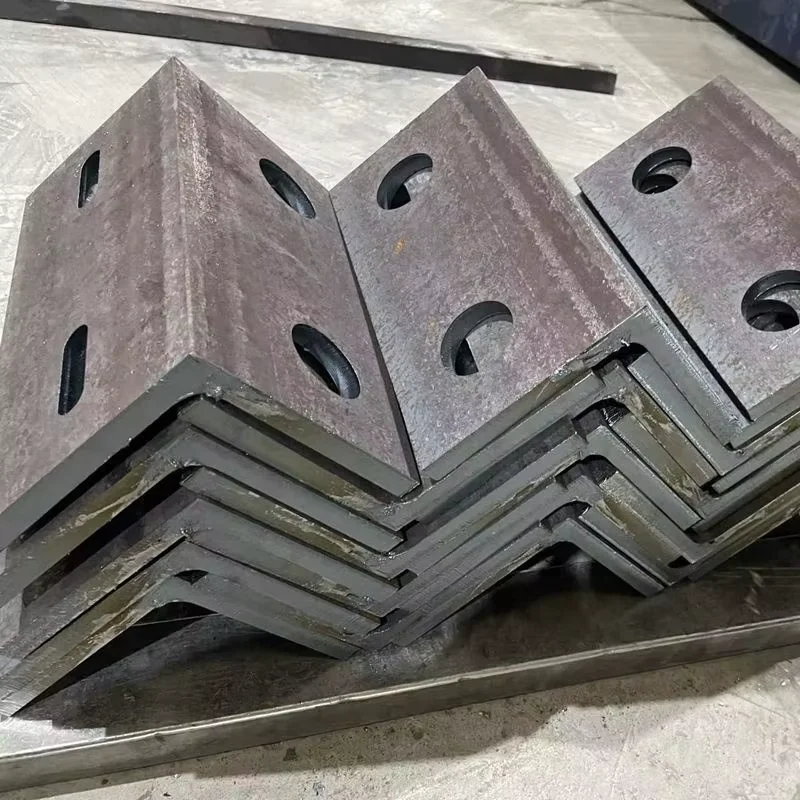
| Processing | Laser Profiling / Bending / Punching Hole / Welding / Cutting |
| Surface Treatment | Galvanizing / Powder Coating / Painting |
| Drawing Format | CAD / DWG / STEP / PDF |
| Tolerance | ±5% |
| Service | ODM / OEM |
| Application | Steel Structures / Construction Frames / Industrial Platforms / Infrastructure Projects |
| MOQ | 1 PCS |
Application Suitability
| Industry | Typical Applications |
|---|---|
| EPC & General Contracting | Warehouse frames, factory building columns, equipment support platforms |
| Industrial Construction | Conveyor structures, pipe rack systems, mezzanine floors |
| Infrastructure | Bridge support brackets, utility tower cross-arms, solar mounting frames |
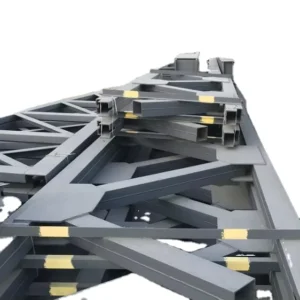
| Commercial Building | Long-span roof trusses, portal frame structures, stairway assemblies |
What Galvanizing Thickness Failures Cost on a Structural Beam Order
A 50μm coating where 80μm was specified means stripping, re-dipping, and weeks of delay at the job site.
I have seen galvanized structural steel beam fabrication orders rejected by third-party inspectors at Middle East project sites because the zinc coating fell short of the drawing callout. The beams had already been shipped across the ocean, loaded with heavy-lift rigging, and staged for erection. Stripping and re-galvanizing locally required a certified dip facility, new transport, and a revised erection sequence. The rework cost alone consumed the entire margin on that procurement package. The root cause was never the steel grade or the welding — it was an unchecked coating process at the fabrication shop. [NEED_CITE: hot-dip galvanizing coating thickness requirements per ISO 1461]
Matching Carbon Steel Beams to Structural Frame Requirements
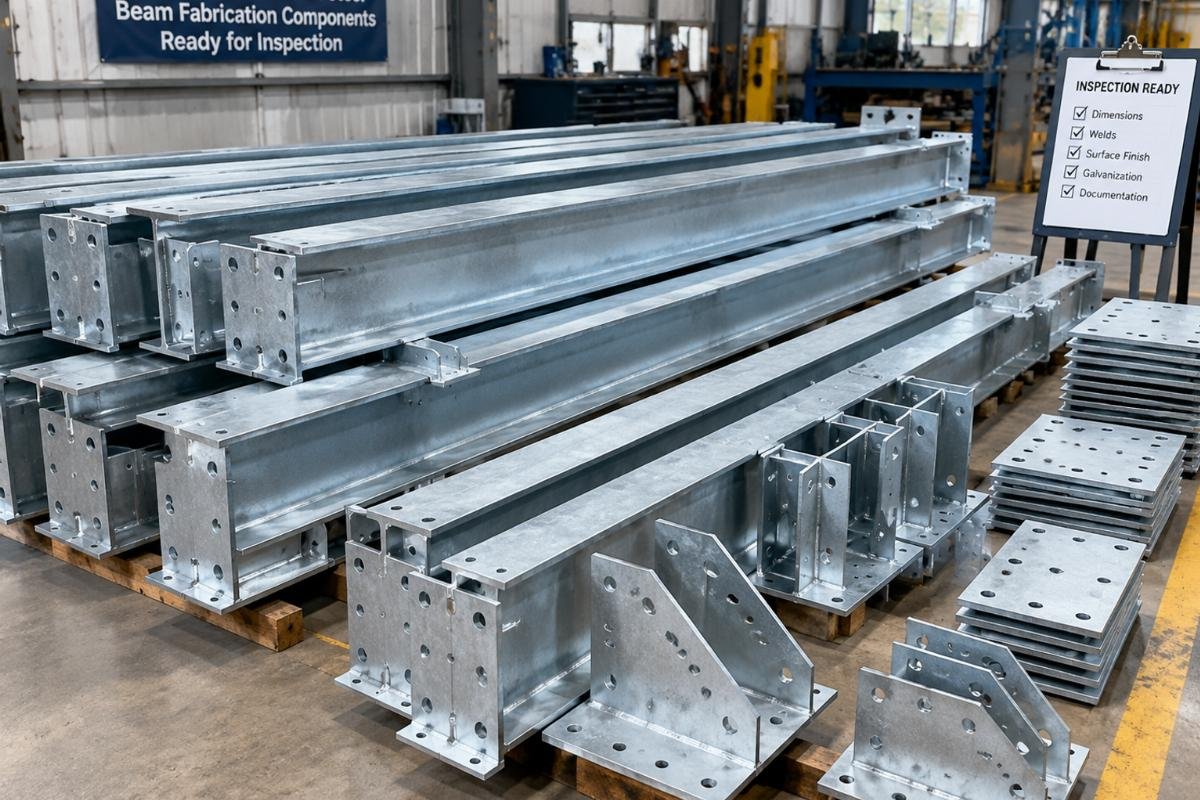
Carbon steel beams fabricated for structural frames must carry design loads through welded or bolted connections while resisting corrosion over the service life of the building. Galvanizing structural steel beam fabrication components provides a metallurgically bonded zinc layer that protects edges, weld zones, and hard-to-reach joints far better than field-applied paint alone. When we fabricate beams for warehouse portals or industrial platforms, the laser profiling ensures bolt-hole patterns match the erection drawings within ±5% tolerance, so crews do not waste time reaming holes at height. The OEM service model means your engineering team submits CAD or DWG files, and we translate them directly into cutting programs and welding sequences without redrawing from scratch.
Engineering Compliance and Surface Protection for Galvanized Beams
Structural steel beams used in load-bearing frames must comply with the design code governing the project — whether that is EN 1993 for European construction, AISC 360 for North American buildings, or local equivalents in Middle East and Southeast Asian markets. The steel grade specified in the contract determines the minimum yield strength available for structural calculations, and the mill test certificate must trace each beam back to its heat number. Galvanizing adds a corrosion protection layer that must meet ISO 1461 or ASTM A123 thickness requirements depending on the destination market. For projects requiring CE marking under EN 1090, the fabrication workshop must hold certified welding procedure specifications and qualified welders — not just the raw material mill. [NEED_CITE: EN 1090 execution class requirements for structural steel fabrication] Powder coating or painting over galvanizing provides additional UV resistance and color coding for projects where appearance matters alongside durability.
Carbon Steel Grades and Fabrication Process Fundamentals
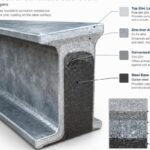
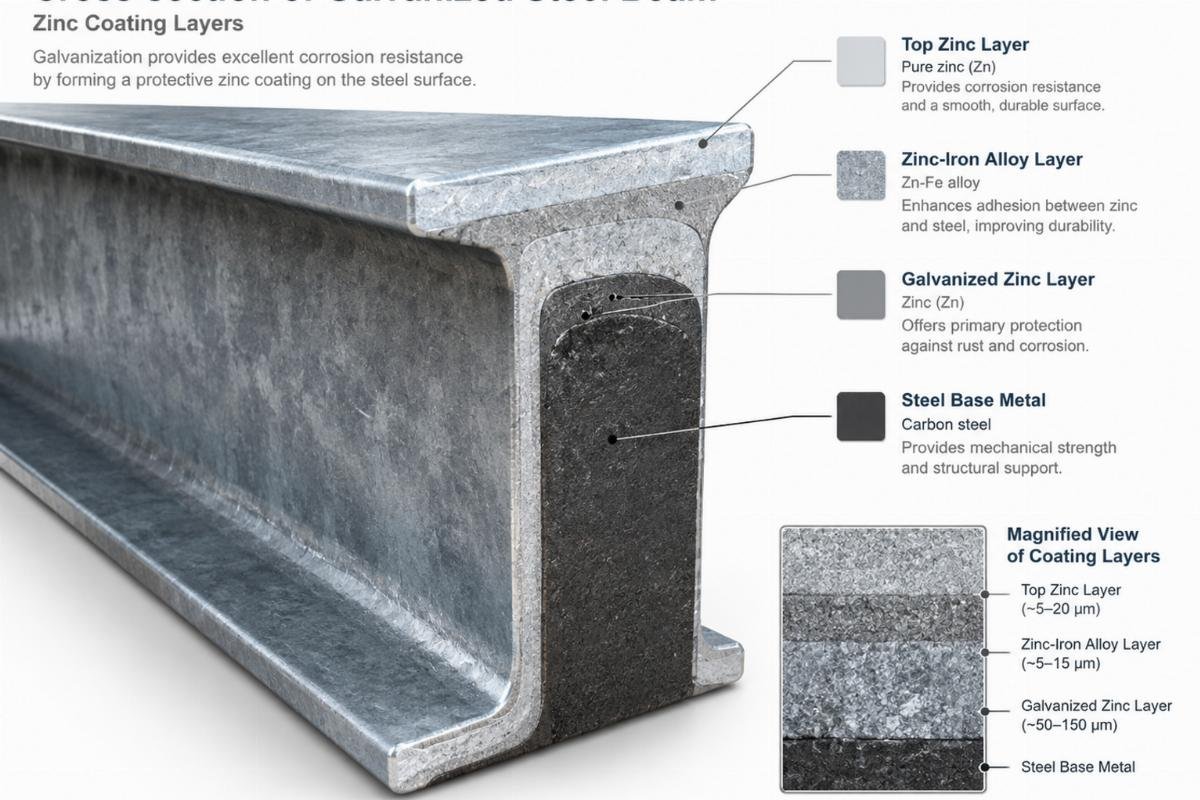
Carbon steel used in structural beam fabrication spans multiple standard systems — the S-series under EN standards, ASTM grades under American specifications, and Q-series under Chinese GB standards. Each system designates yield strength differently, but the structural engineer selects the grade based on the calculated load demands of the frame. Our fabrication process begins with laser profiling from plate or coil, which delivers cleaner edges and tighter dimensional accuracy than flame cutting for complex beam geometries. Bending and punching operations follow the approved shop drawings, with each hole position and bend angle verified against the CAD model before welding begins. Welding procedures are qualified per AWS D1.1 or EN ISO 15614 depending on the project standard, and every weld seam is inspected dimensionally and visually before surface treatment. Galvanizing immerses the fabricated assembly in molten zinc, creating an iron-zinc alloy layer bonded to the steel surface that resists mechanical damage during transport and erection better than paint films. [NEED_CITE: carbon steel grade equivalence between ASTM and EN standards]
Hidden Costs When Material Traceability Breaks Down
Ordering structural beams from a fabricator who sources raw steel from unverified third-party suppliers creates a documentation gap that surfaces at the worst possible moment — customs clearance or final inspection. Without heat-number traceability linking each beam to its original mill test certificate, the project owner cannot prove the steel meets the specified grade, and the inspector has no basis to approve the structure. Negative tolerance abuse compounds the problem: beams that measure under the nominal wall thickness reduce the load-carrying capacity the engineer designed for, creating a safety liability that no amount of re-paperwork can fix. [NEED_CITE: structural steel material traceability requirements for CE marking] The cost of replacing fabricated and galvanized beams after they arrive on site dwarfs the price difference between a verified fabricator and an unverified one.
Why Procure Galvanized Structural Steel Beam Fabrication From Our Facility
Our fabrication division operates within the same facility that produces the raw steel, which means every beam we deliver carries material certification generated in-house rather than collected from external suppliers. We maintain over 2,800 raw material specifications in stock, so your project does not wait on mill rolling schedules for standard carbon steel grades. The workshop holds certified welding procedures under both AWS and EN systems, and our welders maintain current qualifications with documentation available for auditor review. When your engineering team submits shop drawings in CAD or DWG format, our technical staff reviews them for fabrication feasibility, material optimization, and welding sequence before production starts — reducing RFI delays that typically slow overseas procurement. Every galvanized structural steel beam fabrication order ships with a complete documentation package including weld maps, dimensional inspection reports, and coating thickness measurements. Our logistics team handles oversized cargo loading and export documentation for projects across the Middle East, Southeast Asia, Africa, and Europe.
Documentation & Compliance
- Mill test certificate documenting carbon steel chemical composition and mechanical properties per the applicable GB, ASTM, or EN standard, with heat number traceability for every beam
- CE certificate under EN 1090 for structural steel fabrication, confirming execution class compliance for load-bearing components destined for European markets
- ISO 9001 quality management certificate covering the integrated steel production and fabrication workflow
- Third-party inspection report from SGS or BV covering dimensional checks, weld inspection, and galvanizing coating thickness per ISO 1461
- Welding procedure specifications and welder qualification records per AWS D1.1 or EN ISO 15614, matched to the project specification
- Complete customs documentation including packing list, bill of lading, and certificate of origin for destination-country clearance
Packaging, Loading & Delivery
- Galvanized structural steel beam fabrication components bundled with steel straps and edge protectors to preserve the zinc coating during ocean transit and prevent edge damage from friction
- Surface protection maintained through separation spacers between nested beams, ensuring the galvanized finish does not suffer wet storage stain or mechanical scratching before site delivery
- Container loading optimized for beam length and cross-section geometry, with oversized pieces shipped on flat racks or break-bulk when standard container dimensions cannot accommodate the profile
- Custom cutting to project-specified lengths before galvanizing, eliminating on-site cold-cutting that would expose bare steel and require touch-up painting
- Heat number and steel grade stenciled on each beam end for on-site identification and traceability verification during erection
- Delivery terms available as FOB, CIF, or DDP depending on the destination port and project requirements, with full export documentation support
Starting Your Galvanized Structural Steel Beam Fabrication Inquiry
Submit your project drawings in PDF, DWG, or STEP format along with the specified steel grade, surface treatment preference, and required certification standard. Our engineering team responds within one business day with a fabrication assessment, shop drawing timeline, and detailed pricing covering material, processing, galvanizing, and logistics. Confirm your quantity, destination port, and inspection requirements so we can align the production schedule with your erection sequence.
Request Your Fabrication Quote and Material Certification
Share your structural steel drawings and project specifications to receive a detailed fabrication proposal with complete quality documentation.
Contact us at admin@xjystructure.com or reach our project team via WhatsApp at +86 188 5315 7756.