
S355JR Steel Beam HS Code for MENA Import Buyers Wholesale
S355JR Steel Beam HS Code for MENA Import Buyers Wholesale
Most procurement teams assume all steel beams fall under the same customs code, but a single drilled hole can shift your classification from a low-duty raw material to a high-tax fabricated structure.
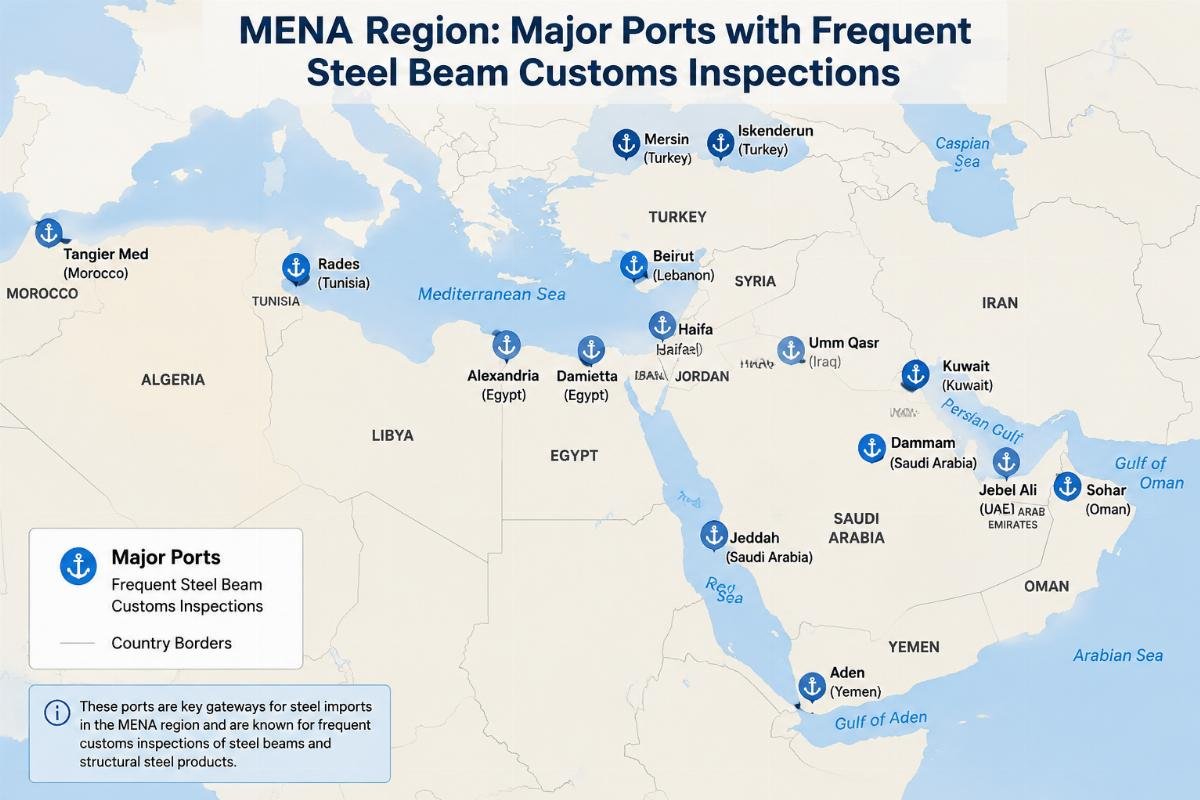
For hot-rolled S355JR H-beams and I-beams imported into MENA countries, the correct Steel Beam HS Code is typically 7216. However, if the beams are further processed—such as welded, drilled, or assembled into frames—they often shift to heading 7308 or 7301. Misclassification triggers excessive import duties, prolonged customs holds in ports like Jebel Ali or King Abdulaziz, and demurrage charges that can erase project margins.
I still remember the silence on the other end of the phone when a client in Dubai asked why their shipment was stuck. It was a container of S355JR H-beams, standard hot-rolled sections intended for a warehouse framework. The local broker had filed them under a generic steel structure code. Customs officers at the port inspected the cargo, noted the clean, unprocessed mill finish, and flagged the declaration as inconsistent. The result was not just a re-filing fee; it was nine days of storage while authorities debated whether these were “raw profiles” or “prefabricated parts.” That delay cost more in demurrage than the profit margin on the entire order. Since then, I have learned that the difference between a smooth clearance and a logistical nightmare often lies in the precise interpretation of the Steel Beam HS Code.
Understanding this distinction is not just about paperwork; it is about protecting your supply chain timeline. In the Middle East and North Africa region, customs administrations are increasingly strict about verifying the physical state of goods against their declared codes. A mismatch here does not just mean paying a higher tax; it means your cargo sits idle while you scramble to provide technical certificates that should have been prepared before the vessel even left the port of loading.
Why Does HS Code Matter for Steel Beams in MENA?
The Harmonized System (HS) is the global standard for classifying traded products, but its application varies significantly by region. In the MENA market, the Steel Beam HS Code determines two critical factors: the applicable import duty rate and the speed of customs clearance. While the GCC Customs Union aims for harmonization, individual member states like Saudi Arabia and the UAE maintain distinct administrative practices and interpretation guidelines.
For buyers, the primary risk is financial. Hot-rolled steel profiles generally attract lower duties compared to fabricated structural components. If a shipment of simple beams is incorrectly classified as a fabricated structure, the importer may face a duty rate that is substantially higher than necessary. More damaging, however, is the operational impact. Customs officers in major hubs like Jebel Ali or Dammam are trained to look for discrepancies between the commercial invoice description and the physical cargo. If the documentation suggests a complex assembly but the container holds simple rolled sections, or vice versa, the shipment is flagged for inspection.
[NEED_CITE: GCC Customs Union guidelines on steel product classification]
This inspection process is not instantaneous. It involves physical verification, potential laboratory testing of material grades, and administrative reviews. During this time, the container occupies valuable port space, accruing daily demurrage and detention charges. For large infrastructure projects with tight schedules, such delays can disrupt downstream construction activities, leading to contractual penalties far exceeding the initial customs duty savings. Therefore, accurate classification using the correct Steel Beam HS Code is a fundamental risk management strategy, not merely a compliance formality.
7216 vs. 7308: Where Do Your Beams Fit?
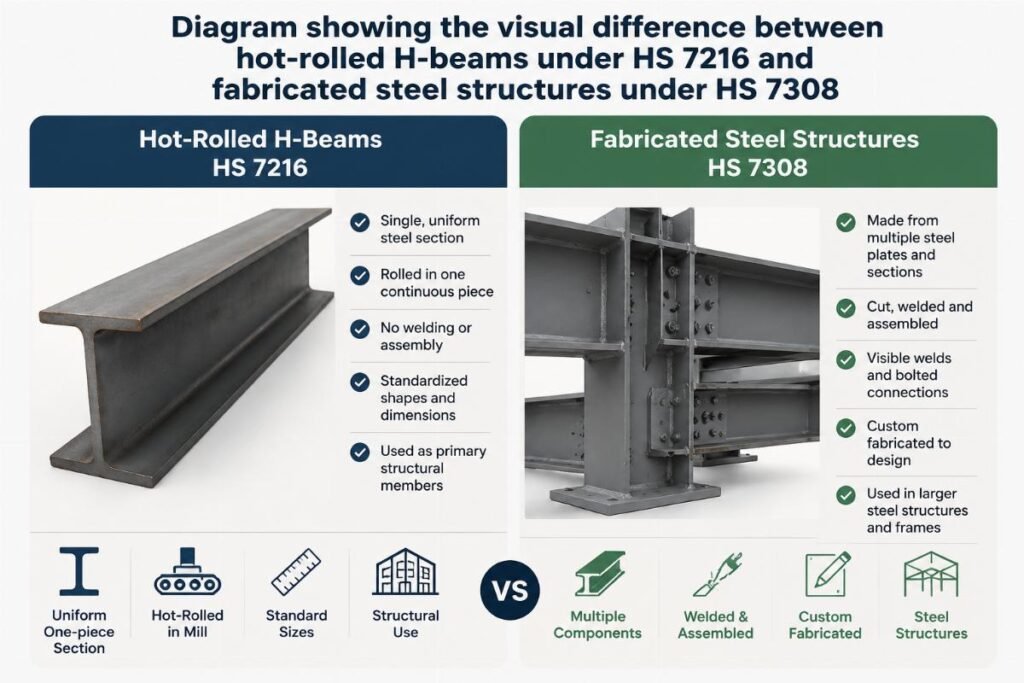
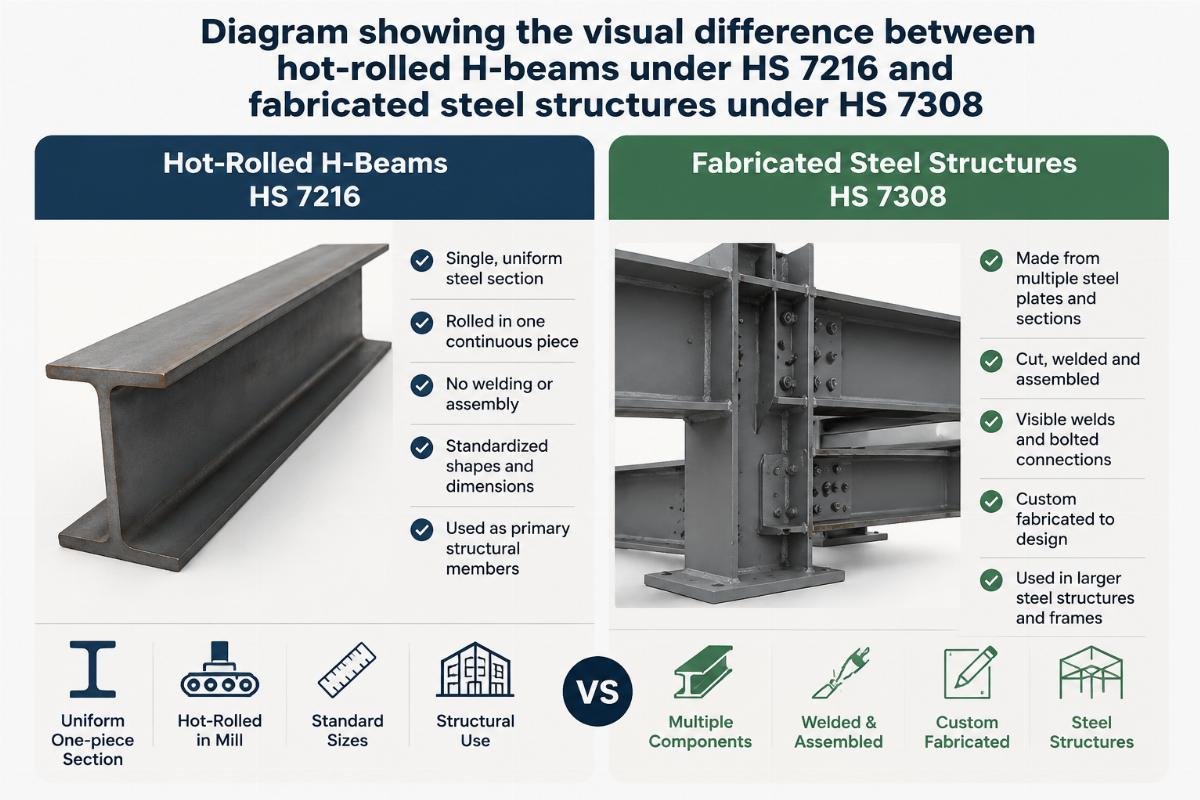
The core confusion in steel imports revolves around two specific headings: 7216 and 7308. Distinguishing between them requires a clear understanding of the manufacturing process and the final state of the product at the time of import.
Heading 7216 covers angles, shapes, and sections of iron or non-alloy steel, simply hot-rolled, hot-drawn, or extruded. This includes standard H-beams, I-beams, and channels that have not undergone further processing beyond cutting to length. If your S355JR beams arrive with a mill finish, perhaps shot-blasted or primed, but without any drilling, welding, or assembly, they firmly belong here.
Heading 7308, on the other hand, covers structures and parts of structures, of iron or steel. This includes bridges, towers, lattice masts, roofs, roofing frameworks, doors, windows, and shutters. Crucially, it also covers plates, rods, angles, shapes, sections, tubes, and the like, prepared for use in structures. The key phrase is “prepared for use.” If the beams have been drilled for bolt connections, welded into sub-assemblies, or cut with complex notches for specific fit-up, customs authorities may view them as fabricated components rather than raw materials.
| Feature | HS 7216 (Hot-Rolled Profiles) | HS 7308 (Structures & Parts) |
|---|---|---|
| Processing Level | Simply hot-rolled, cut to length | Drilled, welded, bent, or assembled |
| Surface Treatment | Mill finish, shot blasted, primed | Painted, galvanized, or finished for installation |
| Documentation | Mill Test Certificates (EN 10025) | Fabrication drawings, assembly instructions |
| Customs Risk | Lower, if described accurately | Higher, requires detailed breakdown |
| Typical Duty | Generally lower base rate | Often higher due to value-added processing |
[NEED_CITE: World Customs Organization explanatory notes for Chapter 72 and 73]
A common pitfall occurs when buyers mix different types of steel in one container. For instance, shipping standard H-beams alongside custom-fabricated connection plates. If the packing list does not clearly separate these items by their respective codes, customs may apply the highest duty rate to the entire shipment. This is why precision in the Bill of Lading and Commercial Invoice is non-negotiable. Each line item must correspond to its correct Steel Beam HS Code based on its specific processing status.
Common Classification Pitfalls in UAE and Saudi Arabia
While the HS system is international, its enforcement is local. In the UAE and Saudi Arabia, customs officers have developed specific precedents that can catch unsuspecting importers off guard. One frequent issue is the interpretation of “structural” versus “profile.”
In Dubai, there have been cases where H-beams were misclassified as fabricated structures simply because they were part of a larger project package that included some welded elements. Even if the beams themselves were untouched, the presence of associated fabricated parts in the same shipment led to a uniform high-tax application. The lesson here is separation: keep raw profiles and fabricated components in separate shipments or, at minimum, ensure they are distinctly listed and packaged to allow for easy individual inspection.
Saudi customs audits are particularly rigorous regarding documentation consistency. A mixed container with Square Hollow Sections (SHS), Rectangular Hollow Sections (RHS), and beams often raises flags if the descriptions are vague. Using generic terms like “steel structure” without specifying the type of section and its processing level invites scrutiny. Officers may request detailed engineering drawings to verify whether the items are indeed raw materials or pre-fabricated parts. If the drawings show drill patterns that match the physical cargo, but the HS code claims they are simple hot-rolled sections, the declaration will be rejected.
[NEED_CITE: UAE Federal Customs Authority guidelines on steel imports]
Another nuance is the requirement for technical certification to match the HS description. For example, importing S355JR beams under a code that implies a certain level of fabrication may require proof of EN certification that matches the complexity of the declared item. If the certificate only covers the raw material properties but the code suggests a finished structure, the mismatch can cause a clearance hold. Ensuring that the Mill Test Certificates align with the declared Steel Beam HS Code is essential for smooth validation.
How to Prepare Documentation for Smooth Clearance
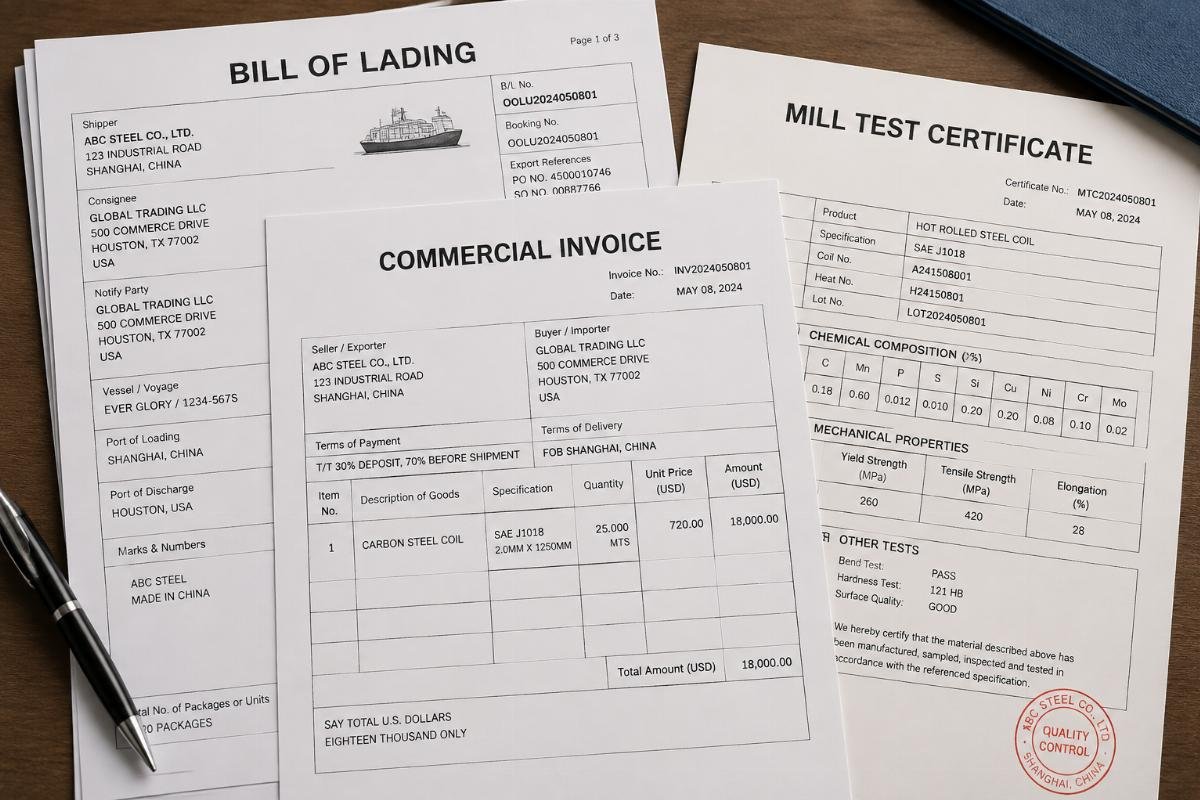
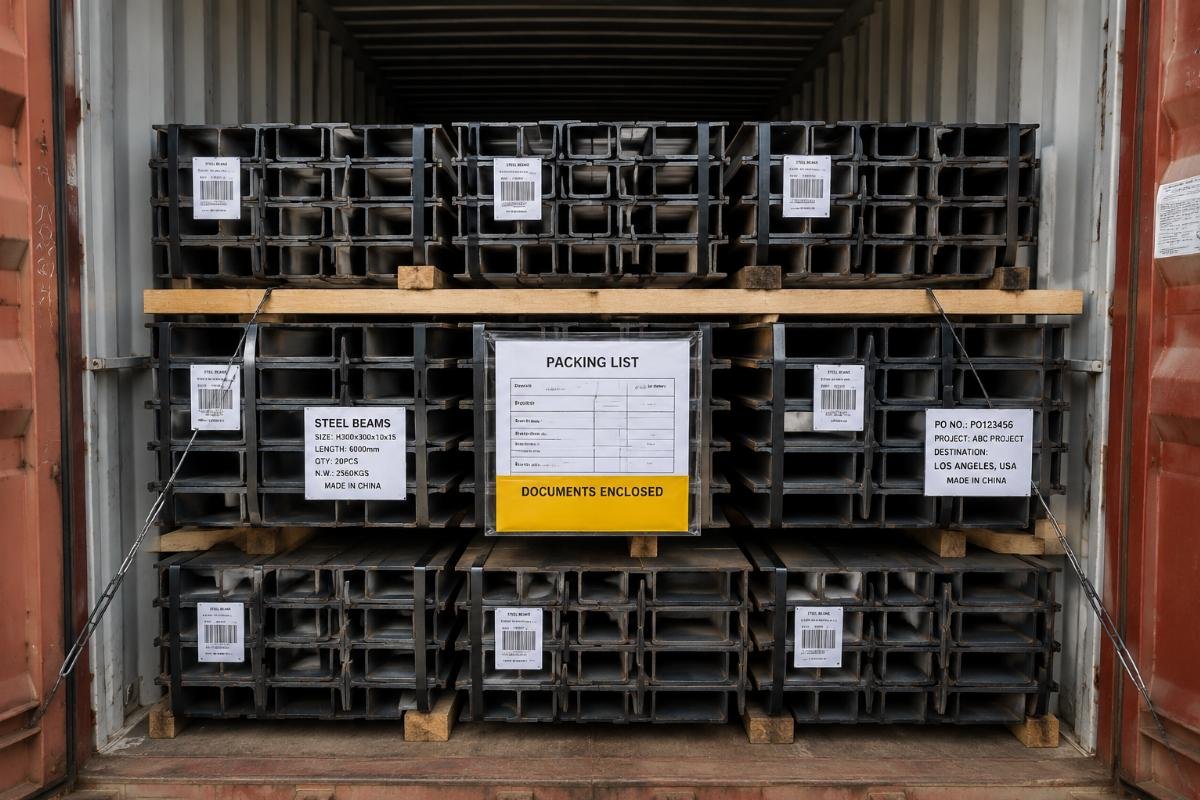
Preventing classification errors starts long before the cargo reaches the destination port. It begins with the accuracy of the export documentation. The Bill of Lading, Commercial Invoice, and Packing List must tell a consistent story that aligns with the chosen Steel Beam HS Code.
First, ensure the product description on the Commercial Invoice is precise. Avoid vague terms like “steel beams.” Instead, use detailed descriptions such as “Hot-rolled H-beams, S355JR grade, cut to length, no further processing.” This clarity helps customs officers immediately identify the item as falling under heading 7216. If the beams have undergone any secondary processing, explicitly state it, such as “H-beams with drilled ends for bolted connections,” which would point towards heading 7308.
Second, the Packing List must mirror this precision. Each item should be listed separately with its corresponding HS code if multiple codes are involved. Do not bundle different types of steel under a single line item. If you are shipping both raw beams and fabricated brackets, list them as separate entries with their respective quantities, weights, and codes. This allows customs to assess duty correctly for each component and reduces the likelihood of the entire shipment being held for verification.
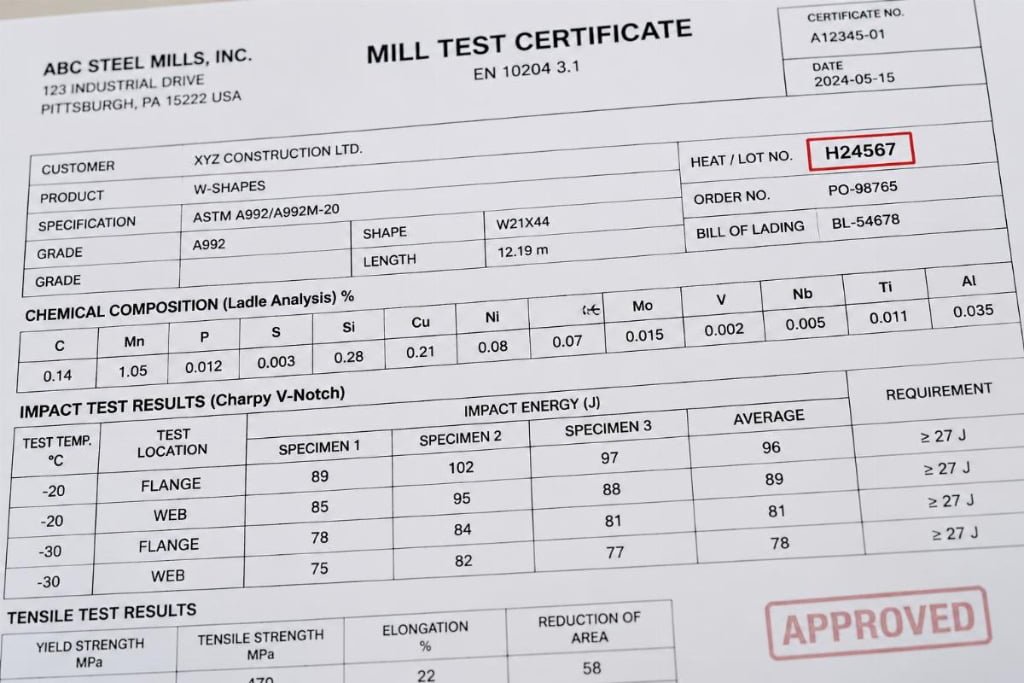
Third, attach the relevant technical certificates. For S355JR beams, this means including the EN 10025 Mill Test Certificates. These documents verify the chemical composition and mechanical properties of the steel, supporting the declaration that the goods are standard hot-rolled profiles. If the beams are part of a larger structural kit, include fabrication drawings that highlight the extent of processing. This transparency builds trust with customs authorities and speeds up the review process.
[NEED_CITE: ISO standards for steel documentation and traceability]
At Xin Jiyuan, we ensure that every shipment is accompanied by documentation that is fully aligned with the declared HS code. Our Mill Test Certificates are issued in strict accordance with EN standards, and our packing lists are detailed to the individual bundle level. This attention to detail supports our buyers in navigating the complexities of MENA customs regulations, minimizing the risk of delays and unexpected costs.
What If You Get It Wrong? Real Cost Implications
The consequences of misclassifying steel beams extend far beyond a simple correction fee. The most immediate impact is demurrage and detention charges. Ports in the MENA region operate at high capacity, and storage space is at a premium. When a shipment is held for customs investigation, daily fees accumulate rapidly. Over a period of several days, these charges can amount to a significant sum, often exceeding the profit margin on the steel itself.
Beyond direct financial losses, there is the reputational risk. Delays in material delivery can halt construction progress, leading to penalties from main contractors. For EPC firms and developers, timely delivery is critical to maintaining project schedules. A customs hold due to incorrect HS coding can disrupt the entire supply chain, affecting subsequent trades and potentially damaging relationships with clients.
Furthermore, repeated misclassifications can lead to increased scrutiny from customs authorities. Importers may be flagged for future inspections, resulting in longer clearance times for all subsequent shipments. This creates a cycle of inefficiency that is difficult to break. In severe cases, intentional misclassification to evade duties can result in heavy fines and legal action.
[NEED_CITE: Case studies on customs penalty structures in GCC countries]
It is crucial to treat HS code classification as a strategic element of procurement. Engaging with experienced suppliers who understand the nuances of international trade regulations can prevent these issues. By ensuring that the Steel Beam HS Code is correctly applied from the outset, buyers can protect their margins, maintain project timelines, and build a reliable supply chain.
Conclusion
Correctly classifying steel beams under the right HS code is not just a regulatory formality; it is a critical safeguard for your project’s budget and schedule.
Misclassification between headings 7216 and 7308 can lead to excessive duties, prolonged port delays, and significant demurrage costs. By understanding the distinction between hot-rolled profiles and fabricated structures, preparing precise documentation, and aligning technical certificates with customs declarations, importers can ensure smooth clearance in MENA markets. Attention to detail in the early stages of procurement prevents costly disruptions later, allowing construction projects to proceed without unnecessary logistical hurdles.
Tags
Share this article

Written by
author
Editor covering global sourcing, supplier verification, and industrial product knowledge. Content is compiled from manufacturer specifications, industry standards, and hands-on experience with international B2B buyers. Every article is fact-checked before publishing to help procurement professionals make informed decisions.
View all posts →Keep Reading
Related Articles
August 12, 2026
EN Standard Structural Steel Beam Mill Certificate Wholesale Supplier
Ensure your Mill Certificate Standards for Structural Steel Beam Export meet EN 10204 Type 3.1 requirements to avoid costly customs...
Read article →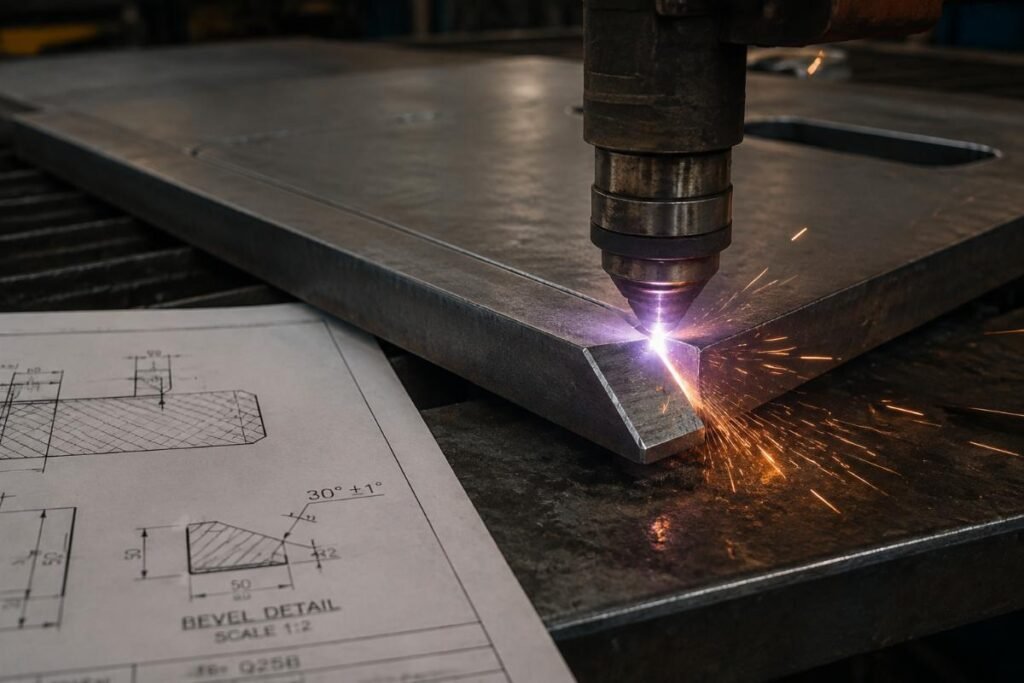
August 11, 2026
Custom Steel Structural Components Cutting & Low MOQ Manufacturer
Navigate the complexities of Steel Structural Components Custom Cutting MOQ by prioritizing container utilization over unit price. Learn how mixed-container...
Read article →
August 11, 2026
EN S355JR Steel Beam Container Loading Config for FCL Buyers
A professional steel beam container loading plan prioritizes structural stability over raw volume to prevent transit deformation. Learn optimal 40ft...
Read article →Discussion