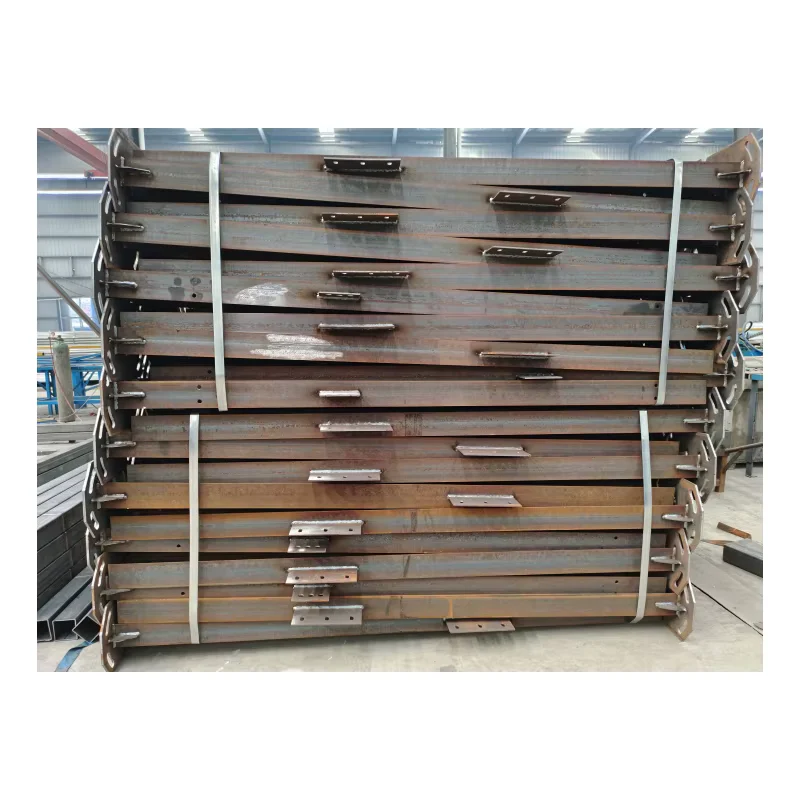
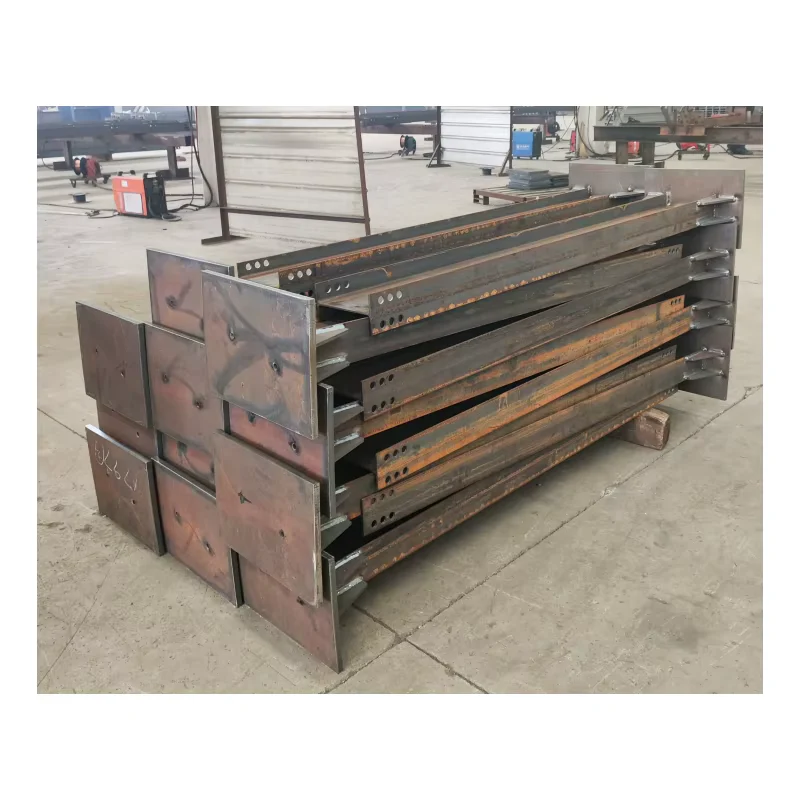
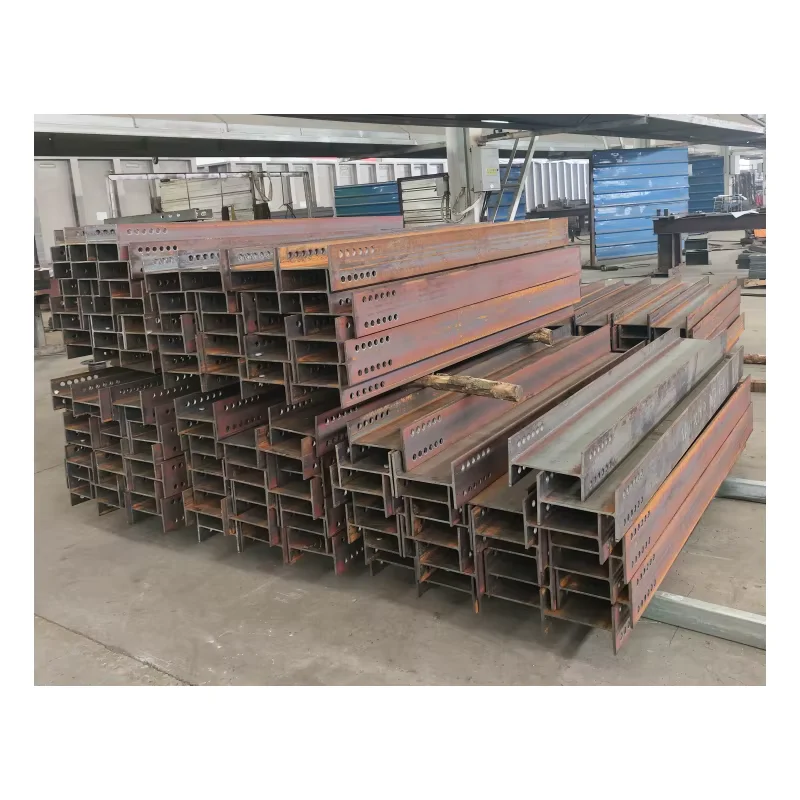
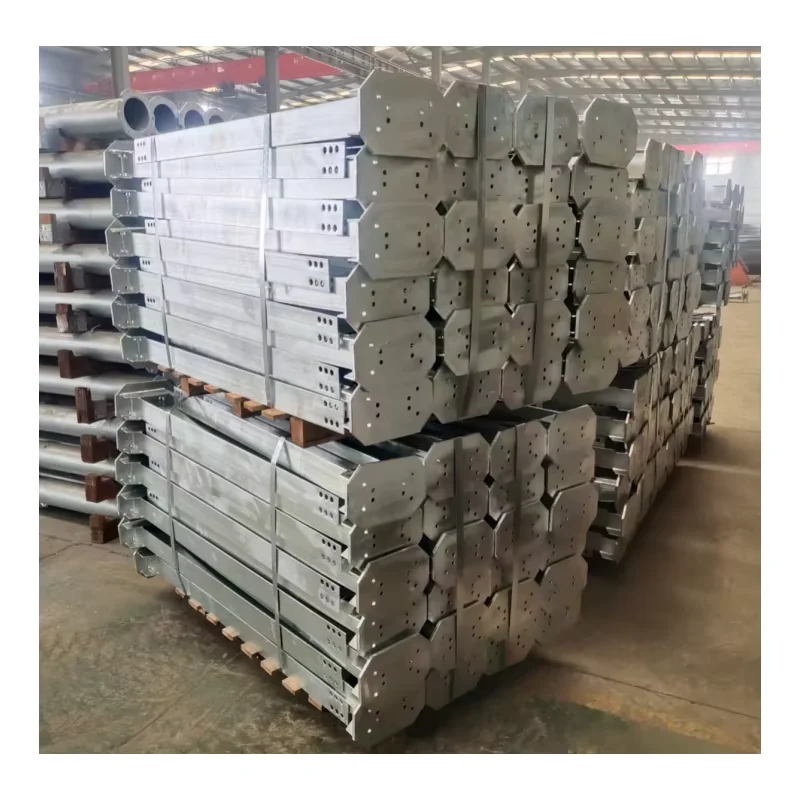
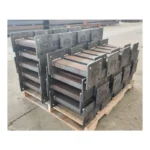
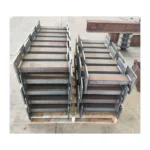
Description
Technical Specifications
| Parameter | Value |
|---|---|
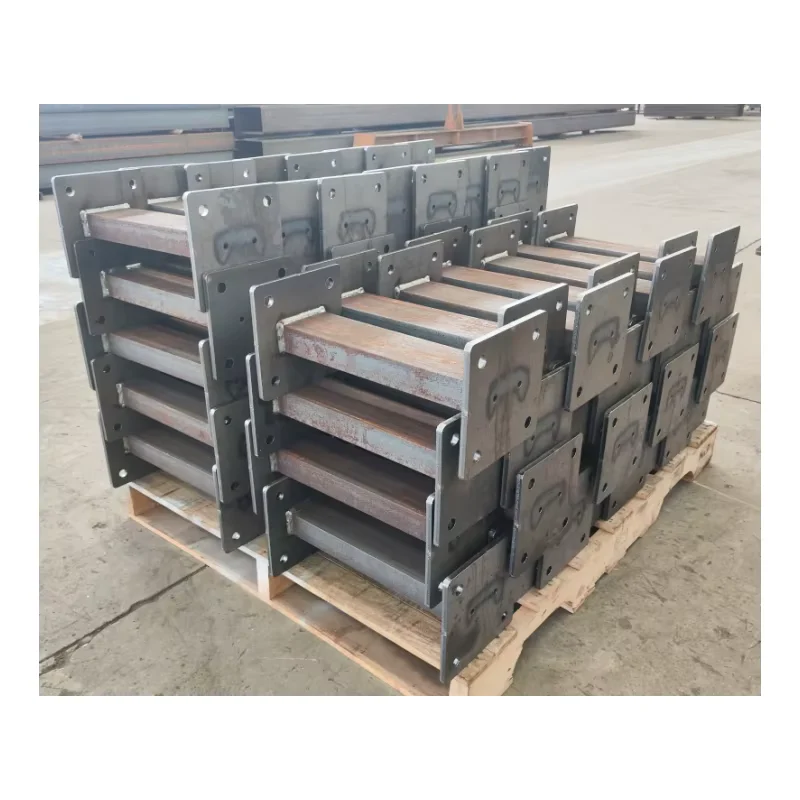
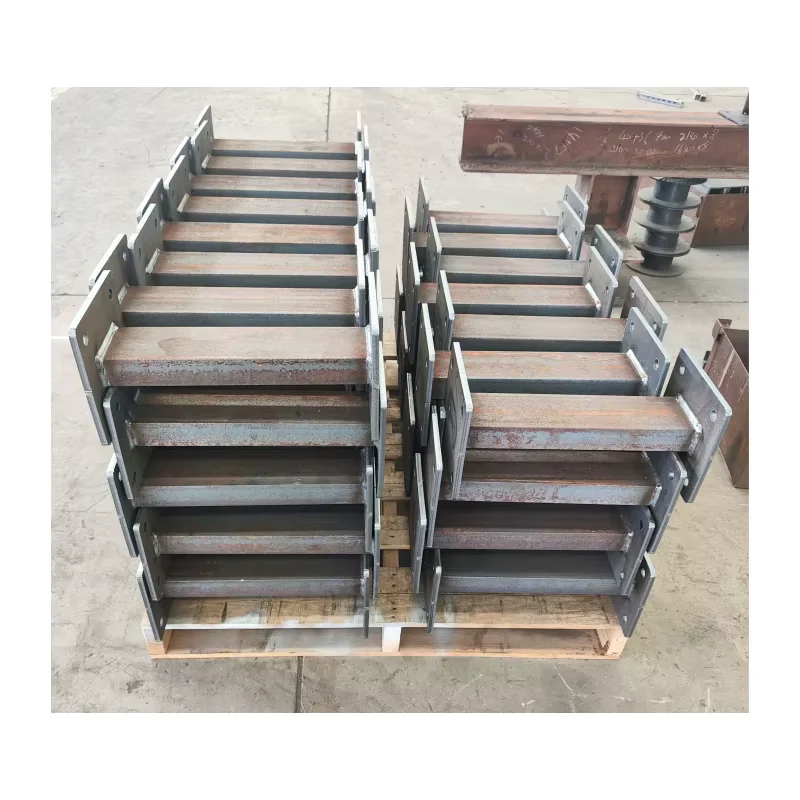
| Designation | Carbon Steel Sheet Welding Fabrication |
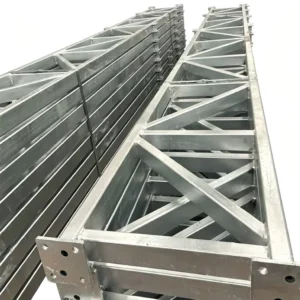
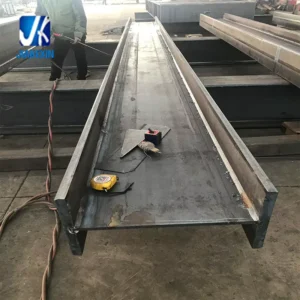
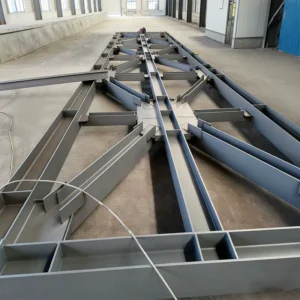
| Product Type | Fabricated Steel Structure / Steel Fabrication Part |
| Steel Grade | Carbon steel sheet/profile/pipe (custom per drawing) |
| Standard | GB / AISI / ASTM / BS / DIN / JIS |
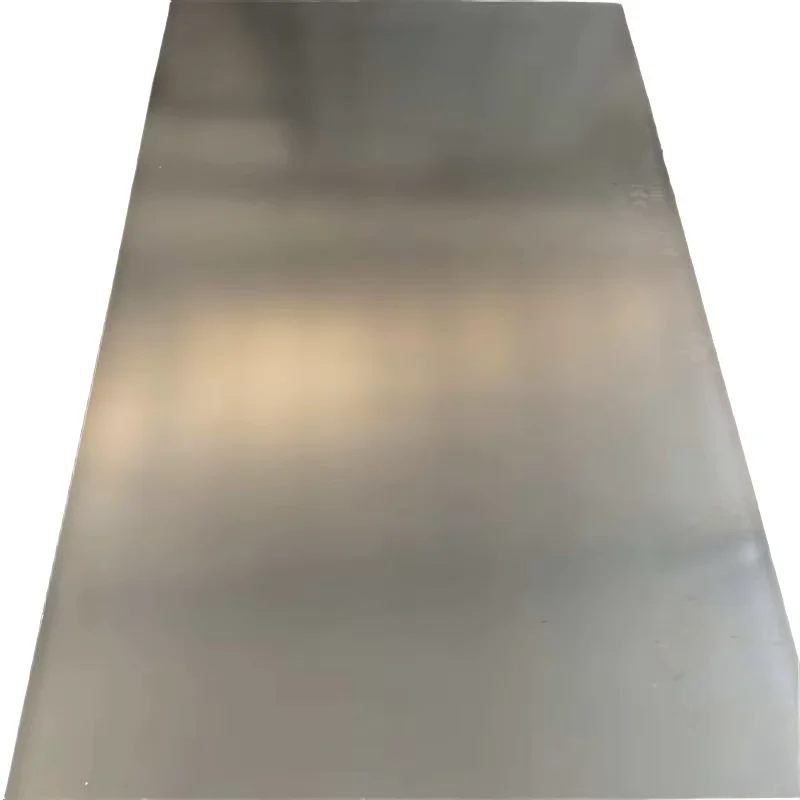
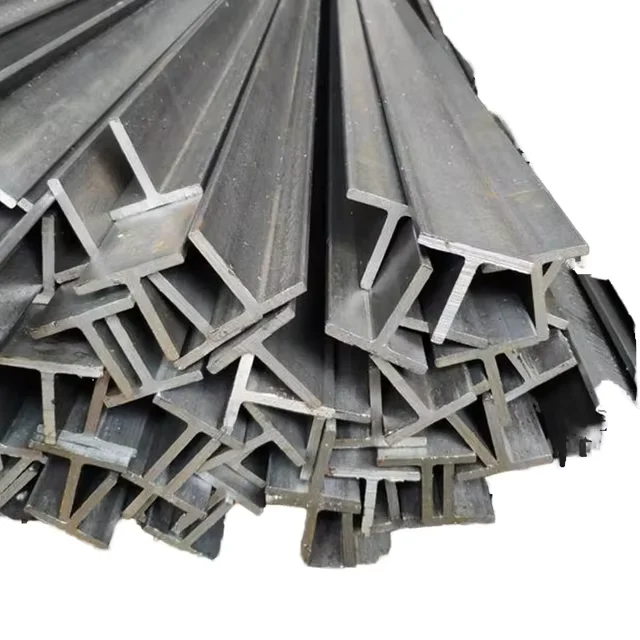
| Section Shape | Sheet / Profile / Pipe (custom fabrication per drawing) |
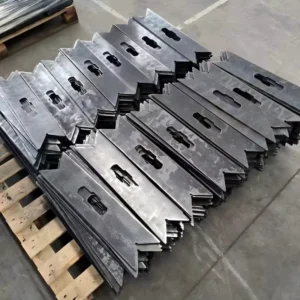
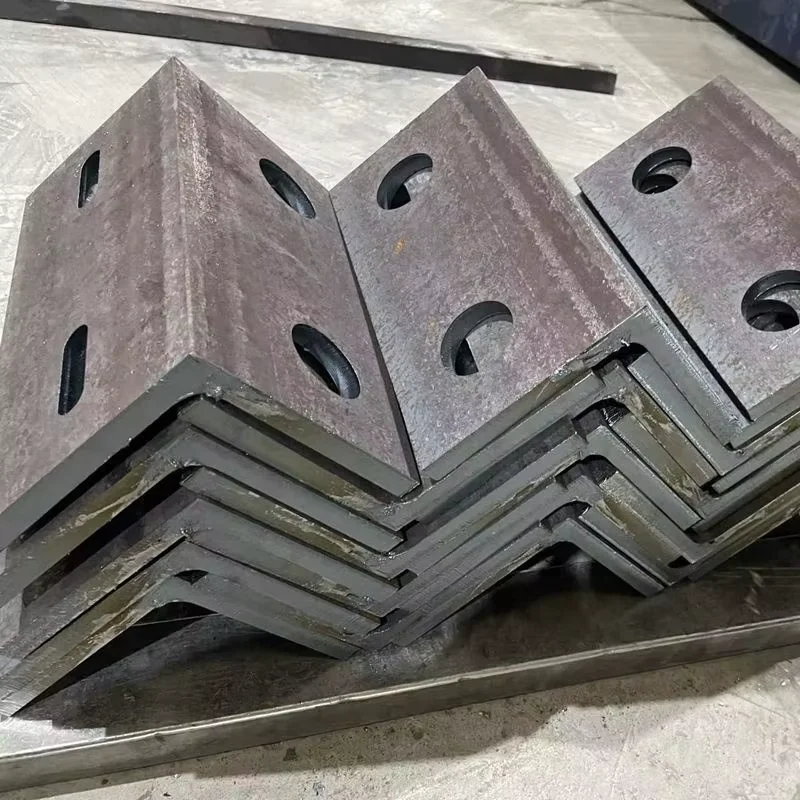
| Processing | Cutting, Laser Profiling, Bending, Punching Hole, Welding, Slotting, Stamping |
| Surface Treatment | Galvanizing / Powder Coating / Painting |
| Tolerance | +/-5% |
| Drawing Format | CAD / DWG / STEP / PDF |
| Service | ODM / OEM |
| Package | By bundle or Custom |
| Delivery Time | Regularly 15 days (depends on order quantity) |
| MOQ | 1 PCS |
| Origin | Shandong, China |
Application Suitability
| Industry | Typical Applications |
|---|---|
| EPC Projects | Industrial plant structures, pipe rack supports, equipment platforms |
| General Construction | Building frames, column-beam assemblies, mezzanine floors |
| Infrastructure | Bridge components, transit station structures, utility supports |
| Industrial Facilities | Warehouse frames, conveyor structures, crane runways |
| Custom Engineering | Non-standard connection assemblies, machinery bases, special brackets |
When Welding Procedure Qualification Determines Site Acceptance
A failed UT inspection on arrival can halt an entire project phase before the first bolt is tightened.
Outsourcing carbon steel sheet welding fabrication overseas introduces a quality control distance that no brochure can bridge. The welds may look clean to the naked eye during pre-shipment inspection, but third-party ultrasonic testing at destination often reveals porosity, incomplete fusion, or lack of penetration — defects rooted in unqualified welding procedures for specific plate thickness and steel grade combinations [NEED_CITE: AWS D1.1 structural welding code requirements]. When a fabricator sources steel from third parties without integrated mill control, material traceability gaps emerge: heat numbers do not match test certificates, and customs clearance stalls under scrutiny. Engineering coordination failures compound the problem — shop drawing errors trigger RFI delays, dimensional mismatches force costly rework on-site, and schedule overruns erase the cost advantage of offshore fabrication.
Matching Fabrication Precision to Structural Load Paths
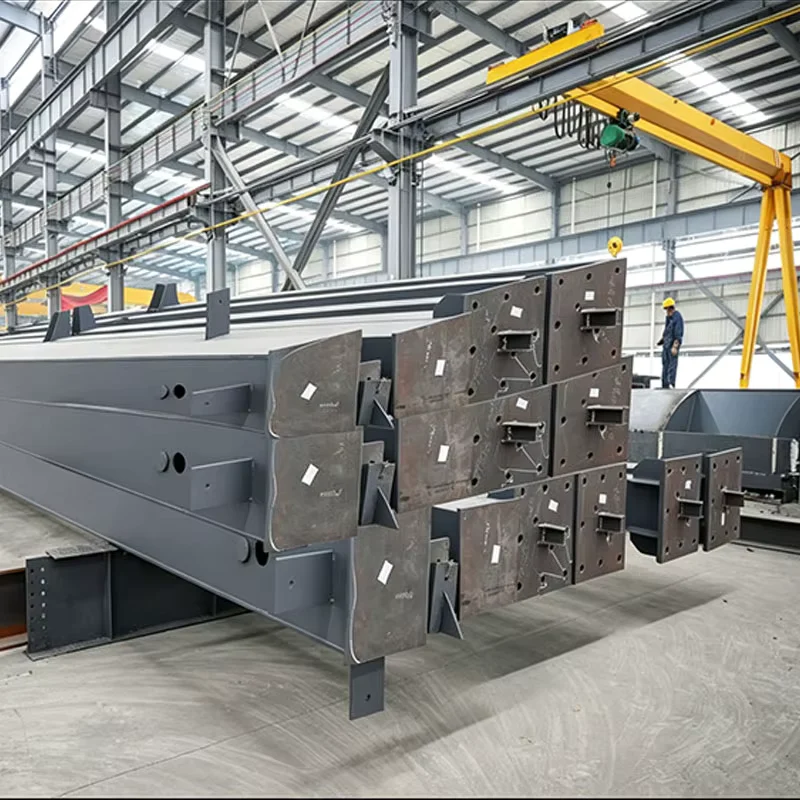
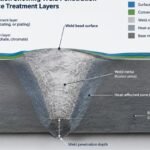
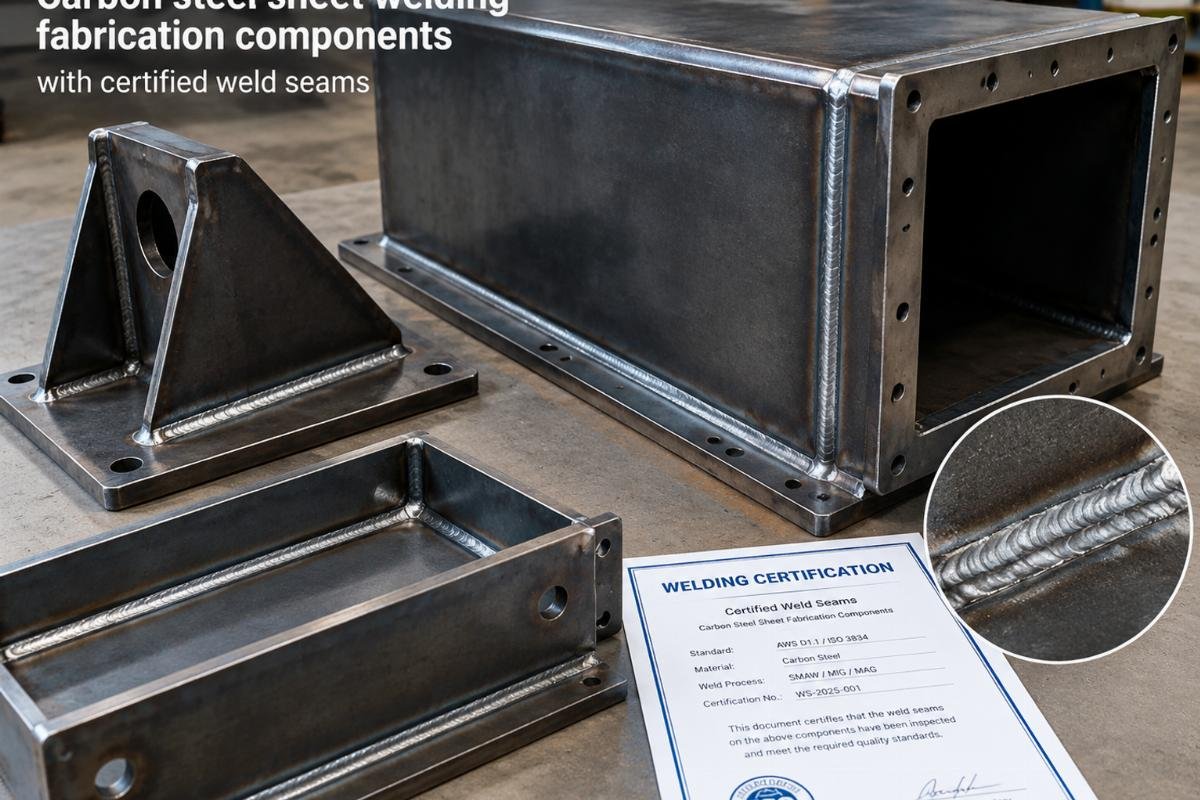
Carbon steel sheet welding fabrication for structural frames must align weld joint design with actual load transfer paths — moment connections require full penetration welds qualified to AWS D1.1 or EN 1090-2, while bracing members may accept fillet welds with verified throat thickness. Our fabrication workflow begins with shop drawing review that identifies stress concentration zones before any cutting starts, ensuring weld placement matches engineering intent rather than shop convenience. The integration of raw material production with fabrication eliminates the certification chain gap: every plate, profile, and pipe traces back to our own mill heat numbers, so mill test certificates correspond exactly to the steel welded into your assembly [NEED_CITE: EN 1090-2 execution class requirements for structural steel].
Engineering Compliance Across International Standards
Structural steel fabrication for international projects must satisfy multiple compliance layers simultaneously. Load-bearing capacity calculations reference EN 1993 (Eurocode 3) or AISC 360, while fabrication execution follows EN 1090-2 for European markets or AWS D1.1 for North American destinations — each standard demands specific welder qualifications, procedure tests, and inspection frequencies. Surface treatment selection depends on corrosion environment: hot-dip galvanizing provides sacrificial protection for outdoor infrastructure, powder coating offers UV-resistant finishes for architectural exposure, and paint systems allow color matching for visible structural elements. CE marking under EN 1090-1 is mandatory for structural components entering the EU, requiring factory production control certification and declared performance values [NEED_CITE: CE marking requirements under Construction Products Regulation]. Custom fabrication to non-standard dimensions requires coordination between design intent and shop feasibility — our engineering team reviews each drawing for weld accessibility, distortion control, and shipping constraints before production approval.
Steel Grade Selection and Welding Process Fundamentals
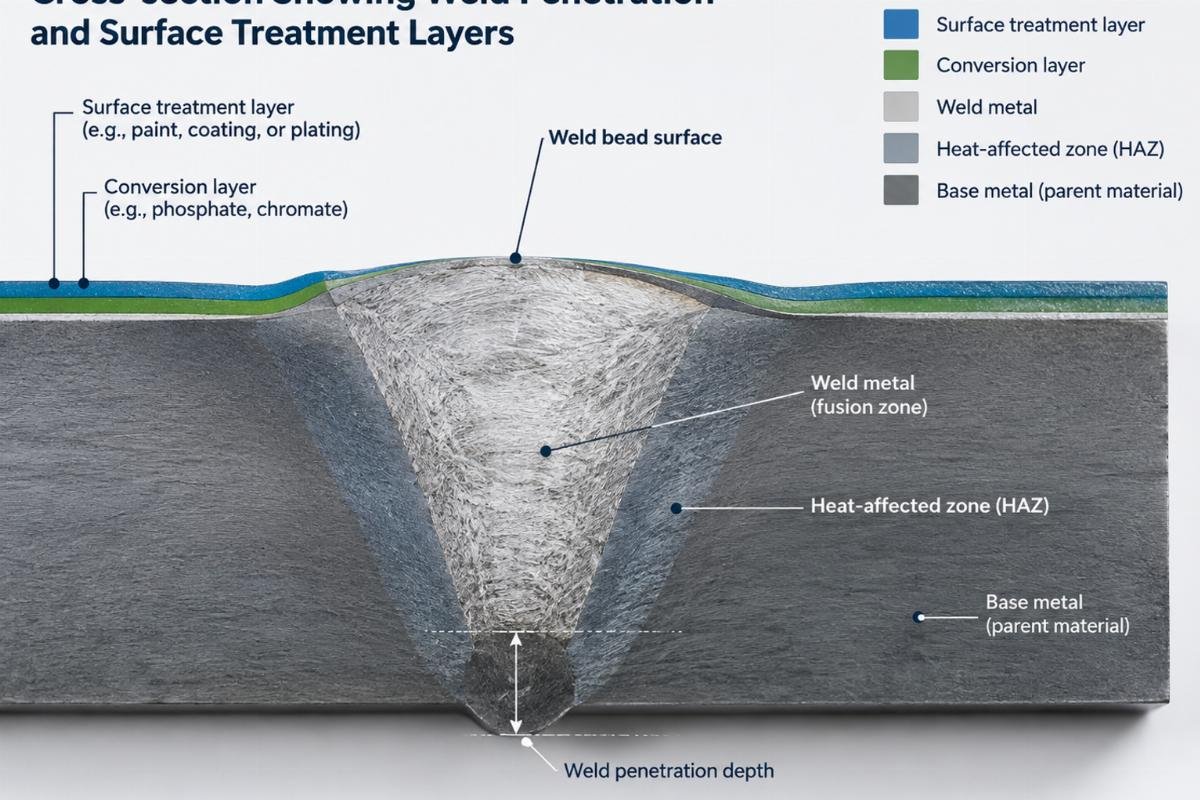
Carbon steel grades follow distinct classification systems that affect both base metal properties and welding procedure requirements. The S-series (S235, S275, S355 per EN 10025) specifies minimum yield strength in MPa, with higher grades demanding stricter preheat temperatures and controlled heat input to prevent hydrogen-induced cracking in thicker sections. ASTM A36 and A572 Gr.50 serve equivalent functions in North American specifications, while Q235 and Q345 dominate Chinese domestic projects — grade equivalence tables must be verified case-by-case, as chemical composition differences affect weld metal toughness [NEED_CITE: steel grade equivalence between EN and ASTM standards]. Welding process selection balances deposition rate against joint configuration: submerged arc welding (SAW) delivers high productivity for long straight seams on heavy plates, MIG/MAG provides versatility for positional welding on complex assemblies, and TIG suits root passes on critical connections requiring single-side access. Surface treatment timing matters — galvanizing after fabrication ensures coating coverage in weld zones but requires vent holes and drain provisions in hollow sections, while painting before assembly risks coating damage during handling and welding.
The Hidden Costs of Unqualified Fabrication Sources
Procuring carbon steel sheet welding fabrication from suppliers without certified welding procedures creates downstream liabilities that surface only during inspection or service. Material certificates from third-party traders may not correspond to actual steel in the fabricated component — when destination inspectors request heat number verification against mill records, gaps in traceability trigger shipment holds or rejection [NEED_CITE: material traceability requirements in structural steel codes]. Dimensional tolerance stacking across multiple fabricated assemblies compounds during erection: a +/-5% tolerance on individual components may result in cumulative misalignment that forces field cutting, re-welding, and re-coating — work that cannot replicate factory-controlled conditions. Non-compliant documentation creates customs clearance delays in regulated markets: missing CE declarations, incomplete weld maps, or absent welder qualification records stall projects at port, generating demurrage charges that exceed fabrication cost savings.
Integrated Control from Mill to Finished Assembly
Our fabrication operation eliminates the traditional gap between material supplier and fabricator through vertical integration. Raw steel plates, profiles, and pipes originate from our own production facility with three rolling lines covering 2,800+ specifications — this means every heat number on your mill test certificate corresponds to steel we produced, welded, and inspected. Welding procedures undergo qualification testing before production begins: procedure qualification records (PQR) document essential variables for each joint configuration, and welder performance qualification ensures operators maintain certification for specific processes and positions. The fabrication workshop houses CNC cutting, laser profiling, bending, punching, and welding stations under one roof, allowing sequential processing without intermediate handling that risks surface damage or dimensional shift. Quality documentation packages include welding procedure specifications, weld maps identifying each joint by location and welder ID, dimensional inspection reports with as-built measurements, and coating thickness records — complete traceability from raw material to finished component. Professional packing and loading planning address the shipping complexity of oversized fabricated assemblies: specialized cradles, edge protectors, and lashing calculations prevent transit damage while maximizing container utilization for cost-efficient delivery.
Documentation & Compliance
- Mill test certificate documenting carbon steel chemical composition and mechanical properties per GB/AISI/ASTM standards, with heat number traceability to our own production
- CE certificate under EN 1090-1 for structural steel components entering European Union markets, with declared performance values for load-bearing capacity
- ISO 9001 quality management system certificate covering fabrication processes from cutting through final inspection
- SGS or BV third-party inspection reports available for pre-shipment verification of dimensional accuracy and weld quality
- Complete weld documentation package including WPS, PQR, weld maps with joint identification, and welder qualification records per AWS D1.1 or EN 1090-2
- Export customs documents including packing list with piece marks, bill of lading, and certificate of origin for destination clearance
Packaging, Loading & Delivery
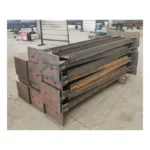
- Fabricated carbon steel components bundled with steel strips and edge protectors to preserve surface treatment (galvanized/powder coated/painted) during handling and ocean transit
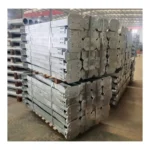
- Surface protection measures including VCI wrapping for painted assemblies or plastic sleeve covering for galvanized surfaces to prevent white rust formation during shipping
- Container loading optimization based on component dimensions — flat-packed assemblies maximize 40ft HC container utilization, while oversized frames require open-top or flat-rack arrangements with professional lashing
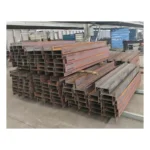
- Custom length cutting available per drawing requirements, with standard 6m/12m lengths optimized for standard container loading without special equipment
- Piece marking with heat number, steel grade, and sequence number for erection identification, plus bundle tags listing contents and destination
- Delivery terms FOB/CIF/DDP with professional export packing and complete shipping documentation for customs clearance at destination port
Initiating Your Fabrication Inquiry
Submit your project drawings (PDF/DWG/STEP format) with specifications including steel grade requirements, surface treatment preference, quantity, and destination port — we respond within 24 hours with preliminary assessment and quotation covering material, fabrication, coating, packing, and shipping costs. For custom fabrication projects, our engineering team prepares shop drawings for your review and approval before production begins, ensuring dimensional accuracy and weld joint design match your structural requirements. Confirm certification requirements (CE/EN 1090 for EU, AWS D1.1 for North America) and documentation needs early in the inquiry stage to avoid delays during production or customs clearance.
Start Your Carbon Steel Sheet Welding Fabrication Project
Share your drawings and specifications to receive quotation with mill test certificates and production schedule.
Contact: Shandong Xin Jiyuan Special Steel Tube Co., Ltd
Website: www.xjystructure.com
Tel: +86 531 8573 6315
Mobile/WhatsApp/WeChat: +86 188 5315 7756
Email: admin@xjystructure.com
Address: No.11889, Jingshi West Road, Lulian Group, Jinan City, Shandong Province, China
Frequently Asked Questions
Q: What quality documentation is provided with fabricated steel components?
A: Each shipment includes mill test certificates documenting chemical composition and mechanical properties per your specified standard (GB/AISI/ASTM), complete weld documentation package with WPS, PQR, weld maps identifying each joint by location and welder ID, dimensional inspection reports with as-built measurements, and coating thickness records for surface treatment verification.
Q: How do you ensure welding quality and dimensional accuracy for overseas projects?
A: All welding procedures undergo qualification testing before production begins, with procedure qualification records documenting essential variables for each joint configuration. Welders maintain performance qualification for specific processes and positions. In-process dimensional checks occur at critical fabrication stages, and final inspection includes comprehensive measurement reports before surface treatment application.
Q: Can you fabricate custom components from our engineering drawings to international standards?
A: Yes, we provide ODM/OEM fabrication services to international standards including EN 1090, AWS D1.1, and AISC requirements. Our engineering team reviews your drawings for weld accessibility, distortion control, and shipping constraints, then prepares shop drawings for your approval before fabrication begins.
Q: What surface treatment options are available and how do they affect durability?
A: We offer hot-dip galvanizing for sacrificial corrosion protection in outdoor environments, powder coating for UV-resistant architectural finishes, and paint systems for color-matched applications. Surface treatment selection depends on corrosion environment, exposure conditions, and aesthetic requirements — galvanizing provides the longest maintenance-free service life in aggressive environments.
Q: How do you handle shipping for oversized fabricated steel components?
A: Professional packing and loading planning addresses shipping complexity through specialized cradles, edge protectors, and lashing calculations that prevent transit damage. Container loading optimization maximizes utilization for standard components, while oversized frames require open-top or flat-rack arrangements. Complete export documentation ensures smooth customs clearance at destination.